

Unveiling the Alchemy of Flavor: The Science Behind Vegetable Soup
Vegetable soup, at its core, is about extracting and combining flavors. It’s more than just throwing a bunch of chopped vegetables into water. The magic lies in understanding how different vegetables release their flavors, how to build a complex flavor profile, and how to achieve that desirable creamy texture without relying solely on heavy cream. The Maillard reaction, for example, is critical. Searing or roasting some of the vegetables before adding them to the soup intensifies their sweetness and adds depth that simply boiling cannot achieve. Think of it like this: caramelizing onions for French Onion soup unlocks a whole new dimension of flavor compared to just simmering them. Building a good broth is also key; even using store-bought broth, understanding the difference between chicken, vegetable, and beef broths (and their salt content) is crucial for the final result. Finally, achieving creaminess is a matter of controlled starch release. Potatoes, when boiled, release starch into the water, naturally thickening the soup. Similarly, pureeing a portion of the soup after cooking achieves a similar effect, creating a smooth, luxurious texture. Adding a touch of acidity, like a squeeze of lemon juice or a splash of vinegar, brightens the flavors and prevents the soup from tasting flat. Understanding these principles is the difference between an okay soup and a truly exceptional One Pot Creamy Vegetable Soup.From Garden to Spoon: Your Foolproof Vegetable Soup Recipe
 This recipe is designed to be flexible and adaptable. Feel free to substitute vegetables based on what’s in season or what you have on hand. This is one of the Easy Soup Recipes to use for any Soup Dinner.
Ingredients:
- 2 tablespoons olive oil
- 1 large onion, chopped
- 2 carrots, chopped
- 2 celery stalks, chopped
- 4 cloves garlic, minced
- 8 cups vegetable broth (low sodium)
- 1 (28 ounce) can crushed tomatoes
- 2 medium potatoes, peeled and cubed
- 2 cups chopped green beans
- 1 cup corn kernels (fresh or frozen)
- 1 cup chopped zucchini
- 1 cup chopped bell pepper (any color)
- 1 teaspoon dried oregano
- 1/2 teaspoon dried basil
- Salt and pepper to taste
- Optional: 1/4 cup chopped fresh parsley, lemon wedges for serving
Instructions:
- Sauté the Aromatics: In a large pot or Dutch oven, heat the olive oil over medium heat. Add the onion, carrots, and celery and cook until softened, about 5-7 minutes. Add the garlic and cook for another minute until fragrant.
- Build the Base: Pour in the vegetable broth and crushed tomatoes. Bring to a boil, then reduce heat and simmer for 10 minutes.
- Add the Hearty Vegetables: Add the potatoes, green beans, and oregano and basil. Simmer for another 15 minutes, or until the potatoes are tender.
- Incorporate the Tender Vegetables: Add the corn, zucchini, and bell pepper. Cook for another 5-7 minutes, or until the vegetables are tender-crisp.
- Season and Serve: Season with salt and pepper to taste. Stir in fresh parsley (if using). Serve hot with a squeeze of lemon juice, if desired.
Optional Creaminess Boost:
- For a creamier soup, use an immersion blender to partially blend the soup, leaving some chunks for texture. Alternatively, remove about 2 cups of the soup and blend it in a regular blender before returning it to the pot.
- A swirl of heavy cream or a dollop of Greek yogurt can also add richness.
Variations:
- Add protein: Cooked chicken, sausage, or chickpeas can be added for a heartier meal. Consider using leftover chicken similar to making Rotisserie Chicken Mushroom Soup.
- Spice it up: Add a pinch of red pepper flakes for a little heat.
- Use different vegetables: Swap out vegetables based on what you have on hand or what’s in season. Spinach, kale, butternut squash, or sweet potatoes are all great additions.
From Soup Skeptic to Soup Star: My Vegetable Soup Journey
My journey to creating the perfect Veggie Soup was filled with more than a few trials and tribulations. Like many of you, I initially thought that vegetable soup was just a matter of throwing whatever vegetables I had lying around into a pot of water.The Watery Wilderness: My Early Soup Struggles
My first few attempts were a disaster. The soup was always watery, lacking in flavor, and generally unappetizing. The vegetables were often overcooked and mushy, and the broth tasted bland and thin. I remember one particularly disastrous batch that tasted faintly of dish soap, a mystery I never fully solved (I suspect cross-contamination in the cutting board). It was far from the comforting bowl of goodness I envisioned. It was definitely NOT an Easy Soup.The Broth Breakthrough: Discovering the Foundation of Flavor
Then, I had an “Aha!” moment. I realized that the key to a great vegetable soup wasn’t just about the vegetables themselves, but about the broth. I started experimenting with different types of broth, both homemade and store-bought. I discovered that using a good quality vegetable broth, preferably low in sodium, made a huge difference. I also learned the importance of building flavor in the broth by sautéing aromatic vegetables like onions, carrots, and celery before adding the liquid. Roasting some of the vegetables, similar to the process used for Pot Roast, also added a depth of flavor that I hadn’t been able to achieve before.The Creaminess Conundrum: Achieving Texture Without the Guilt
The next challenge was achieving that creamy texture without resorting to heavy cream. I knew that I wanted a healthy, lighter soup, so I started researching natural ways to thicken soup. I discovered that potatoes, when boiled, release starch into the water, naturally thickening the soup. I also experimented with pureeing a portion of the soup after cooking, which created a smooth, luxurious texture. The combination of these two techniques resulted in a soup that was both creamy and healthy. Using an immersion blender instead of a regular blender saved time and dishes. I also experimented with adding white beans and blending them into the soup for an extra boost of protein and creaminess, similar to the richness found in Mushroom Pasta.Acidic Awakening: Brightening the Flavors
Finally, I learned the importance of acidity. A squeeze of lemon juice or a splash of vinegar brightens the flavors and prevents the soup from tasting flat. It’s a simple trick, but it makes a world of difference. I now always keep lemon wedges on hand when serving vegetable soup.The Perfect Potful: Your Foolproof Method for Vegetable Soup Success
Here’s the foolproof method I’ve developed for making consistently delicious vegetable soup:- Start with a flavorful base: Sauté aromatic vegetables like onions, carrots, and celery in olive oil until softened. Add garlic and cook until fragrant.
- Use good quality broth: Choose a low-sodium vegetable broth for the best flavor. You can also make your own broth by simmering vegetable scraps in water.
- Add hearty vegetables first: Potatoes, carrots, and green beans should be added early in the cooking process, as they take longer to cook.
- Incorporate tender vegetables later: Corn, zucchini, and bell pepper should be added towards the end of the cooking process, as they cook quickly.
- Season generously: Salt, pepper, dried herbs, and a touch of acidity are essential for bringing out the flavors of the vegetables.
- Achieve desired creaminess: Partially blend the soup with an immersion blender or remove a portion of the soup and blend it in a regular blender.
- Adjust seasoning to taste: Before serving, taste the soup and adjust the seasoning as needed. Add more salt, pepper, herbs, or lemon juice to suit your preferences.
How can I make my vegetable soup creamy without using heavy cream?
You can achieve a creamy texture by using potatoes, which release starch when boiled, naturally thickening the soup. Alternatively, you can puree a portion of the soup after cooking using an immersion blender or regular blender before returning it to the pot.
What is the key to building a flavorful vegetable soup?
The key to a flavorful vegetable soup is building a good broth and understanding how different vegetables release their flavors. Sautéing aromatic vegetables like onions, carrots, and celery before adding liquid is crucial. Using a good quality broth, preferably low in sodium, also makes a significant difference.
What vegetables should be added earlier in the cooking process, and which should be added later?
Hearty vegetables like potatoes, carrots, and green beans should be added earlier as they take longer to cook. Tender vegetables like corn, zucchini, and bell pepper should be added towards the end of the cooking process because they cook quickly.
What is the importance of adding acid, like lemon juice, to vegetable soup?
Adding a touch of acidity, like a squeeze of lemon juice or a splash of vinegar, brightens the flavors and prevents the soup from tasting flat.
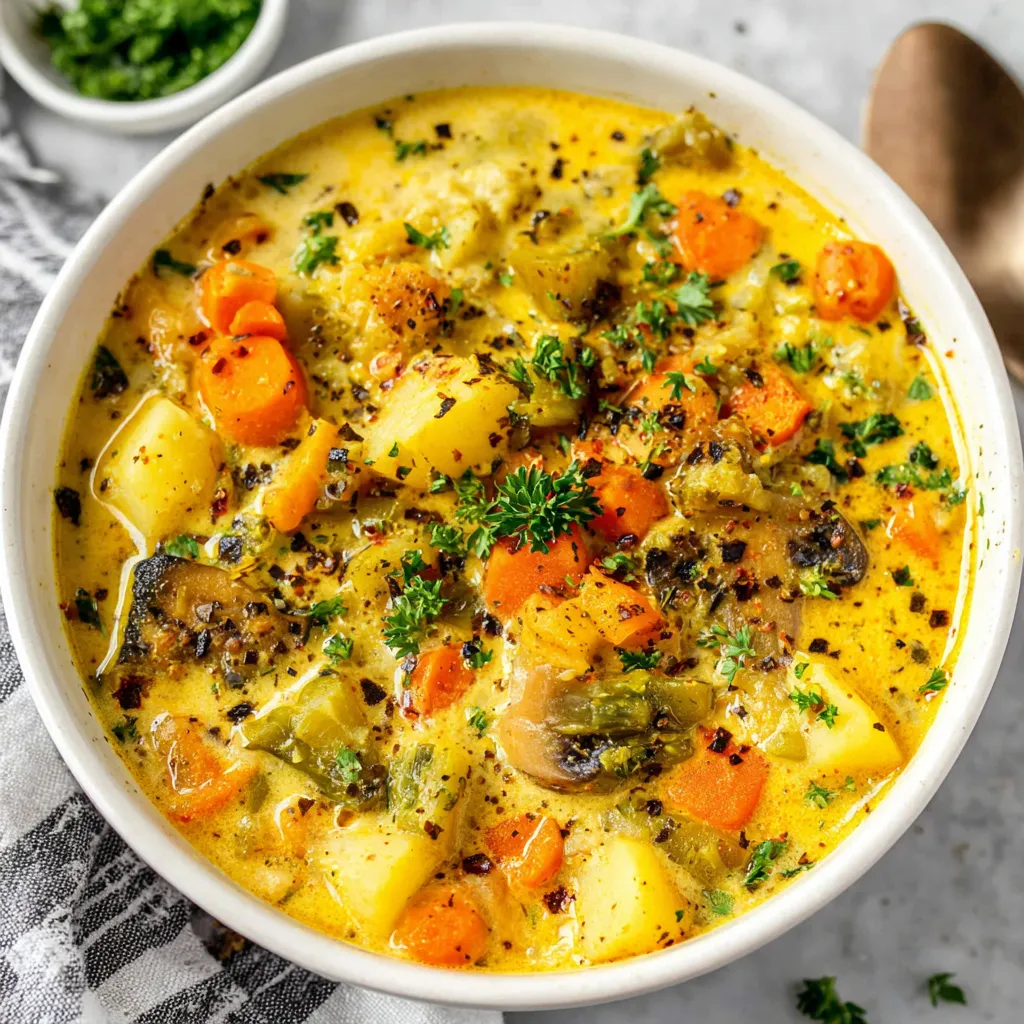
Easy Creamy Vegetable Soup
Ingredients
Equipment
Method
- Sauté the Aromatics: In a large pot or Dutch oven, heat the olive oil over medium heat. Add the onion, carrots, and celery and cook until softened, about 5-7 minutes. Add the garlic and cook for another minute until fragrant.
- Build the Base: Pour in the vegetable broth and crushed tomatoes. Bring to a boil, then reduce heat and simmer for 10 minutes.
- Add the Hearty Vegetables: Add the potatoes, green beans, oregano, and basil. Simmer for another 15 minutes, or until the potatoes are tender.
- Incorporate the Tender Vegetables: Add the corn, zucchini, and bell pepper. Cook for another 5-7 minutes, or until the vegetables are tender-crisp.
- Season and Serve: Season with salt and pepper to taste. Stir in fresh parsley (if using). Serve hot with a squeeze of lemon juice, if desired.
- Optional Creaminess Boost: For a creamier soup, use an immersion blender to partially blend the soup, leaving some chunks for texture. Alternatively, remove about 2 cups of the soup and blend it in a regular blender before returning it to the pot.