
The Molecular Gastronomy of a Fiesta
At its heart, a great Steak Fajita Bowl is about balance. It’s about the interplay of textures – the tender chew of perfectly cooked steak, the crisp-tender bite of peppers and onions, the fluffy softness of rice, and the creamy coolness of toppings. Achieving this balance requires understanding the fundamental principles at play. Firstly, protein denaturation. High heat is crucial for searing the steak, creating the Maillard reaction – that magical browning that unlocks hundreds of flavor compounds. However, excessive heat will cause the muscle fibers to tighten, resulting in a dry, tough steak. The key is to use high heat briefly, aiming for a beautiful crust while keeping the interior medium-rare. Secondly, osmosis. Vegetables, especially when cooked with salt, will release moisture. If you’re not careful, this can lead to soggy fajitas. The solution? Cook your vegetables quickly over high heat, allowing them to char slightly without becoming waterlogged. Finally, flavor layering. A successful fajita bowl isn’t just about throwing ingredients together. It’s about building flavor from the ground up, starting with a well-seasoned steak and continuing through each component. Don’t be afraid to experiment with different spices and herbs to create a unique flavor profile. Similar to the careful flavor layering required for a vibrant Southwest Skillet, each component should sing on its own and harmonize with the others.The Ultimate Steak Fajita Bowl Recipe
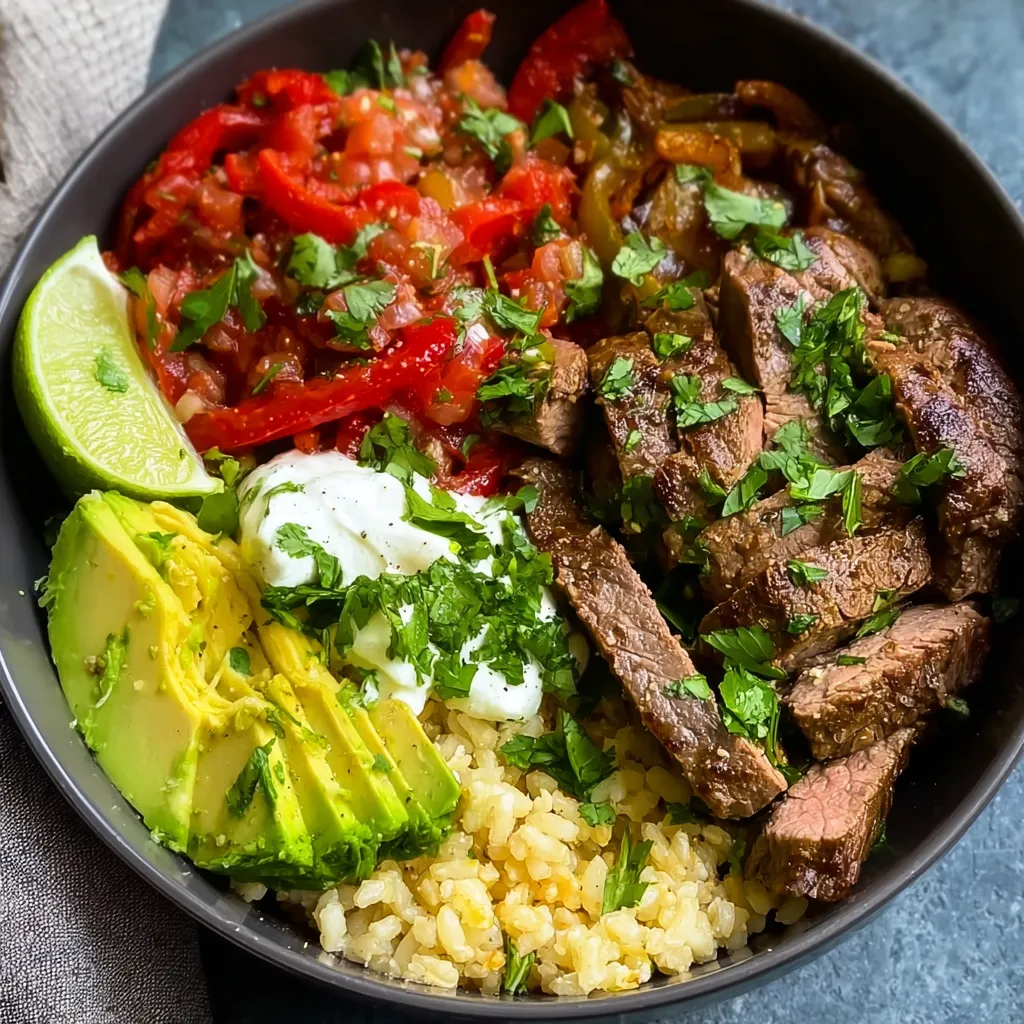 This recipe represents the culmination of countless experiments and taste tests. It’s designed to be easy to follow, yet yields restaurant-quality results.
Ingredients:
- For the Steak:
- 1 lb Flank Steak (or Skirt Steak)
- 2 tbsp Olive Oil
- 1 tbsp Fajita Seasoning (store-bought or homemade)
- 1 tsp Garlic Powder
- 1/2 tsp Smoked Paprika
- Salt and Pepper to taste
- For the Fajita Vegetables:
- 1 Bell Pepper (any color), sliced
- 1 Onion, sliced
- 1 tbsp Olive Oil
- 1 tsp Fajita Seasoning
- Salt and Pepper to taste
- For the Rice:
- 1 cup Long-Grain Rice
- 2 cups Chicken Broth (or Water)
- 1 tbsp Olive Oil
- 1/2 tsp Cumin
- 1/4 tsp Turmeric (for color and flavor)
- Salt to taste
- Toppings (Optional):
- Shredded Cheddar Cheese
- Sour Cream
- Guacamole
- Salsa
- Chopped Cilantro
- Lime Wedges
Instructions:
- Prepare the Rice: In a medium saucepan, heat olive oil over medium heat. Add rice and cook for 1-2 minutes, stirring constantly, until lightly toasted. Add chicken broth, cumin, turmeric, and salt. Bring to a boil, then reduce heat to low, cover, and simmer for 18-20 minutes, or until rice is cooked through and liquid is absorbed. Fluff with a fork.
- Marinate the Steak: While the rice is cooking, prepare the steak. In a bowl, combine olive oil, fajita seasoning, garlic powder, smoked paprika, salt, and pepper. Rub the mixture all over the steak. Let it marinate for at least 15 minutes (or up to overnight in the refrigerator).
- Cook the Fajita Vegetables: Heat a large skillet or cast-iron pan over high heat. Add olive oil. Once the pan is smoking hot, add the sliced bell pepper and onion. Cook for 5-7 minutes, stirring occasionally, until vegetables are tender-crisp and slightly charred. Season with fajita seasoning, salt, and pepper. Remove from the pan and set aside.
- Cook the Steak: Using the same skillet, increase the heat to high. Add the marinated steak and sear for 3-4 minutes per side for medium-rare, or longer if you prefer it more well-done. Remove the steak from the pan and let it rest for 5-10 minutes before slicing thinly against the grain. This resting period is crucial for allowing the juices to redistribute, resulting in a more tender steak.
- Assemble the Bowls: Divide the rice among bowls. Top with the sliced steak, fajita vegetables, and your desired toppings. Serve immediately and enjoy! You can even think of this as a deconstructed Taco Casserole!
Confessions of a Culinary Detective: My Fajita Bowl Fails and Breakthroughs
My journey to the perfect Steak Fajita Bowl was paved with good intentions… and a lot of overcooked steak. Like many of you, I initially thought it was just a matter of throwing some ingredients together. Oh, how wrong I was!The Soggy Bottom Blues
My first few attempts were a disaster. The vegetables were always soggy, leaching moisture into the rice and creating a uniformly unpleasant texture. I tried everything – salting the vegetables in advance (which only made the problem worse), using lower heat (which resulted in steamed, rather than charred, vegetables). Then, I had an “Aha!” moment: high heat and a screaming hot pan. By cooking the vegetables quickly over intense heat, I was able to achieve that desirable char without releasing excess moisture. It was a game-changer!The Steak That Wouldn’t Quit Chewing
Then there was the steak. My initial attempts resulted in a chewy, flavorless disappointment. I tried marinating it longer, using different cuts of meat, even pounding it thin. Nothing seemed to work consistently. The real breakthrough came when I started paying attention to the direction of the muscle fibers. Slicing the steak *against* the grain made a world of difference, transforming it from tough and stringy to tender and easy to chew. I also learned the importance of resting the steak after cooking, allowing the juices to redistribute and tenderize the meat. A similar lesson I learned when I first tried making Steak Tortellini.The Rice That Refused to Cooperate
Even the rice presented its challenges. It was either mushy or dry, never quite hitting that perfect fluffy texture. Experimenting with different ratios of rice to liquid was key. I found that using chicken broth instead of water added depth of flavor, and a touch of turmeric not only enhanced the color but also contributed a subtle, earthy note. You could even use leftover rice from a Beef Stir Fry!The Quest for Flavor Nirvana
Finally, the flavor. While store-bought fajita seasoning is convenient, I found that making my own allowed me to customize the blend to my liking. Adding a touch of smoked paprika provided a smoky depth, while garlic powder and a pinch of cayenne pepper added a subtle kick. And don’t underestimate the power of fresh toppings! A dollop of guacamole, a spoonful of salsa, and a sprinkle of chopped cilantro elevate the bowl from good to extraordinary. It’s important to remember this when making something similar, such as Taco Rice Bowl.The Foolproof Fajita Bowl Formula: A Step-by-Step Guide to Success
After countless experiments and taste tests, I’ve distilled the essence of the perfect Steak Fajita Bowl into these simple, foolproof steps:- Marinate the Steak: Give your steak at least 15 minutes to soak up the flavors of the marinade. Overnight is even better.
- Prepare the Rice: Use the correct rice-to-liquid ratio and don’t overcook it. Fluff with a fork for perfect texture.
- Blast the Veggies: Cook the bell peppers and onions over high heat in a screaming hot pan to prevent them from becoming soggy.
- Sear the Steak to Perfection: Don’t overcook the steak! Aim for medium-rare and let it rest before slicing.
- Slice Against the Grain: This is crucial for tender steak.
- Layer Flavors: Don’t be afraid to experiment with different spices and toppings to create a flavor profile that suits your taste. Consider some inspiration from a recipe of Sheet Pan Chicken Fajitas!
- Assemble and Enjoy: Combine all the elements in a bowl and devour!
What is the key to preventing soggy vegetables in a Steak Fajita Bowl?
Cooking the vegetables quickly over high heat in a screaming hot pan is crucial to prevent them from releasing excess moisture and becoming soggy.
Why is it important to let the steak rest after cooking?
Resting the steak after cooking allows the juices to redistribute throughout the meat, resulting in a more tender and flavorful steak.
What’s the best way to ensure tender steak in a Fajita Bowl?
To ensure tender steak, slice it thinly against the grain. This cuts the muscle fibers, making it easier to chew. Also, don’t overcook the steak; aim for medium-rare.
What can I use instead of water when cooking the rice for a Steak Fajita Bowl?
Using chicken broth instead of water adds depth of flavor to the rice. You can also add a touch of turmeric for color and a subtle, earthy note.
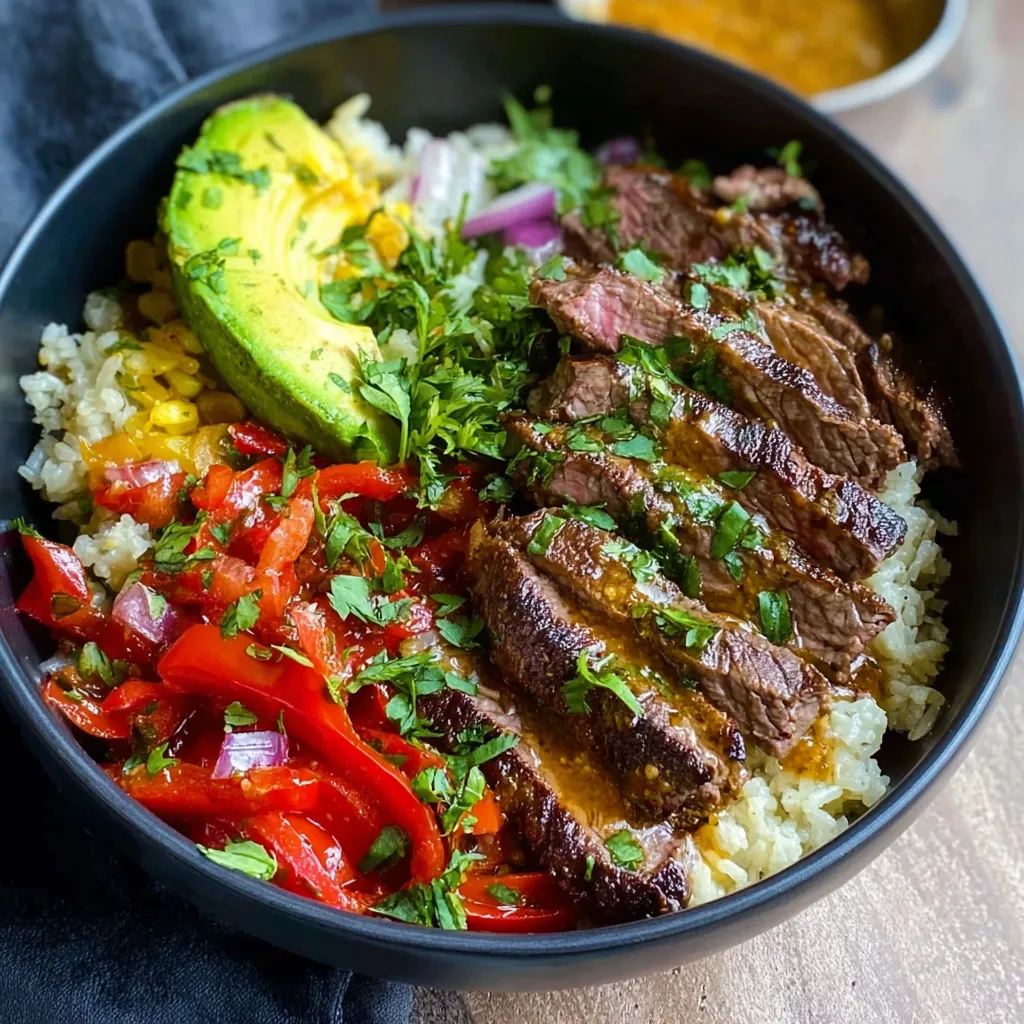
Best Steak Fajita Bowl
This recipe guides you through creating the ultimate Steak Fajita Bowl, balancing textures and flavors for a restaurant-quality meal. Learn how to cook tender steak, crisp-tender vegetables, and fluffy rice, then customize with your favorite toppings for a satisfying and customizable dish.
Ingredients
Equipment
Method
- Prepare the Rice: In a medium saucepan, heat olive oil over medium heat. Add rice and cook for 1-2 minutes, stirring constantly, until lightly toasted. Add chicken broth, cumin, turmeric, and salt. Bring to a boil, then reduce heat to low, cover, and simmer for 18-20 minutes, or until rice is cooked through and liquid is absorbed. Fluff with a fork.
- Marinate the Steak: While the rice is cooking, prepare the steak. In a bowl, combine olive oil, fajita seasoning, garlic powder, smoked paprika, salt, and pepper. Rub the mixture all over the steak. Let it marinate for at least 15 minutes (or up to overnight in the refrigerator).
- Cook the Fajita Vegetables: Heat a large skillet or cast-iron pan over high heat. Add olive oil. Once the pan is smoking hot, add the sliced bell pepper and onion. Cook for 5-7 minutes, stirring occasionally, until vegetables are tender-crisp and slightly charred. Season with fajita seasoning, salt, and pepper. Remove from the pan and set aside.
- Cook the Steak: Using the same skillet, increase the heat to high. Add the marinated steak and sear for 3-4 minutes per side for medium-rare, or longer if you prefer it more well-done. Remove the steak from the pan and let it rest for 5-10 minutes before slicing thinly against the grain. This resting period is crucial for allowing the juices to redistribute, resulting in a more tender steak.
- Assemble the Bowls: Divide the rice among bowls. Top with the sliced steak, fajita vegetables, and your desired toppings. Serve immediately and enjoy!
Notes
For best results, marinate the steak overnight. Ensure the pan is screaming hot before adding the vegetables to prevent them from becoming soggy. Rest the steak after cooking to allow the juices to redistribute, resulting in a more tender steak. Experiment with different toppings to customize your bowl. Store leftover components separately in airtight containers in the refrigerator for up to 3 days.