
Decoding the Creaminess: The Science Behind the Sauce
The magic of Olive Garden’s Chicken Pasta lies in its creamy, decadent sauce. This isn’t *just* heavy cream thrown into a pan; it’s a carefully constructed emulsion of fat, dairy, and flavor. The base is typically a combination of butter and olive oil (yes, both!), which provides a rich, nutty foundation. Next comes the thickening agent: typically flour, creating a roux that ensures the sauce clings beautifully to the pasta. The dairy component is crucial – heavy cream contributes richness, while Parmesan cheese adds a salty, umami depth. Crucially, *how* these ingredients are combined, and *when*, impacts the final texture and flavor. Heat control is paramount; too high, and the cream can separate, resulting in a grainy sauce. Too low, and the roux won’t properly thicken. Finally, the addition of chicken broth not only thins the sauce to the perfect consistency but also infuses it with savory chicken flavor. The balance of these elements is what transforms simple ingredients into that signature Olive Garden creaminess.The Definitive Recipe: Olive Garden Chicken Pasta, Recreated
 This recipe aims to replicate the Olive Garden Chicken Pasta as closely as possible, based on my culinary investigations and adjustments.
Ingredients:
- Chicken: 1.5 lbs boneless, skinless chicken breasts, cut into 1-inch cubes
- Pasta: 1 lb fettuccine pasta
- Butter: 4 tablespoons unsalted butter
- Olive Oil: 2 tablespoons extra virgin olive oil
- Garlic: 4 cloves, minced
- All-Purpose Flour: 3 tablespoons
- Chicken Broth: 2 cups
- Heavy Cream: 1 ½ cups
- Parmesan Cheese: ¾ cup, freshly grated, plus more for serving
- Italian Seasoning: 1 teaspoon
- Salt: To taste
- Black Pepper: To taste
- Fresh Parsley: 2 tablespoons, chopped, for garnish
Instructions:
- Cook the Pasta: Bring a large pot of salted water to a boil. Add the fettuccine and cook according to package directions until al dente. Drain and set aside.
- Cook the Chicken: While the pasta is cooking, season the chicken cubes with salt, pepper, and ½ teaspoon of Italian seasoning. Heat 1 tablespoon of olive oil in a large skillet over medium-high heat. Add the chicken and cook until browned and cooked through, about 5-7 minutes. Remove the chicken from the skillet and set aside.
- Make the Sauce: In the same skillet, melt the butter over medium heat. Add the remaining 1 tablespoon of olive oil. Add the minced garlic and cook until fragrant, about 30 seconds, being careful not to burn it.
- Create the Roux: Sprinkle the flour over the garlic and butter mixture. Whisk continuously for 1-2 minutes until a smooth paste forms. This is your roux.
- Add the Liquids: Slowly pour in the chicken broth, whisking constantly to prevent lumps. Bring to a simmer and cook for 2-3 minutes, until the sauce begins to thicken slightly.
- Incorporate the Cream and Cheese: Reduce the heat to low and stir in the heavy cream. Gently simmer for another 2-3 minutes. Gradually add the Parmesan cheese, stirring until it is melted and the sauce is smooth and creamy.
- Combine Everything: Add the cooked chicken and cooked pasta to the sauce. Toss to coat everything evenly.
- Serve: Garnish with fresh parsley and additional Parmesan cheese. Serve immediately.
My Chicken Pasta Pilgrimage: The Investigation Unveiled
My quest to perfect the Olive Garden Chicken Pasta was a journey filled with trials, errors, and ultimately, sweet, creamy victory.The Initial Fumbles: Too Thin, Too Thick, Just Plain Wrong
My first few attempts were a disaster. Like many of you, I initially thought it was just a matter of throwing some cream, cheese, and chicken together. The results were either a watery mess or a gloppy, over-thickened disaster. The flavor was bland and lacked that characteristic richness I craved. I tried using only heavy cream, only milk, different types of cheese… nothing seemed to work. The sauce was always either too thin and separated, or so thick it resembled wallpaper paste. I even considered using a pre-made Alfredo sauce as a shortcut, but that just felt like cheating and didn’t deliver the nuanced flavor I was after. It was clear I needed to understand the underlying principles of sauce making.The Roux Revelation: Unlocking the Secret to Creaminess
Then, I had an “Aha!” moment when I revisited the concept of a roux. I realized the importance of the flour as a thickening agent and the impact of cooking it properly with the butter and oil. My first mistake was not cooking the roux long enough. By properly cooking the flour, I eliminated the raw flour taste and created a stable base for the sauce. I also learned the importance of slowly adding the chicken broth and whisking constantly to prevent lumps. This single adjustment dramatically improved the texture of the sauce.Chicken Chronicles: Tender Bites and Flavor Infusion
The chicken also presented a challenge. Initially, I simply boiled the chicken, which resulted in bland, rubbery pieces. I switched to pan-frying, which added flavor and a pleasant texture, but the chicken was still sometimes dry. The solution? Cutting the chicken into smaller, uniform cubes ensured even cooking and prevented it from drying out. Marinating the chicken beforehand in Italian dressing also improved the flavor, but I found that seasoning simply with salt, pepper, and a touch of Italian seasoning after it was cooked allowed for a cleaner, more authentic Olive Garden flavor. I also experimented with using Slow Cooker Lemon Chicken and shredding it. Although tasty, it wasn’t quite the same as the cubed chicken.The Parmesan Puzzle: Quality and Quantity Matter
Finally, the Parmesan cheese. I initially used pre-grated Parmesan, which, while convenient, resulted in a grainy, less flavorful sauce. Switching to freshly grated Parmesan made a world of difference. The freshly grated cheese melted more smoothly and imparted a richer, more complex flavor. I also experimented with different amounts of cheese, eventually settling on ¾ cup as the perfect balance of flavor and texture. It’s important not to skimp on the cheese, as it’s a key component of that signature Olive Garden taste. It also pairs nicely with the Chicken Parmesan Casserole I often make.The Technique, Perfected: Your Foolproof Guide
After numerous experiments, I’ve distilled the process into a series of key steps for guaranteed success:- Perfect the Roux: Cook the butter, oil, garlic, and flour mixture until it forms a smooth paste and smells nutty. This is crucial for thickening the sauce and eliminating the raw flour taste.
- Whisk Vigorously: When adding the chicken broth, whisk continuously to prevent lumps from forming. A smooth sauce starts with a lump-free base.
- Simmer Gently: After adding the cream and cheese, reduce the heat to low and simmer gently. Avoid boiling the sauce, as this can cause it to separate.
- Fresh is Best: Use freshly grated Parmesan cheese for the best flavor and texture. Avoid pre-grated cheese, which often contains cellulose and doesn’t melt as smoothly.
- Don’t Overcook the Chicken: Cut the chicken into uniform cubes and cook until just cooked through. Overcooked chicken will be dry and rubbery. Also, consider using the chicken from Creamy Garlic Parmesan Crockpot Chicken Irresistible for added flavor.
- Al Dente or Bust: Cook the pasta al dente. Overcooked pasta will become mushy in the sauce.
- Season to Taste: Taste the sauce and adjust the seasoning as needed. Salt, pepper, and Italian seasoning are your friends. The Honey Pepper Chicken Pasta recipe also has some great seasoning ideas!
- Serve Immediately: Serve the pasta immediately after combining it with the sauce. The sauce will thicken as it sits, so it’s best to serve it while it’s still creamy and luscious. I find that this dish is equally as good as my Creamy Garlic Chicken Gnocchi.
What makes the Olive Garden Chicken Pasta sauce so creamy?
The creaminess comes from a carefully constructed emulsion of butter, olive oil, flour (to create a roux), chicken broth, heavy cream, and Parmesan cheese. The key is the specific order and method of combining these ingredients, and careful heat control to prevent separation.
Why is it important to use freshly grated Parmesan cheese instead of pre-grated?
Freshly grated Parmesan melts more smoothly and imparts a richer, more complex flavor to the sauce. Pre-grated Parmesan often contains cellulose, which prevents it from melting as well.
How should I cook the chicken to prevent it from becoming dry and rubbery?
Cut the chicken into smaller, uniform cubes to ensure even cooking. Pan-fry it until just cooked through, and avoid overcooking. Seasoning the chicken after cooking also contributes to a more authentic Olive Garden flavor.
What is the significance of the ‘roux’ in making the sauce?
The roux, a cooked mixture of butter, oil, and flour, acts as a thickening agent for the sauce. Cooking the flour properly eliminates the raw flour taste and creates a stable base, ensuring the sauce clings beautifully to the pasta.
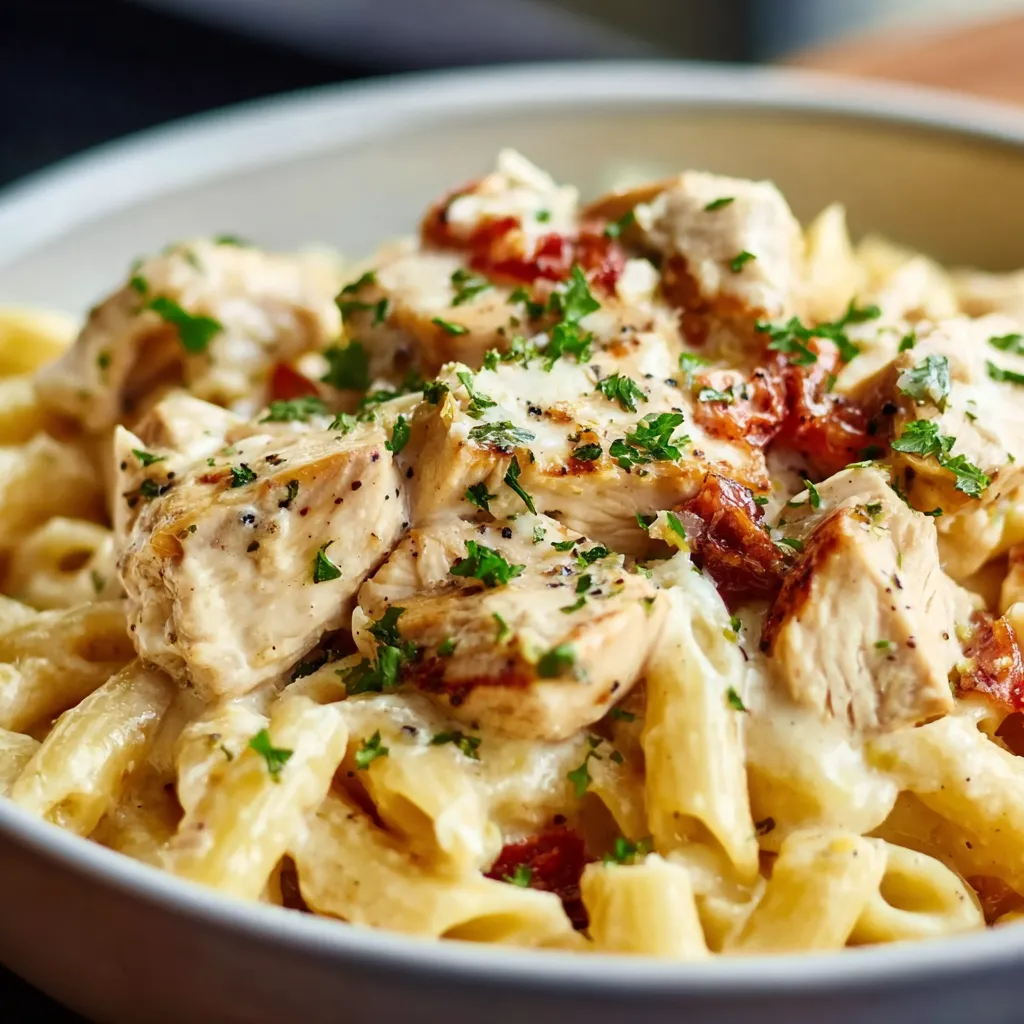
Perfect Olive Garden Chicken Pasta
Ingredients
Equipment
Method
- Cook the Pasta: Bring a large pot of salted water to a boil. Add the fettuccine and cook according to package directions until al dente. Drain and set aside.
- Cook the Chicken: While the pasta is cooking, season the chicken cubes with salt, pepper, and ½ teaspoon of Italian seasoning. Heat 1 tablespoon of olive oil in a large skillet over medium-high heat. Add the chicken and cook until browned and cooked through, about 5-7 minutes. Remove the chicken from the skillet and set aside.
- Make the Sauce: In the same skillet, melt the butter over medium heat. Add the remaining 1 tablespoon of olive oil. Add the minced garlic and cook until fragrant, about 30 seconds, being careful not to burn it.
- Create the Roux: Sprinkle the flour over the garlic and butter mixture. Whisk continuously for 1-2 minutes until a smooth paste forms. This is your roux.
- Add the Liquids: Slowly pour in the chicken broth, whisking constantly to prevent lumps. Bring to a simmer and cook for 2-3 minutes, until the sauce begins to thicken slightly.
- Incorporate the Cream and Cheese: Reduce the heat to low and stir in the heavy cream. Gently simmer for another 2-3 minutes. Gradually add the Parmesan cheese, stirring until it is melted and the sauce is smooth and creamy.
- Combine Everything: Add the cooked chicken and cooked pasta to the sauce. Toss to coat everything evenly.
- Serve: Garnish with fresh parsley and additional Parmesan cheese. Serve immediately.