

Is it possible to create a beef stew that not only tastes incredible but also evokes the enchanting imagery of a witch’s cauldron, bubbling with mystical flavors and textures?
Unlocking the Magic: The Science of Stew
Before we dive into the recipe, let’s talk about the science behind a truly great beef stew. It’s not just about throwing ingredients into a pot; it’s about understanding how each component interacts to create a symphony of flavor. The Maillard reaction, that browning magic that happens when you sear the beef, is crucial. It develops hundreds of flavor compounds that add depth and richness. Then there’s collagen, the connective tissue in tougher cuts of beef. Low and slow cooking breaks down this collagen into gelatin, which contributes to that luscious, melt-in-your-mouth texture and a rich, velvety broth. Finally, vegetable selection and proper layering of flavors are essential to achieving the perfect balance. Acid, such as a splash of vinegar or a touch of tomato paste, brightens the stew and balances the savory notes.
Brewing the Potion: The Witch’s Cauldron Beef Stew Recipe
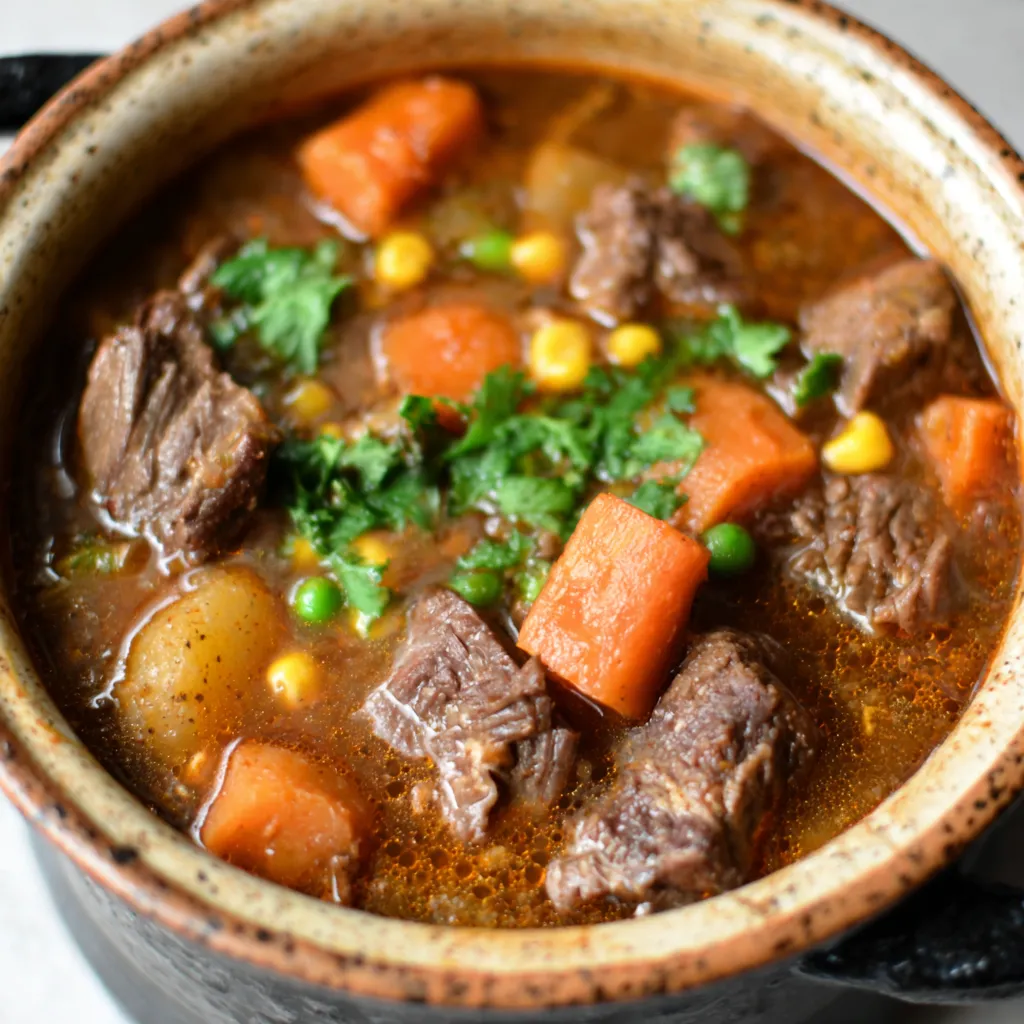
Ingredients:
- 2 lbs Beef Chuck, cut into 1-inch cubes
- 2 tbsp Olive Oil
- 1 large Onion, chopped
- 2 Carrots, peeled and chopped
- 2 Celery stalks, chopped
- 4 cloves Garlic, minced
- 8 oz Cremini Mushrooms, quartered
- 2 tbsp Tomato Paste
- 1/2 cup Dry Red Wine (optional, but recommended)
- 6 cups Beef Broth
- 2 Bay Leaves
- 1 tsp Dried Thyme
- 1/2 tsp Dried Rosemary
- 1 lb Potatoes, peeled and cubed
- 1 cup Frozen Peas
- 1/4 cup chopped Fresh Parsley, for garnish
- Salt and Pepper to taste
Instructions:
- Sear the Beef: Pat the beef cubes dry with paper towels and season generously with salt and pepper. Heat the olive oil in a large Dutch oven or heavy-bottomed pot over medium-high heat. Sear the beef in batches, being careful not to overcrowd the pot. Brown on all sides (about 2-3 minutes per side) and then remove from the pot and set aside.
- Sauté Aromatics: Add the chopped onion, carrots, and celery to the pot and cook until softened, about 5-7 minutes. Add the minced garlic and cook for another minute until fragrant.
- Build the Flavor: Stir in the tomato paste and cook for 1-2 minutes, allowing it to caramelize slightly. If using, pour in the red wine and scrape up any browned bits from the bottom of the pot.
- Combine and Simmer: Return the beef to the pot. Add the beef broth, bay leaves, thyme, and rosemary. Bring to a simmer, then reduce the heat to low, cover, and cook for at least 2 hours, or until the beef is very tender.
- Add Vegetables: Add the cubed potatoes and quartered mushrooms to the stew. Continue to simmer, covered, for another 30 minutes, or until the potatoes are tender.
- Finish and Serve: Stir in the frozen peas and cook for a final 5 minutes until heated through. Remove the bay leaves before serving. Garnish with fresh parsley. Serve hot.
Into the Cauldron: My Stew-Making Odyssey
The Initial Incantations: Early Missteps
My first few attempts were a disaster, let’s be honest. The beef was tough, the broth was bland, and the whole thing tasted suspiciously like sadness. Like many of you, I initially thought you could just throw everything into a pot and hope for the best. I even tried to shortcut the browning process, which was a huge mistake. I once tried adding too many root vegetables and ended up with a Beef And Potato Soup instead of a hearty stew!
The Revelation of the Sear: Flavor Alchemy
Then, I had an “Aha!” moment when I realized the importance of searing the beef properly. The Maillard reaction is NOT optional! That deep, rich browning created a flavor foundation that simply couldn’t be replicated any other way. Even using my favorite cut of chuck roast wouldn’t help if I skipped this step. The difference was night and day. It was as if I’d finally unlocked one of the cauldron’s secrets.
The Collagen Conundrum: Time is the True Ingredient
Next, I wrestled with the texture. The beef was still stubbornly chewy, even after hours of simmering. The solution? More time! Low and slow cooking is essential for breaking down the collagen in the beef, transforming it into gelatin. This not only tenderizes the meat but also adds richness and body to the broth. I experimented with different cooking times, eventually settling on a minimum of two hours. The longer, the better, really. I even considered using a pressure cooker for faster results, but I wanted that slow-simmered depth of flavor you just can’t get any other way, similar to a good Crockpot Beef Stew. A similar technique is used when making Pot Roast With Mashed Potatoes Recipe.
The Vegetable Vortex: Building Flavor Layers
The vegetables were another area where I struggled. At first, I just tossed them all in at once, but the flavors felt muddled and indistinct. The key, I discovered, was to layer the flavors, starting with the aromatics (onion, carrots, celery, and garlic) and then adding the mushrooms later in the cooking process to prevent them from becoming soggy. I also learned that a touch of acidity, like a splash of red wine or a bit of tomato paste, could brighten the stew and balance the richness of the beef. This is similar to balancing flavors when preparing Mexican Beef And Rice Soup.
The Final Potion: A Culinary Triumph
After many trials and tribulations, I finally cracked the code. The Witch’s Cauldron Beef Stew, as I now call it, is a triumph of flavor and texture. The beef is melt-in-your-mouth tender, the broth is rich and complex, and the vegetables are perfectly cooked. It’s the kind of dish that warms you from the inside out, perfect for a chilly evening or a special occasion. You could even add some French onion soup mix to give it a boost, similar to the technique I use in my French Onion Beef Casserole! The key is to not overcook the beef. It can also be served with rice, in a similar manner to the Crock Pot Beef & Broccoli.
The Spellbinding Secret: Foolproof Stew-Making
So, what’s the secret to making the perfect Witch’s Cauldron Beef Stew? Here’s a foolproof method, distilled from my many experiments:
- Sear the Beef Properly: Don’t skip this step! It’s the foundation of flavor. Make sure the beef is dry and the pot is hot before searing.
- Sauté the Aromatics: Build flavor by sautéing the onion, carrots, celery, and garlic before adding the other ingredients.
- Deglaze the Pot: Use red wine or beef broth to scrape up any browned bits from the bottom of the pot. This adds depth and complexity to the broth.
- Cook Low and Slow: Simmer the stew for at least two hours, or until the beef is very tender.
- Add Vegetables in Stages: Add root vegetables like potatoes and carrots earlier in the cooking process, and more delicate vegetables like mushrooms and peas later on.
- Season Generously: Don’t be afraid to salt and pepper to taste. Taste as you go and adjust the seasoning as needed.
- Garnish with Fresh Herbs: A sprinkle of fresh parsley or other herbs adds a bright, fresh finish to the stew.
Why is searing the beef so important in this stew recipe?
Searing the beef creates the Maillard reaction, which develops hundreds of flavor compounds that add depth and richness to the stew. It’s the foundation of the flavor.
How long should I cook the stew to ensure the beef is tender?
The stew should simmer for at least two hours, or until the beef is very tender. The longer it simmers, the more the collagen breaks down into gelatin, resulting in a melt-in-your-mouth texture.
When should I add the vegetables to the stew?
Add root vegetables like potatoes and carrots earlier in the cooking process. More delicate vegetables like mushrooms and peas should be added later to prevent them from becoming soggy.
What is the purpose of adding red wine or tomato paste to the stew?
A splash of red wine or a bit of tomato paste adds acidity, which brightens the stew and balances the richness of the beef.
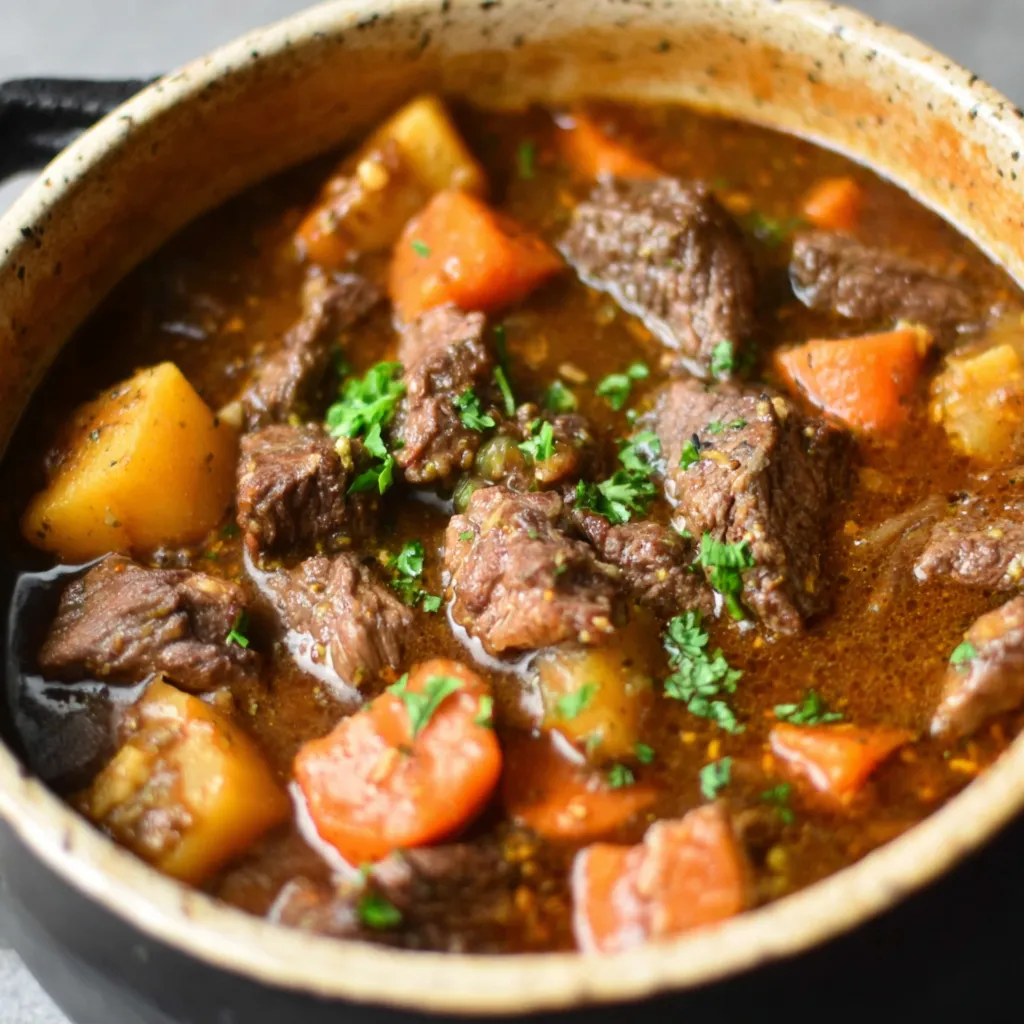
Witch’s Cauldron Beef Stew Ultimate
Ingredients
Equipment
Method
- Sear the Beef: Pat the beef cubes dry with paper towels and season generously with salt and pepper. Heat the olive oil in a large Dutch oven or heavy-bottomed pot over medium-high heat. Sear the beef in batches, being careful not to overcrowd the pot. Brown on all sides (about 2-3 minutes per side) and then remove from the pot and set aside.
- Sauté Aromatics: Add the chopped onion, carrots, and celery to the pot and cook until softened, about 5-7 minutes. Add the minced garlic and cook for another minute until fragrant.
- Build the Flavor: Stir in the tomato paste and cook for 1-2 minutes, allowing it to caramelize slightly. If using, pour in the red wine and scrape up any browned bits from the bottom of the pot.
- Combine and Simmer: Return the beef to the pot. Add the beef broth, bay leaves, thyme, and rosemary. Bring to a simmer, then reduce the heat to low, cover, and cook for at least 2 hours, or until the beef is very tender.
- Add Vegetables: Add the cubed potatoes and quartered mushrooms to the stew. Continue to simmer, covered, for another 30 minutes, or until the potatoes are tender.
- Finish and Serve: Stir in the frozen peas and cook for a final 5 minutes until heated through. Remove the bay leaves before serving. Garnish with fresh parsley. Serve hot.