
The Science Behind the Bowl: Engineering for Edibility
The key to a successful Spaghetti Garlic Bread Bowl lies in understanding the science of bread, moisture, and structural integrity. Bread, particularly the interior crumb, is essentially a sponge. It readily absorbs moisture. Introduce a wet spaghetti sauce, and you’re quickly on the path to sogginess. Therefore, we need to consider the following:- Crumb Structure: A denser, tighter crumb structure will absorb less moisture than an airy, open one. Think Italian loaf vs. a ciabatta.
- Fat Content: Fat repels water. Generously applying garlic butter to the interior of the bowl acts as a barrier, slowing down moisture absorption.
- Baking Time: Baking the bread bowl a second time, after hollowing it out and applying garlic butter, hardens the interior, creating a more robust barrier.
- Sauce Consistency: A thicker, less watery sauce will minimize the risk of sogginess. Simmering the sauce down to reduce its liquid content is crucial.
- Serving Time: This isn’t a dish to be made ahead of time. The longer the spaghetti sits in the bowl, the greater the chance of structural collapse.
The Definitive Spaghetti Garlic Bread Bowl Recipe
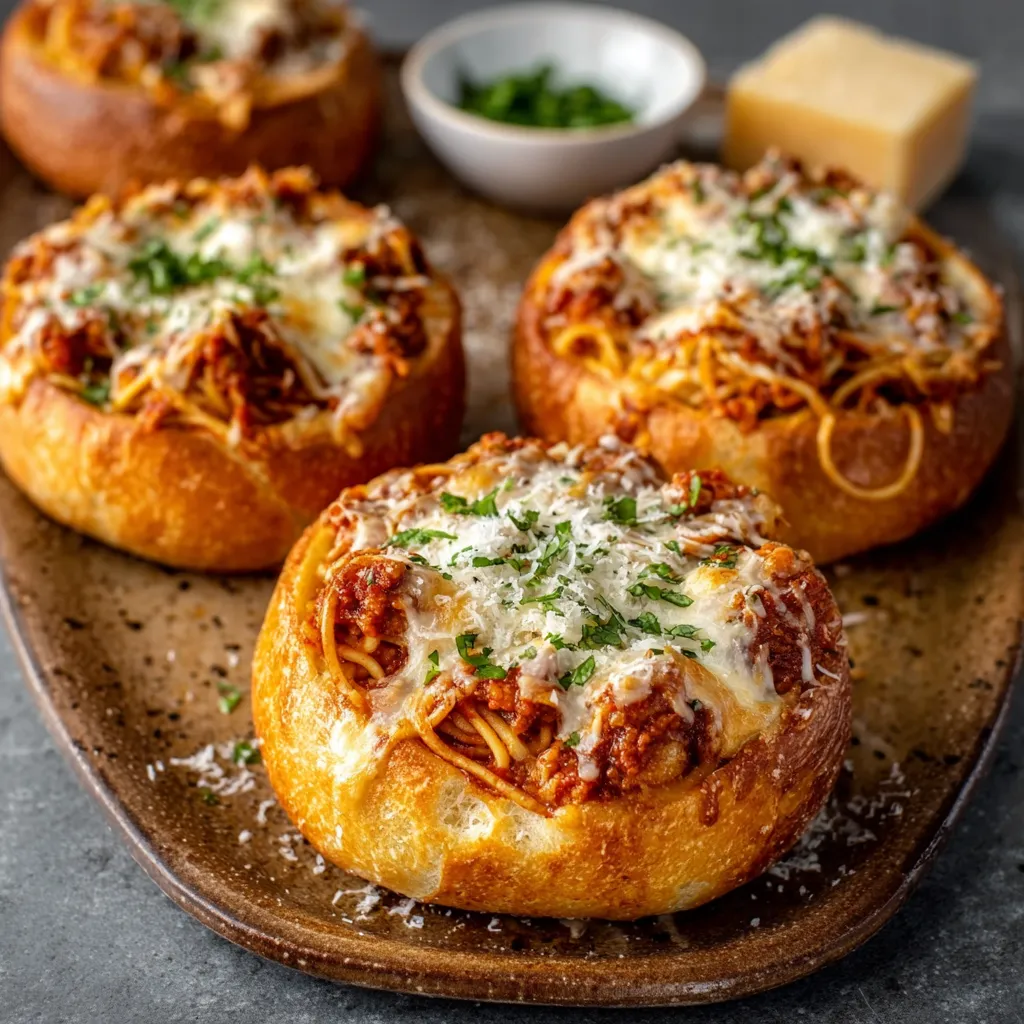 This recipe is the culmination of numerous experiments and fine-tuning. It’s designed to create a sturdy, flavorful bowl that can withstand the rigors of spaghetti and sauce.
Ingredients:
- 4 round loaves of Italian bread, approximately 6-8 inches in diameter
- 1 cup (2 sticks) unsalted butter, softened
- 8 cloves garlic, minced
- 1/4 cup fresh parsley, chopped
- 1/4 cup grated Parmesan cheese
- 1 teaspoon garlic powder
- 1/2 teaspoon salt
- 1/4 teaspoon black pepper
- Your favorite spaghetti sauce (recipe follows)
- 1 pound spaghetti
- Grated Parmesan cheese, for garnish
Spaghetti Sauce Ingredients:
- 1 tablespoon olive oil
- 1 pound ground beef or Italian sausage
- 1 onion, chopped
- 2 cloves garlic, minced
- 1 (28 ounce) can crushed tomatoes
- 1 (15 ounce) can tomato sauce
- 1 (6 ounce) can tomato paste
- 1 teaspoon dried oregano
- 1 teaspoon dried basil
- 1/2 teaspoon sugar
- Salt and pepper to taste
Instructions:
- Prepare the Garlic Butter: In a medium bowl, combine the softened butter, minced garlic, parsley, Parmesan cheese, garlic powder, salt, and pepper. Mix well until thoroughly combined.
- Prepare the Bread Bowls: Preheat oven to 350°F (175°C). Using a serrated knife, carefully cut a circle out of the top of each loaf of bread, leaving a 1-inch border. Remove the bread from the center, creating a bowl shape. Reserve the removed bread for dipping, if desired.
- Garlic Butter Application: Generously spread the garlic butter mixture inside each bread bowl, ensuring the bottom and sides are well coated.
- Bake the Bowls: Place the prepared bread bowls on a baking sheet and bake for 10-15 minutes, or until the garlic butter is melted and the inside of the bowls are lightly toasted. This step is crucial for creating a moisture barrier.
- Prepare the Spaghetti: Cook the spaghetti according to package directions until al dente. Drain well.
- Prepare the Spaghetti Sauce: While the pasta is cooking, heat the olive oil in a large saucepan over medium heat. Add the ground beef or Italian sausage and cook, breaking it up with a spoon, until browned. Drain off any excess grease. Add the chopped onion and minced garlic and cook until softened, about 5 minutes. Stir in the crushed tomatoes, tomato sauce, tomato paste, oregano, basil, sugar, salt, and pepper. Bring to a simmer, then reduce heat and cook for at least 30 minutes, or up to 1 hour, stirring occasionally, to allow the flavors to meld and the sauce to thicken.
- Combine Spaghetti and Sauce: Add the cooked spaghetti to the saucepan with the spaghetti sauce and toss to coat evenly.
- Assemble the Bowls: Carefully fill each baked garlic bread bowl with the spaghetti and sauce mixture.
- Garnish and Serve: Garnish with grated Parmesan cheese and serve immediately.
The Investigation: My Quest for the Perfect Bowl
The road to the perfect Spaghetti Garlic Bread Bowl was paved with soggy bottoms and structural collapses. My first few attempts were a disaster.The Initial Fiasco: Soggy City
Like many of you, I initially thought, “Just hollow out a loaf of bread and fill it with spaghetti!” My naiveté was quickly punished. The spaghetti sauce immediately soaked into the bread, transforming the bowl into a mushy, inedible mess. The taste was fine, but the texture was…unpleasant. It was like eating spaghetti in a bread-flavored swamp.The Butter Barrier Breakthrough
Then, I had an “Aha!” moment. Fat repels water! I remembered my grandmother’s trick for preventing pie crusts from getting soggy: brushing them with melted butter. I decided to slather the inside of the bread bowl with garlic butter before filling it with spaghetti. This was a significant improvement, but the bowl still succumbed to sogginess after a while. The garlic butter, while helpful, wasn’t enough on its own. The Chicken Alfredo Garlic Bread Bowls recipe gave me some good ideas, though.The Double-Bake Revelation
I needed to further fortify the bread bowl. I considered toasting it before applying the garlic butter, but I worried it would become too dry. Then it hit me: bake it *after* applying the garlic butter. This would not only melt the butter into every nook and cranny but also create a hardened, almost waterproof layer on the inside of the bowl. This proved to be a game-changer. The double-baked, garlic-buttered bowl held its shape and resisted sogginess far better than any previous attempt. It reminded me a bit of the prep I do when making Garlic Parmesan Chicken Pasta, but with bread instead of pasta.The Sauce Saga: Thicker is Better
Even with the improved bread bowl, I still experienced some minor sogginess issues, especially when using store-bought spaghetti sauce. I realized the problem wasn’t just the bread; it was also the sauce. Many commercial sauces are quite watery. I decided to make my own sauce and simmer it for a longer period to reduce its liquid content. A thicker sauce meant less moisture seeping into the bread. This, combined with all the other improvements, finally resulted in a structurally sound and delicious Spaghetti Garlic Bread Bowl. While I was experimenting, I thought about trying something like Chicken Garlic Parmesan Pasta inside the bowl, but stuck with traditional spaghetti.The Technique: Foolproof Spaghetti Garlic Bread Bowls
Here’s the definitive, step-by-step method for creating perfect Spaghetti Garlic Bread Bowls every time:- Choose the Right Bread: Select round loaves of Italian bread with a relatively dense crumb. Avoid airy breads like ciabatta.
- Make Garlic Butter with Generosity: Don’t skimp on the garlic butter. A generous layer is crucial for creating a moisture barrier.
- Double-Bake for Defense: Baking the bread bowl *after* applying the garlic butter is essential for hardening the interior and creating a robust barrier against sogginess.
- Thicken the Sauce: Simmer your spaghetti sauce for an extended period to reduce its liquid content. A thicker sauce minimizes the risk of sogginess.
- Serve Immediately: Don’t let the spaghetti sit in the bowl for too long. Serve immediately after assembling to prevent structural collapse. Think of how great this would be alongside some Creamy Garlic Pasta!
What makes this Spaghetti Garlic Bread Bowl recipe different from just putting spaghetti in bread?
The key is preventing the bread from becoming soggy. This recipe uses a denser bread, a generous layer of garlic butter baked into the bread, and a thicker spaghetti sauce to minimize moisture absorption.
Why is it important to bake the bread bowls twice?
The second bake, after applying the garlic butter, hardens the interior of the bread, creating a more robust, almost waterproof barrier against the moisture from the spaghetti sauce.
What kind of bread is best for making a Spaghetti Garlic Bread Bowl?
Round loaves of Italian bread with a relatively dense crumb are ideal. Avoid airy breads like ciabatta, as they absorb moisture more quickly.
Can I make this dish ahead of time?
No, it’s best to serve the Spaghetti Garlic Bread Bowls immediately after assembling them. Letting the spaghetti sit in the bowl for too long increases the risk of the bread becoming soggy and the structure collapsing.

Ultimate Spaghetti Garlic Bread Bowls
This recipe combines the comfort of spaghetti with the garlicky goodness of garlic bread, all served in an edible bowl. By carefully managing moisture and baking the bread bowl twice, this recipe delivers a structurally sound and delicious meal that’s perfect for a fun and satisfying dinner.
Ingredients
Equipment
Method
- Prepare the Garlic Butter: In a medium bowl, combine the softened butter, minced garlic, parsley, Parmesan cheese, garlic powder, salt, and pepper. Mix well until thoroughly combined.
- Prepare the Bread Bowls: Preheat oven to 350°F (175°C). Using a serrated knife, carefully cut a circle out of the top of each loaf of bread, leaving a 1-inch border. Remove the bread from the center, creating a bowl shape. Reserve the removed bread for dipping, if desired.
- Garlic Butter Application: Generously spread the garlic butter mixture inside each bread bowl, ensuring the bottom and sides are well coated.
- Bake the Bowls: Place the prepared bread bowls on a baking sheet and bake for 10-15 minutes, or until the garlic butter is melted and the inside of the bowls are lightly toasted. This step is crucial for creating a moisture barrier.
- Prepare the Spaghetti: Cook the spaghetti according to package directions until al dente. Drain well.
- Prepare the Spaghetti Sauce: While the pasta is cooking, heat the olive oil in a large saucepan over medium heat. Add the ground beef or Italian sausage and cook, breaking it up with a spoon, until browned. Drain off any excess grease. Add the chopped onion and minced garlic and cook until softened, about 5 minutes. Stir in the crushed tomatoes, tomato sauce, tomato paste, oregano, basil, sugar, salt, and pepper. Bring to a simmer, then reduce heat and cook for at least 30 minutes, or up to 1 hour, stirring occasionally, to allow the flavors to meld and the sauce to thicken.
- Combine Spaghetti and Sauce: Add the cooked spaghetti to the saucepan with the spaghetti sauce and toss to coat evenly.
- Assemble the Bowls: Carefully fill each baked garlic bread bowl with the spaghetti and sauce mixture.
- Garnish and Serve: Garnish with grated Parmesan cheese and serve immediately.
Notes
For best results, use a dense Italian bread loaf. Ensure the spaghetti sauce is thick to prevent the bread bowl from becoming soggy. Serve immediately after assembling. You can add other vegetables like bell peppers or mushrooms to the spaghetti sauce. For a vegetarian option, omit the meat and add more vegetables or use a plant-based meat substitute. Store leftover spaghetti separately from the bread bowls to prevent sogginess.