
Decoding Deliciousness: The Science Behind the Bowl
The beauty of a Mediterranean Greek Chicken Bowl lies in the synergy of its components. It’s not just about throwing ingredients together; it’s about understanding how they interact to create a harmonious flavor profile. Let’s break down the key elements:- The Marinade’s Magic: A good marinade isn’t just about flavor; it’s about tenderizing the chicken. Acids like lemon juice or vinegar denature proteins, leading to a more succulent result. The oil helps carry the flavors deep into the meat, and the herbs contribute aromatic compounds that elevate the entire dish. Think about the science behind the Greek Chicken Marinade – it’s a masterclass in flavor infusion and tenderization.
- The Grain Game: The base of your bowl – whether it’s rice, quinoa, or even cauliflower rice – provides the foundation and textural contrast. Choosing the right grain can significantly impact the overall experience. Consider the nutty flavor of quinoa versus the subtle sweetness of rice. Each brings something unique to the table.
- The Veggie Variety: Fresh vegetables are the stars of the show, providing vitamins, minerals, and vibrant colors. Roasting vegetables like bell peppers and zucchini intensifies their sweetness and adds a smoky char, while raw cucumbers and tomatoes offer a refreshing crunch.
- The Sauce Supreme: Tzatziki sauce is the quintessential Greek condiment. Its cool, creamy texture and tangy flavor perfectly complement the savory chicken and vegetables. The combination of yogurt, cucumber, garlic, and dill creates a flavor explosion that ties everything together.
- The Finishing Flourish: Don’t underestimate the power of fresh herbs, crumbled feta cheese, and a drizzle of olive oil. These finishing touches add layers of complexity and visual appeal. Feta provides a salty, tangy punch, while fresh herbs contribute aromatic freshness.
The Ultimate Mediterranean Greek Chicken Bowl Recipe
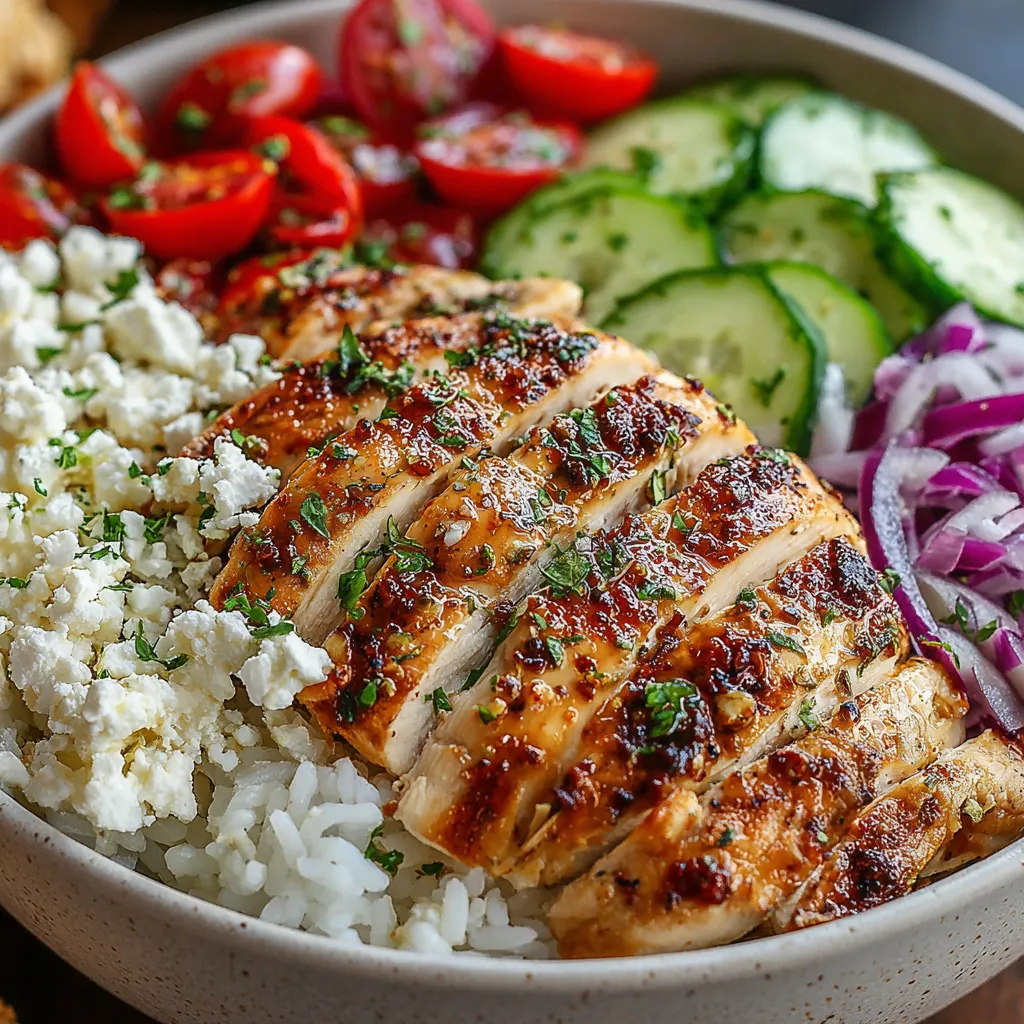 Here’s a detailed recipe to guide you towards creating your own perfect bowl:
Ingredients:
- For the Chicken:
- 1.5 lbs boneless, skinless chicken breasts, cut into 1-inch cubes
- 1/4 cup olive oil
- 1/4 cup lemon juice
- 2 cloves garlic, minced
- 1 tbsp dried oregano
- 1 tsp dried thyme
- 1/2 tsp salt
- 1/4 tsp black pepper
- For the Bowl:
- 2 cups cooked rice, quinoa, or cauliflower rice
- 1 red bell pepper, chopped
- 1 yellow bell pepper, chopped
- 1 zucchini, chopped
- 1 cucumber, diced
- 1 cup cherry tomatoes, halved
- 1/2 red onion, thinly sliced
- 1/2 cup Kalamata olives, pitted and halved
- 1/2 cup crumbled feta cheese
- 1/4 cup fresh parsley, chopped
- 1/4 cup Tzatziki sauce (store-bought or homemade)
- Olive oil for drizzling
Instructions:
- Marinate the Chicken: In a medium bowl, whisk together olive oil, lemon juice, minced garlic, oregano, thyme, salt, and pepper. Add the chicken cubes and toss to coat evenly. Cover and refrigerate for at least 30 minutes, or up to 4 hours.
- Prepare the Vegetables: Preheat oven to 400°F (200°C). On a baking sheet, toss the chopped bell peppers and zucchini with olive oil, salt, and pepper. Roast for 20-25 minutes, or until tender and slightly charred.
- Cook the Chicken: Heat a large skillet over medium-high heat. Add the marinated chicken and cook for 6-8 minutes, or until cooked through and lightly browned.
- Assemble the Bowls: Divide the cooked rice, quinoa, or cauliflower rice among bowls. Top with roasted bell peppers and zucchini, cooked chicken, diced cucumber, cherry tomatoes, red onion, and Kalamata olives.
- Garnish and Serve: Sprinkle with crumbled feta cheese and fresh parsley. Drizzle with olive oil and top with Tzatziki sauce. Serve immediately.
My Culinary Crusade: The Mediterranean Greek Chicken Bowl Investigation
My journey to the perfect Mediterranean Greek Chicken Bowl was paved with both triumphs and tribulations. Like many of you, I initially thought it was just a matter of tossing some ingredients together. My first few attempts were a disaster, resulting in bland chicken, soggy vegetables, and an overall lack of cohesion. But I refused to give up. I was determined to unlock the secrets of this seemingly simple dish.The Marinade Mishap
Initially, I underestimated the importance of the marinade. I would throw the chicken in a quick lemon juice bath, hoping for the best. The result? Dry, flavorless chicken. Then, I had an “Aha!” moment. I realized that the marinade needed to be more than just a fleeting dip. It needed time to penetrate the chicken and infuse it with flavor. I experimented with different combinations of herbs, spices, and acids, eventually landing on the winning formula of olive oil, lemon juice, garlic, oregano, and thyme. Suddenly, the chicken transformed from bland to bursting with Mediterranean goodness. This is where I really began to see the value in understanding the principals used to create the Mediterranean Chicken Rice Bowl.The Veggie Voyage
Next, I tackled the vegetables. My initial attempts involved simply tossing raw veggies into the bowl. While they provided a nice crunch, they lacked depth of flavor. That’s when I decided to experiment with roasting. Roasting the bell peppers and zucchini brought out their natural sweetness and added a smoky char that elevated the entire dish. I also learned the importance of balancing roasted and raw vegetables. The combination of warm, roasted peppers with cool, crisp cucumber created a delightful textural contrast. I even played around with incorporating elements from the Mediterranean Keto Chicken Skillet to see if the flavors could be replicated.The Sauce Saga
The Tzatziki sauce was another area that required careful attention. Store-bought versions often tasted bland and artificial. So, I decided to make my own. My first attempt resulted in a watery, flavorless mess. But I persisted. I learned the importance of using thick Greek yogurt and straining the cucumber to remove excess moisture. I also discovered that a generous amount of garlic and fresh dill was essential for achieving the perfect tangy, refreshing flavor.The Grain Game Gamble
Choosing the right grain was also crucial. I started with white rice, which was fine, but lacked nutritional value and flavor. Then, I tried quinoa, which added a nutty flavor and a boost of protein. I even experimented with cauliflower rice for a lower-carb option. Ultimately, I found that the best grain depended on my mood and dietary preferences.The Foolproof Formula: Mastering the Mediterranean Greek Chicken Bowl Technique
After countless experiments and taste tests, I’ve distilled the process down to a foolproof technique. Follow these steps for guaranteed success:- Marinate the Chicken Like a Pro: Don’t skimp on the marinade. Give the chicken at least 30 minutes (or up to 4 hours) to soak up all the delicious flavors.
- Roast Your Veggies Right: Preheat your oven to 400°F (200°C) and roast the bell peppers and zucchini until they’re tender and slightly charred.
- Master the Tzatziki: Make your own Tzatziki sauce using thick Greek yogurt, strained cucumber, garlic, dill, and a touch of lemon juice.
- Balance Textures: Combine roasted and raw vegetables for a delightful textural contrast.
- Don’t Forget the Finishing Touches: Sprinkle with crumbled feta cheese, fresh herbs, and a drizzle of olive oil for added flavor and visual appeal.
Why is marinating the chicken important for Mediterranean Greek Chicken Bowls?
Marinating the chicken tenderizes it using acids like lemon juice, which denature proteins. The oil in the marinade carries flavors deep into the meat, and herbs add aromatic compounds, resulting in a more flavorful and succulent chicken.
What are some recommended vegetables to use in a Mediterranean Greek Chicken Bowl and why?
The article recommends a variety of fresh vegetables such as bell peppers, zucchini, cucumbers, and tomatoes. Roasting the bell peppers and zucchini intensifies their sweetness and adds a smoky char, while raw cucumbers and tomatoes provide a refreshing crunch, creating a balance of flavors and textures.
What makes Tzatziki sauce a key component of a Mediterranean Greek Chicken Bowl?
Tzatziki sauce provides a cool, creamy texture and tangy flavor that complements the savory chicken and vegetables. The combination of yogurt, cucumber, garlic, and dill creates a flavor explosion that ties all the elements of the bowl together.
What can I use as a base for my Mediterranean Greek Chicken Bowl?
The recipe suggests using cooked rice, quinoa, or cauliflower rice as the base for your bowl. Quinoa adds a nutty flavor, rice offers a subtle sweetness, and cauliflower rice provides a lower-carb option.
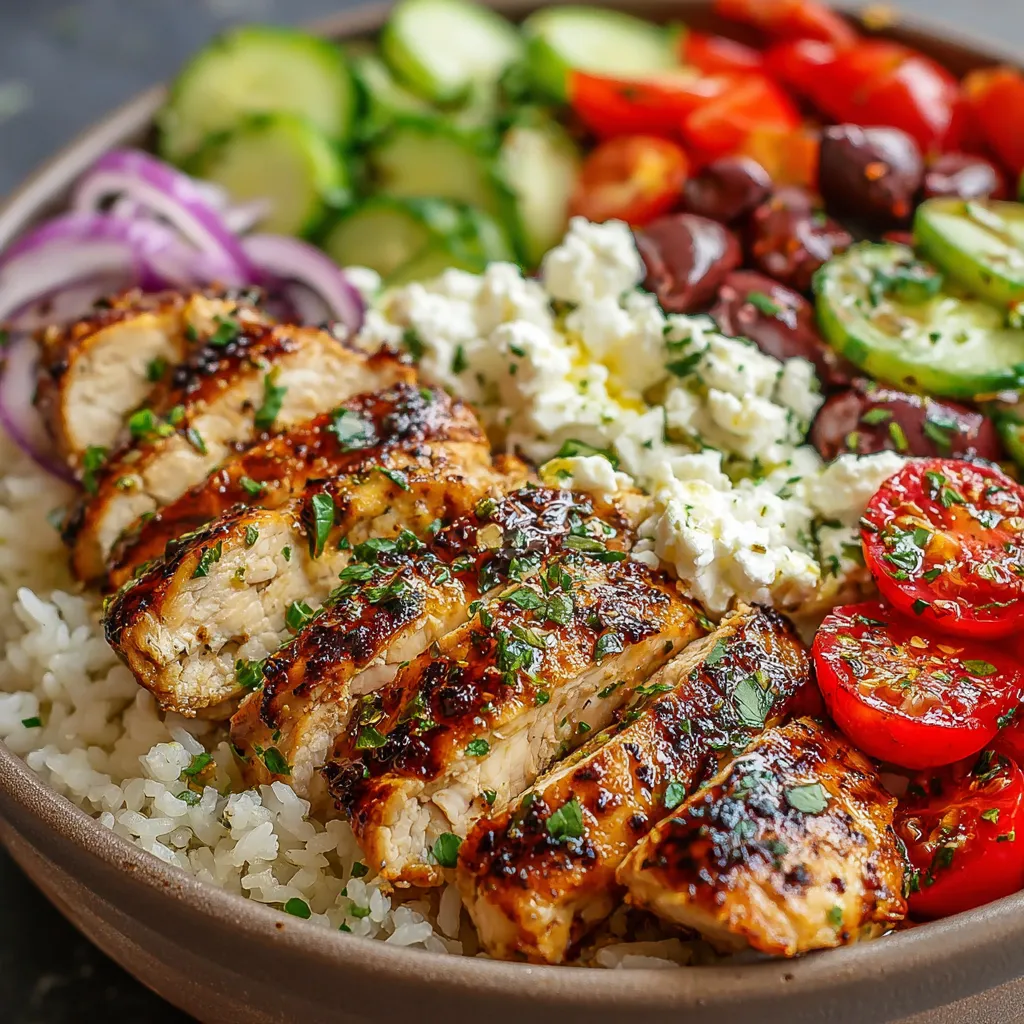
Easy Mediterranean Greek Chicken Bowls
Ingredients
Equipment
Method
- In a medium bowl, whisk together olive oil, lemon juice, minced garlic, oregano, thyme, salt, and pepper.
- Add the chicken cubes and toss to coat evenly. Cover and refrigerate for at least 30 minutes, or up to 4 hours.
- Preheat oven to 400°F (200°C).
- On a baking sheet, toss the chopped bell peppers and zucchini with olive oil, salt, and pepper.
- Roast for 20-25 minutes, or until tender and slightly charred.
- Heat a large skillet over medium-high heat.
- Add the marinated chicken and cook for 6-8 minutes, or until cooked through and lightly browned.
- Divide the cooked rice, quinoa, or cauliflower rice among bowls.
- Top with roasted bell peppers and zucchini, cooked chicken, diced cucumber, cherry tomatoes, red onion, and Kalamata olives.
- Sprinkle with crumbled feta cheese and fresh parsley.
- Drizzle with olive oil and top with Tzatziki sauce.
- Serve immediately.