
Decoding the Cream: A Scientific Perspective
The allure of creamy pasta dishes like this lies in their luxurious texture and rich flavor. But achieving that perfect creaminess isn’t just about dumping cream into a pan; it’s about understanding how dairy proteins, starches, and fats interact.- Dairy Protein Denaturation: High heat can cause dairy proteins to denature and coagulate, leading to a grainy or curdled sauce. That’s why a low and slow approach is often best.
- Starch Gelatinization: The pasta water, rich in starch, is a crucial ingredient. This starch gelatinizes when heated, thickening the sauce naturally and creating a luscious, emulsified texture. Don’t skip the pasta water!
- Fat Emulsification: Fat, whether from the cream, butter, or kielbasa itself, plays a key role in carrying flavor and creating a smooth mouthfeel. Emulsifying the fat properly prevents a greasy or separated sauce.
- Acidic Intrusion: Acidic ingredients like tomatoes or wine can cause dairy to curdle. To counter this, introduce acidic elements slowly and temper them with fat and starch.
The Creamy Kielbasa Pasta Recipe
 This recipe is the culmination of countless experiments, failures, and finally, creamy, dreamy success.
Ingredients:
- 1 pound kielbasa sausage, sliced
- 1 tablespoon olive oil
- 1 medium onion, chopped
- 2 cloves garlic, minced
- 1/2 cup dry white wine (optional)
- 1/2 cup chicken broth
- 1 cup heavy cream
- 1/2 cup grated Parmesan cheese, plus more for serving
- 1/4 cup chopped fresh parsley
- 1 pound pasta (penne, rigatoni, or your favorite shape)
- Salt and freshly ground black pepper to taste
- Red pepper flakes (optional)
Instructions:
- Cook the Pasta: Bring a large pot of salted water to a boil. Add the pasta and cook according to package directions until al dente. Reserve about 1 cup of pasta water before draining.
- Sauté the Kielbasa: While the pasta is cooking, heat the olive oil in a large skillet over medium heat. Add the kielbasa and cook until browned and slightly crispy, about 5-7 minutes. Remove the kielbasa from the skillet and set aside.
- Sauté Aromatics: Add the chopped onion to the skillet and cook until softened, about 5 minutes. Add the minced garlic and cook for another minute until fragrant.
- Deglaze the Pan: If using white wine, pour it into the skillet and scrape up any browned bits from the bottom of the pan. Let the wine reduce slightly, about 2-3 minutes.
- Add Broth and Cream: Pour in the chicken broth and bring to a simmer. Stir in the heavy cream and Parmesan cheese. Reduce the heat to low and let the sauce thicken slightly, about 5 minutes, stirring occasionally.
- Combine: Add the cooked kielbasa back to the skillet. Toss in the cooked pasta and stir to coat evenly with the sauce. Add some of the reserved pasta water, a little at a time, until the sauce reaches your desired consistency.
- Season and Serve: Season with salt, pepper, and red pepper flakes (if using). Stir in the chopped parsley. Serve immediately, garnished with extra Parmesan cheese.
My Creamy Kielbasa Crusade: From Curdles to Culinary Triumph
My journey to creamy kielbasa pasta perfection was not a straight line. Like many of you, I initially thought it was as simple as throwing everything into a pot and hoping for the best. My first few attempts were a disaster.The Great Curdle Catastrophe
The first time I tried making this, I used a cheap wine I had open, cranked the heat way up to save time, and added the cream directly to the hot pan. The result? A grainy, curdled mess that looked more like cottage cheese than a luscious sauce. Lesson learned: high heat and acidic ingredients are the enemies of smooth cream sauces. I wondered if I should pivot to a Honey Garlic Sausage Sweet Potatoes dish instead.The Starch Savior
Then, I had an “Aha!” moment. I remembered reading about the importance of pasta water in Italian cooking. I started reserving some of the starchy water and adding it to the sauce. The difference was remarkable! The sauce thickened beautifully and emulsified perfectly. It was still missing something, though.The Parmesan Power-Up
The flavor was good, but it lacked depth. I experimented with different cheeses and found that freshly grated Parmesan cheese added a salty, nutty richness that elevated the dish to a whole new level. I also realized that adding the cheese *before* the pasta helped it melt into the sauce more evenly. It reminded me of the flavors in Garlic Parmesan Tortellini With Sausage And Broccoli.The Kielbasa Conundrum
Finally, I experimented with different ways to cook the kielbasa. Simply boiling it didn’t impart enough flavor. I tried pan-frying it to get it nice and crispy, and that made all the difference. The browned kielbasa added a smoky, savory element that complemented the creamy sauce perfectly. This brought the dish to the same level of deliciousness as Creamy Sausage Rigatoni.The Foolproof Formula: Mastering the Creamy Kielbasa Technique
After much trial and error, I’ve distilled the key techniques for achieving creamy kielbasa pasta perfection:- Don’t Rush the Aromatics: Sauté the onions and garlic until they are softened and fragrant. This builds a flavorful base for the sauce.
- Deglaze with Wine (Optional, But Recommended): A splash of dry white wine adds depth and complexity to the sauce. Be sure to scrape up any browned bits from the bottom of the pan for extra flavor.
- Low and Slow is the Way to Go: Simmer the sauce over low heat to prevent the cream from curdling.
- Reserve the Pasta Water: This starchy liquid is your secret weapon for creating a creamy, emulsified sauce.
- Add Parmesan Before the Pasta: This allows the cheese to melt into the sauce more evenly.
- Don’t Overcook the Pasta: Cook the pasta al dente so it doesn’t become mushy in the sauce.
- Season Generously: Salt and pepper are essential for bringing out the flavors of the dish. Don’t be afraid to add a pinch of red pepper flakes for a little heat, or like the Cajun Steak Tips In Creamy Rigatoni Parmesan Bake, add cajun seasoning.
Why is it important to reserve pasta water when making creamy kielbasa pasta?
The pasta water is rich in starch, which gelatinizes when heated. This helps thicken the sauce naturally and creates a luscious, emulsified texture, preventing it from being watery.
What can cause the cream sauce to curdle, and how can I prevent it?
High heat and acidic ingredients can cause the cream to curdle. To prevent this, simmer the sauce over low heat and introduce acidic elements like wine slowly, tempering them with fat and starch.
Why does the recipe suggest adding Parmesan cheese before the pasta?
Adding the Parmesan cheese before the pasta allows the cheese to melt into the sauce more evenly, creating a smoother and more flavorful base.
How does pan-frying the kielbasa improve the dish?
Pan-frying the kielbasa makes it browned and slightly crispy, adding a smoky, savory element that complements the creamy sauce perfectly, imparting more flavor than simply boiling it.
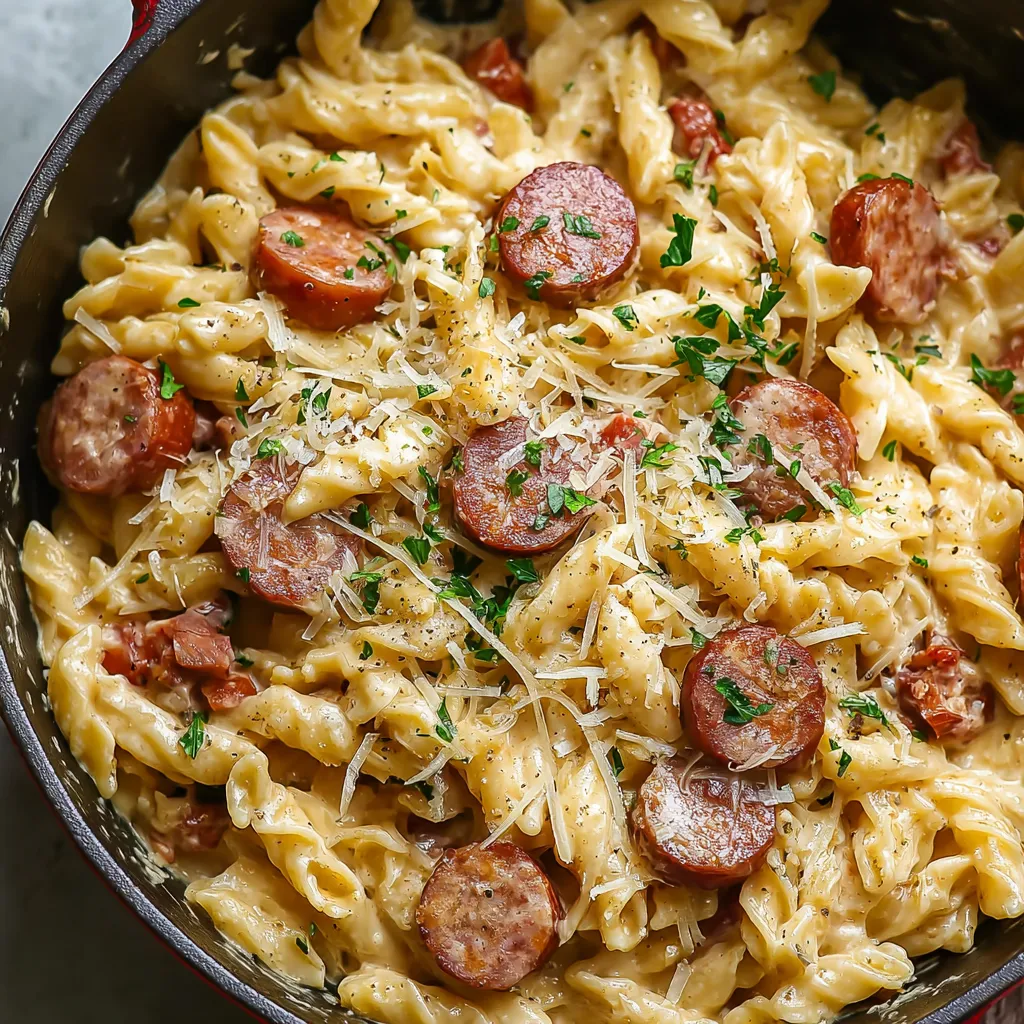
Creamy Kielbasa Pasta
This creamy kielbasa pasta recipe is a simple yet flavorful weeknight meal. It combines savory kielbasa sausage with a rich and creamy Parmesan sauce, tossed with your favorite pasta shape for a satisfying and comforting dish.
Ingredients
Equipment
Method
- Bring a large pot of salted water to a boil. Add the pasta and cook according to package directions until al dente. Reserve about 1 cup of pasta water before draining.
- While the pasta is cooking, heat the olive oil in a large skillet over medium heat. Add the kielbasa and cook until browned and slightly crispy, about 5-7 minutes. Remove the kielbasa from the skillet and set aside.
- Add the chopped onion to the skillet and cook until softened, about 5 minutes. Add the minced garlic and cook for another minute until fragrant.
- If using white wine, pour it into the skillet and scrape up any browned bits from the bottom of the pan. Let the wine reduce slightly, about 2-3 minutes.
- Pour in the chicken broth and bring to a simmer. Stir in the heavy cream and Parmesan cheese. Reduce the heat to low and let the sauce thicken slightly, about 5 minutes, stirring occasionally.
- Add the cooked kielbasa back to the skillet. Toss in the cooked pasta and stir to coat evenly with the sauce. Add some of the reserved pasta water, a little at a time, until the sauce reaches your desired consistency.
- Season with salt, pepper, and red pepper flakes (if using). Stir in the chopped parsley. Serve immediately, garnished with extra Parmesan cheese.
Notes
For a richer flavor, use full-fat heavy cream. To prevent the sauce from curdling, simmer it over low heat and avoid adding acidic ingredients too quickly. Leftovers can be stored in an airtight container in the refrigerator for up to 3 days. Reheat gently on the stovetop, adding a splash of milk or cream if needed to loosen the sauce. You can substitute the kielbasa with other types of sausage, such as Italian sausage or chorizo. Add vegetables like bell peppers or mushrooms for a heartier meal. Consider using a combination of Parmesan and Romano cheese for a more complex flavor.