
The Caramelized Core: Unveiling the Science of Flavor
The key to French Onion Pasta, and indeed, to the soup itself, lies in the Maillard reaction and caramelization. These two processes are often confused, but they’re distinct chemical reactions that contribute to the signature flavor and color. Caramelization is the browning of sugars, requiring high heat and time to break down complex carbohydrates into simpler, sweeter, and more flavorful compounds. The Maillard reaction, on the other hand, is a reaction between amino acids (from proteins) and reducing sugars, also requiring heat. This reaction is responsible for the savory, umami notes we love. In French onion soup (or pasta!), we’re primarily relying on caramelization to develop the deep, sweet, and nutty flavors from the onions. The prolonged cooking time is essential to break down the onion’s complex sugars. The addition of balsamic vinegar, and even a touch of sugar, can accelerate and enhance this process. Moreover, deglazing the pan with wine, like dry sherry or white wine, lifts up the browned bits (fond) from the bottom, adding depth and complexity to the sauce. Finally, the cheese! Gruyere is the traditional choice, known for its nutty and slightly salty flavor, but other cheeses like Swiss or even provolone can be used as well. The cheese provides a creamy, rich element that ties all the flavors together.The Recipe: French Onion Pasta Perfection
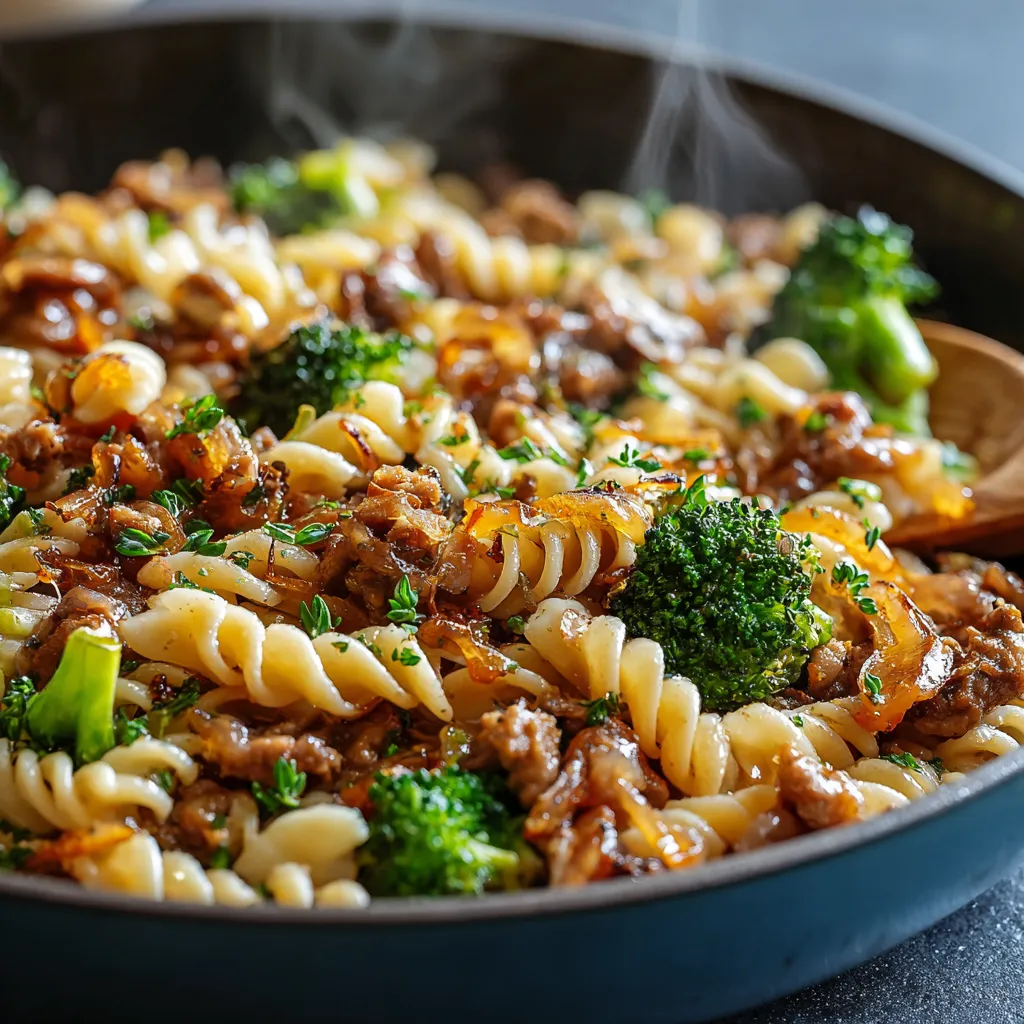 Here’s the recipe I’ve honed through multiple trials, focusing on maximizing flavor and ease of execution:
Ingredients:
- 1 tablespoon olive oil
- 2 tablespoons butter
- 3 large yellow onions, thinly sliced
- 1 teaspoon salt
- 1/2 teaspoon black pepper
- 1/4 teaspoon sugar
- 2 tablespoons balsamic vinegar
- 1/2 cup dry sherry or white wine
- 4 cups beef broth
- 1 teaspoon dried thyme
- 1 bay leaf
- 1 pound pasta (such as penne, rigatoni, or cavatappi)
- 8 ounces Gruyere cheese, shredded
- Fresh parsley, chopped (for garnish)
Instructions:
- In a large Dutch oven or pot, heat olive oil and butter over medium heat. Add onions, salt, and pepper. Cook, stirring occasionally, until onions are softened and translucent, about 10 minutes.
- Reduce heat to medium-low and continue cooking, stirring frequently, until onions are deeply caramelized, about 45-60 minutes. The onions should be a rich brown color and very soft.
- Add sugar and balsamic vinegar to the onions. Cook for another 2-3 minutes, stirring constantly.
- Pour in dry sherry or white wine, scraping up any browned bits from the bottom of the pot. Let the wine reduce slightly, about 2-3 minutes.
- Add beef broth, thyme, and bay leaf. Bring to a simmer and cook for 15-20 minutes to allow the flavors to meld. Remove the bay leaf.
- While the sauce is simmering, cook pasta according to package directions until al dente. Reserve about 1 cup of pasta water before draining.
- Add the cooked pasta to the pot with the French onion sauce. Toss to combine. If the sauce is too thick, add some of the reserved pasta water until it reaches your desired consistency.
- Stir in half of the Gruyere cheese until melted.
- Transfer pasta to a serving dish or individual bowls. Top with remaining Gruyere cheese.
- Broil for 2-3 minutes, or until cheese is melted and bubbly (optional).
- Garnish with fresh parsley and serve immediately.
The Caramelization Chronicles: A Culinary Investigation
My journey to French Onion Pasta perfection was not without its bumps. My first few attempts were a disaster! Like many of you, I initially thought I could rush the onion caramelization process. I cranked up the heat, hoping to speed things up, and ended up with burnt, bitter onions. *Yuck!* The sauce was acrid and completely unpalatable. That’s when I realized the low and slow method was non-negotiable.The Great Onion Debacle
The first hurdle was indeed the onions. I experimented with different types – yellow, white, red – and found that yellow onions offered the best balance of sweetness and flavor for this dish. I also tried various slicing techniques. Thick slices took forever to caramelize, while finely diced onions turned to mush. Thinly sliced onions, about 1/8 inch thick, proved to be the sweet spot.Broth Brouhaha
Then came the broth. I tried using chicken broth, thinking it would be a lighter alternative, but it lacked the depth and richness needed to truly capture the essence of French onion soup. Vegetable broth was even worse – too bland. Beef broth was the clear winner. I even experimented with homemade beef stock versus store-bought, and while homemade was undeniably superior, a good quality store-bought beef broth worked perfectly well for a weeknight meal.The Cheese Conundrum
The cheese was another area of exploration. Gruyere is the classic choice, but it can be expensive and sometimes hard to find. I tried using Swiss cheese, which was a decent substitute, offering a similar nutty flavor. Provolone also worked in a pinch, but it lacked the complexity of Gruyere. Ultimately, I decided that Gruyere was worth the splurge, as it truly elevated the dish. Then, I had an “Aha!” moment when I decided to broil the pasta after topping it with cheese. That bubbly, golden-brown crust of melted Gruyere took the dish from good to extraordinary. This pairs great with French Onion Beef Casserole and will remind you of classic French flavors.Wine Woes and Wins
The choice of wine was also crucial. I initially tried using a sweet Marsala wine, but it overpowered the other flavors. A dry sherry or a crisp white wine, like Sauvignon Blanc, proved to be much better choices, adding acidity and complexity without being too sweet. The wine helps to deglaze the pan, lifting up all those delicious browned bits from the bottom and incorporating them into the sauce. This is a similar process to what I use when making French Onion Pot Roast.The Foolproof Formula: Mastering the Method
After countless iterations, I’ve distilled the process down to a few key steps:- Patience is paramount: Caramelize the onions low and slow. Rushing this process will result in bitter, burnt onions.
- Use the right broth: Opt for beef broth for the most authentic flavor.
- Don’t skimp on the Gruyere: It’s worth the splurge for its nutty, complex flavor.
- Deglaze with wine: This step adds depth and complexity to the sauce.
- Broil for bubbly perfection: A quick broil melts the cheese and creates a beautiful golden-brown crust.
What makes the caramelization process so important in French Onion Pasta?
Caramelization is crucial because it breaks down the complex sugars in the onions, creating the deep, sweet, and nutty flavors that are characteristic of French onion soup and pasta. It also contributes to the rich brown color of the dish.
What type of broth is recommended for French Onion Pasta and why?
Beef broth is highly recommended because it provides the depth and richness necessary to capture the essence of French onion soup. Chicken and vegetable broths lack the same flavor profile.
Is Gruyere cheese absolutely essential for this recipe, or are there acceptable substitutes?
While Gruyere is the classic and recommended choice for its nutty and slightly salty flavor, Swiss or provolone cheese can be used as substitutes, though they may not offer the same level of complexity.
Why is it important to cook the onions on low heat for a long time?
Cooking the onions low and slow is essential for proper caramelization. Rushing the process by increasing the heat will result in burnt and bitter onions, ruining the flavor of the dish.
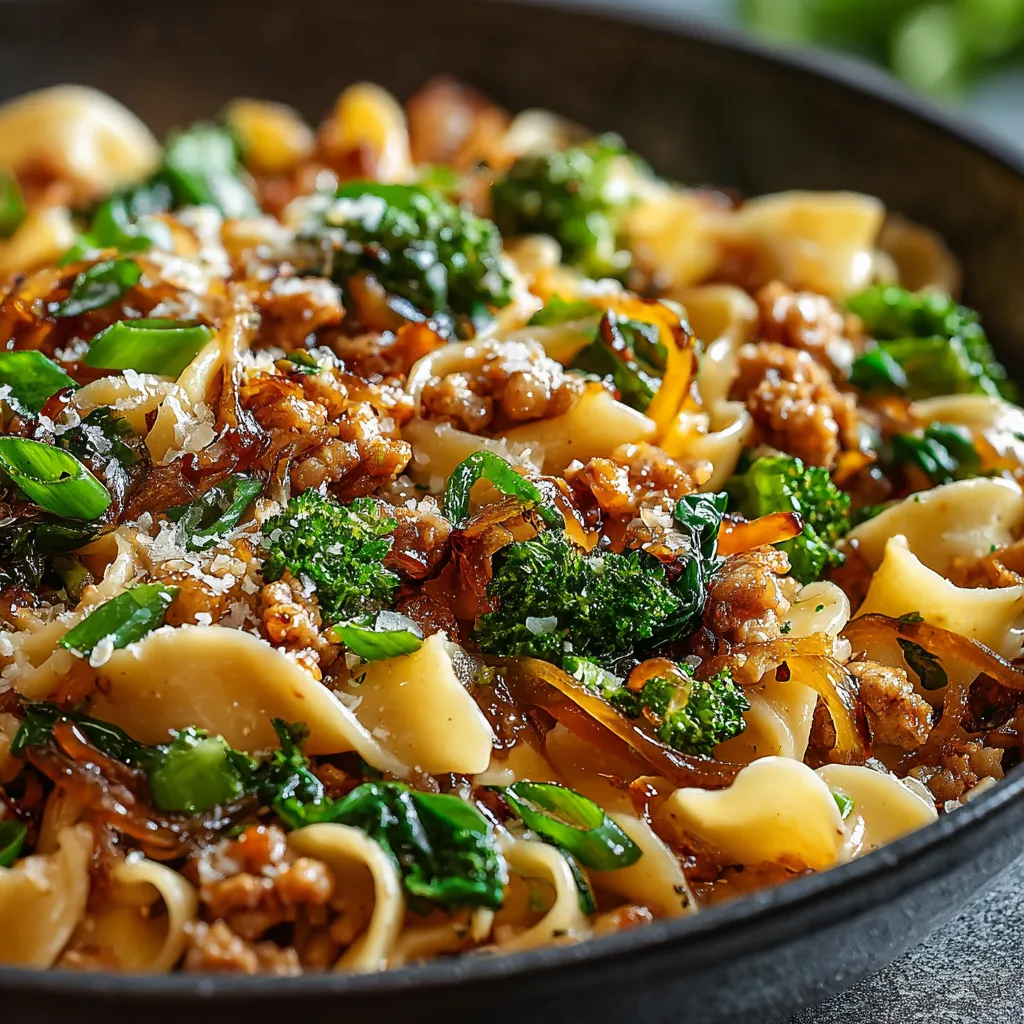
Easy French Onion Pasta
Ingredients
Equipment
Method
- In a large Dutch oven or pot, heat olive oil and butter over medium heat. Add onions, salt, and pepper. Cook, stirring occasionally, until onions are softened and translucent, about 10 minutes.
- Reduce heat to medium-low and continue cooking, stirring frequently, until onions are deeply caramelized, about 45-60 minutes. The onions should be a rich brown color and very soft.
- Add sugar and balsamic vinegar to the onions. Cook for another 2-3 minutes, stirring constantly.
- Pour in dry sherry or white wine, scraping up any browned bits from the bottom of the pot. Let the wine reduce slightly, about 2-3 minutes.
- Add beef broth, thyme, and bay leaf. Bring to a simmer and cook for 15-20 minutes to allow the flavors to meld. Remove the bay leaf.
- While the sauce is simmering, cook pasta according to package directions until al dente. Reserve about 1 cup of pasta water before draining.
- Add the cooked pasta to the pot with the French onion sauce. Toss to combine. If the sauce is too thick, add some of the reserved pasta water until it reaches your desired consistency.
- Stir in half of the Gruyere cheese until melted.
- Transfer pasta to a serving dish or individual bowls. Top with remaining Gruyere cheese.
- Broil for 2-3 minutes, or until cheese is melted and bubbly (optional).
- Garnish with fresh parsley and serve immediately.