
Unlocking the Secrets: The Science Behind Split Roasting
The key to a perfectly roasted chicken, one that boasts both succulent breast meat and fully cooked (but not dried out) legs, lies in understanding the science of heat transfer and protein denaturation. Chicken breasts, being leaner, cook faster and dry out at a lower internal temperature (around 160°F/71°C). Legs, on the other hand, are denser and contain more connective tissue, requiring a higher internal temperature (around 175°F/79°C) to become tender. Traditional roasting methods often fail to account for these differing needs, resulting in the aforementioned issues. Split roasting, also known as spatchcocking or butterflying, addresses this problem by creating a more even cooking surface. Removing the backbone and flattening the chicken allows the legs and thighs to lie on the same plane as the breast, promoting more uniform heat exposure. Additionally, the increased surface area facilitates faster cooking, which minimizes moisture loss. The lemon and rosemary not only infuse the chicken with incredible flavor but also contribute to moisture retention. The acidity of the lemon helps to tenderize the meat, while the rosemary’s aromatic oils create a flavorful barrier against drying. This is similar in theory to how you might use other flavor combinations, such as in Rosemary Apple Cider Chicken, but it applies to roasting as well.The Ultimate Rosemary Lemon Split Roast Chicken Recipe
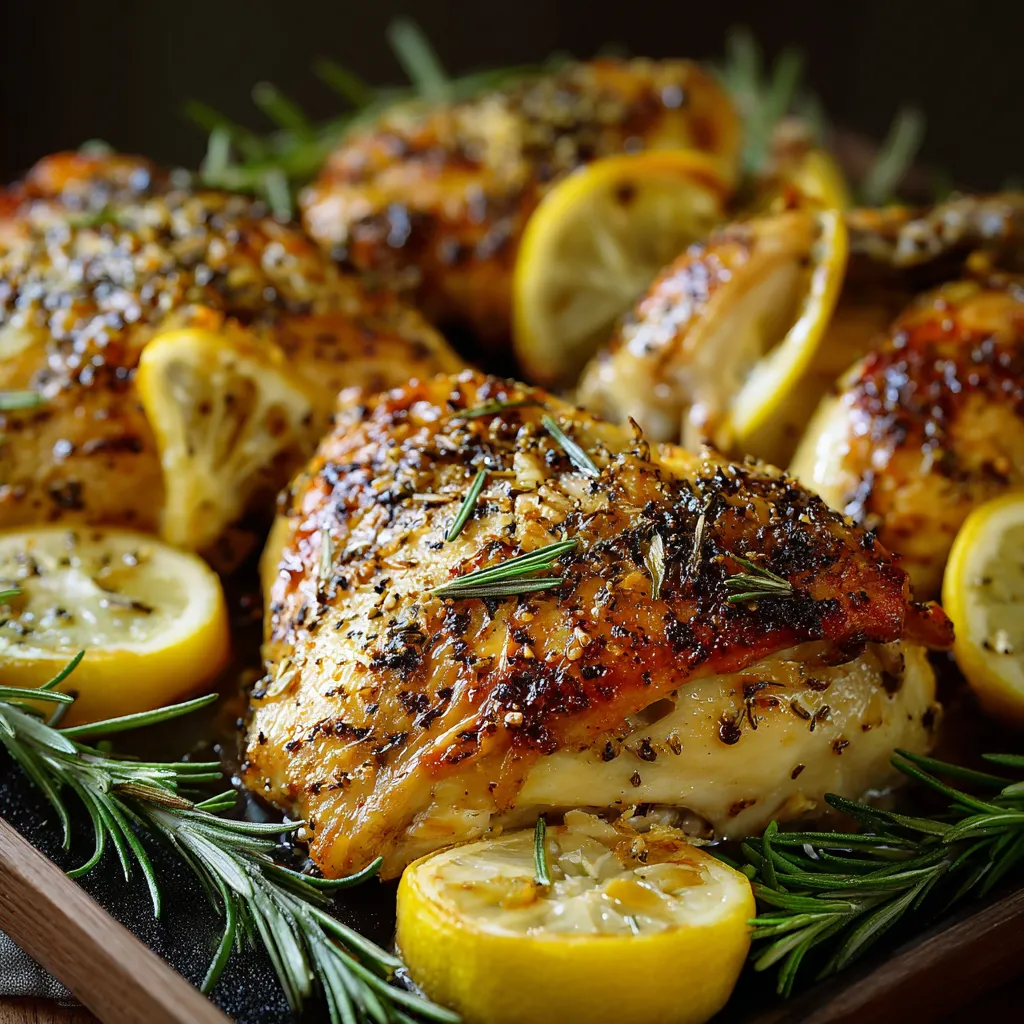 This recipe has been refined over countless iterations to deliver consistently perfect results. It’s not just about the ingredients; it’s about the technique.
Ingredients:
- 1 whole chicken (about 3-4 pounds)
- 2 lemons, one halved, one sliced
- 4 sprigs fresh rosemary
- 4 cloves garlic, minced
- 2 tablespoons olive oil
- 1 teaspoon salt
- 1/2 teaspoon black pepper
- 1/2 teaspoon paprika
Equipment:
- Kitchen shears or a sharp knife
- Cutting board
- Roasting pan with a rack
- Meat thermometer
Instructions:
- Prepare the Chicken: Pat the chicken dry with paper towels. This step is crucial for achieving crispy skin.
- Spatchcock the Chicken: Place the chicken breast-side down on the cutting board. Using kitchen shears or a sharp knife, cut along both sides of the backbone to remove it. Discard or save the backbone for stock.
- Flatten the Chicken: Flip the chicken over and press firmly on the breastbone to flatten it. You should hear a slight crack.
- Make the Rosemary Lemon Marinade: In a small bowl, combine the minced garlic, olive oil, salt, pepper, and paprika.
- Season the Chicken: Rub the rosemary lemon marinade all over the chicken, making sure to get under the skin of the breast and thighs. This ensures maximum flavor penetration.
- Infuse with Lemon and Rosemary: Place the lemon halves and rosemary sprigs under the skin of the chicken breast. Arrange the lemon slices on top of the chicken.
- Roast the Chicken: Place the chicken on the rack in the roasting pan.
- Roasting Temperatures: Preheat oven to 425°F (220°C). Roast for 45-55 minutes, or until a meat thermometer inserted into the thickest part of the thigh registers 175°F (79°C) and the breast registers 160°F (71°C).
- Rest the Chicken: Remove the chicken from the oven and let it rest for 10-15 minutes before carving. This allows the juices to redistribute, resulting in a more tender and flavorful bird.
- Carve and Serve: Carve the chicken and serve immediately.
The Investigation: My Quest for the Perfect Roast Chicken
My journey to mastering the rosemary lemon split roast chicken was far from straightforward. Like many of you, I initially thought that roasting a chicken was a relatively simple affair. Throw it in the oven, wait a while, and voila – a delicious meal! My first few attempts were a disaster. The breast meat was always dry and stringy, while the legs were either undercooked or overcooked and tough. I even tried brining the chicken, similar to what one might do with Skillet Cranberry Orange Chicken, hoping that would solve the dryness issue, but it only slightly improved the texture.The Spatchcocking Revelation
Then, I stumbled upon the concept of spatchcocking. I was skeptical at first. It seemed like a lot of extra work. But desperate to achieve roast chicken nirvana, I decided to give it a try. The difference was immediately noticeable. The chicken cooked much faster and more evenly. However, the breast meat was still a bit drier than I wanted.The Rosemary Lemon Infusion
That’s when I had an “Aha!” moment. I realized that I needed to focus on infusing the chicken with moisture and flavor from the inside out. I started experimenting with different aromatics and marinades. Lemon and rosemary seemed like a natural pairing, and I loved the bright, fresh flavor they imparted.The Temperature Tango
But simply rubbing the chicken with lemon juice and rosemary wasn’t enough. The key was to get the flavors deep under the skin, right next to the meat. I also discovered the importance of precise temperature control. Using a meat thermometer is non-negotiable. It’s the only way to ensure that the breast and legs reach their optimal internal temperatures. Now, comparing this to Lemon Chicken Romano, where the sauce and method lend to the overall moistness, roasting relies on the exact temperature.The Resting Ritual
Finally, I learned the importance of resting the chicken after roasting. This allows the juices to redistribute throughout the meat, resulting in a more tender and flavorful bird. I know it’s tempting to dive right in, but trust me, the extra 10-15 minutes are well worth it.The Foolproof Technique: A Step-by-Step Guide to Perfect Roast Chicken
This method is designed to eliminate guesswork and ensure consistently delicious results.- Dry the Chicken: Pat the chicken completely dry with paper towels. This is vital for crispy skin.
- Spatchcock: Remove the backbone and flatten the chicken for even cooking.
- Marinate Generously: Rub the rosemary lemon marinade under and over the skin.
- Infuse Internally: Place lemon halves and rosemary under the breast skin.
- Roast at High Heat: Roast at 425°F (220°C) for optimal browning and even cooking.
- Monitor Temperature: Use a meat thermometer to ensure the breast reaches 160°F (71°C) and the thigh reaches 175°F (79°C).
- Rest Before Carving: Let the chicken rest for 10-15 minutes to redistribute juices.
Why is split roasting (spatchcocking) recommended for roasting chicken?
Split roasting creates a more even cooking surface by flattening the chicken, allowing the legs and thighs to lie on the same plane as the breast. This promotes uniform heat exposure, faster cooking, and minimizes moisture loss, resulting in more evenly cooked chicken.
What internal temperatures should the chicken breast and thigh reach for optimal doneness?
The chicken breast should reach an internal temperature of 160°F (71°C), and the thickest part of the thigh should reach 175°F (79°C).
Why is it important to let the chicken rest after roasting?
Resting the chicken for 10-15 minutes after roasting allows the juices to redistribute throughout the meat, resulting in a more tender and flavorful bird.
Why is patting the chicken dry important before roasting?
Patting the chicken dry with paper towels before roasting is crucial for achieving crispy skin.
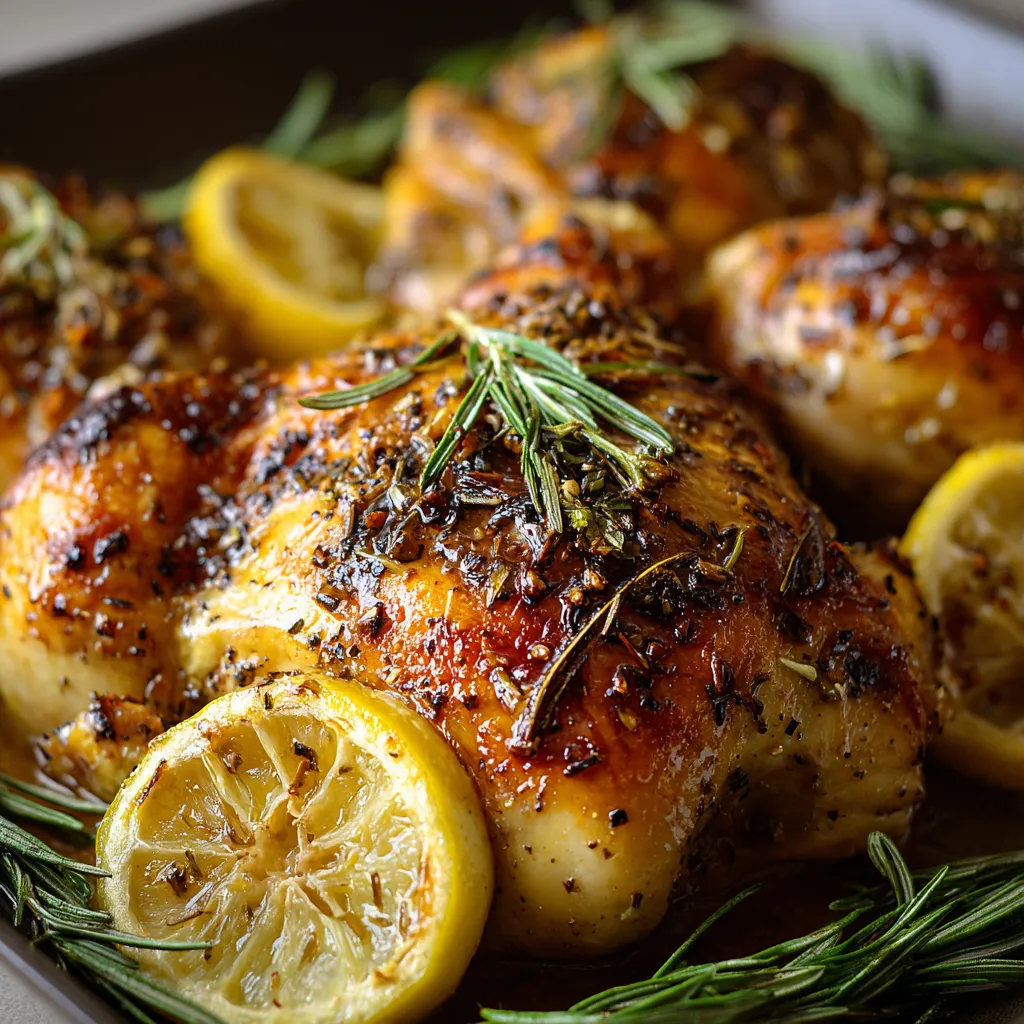
Rosemary Lemon Split Roast Chicken Ultimate
This recipe delivers a perfectly roasted chicken with succulent breast meat and tender legs, achieved through split roasting and a flavorful rosemary lemon infusion. The technique ensures even cooking and maximum moisture retention, resulting in a delicious and foolproof meal.
Ingredients
Equipment
Method
- Preheat oven to 425°F (220°C).
- Pat the chicken dry with paper towels.
- Place the chicken breast-side down on the cutting board.
- Cut along both sides of the backbone to remove it.
- Flip the chicken over and press firmly on the breastbone to flatten it.
- In a small bowl, combine the minced garlic, olive oil, salt, pepper, and paprika.
- Rub the rosemary lemon marinade all over the chicken, making sure to get under the skin of the breast and thighs.
- Place the lemon halves and rosemary sprigs under the skin of the chicken breast.
- Arrange the lemon slices on top of the chicken.
- Place the chicken on the rack in the roasting pan.
- Roast for 45-55 minutes, or until a meat thermometer inserted into the thickest part of the thigh registers 175°F (79°C) and the breast registers 160°F (71°C).
- Remove the chicken from the oven and let it rest for 10-15 minutes before carving.
- Carve the chicken and serve immediately.
Notes
For extra crispy skin, ensure the chicken is thoroughly dry before roasting. Save the backbone for making chicken stock. Resting the chicken is crucial for juicy and tender meat. You can adjust the amount of garlic and rosemary to your preference.