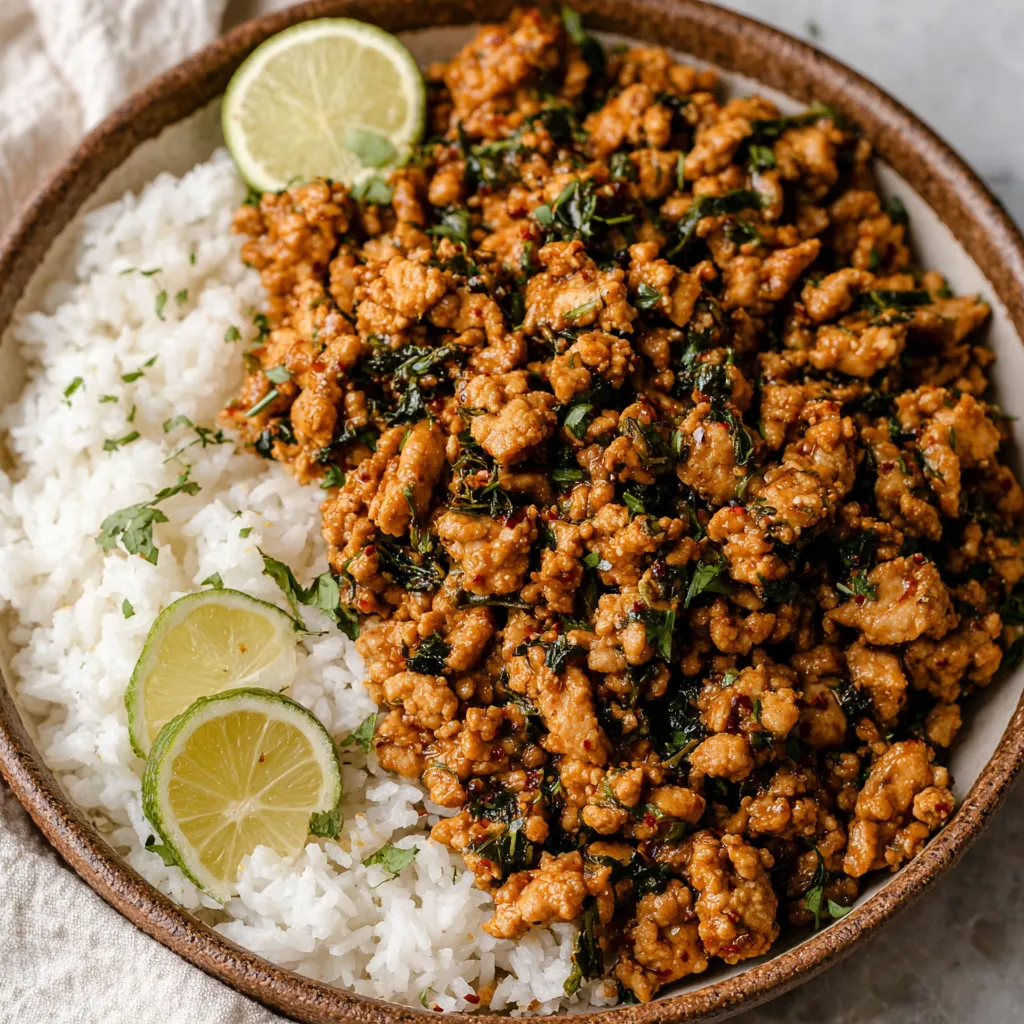

Unlocking the Coconutty Conundrum: The Science Behind the Flavor
The secret, as with most great dishes, lies in understanding the science behind the ingredients. Coconut, in all its forms (milk, cream, oil, flakes), is a complex matrix of fats, sugars, and aromatic compounds. Heating coconut milk causes its fats to emulsify, creating a creamy texture. The Maillard reaction, that beautiful browning process, is key to developing deeper, more complex flavors. However, overcooking can lead to bitterness, particularly with dried coconut. Furthermore, the acidity of certain ingredients, like lime juice, can cut through the richness of the coconut and brighten the overall flavor profile. Similarly, understanding the properties of rice, such as starch content and cooking method, is crucial to achieving the perfect fluffy texture. Using jasmine rice, for instance, provides a subtly floral aroma that complements the coconut. Balancing these elements is the key to creating a harmonious and delicious dish.The Ultimate Coconut Chicken Rice Bowl Recipe
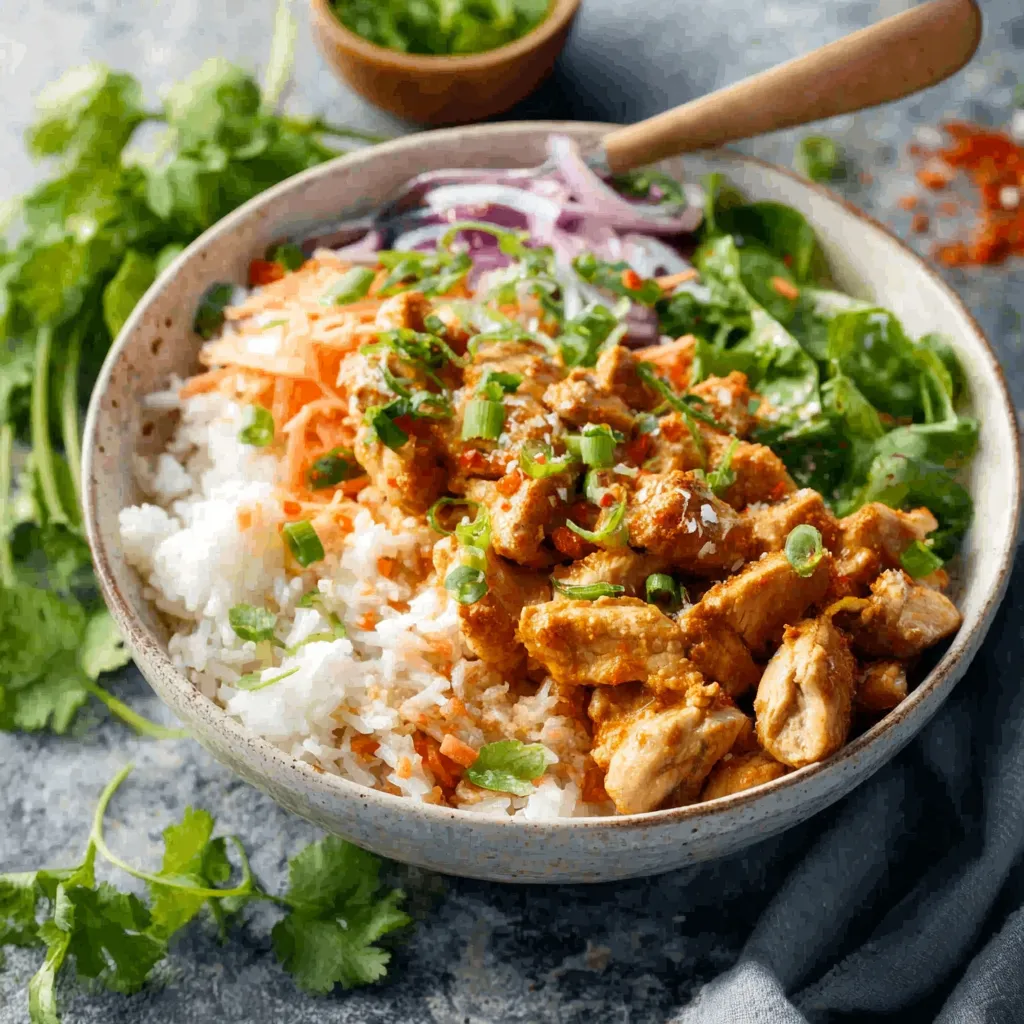 This recipe is the culmination of my trials and tribulations, designed for maximum flavor and ease of preparation.
Ingredients:
- For the Chicken:
- 1.5 lbs boneless, skinless chicken thighs, cut into 1-inch cubes
- 1 tbsp coconut oil
- 1 onion, chopped
- 2 cloves garlic, minced
- 1 inch ginger, grated
- 1 red bell pepper, sliced
- 1 (13.5 oz) can coconut milk (full fat)
- 2 tbsp soy sauce
- 1 tbsp fish sauce (optional, but highly recommended)
- 1 tbsp lime juice
- 1 tsp curry powder
- 1/2 tsp turmeric powder
- 1/4 tsp red pepper flakes (optional)
- Salt and pepper to taste
- For the Rice:
- 2 cups jasmine rice
- 3 cups water
- 1/2 tsp salt
- For the Toppings:
- Fresh cilantro, chopped
- Toasted coconut flakes
- Lime wedges
- Chopped peanuts (optional)
- Sriracha or chili garlic sauce (optional)
Instructions:
- Cook the Rice: Rinse the jasmine rice under cold water until the water runs clear. Combine rice, water, and salt in a pot. Bring to a boil, then reduce heat to low, cover, and simmer for 15-20 minutes, or until the water is absorbed and the rice is tender. Fluff with a fork.
- Prepare the Chicken: Heat the coconut oil in a large skillet or wok over medium-high heat. Add the chicken and cook until browned on all sides. Remove the chicken from the skillet and set aside.
- Sauté Aromatics: Add the chopped onion to the skillet and cook until softened, about 5 minutes. Add the minced garlic and grated ginger and cook for another minute, until fragrant.
- Build the Sauce: Add the sliced red bell pepper to the skillet and cook until slightly softened, about 3 minutes. Pour in the coconut milk, soy sauce, fish sauce (if using), lime juice, curry powder, turmeric powder, and red pepper flakes (if using). Stir to combine.
- Simmer the Chicken: Return the chicken to the skillet. Bring the sauce to a simmer, then reduce heat to low, cover, and cook for 15-20 minutes, or until the chicken is cooked through and the sauce has thickened slightly. Season with salt and pepper to taste.
- Assemble the Bowls: Divide the cooked rice among bowls. Top with the coconut chicken and sauce. Garnish with fresh cilantro, toasted coconut flakes, lime wedges, chopped peanuts (if using), and sriracha or chili garlic sauce (if using).
- Serve and Enjoy!
My Coconut Chicken Quest: A Tale of Culinary Trials
My journey to the perfect Coconut Chicken Rice Bowl was far from smooth. My first few attempts were a disaster – the chicken was dry, the sauce was bland, and the rice was either mushy or crunchy. But I refused to give up. I knew there was potential hidden within these simple ingredients.The Great Coconut Milk Catastrophe
Like many of you, I initially thought any old coconut milk would do. Big mistake! My first batch used “lite” coconut milk, resulting in a watery, flavorless sauce. The fat content is crucial for that rich, creamy texture. From then on, I only used full-fat coconut milk. It made all the difference. I also experimented with different brands. Some brands have a higher water content, leading to a thinner sauce. This can be remedied by simmering the sauce for a longer period to reduce it, but I prefer to use a higher-quality, thicker brand from the start.The Chicken Chronicles: Dryness Be Gone!
My initial attempts using chicken breast resulted in dry, chewy pieces. Then, I had an “Aha!” moment: chicken thighs! They’re more forgiving, remaining tender and juicy even when slightly overcooked. Cutting the chicken into smaller, uniform cubes also ensures even cooking. The browning stage is also critical. Don’t overcrowd the pan, or the chicken will steam instead of sear. Sear the chicken in batches for optimal color and flavor development. I also learned from making Pineapple Chicken Rice, and other similar dishes, that a quick marinade can work wonders for the chicken’s texture and flavor.Rice Rhapsody: Achieving Fluffy Perfection
Rice seems simple, but it’s surprisingly easy to mess up. My first few batches were either gummy or undercooked. The key is rinsing the rice thoroughly before cooking to remove excess starch. This prevents the grains from sticking together. I also found that using the correct water-to-rice ratio is crucial. Too much water, and you get mushy rice. Too little, and you get crunchy rice. Jasmine rice, with its delicate aroma, pairs beautifully with coconut, but basmati rice is a good substitute. Thinking back, I also remembered useful methods when making Pineapple Chicken And Rice, which helped me perfect my rice.The Flavor Frontier: Balancing Act
The final piece of the puzzle was the flavor balance. The coconut milk provides richness, but it needs to be balanced with acidity and umami. Lime juice and fish sauce (optional, but highly recommended) are the secret weapons. The lime juice brightens the flavors, while the fish sauce adds a savory depth. Soy sauce provides saltiness and umami, while curry powder and turmeric add warmth and complexity. A touch of red pepper flakes adds a subtle kick. The key is to taste and adjust the seasonings as you go, until you achieve the perfect balance of sweet, savory, and tangy. Looking at other great recipes like Honey Butter Garlic Chicken And Rice gave me ideas for flavour balances that I could incorporate into my coconut chicken rice bowl. And, while experimenting with Coconut Chicken And Rice, I realized that the key lies in layering the flavours.The Foolproof Method: Your Path to Coconut Chicken Rice Bowl Bliss
After countless attempts, I’ve distilled the process down to a simple, foolproof method:- Choose the Right Ingredients: Use full-fat coconut milk, chicken thighs, and jasmine rice for the best results.
- Rinse the Rice: Rinse the jasmine rice thoroughly before cooking to remove excess starch.
- Sear the Chicken: Sear the chicken in batches to develop color and flavor.
- Layer the Flavors: Sauté the aromatics (onion, garlic, ginger) before adding the coconut milk and other seasonings.
- Simmer Gently: Simmer the chicken in the sauce until cooked through and the sauce has thickened.
- Balance the Flavors: Taste and adjust the seasonings as you go, ensuring a balance of sweet, savory, and tangy. Don’t be afraid to experiment with a little lime juice and fish sauce!
- Garnish Generously: Top with fresh cilantro, toasted coconut flakes, and lime wedges for added flavor and texture.
- Don’t be afraid to adapt: If you are looking for a lower carb option, why not try serving the coconut chicken in a Chicken Sweet Potato Rice Bowl.
Why is it important to use full-fat coconut milk in this recipe?
Using full-fat coconut milk is crucial because the fat content is essential for creating a rich and creamy sauce. Lite coconut milk will result in a watery, flavorless dish.
Why are chicken thighs recommended over chicken breasts for this recipe?
Chicken thighs are more forgiving and remain tender and juicy even if slightly overcooked, unlike chicken breasts, which can easily become dry.
Why is rinsing the jasmine rice before cooking so important?
Rinsing the jasmine rice before cooking removes excess starch, which prevents the grains from sticking together and results in fluffier rice.
What is the key to balancing the flavors in the Coconut Chicken Rice Bowl?
The key to balancing the flavors is to combine the richness of the coconut milk with acidity and umami. Lime juice brightens the flavors, while fish sauce (optional) adds a savory depth. Taste and adjust the seasonings as you go to achieve the perfect balance of sweet, savory, and tangy.
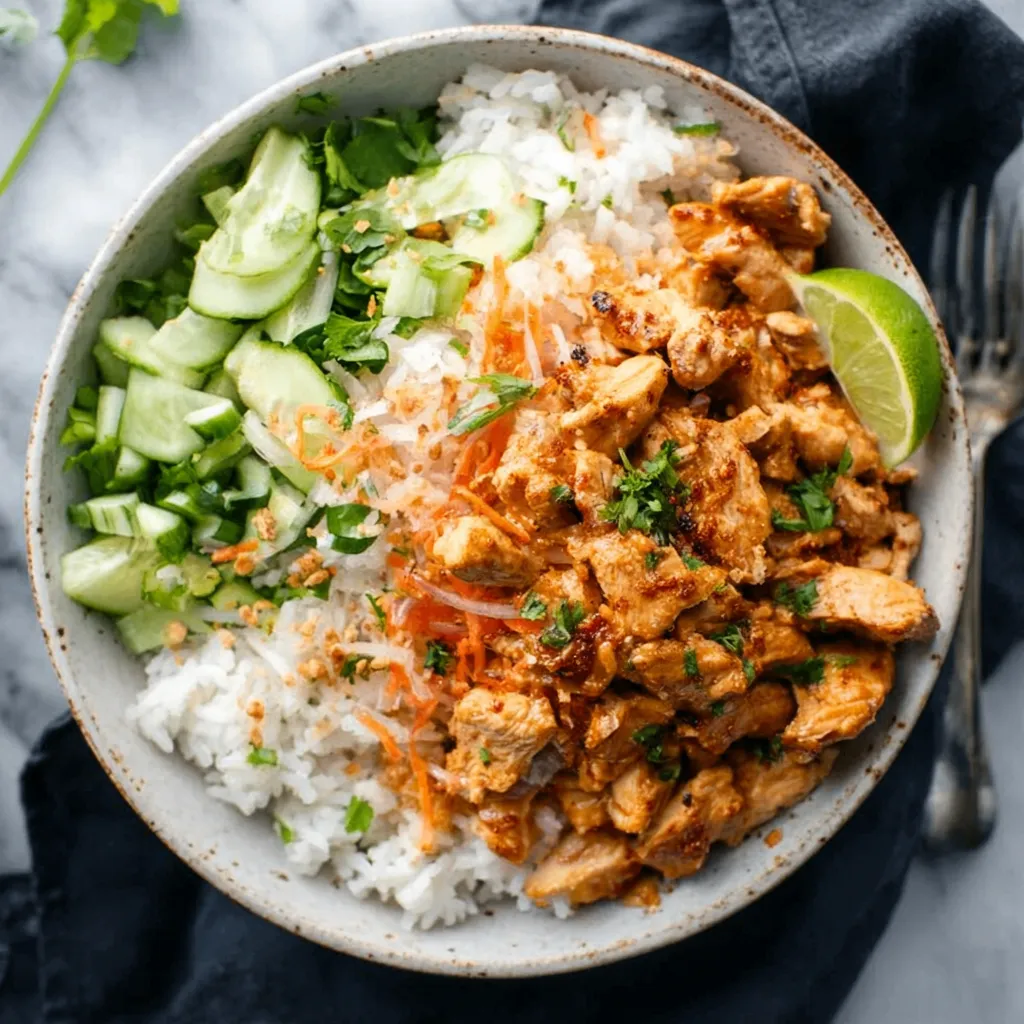
EASY COCONUT CHICKEN RICE BOWL
This Coconut Chicken Rice Bowl recipe delivers a flavorful and easy-to-prepare meal. Featuring tender chicken simmered in a creamy coconut sauce and served over fluffy jasmine rice, this dish balances sweet, savory, and tangy flavors for a delightful tropical experience.
Ingredients
Equipment
Method
- Cook the Rice: Rinse the jasmine rice under cold water until the water runs clear. Combine rice, water, and salt in a pot. Bring to a boil, then reduce heat to low, cover, and simmer for 15-20 minutes, or until the water is absorbed and the rice is tender. Fluff with a fork.
- Prepare the Chicken: Heat the coconut oil in a large skillet or wok over medium-high heat. Add the chicken and cook until browned on all sides. Remove the chicken from the skillet and set aside.
- Sauté Aromatics: Add the chopped onion to the skillet and cook until softened, about 5 minutes. Add the minced garlic and grated ginger and cook for another minute, until fragrant.
- Build the Sauce: Add the sliced red bell pepper to the skillet and cook until slightly softened, about 3 minutes. Pour in the coconut milk, soy sauce, fish sauce (if using), lime juice, curry powder, turmeric powder, and red pepper flakes (if using). Stir to combine.
- Simmer the Chicken: Return the chicken to the skillet. Bring the sauce to a simmer, then reduce heat to low, cover, and cook for 15-20 minutes, or until the chicken is cooked through and the sauce has thickened slightly. Season with salt and pepper to taste.
- Assemble the Bowls: Divide the cooked rice among bowls. Top with the coconut chicken and sauce. Garnish with fresh cilantro, toasted coconut flakes, lime wedges, chopped peanuts (if using), and sriracha or chili garlic sauce (if using).
- Serve and Enjoy!
Notes
For best results, use full-fat coconut milk. Chicken thighs are more tender than chicken breasts. Rinse the rice before cooking to remove excess starch. Adjust seasonings to taste. Leftovers can be stored in the refrigerator for up to 3 days.