
Unlocking the Secrets of Carbonara Chemistry
The heart of a good carbonara lies in understanding the science of emulsion. At its core, carbonara is a sauce built on emulsifying fat (from the guanciale or pancetta) with egg yolks and pasta water. Heat is the enemy; too much, and the eggs scramble, breaking the emulsion and resulting in a grainy texture. The trick is to use the residual heat of the cooked pasta and the starchy pasta water to gently cook the egg yolks, creating a luscious, creamy sauce. The starch in the pasta water acts as a stabilizer, helping the fat and water stay together. Achieving the right consistency is about controlling the temperature and ensuring a gradual, even distribution of heat. It’s a delicate dance, but when you understand the fundamentals, you can create a Creamy Sausage Rigatoni Irresistible Recipe and other creamy pasta dishes with confidence.The Creamy Tortellini Carbonara Recipe: Decadence Simplified
 This recipe focuses on speed and simplicity while maintaining the essential elements of a classic carbonara. We’re using tortellini for its inherent cheesy filling, which adds another layer of flavor and creaminess to the final dish.
Ingredients:
- 1 pound fresh or frozen cheese tortellini
- 4 ounces pancetta, diced (guanciale is traditional, but pancetta is more readily available)
- 2 large egg yolks
- 1/2 cup grated Pecorino Romano cheese (Parmesan can be substituted, but Pecorino adds a sharper, saltier flavor)
- 1/4 cup heavy cream (optional, for extra richness. Purists may scoff, but it helps stabilize the sauce)
- 1/4 teaspoon freshly ground black pepper, plus more to taste
- Salt to taste (be mindful that pancetta and cheese are already salty)
- 2-3 tablespoons reserved pasta water
- Optional garnish: chopped fresh parsley
Instructions:
- Cook the Tortellini: Bring a large pot of salted water to a boil. Add the tortellini and cook according to package directions until al dente. Reserve about 1/2 cup of pasta water before draining.
- Crisp the Pancetta: While the tortellini is cooking, cook the diced pancetta in a large skillet over medium heat until crispy and golden brown. Remove the pancetta with a slotted spoon and set aside, leaving the rendered fat in the skillet.
- Prepare the Egg Mixture: In a medium bowl, whisk together the egg yolks, Pecorino Romano cheese, heavy cream (if using), and black pepper until well combined.
- Assemble the Carbonara: Immediately after draining the tortellini, add it to the skillet with the rendered pancetta fat. Toss to coat. Remove the skillet from the heat.
- Temper the Egg Mixture: Slowly drizzle a tablespoon or two of the reserved hot pasta water into the egg mixture, whisking constantly to temper the eggs. This prevents them from scrambling when added to the hot pasta.
- Combine and Serve: Pour the tempered egg mixture over the tortellini and toss quickly and continuously until the sauce thickens and coats the pasta evenly. Add more pasta water, a tablespoon at a time, if needed to reach the desired consistency. Be careful not to overcook the sauce.
- Garnish and Serve: Stir in the crispy pancetta. Taste and adjust seasoning with salt and pepper as needed. Serve immediately, garnished with chopped fresh parsley, if desired.
My Carbonara Quest: From Curdled Chaos to Creamy Perfection
My first few attempts at making Creamy Tortellini Carbonara were a disaster. I envisioned a silky, decadent sauce clinging lovingly to each tortellini, but what I got instead was often a scrambled, oily mess. I knew I had to dive deeper into the ‘why’ behind the failures.The Great Scramble Scare
Initially, my biggest problem was scrambled eggs. I was too impatient, adding the egg mixture to the hot pasta and skillet without properly tempering it. The residual heat was simply too intense, causing the eggs to cook instantly and unevenly. It tasted okay, but the texture was far from the luxurious creaminess I was aiming for. Like many, I assumed adding cream would solve everything. Creamy Cheesy Beef Enchilada Tortellini is amazing with cream, but that doesn’t always translate to authentic carbonara.The Starch Solution
Then, I had an “Aha!” moment when I started paying closer attention to the pasta water. I knew it was important, but I didn’t realize just *how* important. The starch in the pasta water acts as an emulsifier, helping the fat and water from the pancetta and eggs to bind together. By reserving enough of it and adding it gradually, I could control the consistency of the sauce and prevent it from breaking. I started experimenting with different amounts of pasta water, noting how each adjustment affected the final result. I even tried adding a little bit to the egg mixture *before* tempering, which helped stabilize it even further. This also helped me improve my Philly Cheesesteak Tortellini Pasta Crockpot recipe by enhancing the sauce.The Pancetta Predicament
Another factor that significantly impacted the outcome was the quality and preparation of the pancetta. Initially, I was using pre-diced pancetta from the supermarket, which often had a high water content. This meant it would steam rather than crisp up properly. Switching to a higher-quality pancetta that I diced myself made a world of difference. I also learned to render the fat slowly over medium heat, allowing it to infuse the skillet and the tortellini with its rich, savory flavor. And sometimes, you just need some Garlic Parmesan Tortellini With Sausage And Broccoli in your life, even if it’s not carbonara.The Cream Conundrum
The addition of cream is controversial in a traditional carbonara. Purists argue that it’s unnecessary and detracts from the authentic flavor. However, I found that a small amount of heavy cream (about 1/4 cup) can actually help stabilize the sauce and prevent it from curdling, especially for those who are new to making carbonara. It provides a bit of insurance without significantly altering the taste profile. If you’re feeling adventurous, try it both ways and see which you prefer! If you like spicy, you might like Spicy Garlic Butter Chicken Tortellini.The Foolproof Technique: A Step-by-Step Guide to Creamy Tortellini Carbonara Bliss
After countless experiments and a few near-disasters, I’ve distilled the process into a simple, foolproof technique that guarantees a creamy, decadent Creamy Tortellini Carbonara every time.- Prioritize Pancetta Prep: Use high-quality pancetta, diced into small pieces. Render the fat slowly over medium heat until crispy and golden brown. Remove the pancetta but leave the rendered fat in the skillet.
- Strategic Starch Retention: Reserve at least 1/2 cup of pasta water before draining the tortellini. The starch is your best friend in achieving a creamy, emulsified sauce.
- Tempering Triumph: Slowly drizzle a tablespoon or two of hot pasta water into the egg mixture, whisking constantly. This prevents the eggs from scrambling when added to the hot pasta.
- Gentle Incorporation: Remove the skillet from the heat before adding the egg mixture. The residual heat is enough to cook the sauce without scrambling the eggs. Toss quickly and continuously until the sauce thickens and coats the pasta evenly.
- Pasta Water Precision: Add more pasta water, a tablespoon at a time, if needed to reach the desired consistency. The goal is a luscious, creamy sauce that clings to the tortellini, not a watery soup.
- Immediate Indulgence: Serve immediately. Carbonara is best enjoyed fresh, as the sauce can thicken as it cools. Sometimes you just need Steak Tortellini, but carbonara is a classic for a reason.
Why is pasta water important in making Creamy Tortellini Carbonara?
The starch in the pasta water acts as an emulsifier, helping the fat and water from the pancetta and eggs bind together, creating a creamy sauce and preventing it from breaking.
What is ‘tempering’ the egg mixture, and why is it necessary?
Tempering involves slowly adding hot pasta water to the egg mixture while whisking. This gradually raises the temperature of the eggs, preventing them from scrambling when added to the hot pasta.
Is it necessary to add cream to Creamy Tortellini Carbonara?
No, it’s not strictly necessary. Traditional carbonara doesn’t include cream. However, adding a small amount of heavy cream (about 1/4 cup) can help stabilize the sauce and prevent it from curdling, especially for beginners.
What kind of cheese is recommended for this recipe?
Pecorino Romano cheese is recommended for a sharper, saltier flavor. However, Parmesan cheese can be substituted.
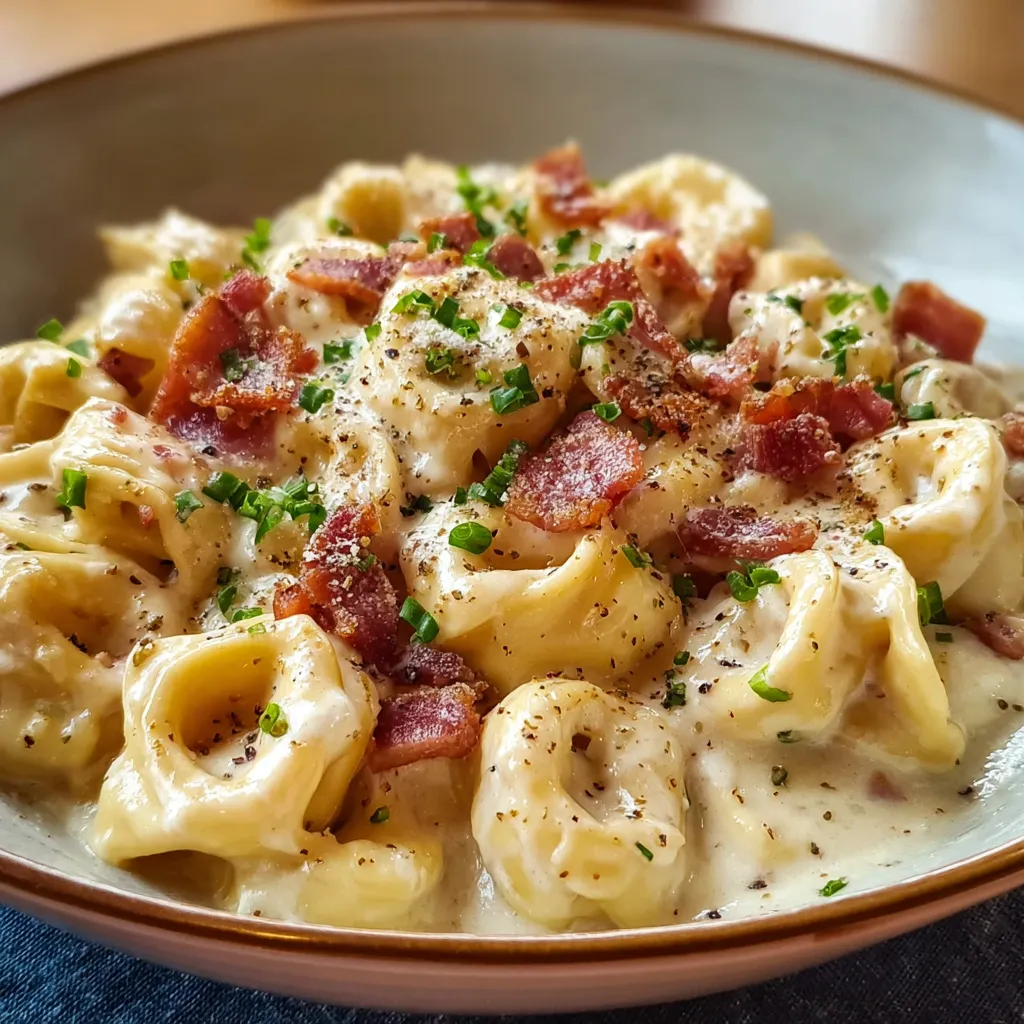
Creamy Tortellini Carbonara
This Creamy Tortellini Carbonara recipe offers a quick and easy way to enjoy a decadent pasta dish. It combines the richness of carbonara sauce with the cheesy goodness of tortellini for a simplified yet satisfying meal.
Ingredients
Equipment
Method
- Bring a large pot of salted water to a boil. Add the tortellini and cook according to package directions until al dente. Reserve about 1/2 cup of pasta water before draining.
- While the tortellini is cooking, cook the diced pancetta in a large skillet over medium heat until crispy and golden brown. Remove the pancetta with a slotted spoon and set aside, leaving the rendered fat in the skillet.
- In a medium bowl, whisk together the egg yolks, Pecorino Romano cheese, heavy cream (if using), and black pepper until well combined.
- Immediately after draining the tortellini, add it to the skillet with the rendered pancetta fat. Toss to coat. Remove the skillet from the heat.
- Slowly drizzle a tablespoon or two of the reserved hot pasta water into the egg mixture, whisking constantly to temper the eggs.
- Pour the tempered egg mixture over the tortellini and toss quickly and continuously until the sauce thickens and coats the pasta evenly. Add more pasta water, a tablespoon at a time, if needed to reach the desired consistency. Be careful not to overcook the sauce.
- Stir in the crispy pancetta. Taste and adjust seasoning with salt and pepper as needed.
- Serve immediately, garnished with chopped fresh parsley, if desired.
Notes
For best results, use high-quality pancetta and Pecorino Romano cheese. Tempering the eggs is crucial to prevent scrambling. Serve immediately, as the sauce can thicken as it cools. For a richer flavor, use guanciale instead of pancetta. If you don’t have Pecorino Romano, Parmesan cheese can be substituted. The heavy cream is optional but helps stabilize the sauce. Be mindful when adding salt as the pancetta and cheese are already salty.