
Unlocking Umami: The Science Behind the Bowl
The magic of a truly exceptional Korean Ground Beef Bowl lies not just in throwing ingredients together, but understanding the synergistic reactions that create its addictive flavor profile. The core principle at play here is the Maillard reaction, the chemical reaction between amino acids and reducing sugars that gives browned food its distinctive flavor. In our case, browning the ground beef is crucial. But it’s not just about browning; it’s about controlling the heat and moisture to maximize the Maillard reaction without steaming the beef. Secondly, the balance of sweet, savory, and spicy is paramount. The sweetness, usually from brown sugar or honey, needs to be balanced by the umami-rich soy sauce and the kick of gochujang (Korean chili paste). The gochujang not only adds heat but also a fermented depth of flavor that elevates the dish. Finally, acid plays a crucial role. A touch of rice vinegar or lemon juice brightens the flavors and cuts through the richness of the beef. Understanding these principles allows you to adjust the recipe to your own taste preferences and create your own signature version.The Recipe: A Symphony of Flavors
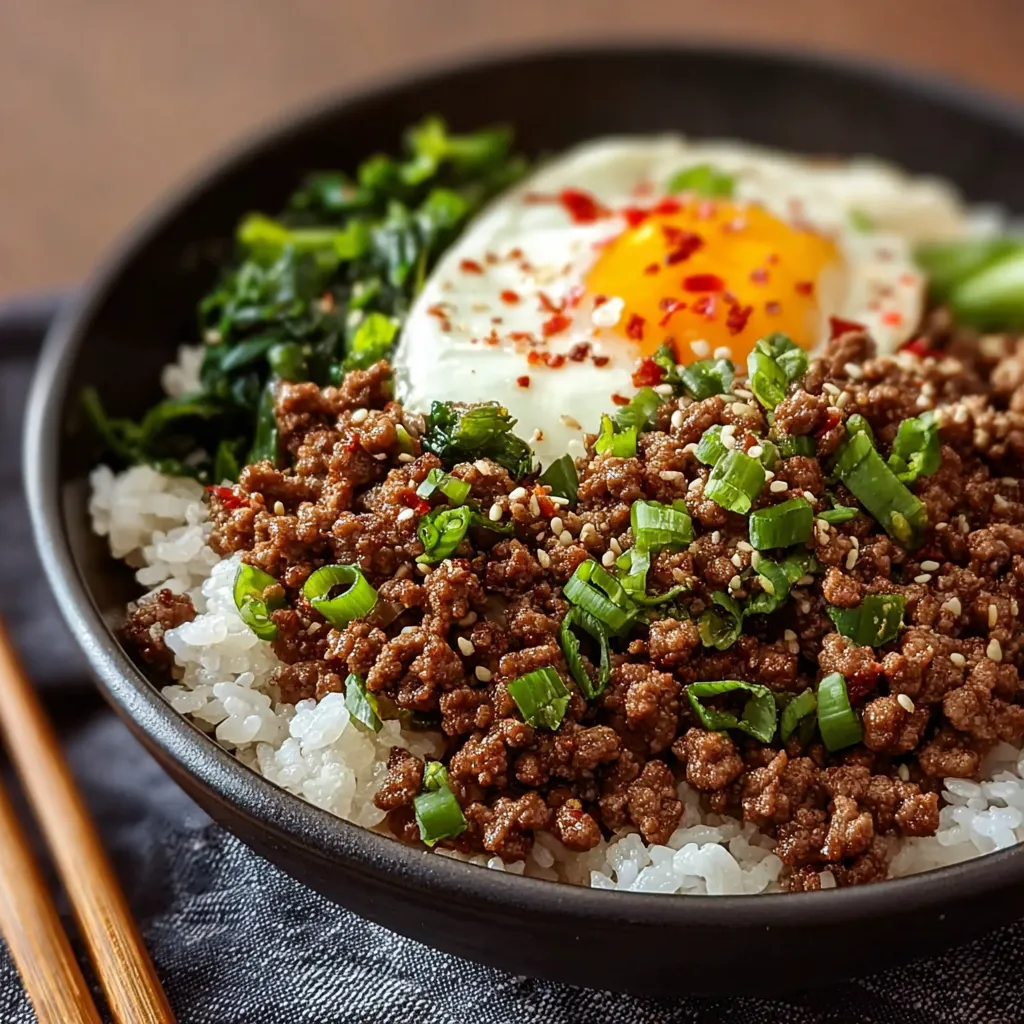 This Easy Korean Ground Beef Bowl recipe! delivers a savory ground beef in a sweet & spicy sauce over rice with toppings. Skip takeout! and create a quick, flavorful weeknight dinner and family favorite.
Ingredients:
- 1 pound ground beef (80/20 is recommended for flavor)
- 2 cloves garlic, minced
- 1 teaspoon ginger, grated
- 1/4 cup soy sauce
- 2 tablespoons brown sugar
- 1-2 tablespoons gochujang (Korean chili paste), adjust to taste
- 1 tablespoon sesame oil
- 1 tablespoon rice vinegar (or lemon juice)
- 1/4 cup water
- 1 tablespoon cornstarch
- Cooked rice, for serving
- Optional toppings: sesame seeds, sliced green onions, kimchi, sriracha mayo, fried egg
Instructions:
- In a large skillet or wok, brown the ground beef over medium-high heat. Break it up with a spoon as it cooks. Drain off any excess grease.
- Add the minced garlic and grated ginger to the skillet and cook for about 1 minute, until fragrant.
- In a small bowl, whisk together the soy sauce, brown sugar, gochujang, sesame oil, rice vinegar (or lemon juice), water, and cornstarch.
- Pour the sauce over the ground beef and stir to combine.
- Bring the sauce to a simmer and cook for 2-3 minutes, or until the sauce has thickened and the beef is coated.
- Serve the ground beef over cooked rice.
- Garnish with your favorite toppings, such as sesame seeds, sliced green onions, kimchi, and a fried egg.
My Culinary Crusade: The Investigation Begins
My first few attempts were a disaster. I’m not exaggerating. The first time, I used too lean of ground beef, and the result was dry and flavorless. Then, I tried using regular chili paste instead of gochujang, thinking it was a close substitute. Big mistake! The flavor was completely off, lacking that fermented depth that makes Korean cuisine so unique. Like many of you, I initially thought this was just another basic ground beef recipe. I thought I could just throw everything in a pan and hope for the best. I was so wrong.The Lean Beef Blunder
I started by using 93/7 ground beef, convinced I was making a healthier choice. What I ended up with was dry, crumbly beef that didn’t hold the sauce well. The flavor was also lacking. It was then I realized that the fat content plays a crucial role in both the texture and the flavor of the dish. The fat renders out and helps to create a rich, flavorful sauce and keeps the beef moist.The Chili Paste Catastrophe
Desperate to make a quick version, I substituted gochujang with regular chili paste. The outcome was simply not the same. The chili paste added heat, but it lacked the depth and complexity of gochujang. It tasted flat and one-dimensional. That’s when I understood gochujang isn’t just about heat; it’s about that fermented, funky, slightly sweet flavor that’s integral to Korean cuisine.The Sugar Shock
Initially, I was hesitant to use brown sugar. I tried to reduce the amount, substituting it with a sugar substitute. The sweetness was off, and the sauce didn’t thicken properly. Then, I had an “Aha!” moment when I realized that the brown sugar isn’t just for sweetness; it also contributes to the viscosity and caramelization of the sauce. It creates a beautiful, glossy glaze on the beef.The Rice Revelation
The type of rice matters! I initially used a long-grain rice, and it just didn’t work. The sauce didn’t cling to the rice, and the overall texture was off. Switching to short-grain rice, specifically sushi rice, made a huge difference. The slightly sticky texture of the rice allowed it to absorb the sauce perfectly, creating a cohesive and satisfying bowl.The Foolproof Method: A Step-by-Step Guide to Korean Ground Beef Bowl Perfection
After countless iterations and a few kitchen disasters, I’ve distilled the process into a foolproof method for creating the perfect Easy Korean Ground Beef Bowl:- Choose Your Beef Wisely: Opt for 80/20 ground beef for optimal flavor and texture. The fat will render and create a rich, flavorful sauce.
- Master the Maillard: Brown the beef over medium-high heat, ensuring it’s fully cooked and slightly crispy. This step is crucial for developing that deep, savory flavor.
- Embrace Gochujang: Don’t skimp on the gochujang! This fermented chili paste is the heart and soul of the dish. Adjust the amount to your spice preference.
- Balance the Sweet and Savory: Use the correct amount of brown sugar to balance the soy sauce and gochujang. The brown sugar also helps to thicken the sauce.
- Thicken with Cornstarch: A cornstarch slurry is essential for creating a glossy, thickened sauce that clings to the beef.
- Brighten with Acid: A touch of rice vinegar or lemon juice adds brightness and cuts through the richness of the dish.
- Select the Right Rice: Use short-grain rice, like sushi rice, for its slightly sticky texture that absorbs the sauce perfectly.
- Don’t Forget the Toppings: Toppings add texture, flavor, and visual appeal. Sesame seeds, green onions, kimchi, and a fried egg are all excellent choices.
Why is 80/20 ground beef recommended for this Korean Ground Beef Bowl recipe?
80/20 ground beef is recommended because the fat content renders during cooking, creating a rich, flavorful sauce and keeping the beef moist. Leaner beef can result in a dry and less flavorful dish.
What makes gochujang so important in this recipe, and can I substitute it with regular chili paste?
Gochujang is a fermented chili paste that adds a unique depth of flavor, including a slightly sweet and funky taste that is essential to Korean cuisine. Regular chili paste lacks this fermented quality and will not provide the same flavor profile.
Why is short-grain rice recommended over long-grain rice for this dish?
Short-grain rice, especially sushi rice, has a slightly sticky texture that allows it to absorb the sauce perfectly, creating a cohesive and satisfying bowl. Long-grain rice does not cling to the sauce as well.
What is the Maillard reaction, and why is it important when browning the ground beef?
The Maillard reaction is a chemical reaction between amino acids and reducing sugars that gives browned food its distinctive flavor. Browning the ground beef properly, without steaming it, is crucial for developing a deep, savory flavor in the dish.

Best Korean Ground Beef Bowl
Ingredients
Equipment
Method
- In a large skillet or wok, brown the ground beef over medium-high heat. Break it up with a spoon as it cooks. Drain off any excess grease.
- Add the minced garlic and grated ginger to the skillet and cook for about 1 minute, until fragrant.
- In a small bowl, whisk together the soy sauce, brown sugar, gochujang, sesame oil, rice vinegar (or lemon juice), water, and cornstarch.
- Pour the sauce over the ground beef and stir to combine.
- Bring the sauce to a simmer and cook for 2-3 minutes, or until the sauce has thickened and the beef is coated.
- Serve the ground beef over cooked rice.
- Garnish with your favorite toppings, such as sesame seeds, sliced green onions, kimchi, and a fried egg.