
Unlocking the Secrets: The Science Behind Beef and Noodles
At its heart, Beef and Noodles is a study in starch gelatinization, protein denaturation, and flavor development. The noodles, primarily composed of starch, undergo a process of gelatinization when heated in liquid. This means the starch granules absorb water, swell, and create a viscous sauce. Choosing the right type of noodle, with the optimal starch content, is crucial for achieving the desired thickness and texture. Too little starch, and the sauce remains thin and watery. Too much, and you end up with a gummy, gluey mess. The beef contributes protein, which denatures upon heating. This unfolding of protein structures leads to coagulation, creating a firm texture and releasing flavorful compounds. The Maillard reaction, a chemical reaction between amino acids and reducing sugars, occurs at higher temperatures, contributing to the rich, browned flavors we associate with well-cooked beef. Furthermore, the slow braising process allows collagen, a tough connective tissue, to break down into gelatin, adding richness and body to the sauce. Finally, the flavor profile is a complex interplay of savory umami from the beef, starchy sweetness from the noodles, and aromatic compounds from added vegetables and herbs. Achieving a harmonious balance of these elements is the key to a truly exceptional dish. Consider how this contrasts with the vibrant flavors in Sticky Beef Noodles, which rely on a different blend of sweet, savory, and spicy elements.The Ultimate Beef and Noodles Recipe
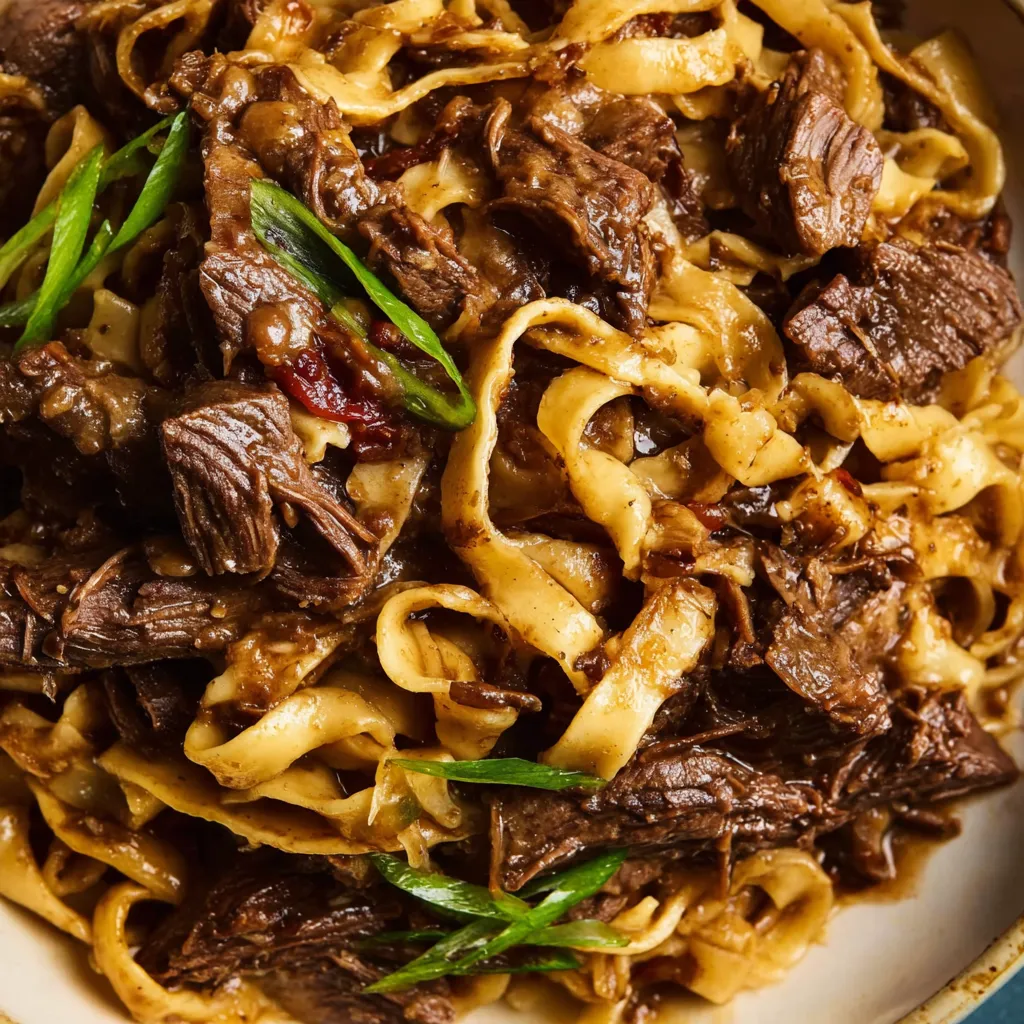 This recipe is the culmination of countless experiments, tweaking and perfecting until I achieved what I consider the ultimate Beef and Noodles experience.
Ingredients:
- For the Beef:
- 2 lbs Beef Chuck Roast, cut into 1-inch cubes
- 2 tbsp Olive Oil
- 1 large Yellow Onion, chopped
- 2 Carrots, peeled and chopped
- 2 Celery stalks, chopped
- 4 cloves Garlic, minced
- 2 tbsp Tomato Paste
- 1 cup Dry Red Wine (optional, but highly recommended)
- 4 cups Beef Broth
- 2 cups Water
- 2 Bay Leaves
- 1 tsp Dried Thyme
- 1/2 tsp Dried Rosemary
- Salt and Black Pepper to taste
- For the Noodles:
- 1 lb Wide Egg Noodles (preferably homemade, but dried works well)
- 2 tbsp Butter
- 2 tbsp All-Purpose Flour
- 1 cup Milk
- Garnish (optional):
- Fresh Parsley, chopped
Instructions:
- Sear the Beef: Season the beef cubes generously with salt and pepper. Heat olive oil in a large Dutch oven or heavy-bottomed pot over medium-high heat. Sear the beef in batches until browned on all sides. Remove the beef from the pot and set aside.
- Sauté the Vegetables: Add the chopped onion, carrots, and celery to the pot and sauté until softened, about 5-7 minutes. Add the minced garlic and tomato paste and cook for another minute until fragrant.
- Deglaze and Simmer: If using, pour in the red wine and deglaze the pot, scraping up any browned bits from the bottom. Cook until the wine has reduced slightly, about 2-3 minutes.
- Combine and Braise: Return the beef to the pot. Pour in the beef broth and water. Add the bay leaves, thyme, and rosemary. Bring to a simmer, then reduce the heat to low, cover, and simmer for at least 3 hours, or until the beef is very tender.
- Prepare the Noodles: About 30 minutes before serving, cook the egg noodles according to package directions. Drain well and set aside.
- Thicken the Sauce: In a separate saucepan, melt the butter over medium heat. Whisk in the flour and cook for 1-2 minutes, creating a roux. Gradually whisk in the milk until smooth. Simmer until the sauce thickens slightly, about 3-5 minutes.
- Combine Everything: Stir the thickened sauce into the beef mixture. Add the cooked noodles and stir to combine. Season with salt and pepper to taste.
- Serve: Serve hot, garnished with fresh parsley, if desired.
My Beef and Noodle Odyssey: A Culinary Investigation
My journey to Beef and Noodle perfection was not a straight line. It was a winding road filled with soggy noodles, bland sauces, and tough, chewy beef. But with each failure, I learned something new, inching closer to the ultimate bowl.The Early Days: A Starchy Disaster
My first few attempts were a disaster. Like many of you, I initially thought that simply throwing some beef, noodles, and broth into a pot would result in a delicious meal. I was wrong. The noodles were always overcooked and mushy, and the sauce was thin and watery. I used pre-cut stew meat, which turned out dry and flavorless. It was closer to a sad soup than the hearty, comforting dish I envisioned. I even tried using canned cream of mushroom soup as a shortcut. Big mistake.The ‘Aha!’ Moment: Embracing the Braise
Then, I had an “Aha!” moment. I realized that the key to tender, flavorful beef was slow braising. Instead of using pre-cut stew meat, I opted for a chuck roast, which is a tougher cut but becomes incredibly tender and flavorful when cooked low and slow. Searing the beef before braising also added a depth of flavor that was previously missing. This was a game changer. The difference was night and day.Noodle Nirvana: The Search for the Perfect Strand
Next, I tackled the noodle problem. I experimented with different types of noodles – wide egg noodles, thin egg noodles, even store-bought pasta. I discovered that wide egg noodles held their shape the best and provided the perfect chewy texture. I also learned the importance of not overcooking the noodles. Cooking them separately and adding them to the beef mixture at the very end prevented them from becoming mushy. The result was far superior to anything I had tried before. I even considered making my own homemade noodles, similar to what you might do when making Sticky Beef Noodles from scratch, but for this particular dish, I found that high-quality dried egg noodles worked perfectly well.The Flavor Boost: Wine, Herbs, and Tomato Paste
Finally, I focused on the flavor of the sauce. I added a splash of dry red wine to deglaze the pot, which added a richness and depth of flavor that was truly transformative. I also experimented with different herbs and spices, eventually settling on a combination of bay leaves, thyme, and rosemary. A touch of tomato paste added a subtle sweetness and umami that rounded out the flavors perfectly.The Foolproof Method: Mastering Beef and Noodles
After countless iterations, I’ve distilled the process into a simple, foolproof method. Follow these steps, and you’ll be well on your way to Beef and Noodle perfection:- Choose the Right Beef: Opt for a chuck roast for maximum flavor and tenderness.
- Sear the Beef: Don’t skip this step! Searing adds a crucial layer of flavor.
- Braise Low and Slow: Patience is key. Braise the beef for at least 3 hours, or until it’s fork-tender.
- Cook Noodles Separately: Prevent mushy noodles by cooking them separately and adding them at the end.
- Thicken the Sauce with a Roux: A simple roux of butter and flour will create a velvety smooth sauce.
- Season Generously: Don’t be afraid to season with salt, pepper, and your favorite herbs and spices.
- Adjust to taste. Consider adding a dash of Worcestershire sauce, or a splash of cream for extra richness.
Why is searing the beef important in this Beef and Noodles recipe?
Searing the beef before braising adds a crucial layer of flavor to the dish.
What type of beef is recommended for this recipe and why?
The recipe recommends using chuck roast because it becomes incredibly tender and flavorful when cooked low and slow through braising.
How do you prevent the noodles from becoming mushy in this Beef and Noodles recipe?
To prevent mushy noodles, cook them separately and add them to the beef mixture at the very end, just before serving.
What’s the purpose of adding a roux to the sauce?
A roux, made from butter and flour, is used to thicken the sauce, creating a velvety smooth texture.
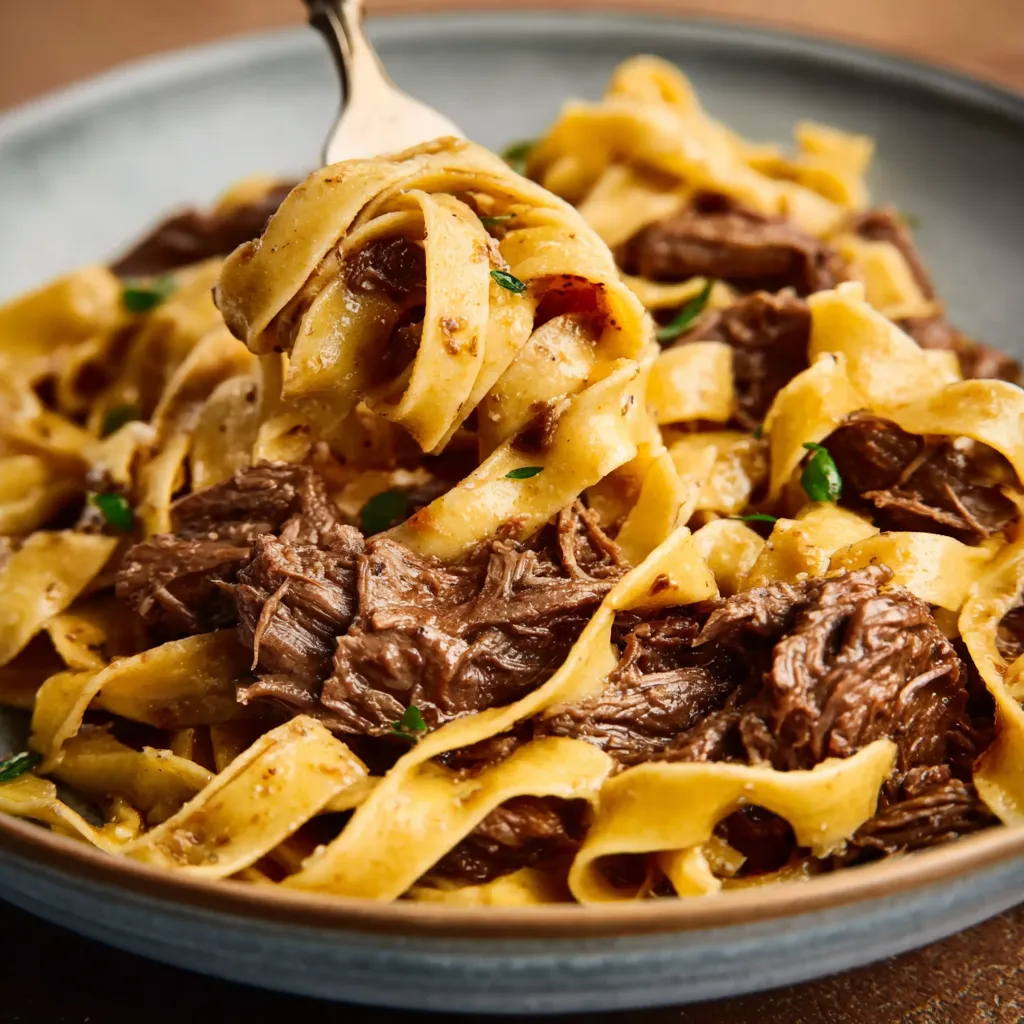
BEST BEEF AND NOODLES EVER
This recipe delivers the ultimate comfort food experience with tender, flavorful beef braised in a rich sauce, combined with perfectly cooked egg noodles. The slow braising process ensures the beef is incredibly tender, while the homemade roux creates a velvety smooth sauce that coats the noodles beautifully.
Ingredients
Equipment
Method
- Season the beef cubes generously with salt and pepper.
- Heat olive oil in a large Dutch oven or heavy-bottomed pot over medium-high heat.
- Sear the beef in batches until browned on all sides. Remove the beef from the pot and set aside.
- Add the chopped onion, carrots, and celery to the pot and sauté until softened, about 5-7 minutes.
- Add the minced garlic and tomato paste and cook for another minute until fragrant.
- If using, pour in the red wine and deglaze the pot, scraping up any browned bits from the bottom. Cook until the wine has reduced slightly, about 2-3 minutes.
- Return the beef to the pot. Pour in the beef broth and water. Add the bay leaves, thyme, and rosemary.
- Bring to a simmer, then reduce the heat to low, cover, and simmer for at least 3 hours, or until the beef is very tender.
- About 30 minutes before serving, cook the egg noodles according to package directions. Drain well and set aside.
- In a separate saucepan, melt the butter over medium heat.
- Whisk in the flour and cook for 1-2 minutes, creating a roux.
- Gradually whisk in the milk until smooth.
- Simmer until the sauce thickens slightly, about 3-5 minutes.
- Stir the thickened sauce into the beef mixture.
- Add the cooked noodles and stir to combine. Season with salt and pepper to taste.
- Serve hot, garnished with fresh parsley, if desired.
Notes
For extra richness, add a splash of cream or a dash of Worcestershire sauce at the end of cooking. Leftovers can be stored in an airtight container in the refrigerator for up to 3 days. Reheat gently on the stovetop or in the microwave. To prevent the noodles from becoming too soft during reheating, consider storing the noodles separately from the beef mixture and combining them just before serving.