
Unlocking the Secrets: The Science Behind the Flavor
The magic of Bruschetta Chicken Pasta lies in the interplay of a few key elements, each built upon scientific principles. First, we have the Maillard reaction at play when searing the chicken. This browning process creates hundreds of flavor compounds, adding depth and complexity that simply can’t be achieved by poaching or boiling. Think of it like the difference between plain toast and perfectly browned, buttery toast – same bread, vastly different experience. Next, consider the acidity of the tomatoes. Ripe tomatoes are naturally acidic, but the addition of balsamic vinegar further enhances this tang, which cuts through the richness of the olive oil and Parmesan cheese. This acidity is crucial for balancing the flavors. Finally, the hydrophobic nature of olive oil allows it to coat the pasta and chicken evenly, carrying the flavors of the garlic, basil, and balsamic vinegar to every bite. Without enough olive oil, the pasta can become dry and the flavors muddled. Understanding these principles is the first step to mastering this dish.The Definitive Bruschetta Chicken Pasta Recipe

Ingredients:
- For the Chicken:
- 1.5 lbs boneless, skinless chicken breasts, cut into 1-inch pieces
- 1 tbsp olive oil
- 1 tsp Italian seasoning
- 1/2 tsp garlic powder
- Salt and pepper to taste
- For the Bruschetta Topping:
- 2 cups ripe Roma tomatoes, diced
- 1/2 cup fresh basil, chopped
- 2 cloves garlic, minced
- 1/4 cup balsamic vinegar
- 1/4 cup extra virgin olive oil
- Salt and pepper to taste
- For the Pasta:
- 1 lb pasta (penne, rotini, or farfalle work well)
- 1/4 cup grated Parmesan cheese, plus more for serving
- Optional: Red pepper flakes for a touch of heat
Instructions:
- Prepare the Bruschetta Topping: In a medium bowl, combine the diced tomatoes, basil, garlic, balsamic vinegar, and olive oil. Season with salt and pepper to taste. Gently mix everything together and let it sit at room temperature for at least 30 minutes to allow the flavors to meld. This is crucial for developing the best flavor.
- Cook the Pasta: Bring a large pot of salted water to a boil. Add the pasta and cook according to package directions until al dente. Drain the pasta, reserving about 1/2 cup of pasta water.
- Cook the Chicken: While the pasta is cooking, heat the olive oil in a large skillet over medium-high heat. Season the chicken pieces with Italian seasoning, garlic powder, salt, and pepper. Add the chicken to the skillet and cook until browned and cooked through, about 5-7 minutes. Ensure not to overcrowd the pan; cook in batches if necessary for proper browning.
- Combine Everything: Add the cooked pasta to the skillet with the chicken. Pour the bruschetta topping over the pasta and chicken. Toss everything together gently to combine. If the pasta seems dry, add a little of the reserved pasta water until it reaches your desired consistency.
- Finish and Serve: Stir in the grated Parmesan cheese. Serve immediately, garnished with additional Parmesan cheese and red pepper flakes (if using).
The Great Bruschetta Chicken Pasta Experiment: My Journey to Perfection
The Initial Stumbles: A Soggy Mess
My first few attempts were a disaster. Like many of you, I initially thought, “Throw everything together; how hard can it be?” The result? Soggy pasta, bland chicken, and a watery tomato topping that tasted more like sadness than summer. I was using canned diced tomatoes, which were far too watery, and I was adding the bruschetta topping to the pasta *before* the chicken was cooked, resulting in steamed, not seared, chicken. It was a far cry from the vibrant, flavorful dish I envisioned. This was nothing like the flavor-packed Honey Pepper Chicken Pasta I love to make.The “Aha!” Moment: The Importance of Freshness and Timing
Then, I had an “Aha!” moment. I realized the key was in the quality of the ingredients and the timing of each step. Using fresh, ripe Roma tomatoes made a world of difference. The canned tomatoes were just too acidic and watery, diluting the flavors. Letting the bruschetta topping sit at room temperature for at least 30 minutes allowed the flavors to meld together, creating a much more complex and aromatic sauce. And searing the chicken separately, ensuring it was properly browned, added a crucial layer of flavor and texture. The next time, I also made sure to use fresh basil.The Balsamic Balancing Act: Taming the Tang
Another critical adjustment was the amount of balsamic vinegar. Initially, I was heavy-handed with it, resulting in an overly acidic dish. I learned that a little goes a long way, and the quality of the balsamic vinegar matters. A good-quality balsamic will have a natural sweetness that balances the acidity. I also experimented with adding a touch of honey to the bruschetta topping to further tame the tang, but I found that fresh, ripe tomatoes and a balanced amount of balsamic were sufficient. This was a much better approach than adding too much sugar, which can mask the other flavors. This process reminded me of perfecting my Creamy Garlic Parmesan Crockpot Chicken, where balancing the garlic flavor is key.Pasta Perfection: Al Dente is Non-Negotiable
Finally, the pasta itself played a crucial role. Overcooked pasta becomes mushy and absorbs too much of the sauce, leading to a bland and unappetizing dish. Cooking the pasta al dente, with a slight bite, ensures that it retains its texture and complements the other ingredients. Reserving some pasta water is also essential. The starchy water helps to emulsify the sauce, creating a creamy and cohesive dish. The goal is to get a perfectly cooked pasta just like in the Chicken Broccoli Alfredo Bake.The Foolproof Method: Your Guide to Bruschetta Chicken Pasta Success
Follow these steps for Bruschetta Chicken Pasta perfection:- Prioritize Freshness: Use ripe, in-season Roma tomatoes and fresh basil. Canned tomatoes simply won’t deliver the same flavor.
- Marinate the Bruschetta: Allow the bruschetta topping to sit at room temperature for at least 30 minutes to allow the flavors to meld.
- Sear, Don’t Steam: Sear the chicken in a hot skillet to develop a golden-brown crust. Cook in batches to avoid overcrowding the pan.
- Al Dente is Key: Cook the pasta until al dente. Reserve some pasta water before draining.
- Emulsify the Sauce: Add a little pasta water to the skillet while tossing everything together to create a creamy and cohesive sauce.
- Taste and Adjust: Before serving, taste the dish and adjust the seasoning as needed. A pinch of salt, a grind of pepper, or a drizzle of olive oil can make all the difference.
Why is it important to let the bruschetta topping sit for at least 30 minutes?
Letting the bruschetta topping sit at room temperature for at least 30 minutes allows the flavors to meld together, creating a more complex and aromatic sauce.
What makes cooking the chicken correctly so important to the flavor of this dish?
Searing the chicken in a hot skillet promotes the Maillard reaction, which creates hundreds of flavor compounds, adding depth and complexity to the dish that can’t be achieved by other cooking methods.
Why should I reserve some pasta water when making Bruschetta Chicken Pasta?
The starchy pasta water helps to emulsify the sauce, creating a creamy and cohesive dish. If the pasta seems dry after combining everything, adding a little reserved pasta water can bring it to the desired consistency.
What kind of tomatoes are recommended for the best flavor?
The recipe recommends using fresh, ripe Roma tomatoes. Canned tomatoes can be too acidic and watery, diluting the flavors of the dish.
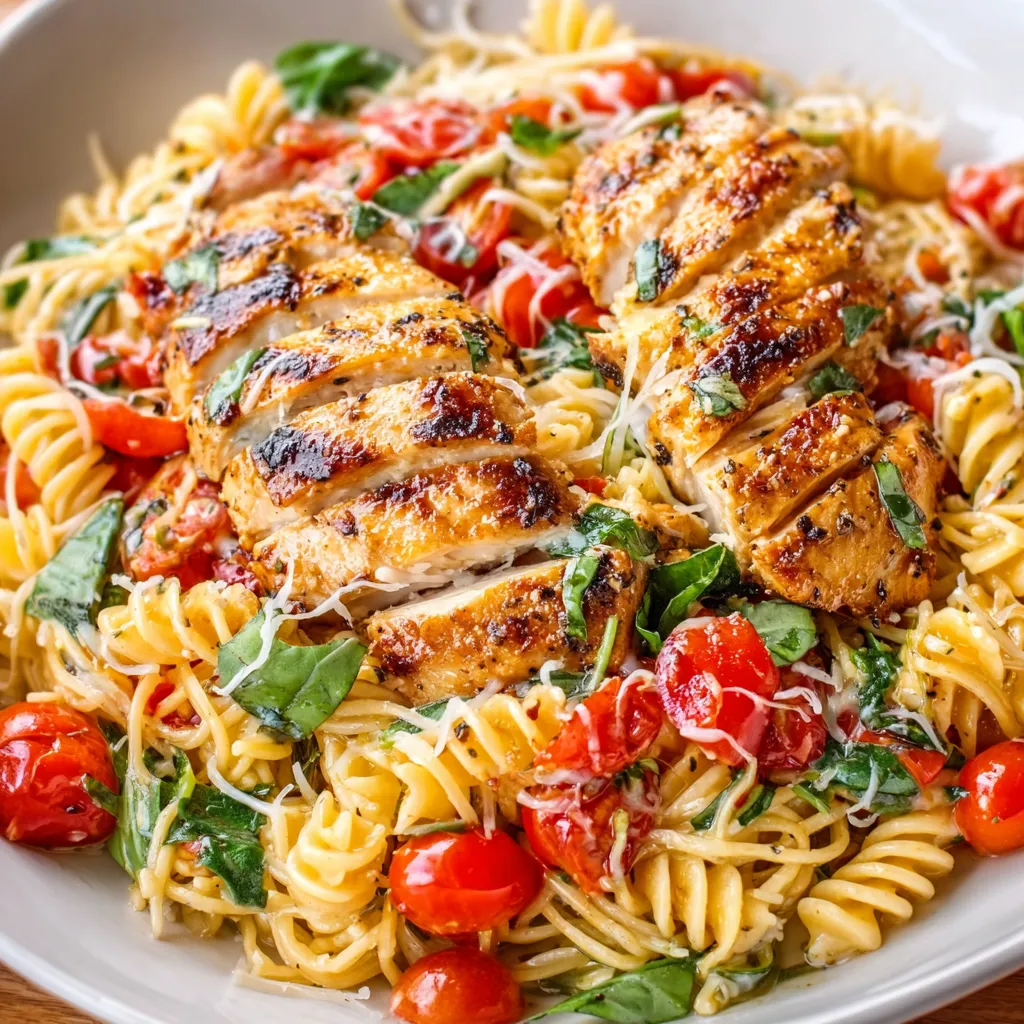
Best Bruschetta Chicken Pasta
This Bruschetta Chicken Pasta recipe combines the freshness of bruschetta with the heartiness of pasta and chicken. It’s a vibrant and flavorful dish perfect for a summer meal, emphasizing fresh ingredients and balanced flavors. The recipe focuses on searing the chicken for maximum flavor and letting the bruschetta topping meld for optimal taste.
Ingredients
Equipment
Method
- Prepare the Bruschetta Topping: In a medium bowl, combine the diced tomatoes, basil, garlic, balsamic vinegar, and olive oil. Season with salt and pepper to taste. Gently mix everything together and let it sit at room temperature for at least 30 minutes to allow the flavors to meld.
- Cook the Pasta: Bring a large pot of salted water to a boil. Add the pasta and cook according to package directions until al dente. Drain the pasta, reserving about 1/2 cup of pasta water.
- Cook the Chicken: While the pasta is cooking, heat the olive oil in a large skillet over medium-high heat. Season the chicken pieces with Italian seasoning, garlic powder, salt, and pepper. Add the chicken to the skillet and cook until browned and cooked through, about 5-7 minutes. Ensure not to overcrowd the pan; cook in batches if necessary for proper browning.
- Combine Everything: Add the cooked pasta to the skillet with the chicken. Pour the bruschetta topping over the pasta and chicken. Toss everything together gently to combine. If the pasta seems dry, add a little of the reserved pasta water until it reaches your desired consistency.
- Finish and Serve: Stir in the grated Parmesan cheese. Serve immediately, garnished with additional Parmesan cheese and red pepper flakes (if using).
Notes
Prioritize fresh, in-season Roma tomatoes and basil for the best flavor. Allowing the bruschetta topping to sit for at least 30 minutes is crucial for flavor development. Sear the chicken in a hot skillet, avoiding overcrowding, to ensure proper browning. Cook the pasta al dente and reserve pasta water to emulsify the sauce and create a creamy texture. Taste and adjust seasoning as needed before serving. You can also add a touch of honey to the bruschetta to tame the tang if needed.