
Unlocking Umami: The Science Behind the Sizzle
The magic of French Onion Pot Roast lies in the synergistic combination of Maillard reaction browning, the caramelization of onions, and the unctuousness of slow-cooked beef. The Maillard reaction, a chemical reaction between amino acids and reducing sugars, is responsible for the deep, savory flavors we associate with browned meat. High heat, typically above 300°F, is crucial for this reaction. Think of it as the foundation upon which all other flavors are built. Caramelization, on the other hand, is the browning of sugars, which occurs at slightly lower temperatures than the Maillard reaction. In French onion soup (and therefore, this pot roast), the long, slow cooking of the onions allows the sugars to break down and develop complex, sweet, and savory notes. Finally, the slow cooking process tenderizes the tough collagen in the beef, transforming it into gelatin, which adds richness and body to the sauce. The addition of dry sherry or red wine contributes acidity, which balances the sweetness of the onions and cuts through the richness of the beef. This creates a symphony of flavors that is greater than the sum of its parts.From Humble Ingredients to Culinary Gold: The Recipe
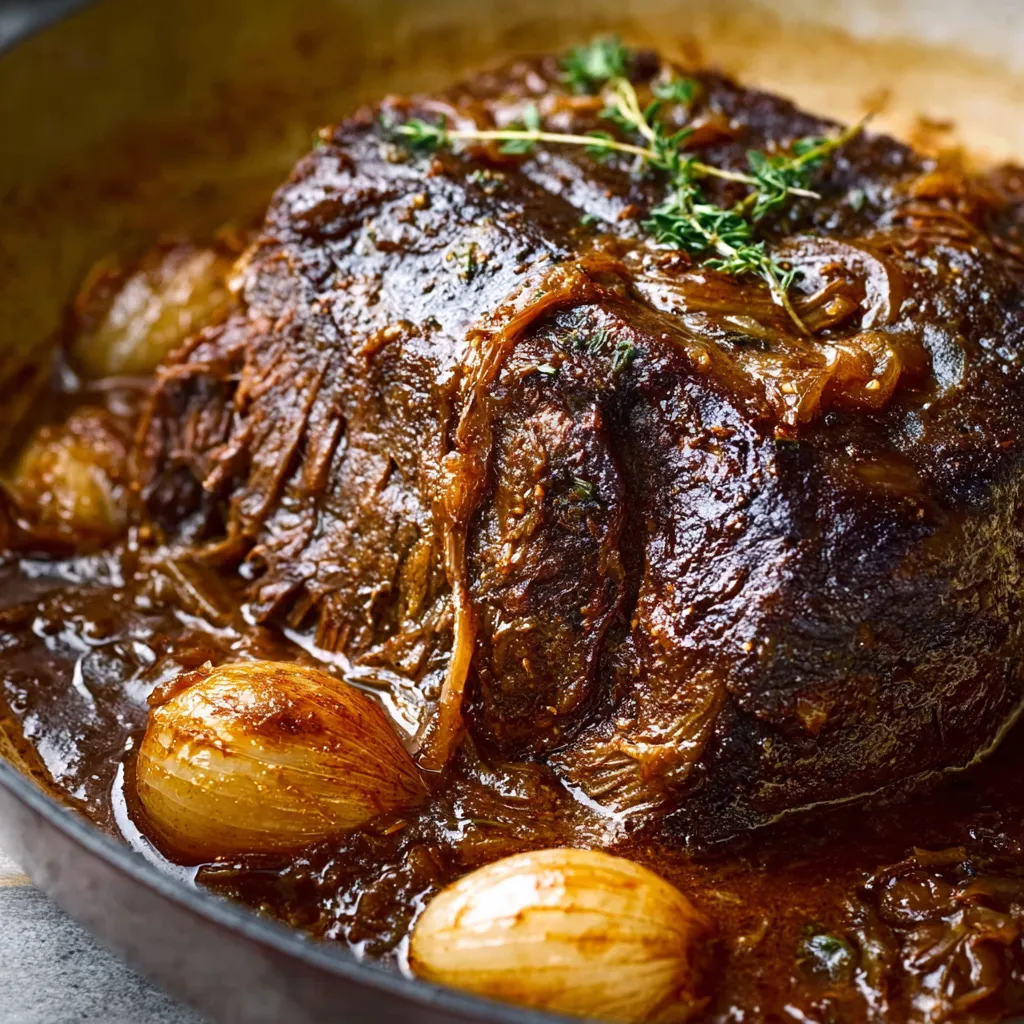 This recipe is designed to be approachable and customizable, allowing you to adapt it to your preferred equipment and ingredient availability.
Ingredients:
- 3-4 lb Beef Chuck Roast
- 2 large Yellow Onions, thinly sliced
- 4 cloves Garlic, minced
- 4 cups Beef Broth
- 1 cup Dry Red Wine or Dry Sherry
- 2 tbsp Olive Oil
- 2 tbsp Balsamic Vinegar
- 1 tbsp Worcestershire Sauce
- 1 tsp Dried Thyme
- 1 tsp Dried Rosemary
- 1 Bay Leaf
- Salt and Black Pepper to taste
- Optional: 1 tbsp Butter
- Optional: Fresh Parsley, chopped, for garnish
Instructions:
- Sear the Beef: Pat the chuck roast dry with paper towels and season generously with salt and pepper. Heat olive oil in a large Dutch oven or heavy-bottomed pot over medium-high heat. Sear the roast on all sides until deeply browned, about 3-5 minutes per side. Remove the roast from the pot and set aside.
- Caramelize the Onions: Add the sliced onions to the pot and cook over medium heat, stirring occasionally, until they are deeply caramelized and golden brown, about 25-35 minutes. This step is crucial for developing the rich flavor of the dish, so be patient and don’t rush it. Add butter for extra richness and browning (optional).
- Deglaze and Sauté: Add the minced garlic to the onions and cook for another minute until fragrant. Pour in the red wine or sherry and scrape up any browned bits from the bottom of the pot. Let the wine reduce slightly, about 2-3 minutes. Stir in the balsamic vinegar and Worcestershire sauce.
- Combine and Simmer: Return the beef roast to the pot. Pour in the beef broth, ensuring the roast is mostly submerged. Add the dried thyme, rosemary, and bay leaf. Bring the mixture to a simmer, then reduce the heat to low, cover the pot, and simmer for 3-4 hours, or until the beef is fork-tender.
- Shred and Serve: Remove the pot roast from the pot and shred it with two forks. Return the shredded beef to the pot and stir to combine with the sauce. Season with salt and pepper to taste.
- Serve: Serve the French Onion Pot Roast over mashed potatoes, rice, or crusty bread. Garnish with fresh parsley, if desired. This also goes well with a side of roasted vegetables.
The Case of the Missing Umami: My Culinary Investigation
My first few attempts were a disaster. I rushed the onion caramelization, the beef was tough, and the flavor was… well, bland. Like many of you, I initially thought that simply throwing everything into a slow cooker would result in a magically delicious dish. I was wrong. So, I decided to treat this culinary challenge like a scientific experiment.Hypothesis 1: Sear or Not to Sear?
My first hunch was that the searing process was crucial. After all, I knew about the Maillard reaction. But did it *really* make that much of a difference? I tested two roasts, one seared and one not. The results were undeniable: the seared roast had a significantly richer, deeper flavor. The unseared roast, while tender, lacked that crucial depth. I also experimented with different oils for searing. Olive oil held up well, but I found that a high-smoke-point avocado oil worked beautifully too.Hypothesis 2: The Caramelization Conundrum
Then, I tackled the onions. My first attempt involved simply sautéing them until they were translucent. Big mistake. The flavor was weak and underdeveloped. I realized that *true* caramelization was essential. This meant patient, low-and-slow cooking, stirring frequently, and allowing the onions to develop a deep, golden-brown color. I even experimented with adding a pinch of sugar to speed up the process, but ultimately, I found that patience was the key.Hypothesis 3: Liquid Assets
The liquid component was another area of experimentation. My initial attempts relied solely on beef broth. The result? A one-dimensional flavor profile. Then, I had an “Aha!” moment: wine! Adding a cup of dry red wine not only deglazed the pot, capturing all those delicious browned bits, but it also added a layer of complexity and acidity that balanced the richness of the beef and onions. I also tested different wines – Cabernet Sauvignon, Merlot, and even a dry sherry. The sherry added a subtle nutty flavor that I found particularly appealing. A splash of Balsamic vinegar was also added in later experiments to help balance out the sweetness.The Eureka Moment!
Finally, everything came together. The seared beef, the deeply caramelized onions, the red wine deglaze, and the slow, patient simmering. The result was a pot roast that was not only incredibly tender but also bursting with flavor. It tasted almost like a French Onion Beef Casserole, but in pot roast form. Now, it’s easily as delectable as other beef based recipes such as Beef And Potato Soup, Pot Roast With Mashed Potatoes Recipe, and Slow Cooker Garlic Butter Beef Potatoes.The Foolproof French Onion Pot Roast Technique: A Step-by-Step Guide
Based on my investigation, here’s the method for guaranteed success:- Sear it like you mean it: Don’t skimp on the searing. A deep, even sear on all sides of the beef is crucial for developing that rich, savory flavor.
- Patience is a virtue (especially with onions): Caramelize the onions low and slow. This step takes time, but it’s essential for the signature French onion flavor. Aim for a deep golden-brown color.
- Deglaze with gusto: Use red wine or dry sherry to deglaze the pot, scraping up all those flavorful browned bits from the bottom.
- Low and slow wins the race: Simmer the pot roast on low heat for at least 3-4 hours, or until the beef is fork-tender. The longer it simmers, the more tender and flavorful it will become.
- Season generously: Don’t be afraid to season the pot roast with salt and pepper throughout the cooking process. Taste and adjust as needed. Add balsamic vinegar for extra depth.
Why is searing the beef roast so important for this French Onion Pot Roast recipe?
Searing the beef is crucial because it promotes the Maillard reaction, a chemical reaction between amino acids and reducing sugars that creates deep, savory flavors. This foundational flavor is key to the richness of the dish.
How long should I caramelize the onions, and what am I looking for?
Caramelize the onions for about 25-35 minutes over medium heat. The goal is to achieve a deep, golden-brown color, which indicates that the sugars have broken down and developed complex, sweet, and savory notes.
What kind of wine is best for deglazing the pot?
The recipe suggests using a dry red wine or dry sherry for deglazing. Cabernet Sauvignon, Merlot, or dry sherry all work well. The sherry adds a subtle nutty flavor.
How long should I simmer the pot roast, and how will I know when it’s done?
Simmer the pot roast on low heat for 3-4 hours, or until the beef is fork-tender. The longer it simmers, the more tender and flavorful it will become.
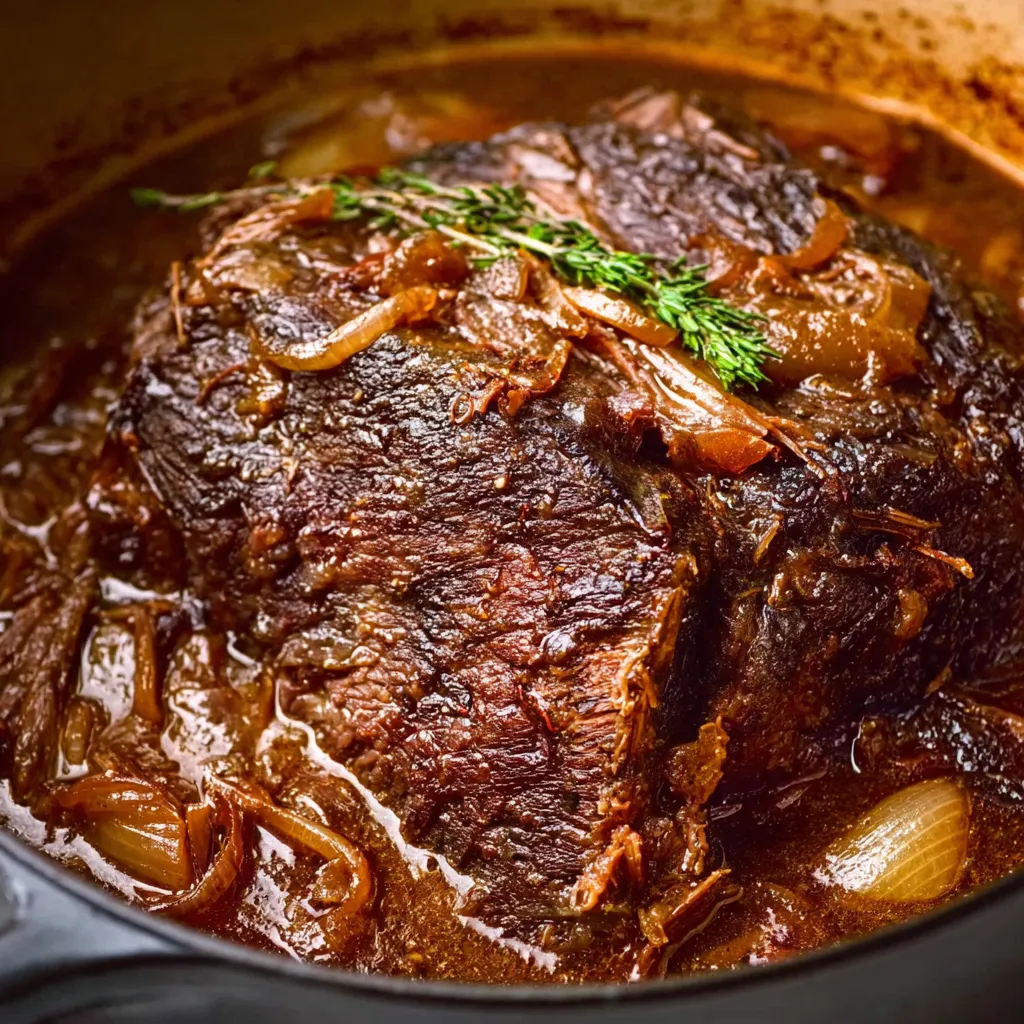
Best French Onion Pot Roast
Ingredients
Equipment
Method
- Sear the Beef: Pat the chuck roast dry with paper towels and season generously with salt and pepper. Heat olive oil in a large Dutch oven or heavy-bottomed pot over medium-high heat. Sear the roast on all sides until deeply browned, about 3-5 minutes per side. Remove the roast from the pot and set aside.
- Caramelize the Onions: Add the sliced onions to the pot and cook over medium heat, stirring occasionally, until they are deeply caramelized and golden brown, about 25-35 minutes. This step is crucial for developing the rich flavor of the dish. Add butter for extra richness and browning (optional).
- Deglaze and Sauté: Add the minced garlic to the onions and cook for another minute until fragrant. Pour in the red wine or sherry and scrape up any browned bits from the bottom of the pot. Let the wine reduce slightly, about 2-3 minutes. Stir in the balsamic vinegar and Worcestershire sauce.
- Combine and Simmer: Return the beef roast to the pot. Pour in the beef broth, ensuring the roast is mostly submerged. Add the dried thyme, rosemary, and bay leaf. Bring the mixture to a simmer, then reduce the heat to low, cover the pot, and simmer for 3-4 hours, or until the beef is fork-tender.
- Shred and Serve: Remove the pot roast from the pot and shred it with two forks. Return the shredded beef to the pot and stir to combine with the sauce. Season with salt and pepper to taste.
- Serve: Serve the French Onion Pot Roast over mashed potatoes, rice, or crusty bread. Garnish with fresh parsley, if desired. This also goes well with a side of roasted vegetables.