
The Science of Stuffing: Beyond Just Bread
The magic of stuffing, at its core, is a delicate dance between moisture absorption and evaporation. Stale bread, the traditional foundation, acts like a sponge, soaking up flavorful broth and other liquids. But here’s the crucial bit: the oven’s heat then needs to *carefully* evaporate some of that moisture, creating pockets of air and preventing a soggy mess. The ingredients we choose and the order in which we introduce them dictate the final texture. Fat, from butter or sausage, coats the bread, preventing it from becoming *too* saturated. Aromatics, like onions, celery, and herbs, infuse the entire dish with depth. And eggs, though optional, act as a binder, adding richness and structure. The key is understanding how each component interacts to create that perfect balance.The Ultimate Homemade Stuffing Recipe
Ingredients:
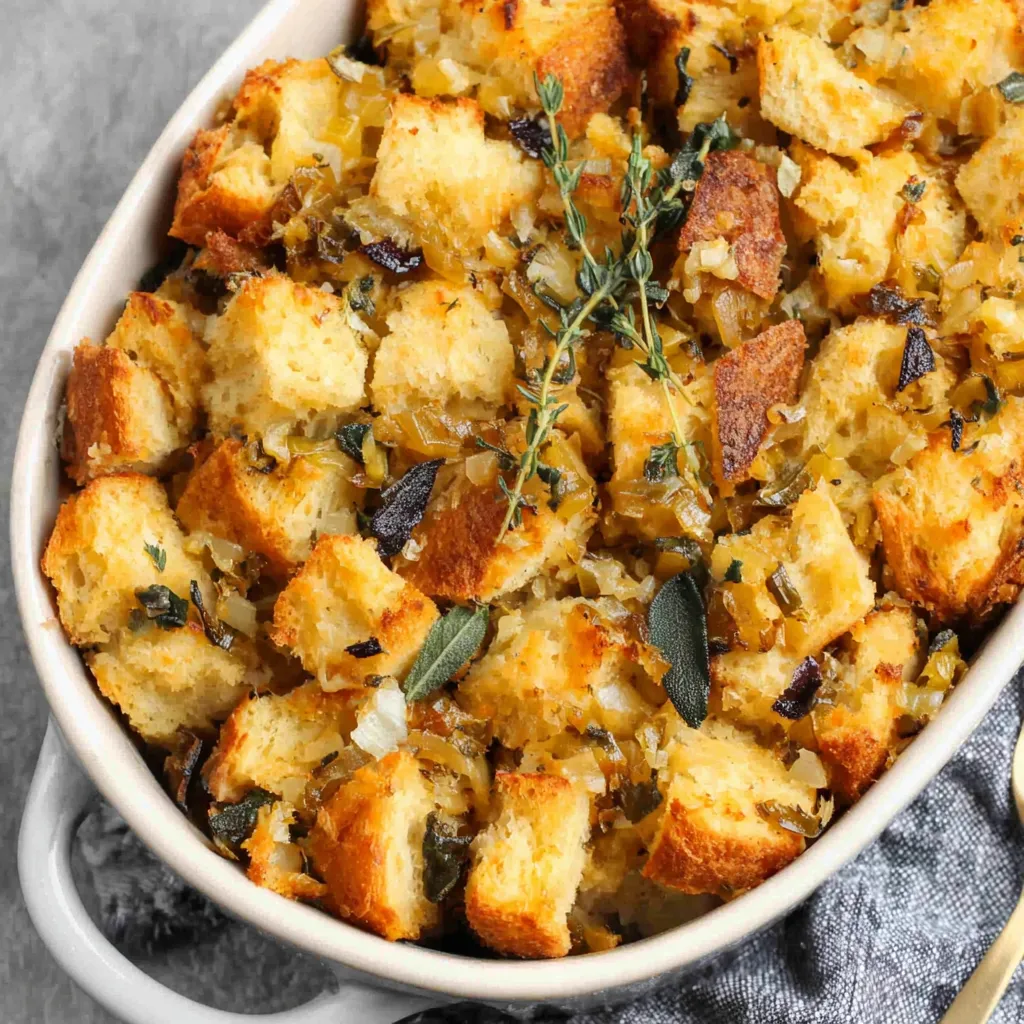
- 1 loaf (about 1 pound) stale bread, such as sourdough, French, or Italian, cut into 1-inch cubes
- 1/2 cup (1 stick) unsalted butter
- 1 large onion, chopped
- 2 stalks celery, chopped
- 4 cloves garlic, minced
- 1 pound Italian sausage, removed from casings (optional, but highly recommended)
- 1 teaspoon dried sage
- 1/2 teaspoon dried thyme
- 1/4 teaspoon dried rosemary
- 1/4 teaspoon ground black pepper
- 1/2 teaspoon salt (or more to taste)
- 4 cups chicken broth
- 2 large eggs, lightly beaten (optional)
- 1/2 cup chopped fresh parsley
Instructions:
- Prepare the Bread: Preheat oven to 300°F (150°C). Spread the bread cubes on a baking sheet and bake for 15-20 minutes, or until lightly toasted and dried out. This is a crucial step to prevent soggy stuffing.
- Sauté Aromatics: In a large skillet or Dutch oven, melt the butter over medium heat. Add the onion and celery and cook until softened, about 5-7 minutes. Add the garlic and cook for another minute until fragrant.
- Brown the Sausage (Optional): If using sausage, add it to the skillet and cook, breaking it up with a spoon, until browned and cooked through. Drain off any excess grease.
- Combine Ingredients: In a large bowl, combine the toasted bread cubes, sautéed onion, celery, garlic, and sausage (if using). Add the sage, thyme, rosemary, pepper, and salt. Toss to combine.
- Add Broth and Eggs: Gradually pour the chicken broth over the bread mixture, tossing to moisten evenly. If using eggs, add them now and toss gently. Be careful not to over-saturate the bread; you want it moist, but not swimming in liquid.
- Add Parsley: Stir in the chopped fresh parsley.
- Bake or Stuff:
- To Bake Separately: Preheat oven to 350°F (175°C). Transfer the stuffing to a greased 9×13 inch baking dish. Cover with foil and bake for 30 minutes. Remove the foil and bake for another 15-20 minutes, or until golden brown and heated through.
- To Stuff a Turkey: Loosely stuff the turkey cavity with the stuffing just before roasting. Do not pack the stuffing tightly, as it will expand during cooking. Cook the turkey according to your preferred method, ensuring the stuffing reaches an internal temperature of 165°F (74°C). Note: Stuffing a turkey increases cooking time.
- Rest and Serve: Let the stuffing rest for 10 minutes before serving.
My Stuffing Pilgrimage: From Soggy Disasters to Eureka!
The Early Years: A Waterlogged Wasteland
My first few attempts at homemade stuffing were a disaster. Like many of you, I initially thought that more broth equaled more flavor and moisture. The result? A soggy, flavorless mess resembling bread pudding gone wrong. The bread, instead of holding its shape, disintegrated into a gluey substance. It was clear I was missing some fundamental understanding of the process.The Sausage Revelation: Fat is Your Friend
Then, I had an “Aha!” moment. I realized the importance of fat. My grandmother always used sausage in her stuffing, and I finally understood why. The fat from the sausage coats the bread, preventing it from becoming overly saturated. It also adds a rich, savory flavor that elevates the entire dish. From then on, sausage became a non-negotiable ingredient in my stuffing. Plus, draining off the grease before adding the bread helped avoid excessive greasiness.The Bread Experiment: Stale is the Key
Next, I experimented with different types of bread. I tried fresh bread, day-old bread, and even store-bought stuffing mix. Fresh bread turned into a mushy paste. Day-old bread was slightly better, but still lacked the necessary structural integrity. Then, I discovered the beauty of truly stale bread. By drying out the bread cubes in a low oven, I created a porous structure that could absorb moisture without becoming soggy. This was a game-changer. It’s similar in principle to making croutons – you want that dry, slightly crunchy texture *before* adding moisture.Broth Balancing Act: Less is More
Finally, I learned the importance of controlling the amount of broth. I started adding the broth gradually, tossing the bread mixture after each addition. This allowed me to gauge the moisture level and stop before the bread became oversaturated. It’s far easier to add more broth than it is to remove it! This careful approach ensured that the stuffing was moist and flavorful, but not soggy. I think this approach would also work well if you are making Honey Bbq Chicken Rice.Herbs and Spices: The Flavor Foundation
The type and quantity of herbs you use can dramatically affect the overall flavor profile of the stuffing. I settled on a blend of sage, thyme, and rosemary, which I find to be classic and comforting. I also discovered that using dried herbs allows the flavors to meld together more effectively during the baking process. Fresh parsley, added at the end, provides a bright, fresh counterpoint to the earthiness of the other herbs. It adds the same “pop” that you would get from the fresh herbs in a bowl of Wild Rice Soup.The Foolproof Method: Stuffing Success, Guaranteed
Here’s a summary of the key steps to achieving stuffing perfection:- Start with Stale Bread: Dry out bread cubes in a low oven to create a porous structure.
- Sauté Aromatics: Cook onions, celery, and garlic in butter to develop a flavorful base.
- Brown the Sausage (Optional): Add sausage for richness and flavor, draining off excess grease.
- Combine Ingredients: Toss bread cubes with aromatics, sausage, and dried herbs.
- Add Broth Gradually: Moisten the bread mixture with chicken broth, being careful not to oversaturate.
- Bake or Stuff: Bake separately or stuff a turkey, ensuring the stuffing reaches a safe internal temperature.
- Rest Before Serving: Let the stuffing rest for 10 minutes to allow the flavors to meld and the texture to stabilize.
Why is stale bread better for stuffing than fresh bread?
Stale bread, especially when dried out in a low oven, creates a porous structure that can absorb moisture without becoming soggy. Fresh bread tends to turn into a mushy paste.
How do I prevent my stuffing from becoming too soggy?
Use stale bread, dry it out in the oven, gradually add broth, and use fat (like butter or sausage) to coat the bread and prevent over-saturation.
Is it better to bake the stuffing separately or inside the turkey?
The article provides instructions for both. You can bake it separately in a greased baking dish, or loosely stuff it into the turkey cavity just before roasting. If stuffing the turkey, ensure the stuffing reaches an internal temperature of 165°F (74°C), which will increase the turkey’s overall cooking time.
Why is sausage a recommended ingredient in this stuffing recipe?
Sausage adds richness and savory flavor to the stuffing. The fat from the sausage coats the bread, preventing it from becoming overly saturated and mushy. It’s important to drain off any excess grease after browning the sausage.
Best Homemade Stuffing Ever
Ingredients
Equipment
Method
- Preheat oven to 300°F (150°C). Spread the bread cubes on a baking sheet and bake for 15-20 minutes, or until lightly toasted and dried out.
- In a large skillet or Dutch oven, melt the butter over medium heat. Add the onion and celery and cook until softened, about 5-7 minutes. Add the garlic and cook for another minute until fragrant.
- If using sausage, add it to the skillet and cook, breaking it up with a spoon, until browned and cooked through. Drain off any excess grease.
- In a large bowl, combine the toasted bread cubes, sautéed onion, celery, garlic, and sausage (if using). Add the sage, thyme, rosemary, pepper, and salt. Toss to combine.
- Gradually pour the chicken broth over the bread mixture, tossing to moisten evenly. If using eggs, add them now and toss gently. Be careful not to over-saturate the bread; you want it moist, but not swimming in liquid.
- Stir in the chopped fresh parsley.
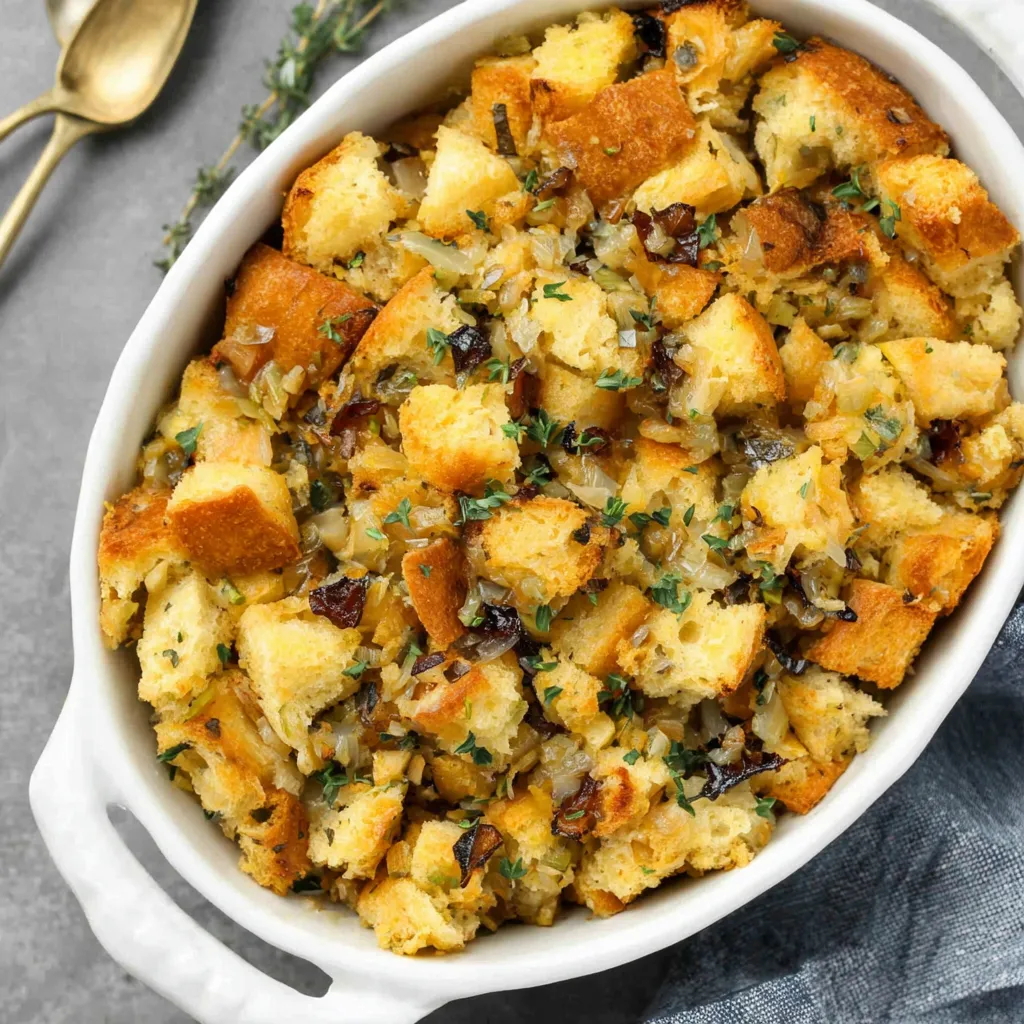
- Preheat oven to 350°F (175°C). Transfer the stuffing to a greased 9×13 inch baking dish. Cover with foil and bake for 30 minutes. Remove the foil and bake for another 15-20 minutes, or until golden brown and heated through. Alternatively, loosely stuff the turkey cavity with the stuffing just before roasting, ensuring the stuffing reaches an internal temperature of 165°F (74°C).
- Let the stuffing rest for 10 minutes before serving.