
The Alchemic Equations of Stuffing: A Scientific Deconstruction
Stuffing, at its core, is an exercise in moisture control and flavor infusion. We’re essentially trying to create a cohesive, flavorful mass from relatively dry ingredients. Here’s the breakdown of the key scientific principles at play:- Bread Chemistry: Stale bread is crucial. As bread ages, retrogradation occurs – the starch molecules realign and recrystallize, making the bread drier and able to absorb more liquid without becoming mushy. Different breads have different starch contents and structures, impacting their absorbency. A crusty artisan loaf will behave differently than a soft white bread.
- Moisture Migration: The broth (or stock) you use is the primary source of moisture. Hot broth penetrates the bread more effectively than cold, and fat in the broth (from meat drippings or butter) carries flavor molecules deeper into the bread’s structure. Over-soaking leads to a gummy texture, while under-soaking results in dryness.
- Flavor Compounds: Herbs, spices, vegetables, and meats contribute a complex array of volatile aromatic compounds. Sautéing vegetables before adding them to the stuffing unlocks their flavor potential. The Maillard reaction, the browning of proteins and sugars, adds depth and complexity.
- Binding Agents: Eggs are sometimes used as a binding agent, but their role is subtle. They provide a slight structure and richness but can also lead to a denser, less airy stuffing if overused. The key is to create just enough of a matrix to hold everything together.
The Ultimate Homemade Stuffing Recipe
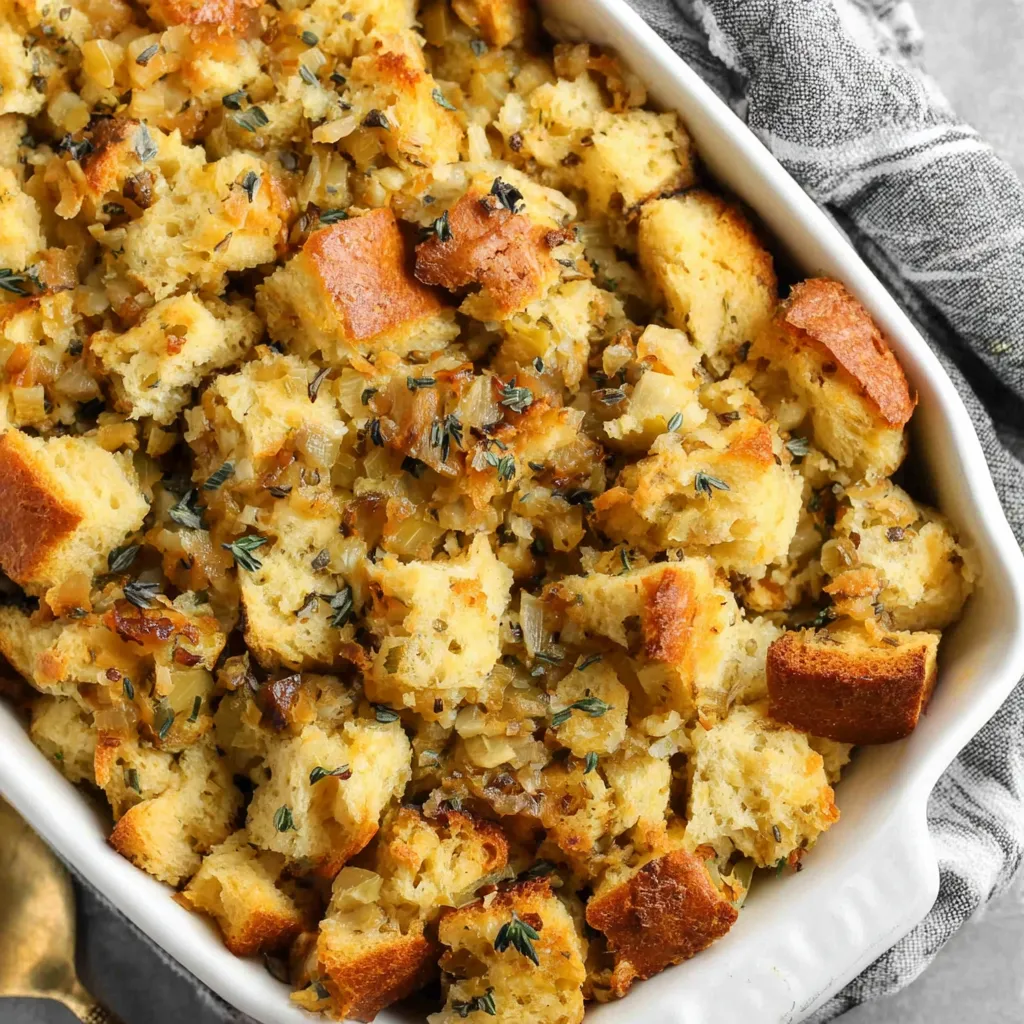 Here’s my perfected recipe, built on years of experimentation and scientific understanding. This recipe is designed to deliver a moist, flavorful, and perfectly textured stuffing every time.
Ingredients:
- 1 large loaf (about 1 pound) of day-old crusty bread, such as sourdough or French bread, cut into 1-inch cubes
- 1/2 cup (1 stick) unsalted butter
- 1 large onion, chopped
- 2 celery stalks, chopped
- 2 carrots, chopped
- 1 pound Italian sausage, removed from casings
- 1 cup chopped fresh mushrooms
- 1/2 cup chopped fresh parsley
- 1/4 cup chopped fresh sage
- 2 teaspoons chopped fresh thyme
- 1 teaspoon salt
- 1/2 teaspoon black pepper
- 4 cups chicken broth (low-sodium)
- 2 large eggs, lightly beaten
Instructions:
- Preheat oven to 350°F (175°C).
- Spread bread cubes on a baking sheet and bake for 10-15 minutes, or until lightly toasted and dried out. Remove from oven and set aside.
- In a large skillet, melt butter over medium heat. Add onion, celery, and carrots and cook until softened, about 8-10 minutes.
- Add sausage to the skillet and cook, breaking it up with a spoon, until browned.
- Add mushrooms to the skillet and cook until softened, about 5 minutes.
- Stir in parsley, sage, thyme, salt, and pepper. Cook for 1 minute more, until fragrant.
- In a large bowl, combine toasted bread cubes and sausage mixture.
- Pour chicken broth over the bread mixture, tossing gently to coat evenly.
- Stir in beaten eggs.
- Transfer the stuffing to a greased 9×13 inch baking dish.
- Cover with foil and bake for 30 minutes.
- Remove foil and bake for another 15-20 minutes, or until golden brown and heated through.
- Let stand for 10 minutes before serving.
The Investigation: My Quest for Stuffing Nirvana
My journey to perfect stuffing wasn’t a straight line. It was a winding path filled with soggy disappointments, dry crumbly failures, and moments of near despair. But, like any good food scientist, I persisted, meticulously documenting my experiments and analyzing the results.The Soggy Bread Swamp
My first few attempts were a disaster. I used fresh bread, assuming it would be moister and more delicious. Wrong! The stuffing turned into a gummy, gluey mess. The bread absorbed all the broth and refused to hold its shape. The texture was revolting, and the flavor was muted.The Dry Crumbly Desert
Then, I overcorrected. I used bread that was *too* stale. The result? A dry, crumbly desert that tasted like cardboard. No amount of broth could rescue it. It was an utter failure.The Sausage Saga
Like many of you, I initially thought that all sausage was created equal. I grabbed whatever was on sale at the grocery store. But some sausages were too greasy, leaving a slick of oil on top of the stuffing. Others lacked flavor, leaving the stuffing bland. I discovered that high-quality Italian sausage, removed from its casing, provided the perfect balance of fat and flavor.The Herbaceous Revelation
The herbs were another area of experimentation. I initially used dried herbs, figuring they were more convenient. But the flavor was flat and one-dimensional. Fresh herbs, on the other hand, brought a vibrant, aromatic complexity that transformed the stuffing. The combination of parsley, sage, and thyme proved to be the winning formula. You can serve this with Turkey Breast With Cranberry for a full meal.The “Aha!” Moment: Toasting the Bread
Finally, I had an “Aha!” moment. Toasting the bread cubes before adding them to the broth. This crucial step created a slightly crispy exterior that helped the bread retain its structure while still absorbing the flavorful liquid. It was the key to achieving the perfect balance of moisture and texture. This also pairs well with Green Bean Casserole. For a variation, you can try Cranberry Turkey Stuffing Balls.The Foolproof Method: Mastering the Art of Stuffing
Based on my extensive investigation, here’s a step-by-step guide to creating the ultimate homemade stuffing:- Choose the Right Bread: Use a day-old crusty bread, such as sourdough or French bread.
- Toast the Bread: Toast the bread cubes until lightly golden and dried out. This is crucial for preventing sogginess.
- Sauté the Vegetables: Sauté the onion, celery, and carrots in butter until softened. This unlocks their flavor and adds depth to the stuffing.
- Use High-Quality Sausage: Use high-quality Italian sausage, removed from its casings. Brown the sausage thoroughly.
- Don’t Skimp on the Herbs: Use fresh herbs for the best flavor. Parsley, sage, and thyme are a classic combination.
- Moisten, Don’t Drown: Pour warm chicken broth over the bread mixture gradually, tossing gently to coat evenly. Avoid over-soaking.
- Add Eggs (Sparingly): Use eggs as a binding agent, but don’t overdo it. A couple of eggs will help hold the stuffing together without making it dense.
- Bake Covered, Then Uncovered: Bake the stuffing covered with foil for the first 30 minutes to retain moisture, then uncover for the last 15-20 minutes to allow it to brown. You can also pair this with Cranberry Brie Stuffed Chicken or Sweet Potato Casserole.
- Rest Before Serving: Let the stuffing stand for 10 minutes before serving. This allows the flavors to meld and the texture to stabilize.
Why is it important to use stale or day-old bread for stuffing?
Stale bread is crucial because as it ages, the starch molecules realign and recrystallize, making the bread drier and able to absorb more liquid without becoming mushy.
Why does the recipe instruct to toast the bread cubes before adding them to the broth?
Toasting the bread cubes creates a slightly crispy exterior that helps the bread retain its structure while still absorbing the flavorful liquid, preventing sogginess.
What is the importance of using fresh herbs instead of dried herbs in the stuffing recipe?
Fresh herbs bring a vibrant, aromatic complexity that transforms the stuffing. Dried herbs result in a flatter, one-dimensional flavor.
Why is it recommended to bake the stuffing covered with foil for part of the baking time?
Baking the stuffing covered with foil for the first 30 minutes helps to retain moisture, then uncovering it for the last 15-20 minutes allows it to brown nicely.
Best Homemade Stuffing Recipe
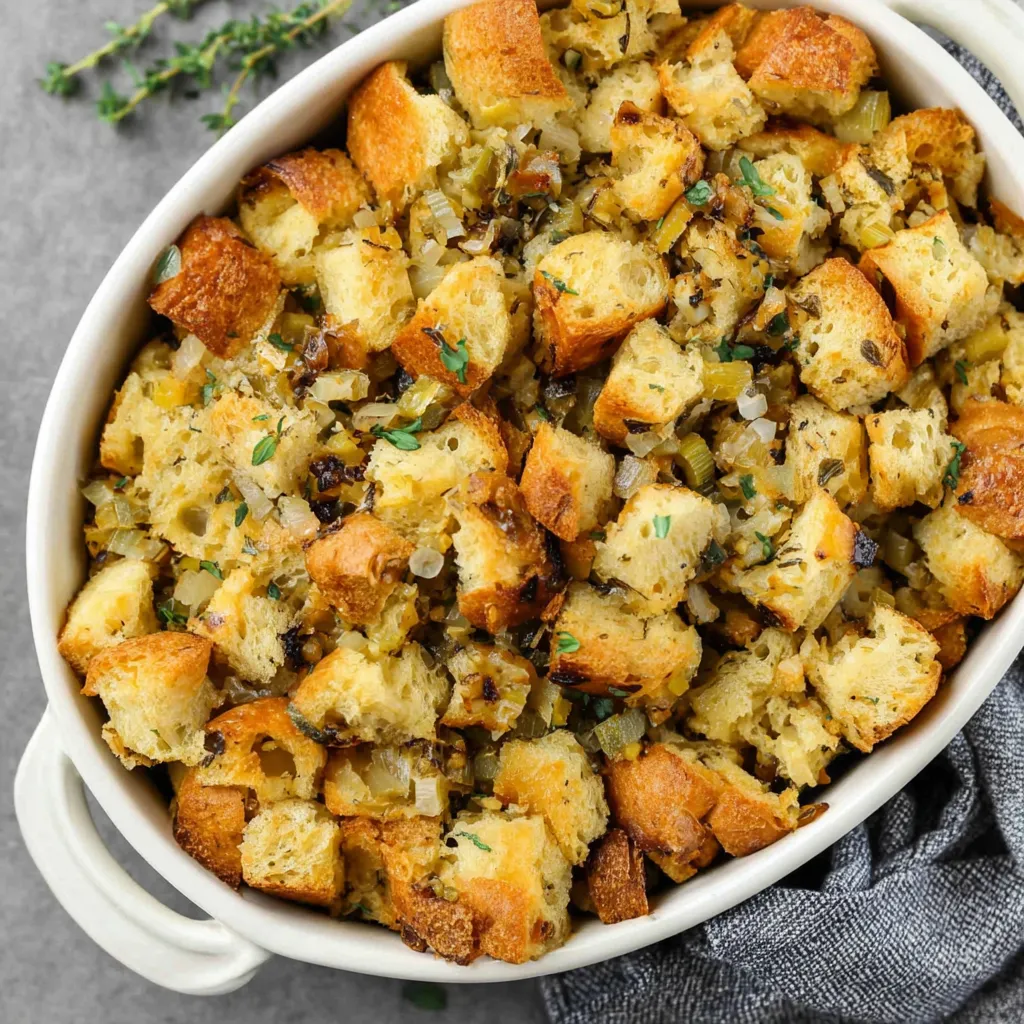
This homemade stuffing recipe is designed to deliver a moist, flavorful, and perfectly textured side dish every time. Featuring a blend of toasted bread, savory sausage, aromatic vegetables, and fresh herbs, this stuffing will be the star of your Thanksgiving feast.
Ingredients
Equipment
Method
- Preheat oven to 350°F (175°C).
- Spread bread cubes on a baking sheet and bake for 10-15 minutes, or until lightly toasted and dried out. Remove from oven and set aside.
- In a large skillet, melt butter over medium heat. Add onion, celery, and carrots and cook until softened, about 8-10 minutes.
- Add sausage to the skillet and cook, breaking it up with a spoon, until browned.
- Add mushrooms to the skillet and cook until softened, about 5 minutes.
- Stir in parsley, sage, thyme, salt, and pepper. Cook for 1 minute more, until fragrant.
- In a large bowl, combine toasted bread cubes and sausage mixture.
- Pour chicken broth over the bread mixture, tossing gently to coat evenly.
- Stir in beaten eggs.
- Transfer the stuffing to a greased 9×13 inch baking dish.
- Cover with foil and bake for 30 minutes.
- Remove foil and bake for another 15-20 minutes, or until golden brown and heated through.
- Let stand for 10 minutes before serving.
Notes
Use day-old crusty bread for the best texture. Toasting the bread cubes is crucial for preventing sogginess. Use high-quality Italian sausage for the best flavor. Fresh herbs provide a more vibrant flavor than dried herbs. The stuffing can be prepared ahead of time and stored in the refrigerator for up to 24 hours before baking. For a vegetarian option, omit the sausage and add more vegetables. Store leftovers in an airtight container in the refrigerator for up to 3 days.