
Decoding the Crimson Depths: The Science of Thai Red Curry
The allure of Thai red curry lies in its complex flavor profile, and understanding the science behind it is crucial to mastering the noodle soup version. First, let’s break down the curry paste itself. The fundamental ingredients—red chilies (the source of heat and color), garlic, galangal (for an earthy, citrusy note), lemongrass (for bright, herbal freshness), kaffir lime leaves (for aromatic citrus), coriander root (for a deep, savory base), cumin, peppercorns, and shrimp paste (or fish sauce for umami)—create a symphony of flavors. The process of grinding these ingredients releases essential oils, which are then activated by heat during cooking. Coconut milk is the second key element, contributing creaminess and sweetness. The fat content in coconut milk also acts as a solvent, helping to distribute the flavors of the curry paste evenly throughout the soup. Furthermore, simmering the coconut milk reduces it, intensifying its flavor and creating a richer texture. Finally, the addition of protein (typically chicken, tofu, or shrimp) and vegetables not only provides substance but also contributes to the overall flavor complexity. The protein absorbs the curry flavors, while the vegetables add textural contrast and complementary tastes. Fish sauce or soy sauce balances the sweetness and adds umami depth. Sugar or palm sugar is often used to round out the flavors. Understanding these scientific principles allows us to troubleshoot common problems, such as a curry that is too spicy, too bland, or lacks depth.The Crimson Bowl: Thai Red Curry Noodle Soup Recipe
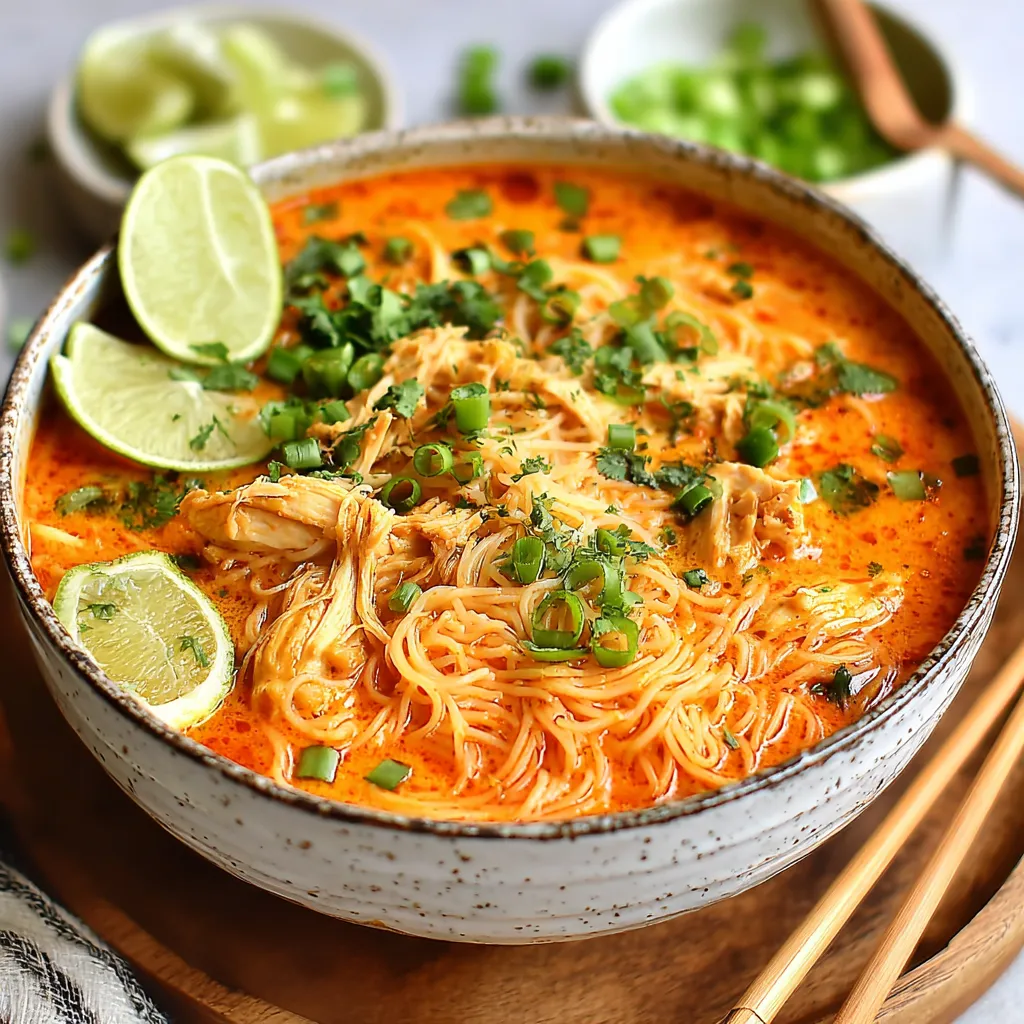 Here’s a detailed recipe to guide you towards achieving Thai Red Curry Noodle Soup perfection:
Ingredients:
- For the Red Curry Paste:
- 6-8 dried red chilies, soaked in warm water for 30 minutes
- 4 cloves garlic
- 1 inch galangal, peeled and sliced
- 2 stalks lemongrass, finely sliced
- 2 kaffir lime leaves, roughly chopped
- 1 tablespoon coriander root, chopped
- 1 teaspoon cumin seeds
- 1/2 teaspoon white peppercorns
- 1 teaspoon shrimp paste (or 1 tablespoon fish sauce)
- For the Soup:
- 2 tablespoons vegetable oil
- 2 tablespoons red curry paste (store-bought or homemade)
- 1 can (13.5 oz) full-fat coconut milk
- 2 cups chicken broth (or vegetable broth)
- 1 tablespoon fish sauce (or soy sauce)
- 1 tablespoon palm sugar (or brown sugar)
- 1 lime, juiced
- 8 oz rice noodles (thin or wide), cooked according to package directions
- 1 lb chicken breast, thinly sliced (or tofu, or shrimp)
- 1 cup mixed vegetables (broccoli florets, bell peppers, sliced carrots, snow peas)
- Optional toppings: fresh cilantro, basil, lime wedges, bean sprouts, chili oil
Instructions:
- Prepare the Curry Paste (if making from scratch): Combine all curry paste ingredients in a food processor or mortar and pestle. Process or pound until a smooth paste forms.
- Sauté the Curry Paste: Heat vegetable oil in a large pot or Dutch oven over medium heat. Add the red curry paste and cook, stirring constantly, for 2-3 minutes, or until fragrant. Be careful not to burn the paste.
- Add Coconut Milk: Pour in the coconut milk and stir well to combine with the curry paste. Bring to a simmer.
- Add Broth and Seasonings: Pour in the chicken broth (or vegetable broth). Add fish sauce (or soy sauce) and palm sugar (or brown sugar). Stir to dissolve the sugar.
- Simmer the Soup: Bring the soup to a gentle simmer and cook for 10-15 minutes, allowing the flavors to meld together.
- Add Protein and Vegetables: Add the sliced chicken (or tofu, or shrimp) and mixed vegetables to the soup. Cook until the protein is cooked through and the vegetables are tender-crisp, about 5-7 minutes.
- Adjust Seasoning: Taste the soup and adjust seasoning as needed. Add more fish sauce (or soy sauce) for saltiness, palm sugar (or brown sugar) for sweetness, or lime juice for acidity.
- Assemble the Noodle Soup: Divide the cooked rice noodles among bowls. Ladle the red curry soup over the noodles.
- Garnish and Serve: Garnish with fresh cilantro, basil, lime wedges, bean sprouts, and chili oil, if desired. Serve immediately.
Diary of a Curry Quest: My Red Curry Noodle Soup Investigation
My journey to crafting the perfect Thai Red Curry Noodle Soup was far from straightforward. My first few attempts were a disaster, resulting in curries that were either overwhelmingly spicy, bland, or simply lacking that authentic Thai flavor. Like many of you, I initially thought that simply throwing ingredients together would suffice. I was wrong.The Spice Dilemma: Taming the Fire
The initial challenge was controlling the heat. I used too many chilies in my homemade curry paste, resulting in a soup that was inedible for most palates. The “Aha!” moment came when I realized the importance of soaking the dried chilies in warm water before grinding them. This not only softens the chilies but also helps to temper their spiciness, allowing me to extract more flavor without scorching my taste buds. I also started using a combination of dried and fresh chilies for a more balanced heat.The Umami Enigma: Unlocking Depth of Flavor
Another hurdle was achieving that signature umami depth that defines authentic Thai cuisine. My early attempts tasted flat and one-dimensional. I experimented with different types of fish sauce, discovering that some brands are significantly more potent and flavorful than others. Then, I had an ‘Aha!’ moment when I started adding a small amount of shrimp paste to my curry paste. The pungent aroma of shrimp paste might be off-putting to some, but it adds an irreplaceable layer of savory complexity. If you are vegetarian or vegan, a high-quality soy sauce or even a touch of miso paste can work wonders.The Texture Tango: Balancing Creaminess and Broth
Finally, I struggled with the texture of the soup. It was either too thick and cloying or too watery and thin. The key, I learned, is the ratio of coconut milk to broth. Using full-fat coconut milk is essential for achieving that creamy richness, but it needs to be balanced with enough broth to create a soup-like consistency. Simmering the coconut milk for a longer period also helps to thicken it naturally and intensify its flavor.The Crimson Code: The Foolproof Method for Perfect Thai Red Curry Noodle Soup
After countless experiments and delicious (and not-so-delicious) bowls of soup, I’ve distilled the process into a foolproof method:- Soak Your Chilies: If using dried red chilies for your curry paste, always soak them in warm water for at least 30 minutes to soften them and temper their spiciness.
- Bloom Your Curry Paste: Sautéing the curry paste in oil before adding the coconut milk is crucial for releasing the essential oils and maximizing its flavor.
- Use Full-Fat Coconut Milk: For the richest, creamiest soup, opt for full-fat coconut milk.
- Simmer, Don’t Boil: Simmering the soup gently allows the flavors to meld together without scorching the coconut milk.
- Taste and Adjust: The key to any great dish is to taste and adjust the seasoning as needed. Don’t be afraid to add more fish sauce, sugar, or lime juice to achieve the perfect balance of flavors.
- Fresh is Best: Use fresh herbs like cilantro and basil as garnishes for a burst of freshness and aroma.
What is the key to achieving a balanced flavor profile in Thai Red Curry Noodle Soup?
Achieving the perfect balance involves understanding the science behind the curry, including the curry paste ingredients (chilies, garlic, galangal, lemongrass, etc.), coconut milk, protein, and vegetables. Balancing spicy, creamy, savory, and sweet elements is crucial.
Why is soaking dried red chilies important when making homemade red curry paste?
Soaking dried red chilies in warm water before grinding them softens the chilies and helps to temper their spiciness, allowing you to extract more flavor without making the curry overly spicy.
What can I use as a substitute for shrimp paste to achieve umami flavor if I’m vegetarian or vegan?
If you are vegetarian or vegan, a high-quality soy sauce or even a touch of miso paste can be used as a substitute for shrimp paste to add umami depth to the curry.
Why is using full-fat coconut milk recommended for Thai Red Curry Noodle Soup?
Using full-fat coconut milk is essential for achieving that creamy richness in the soup. The fat content also helps distribute the flavors of the curry paste evenly and creates a richer texture.
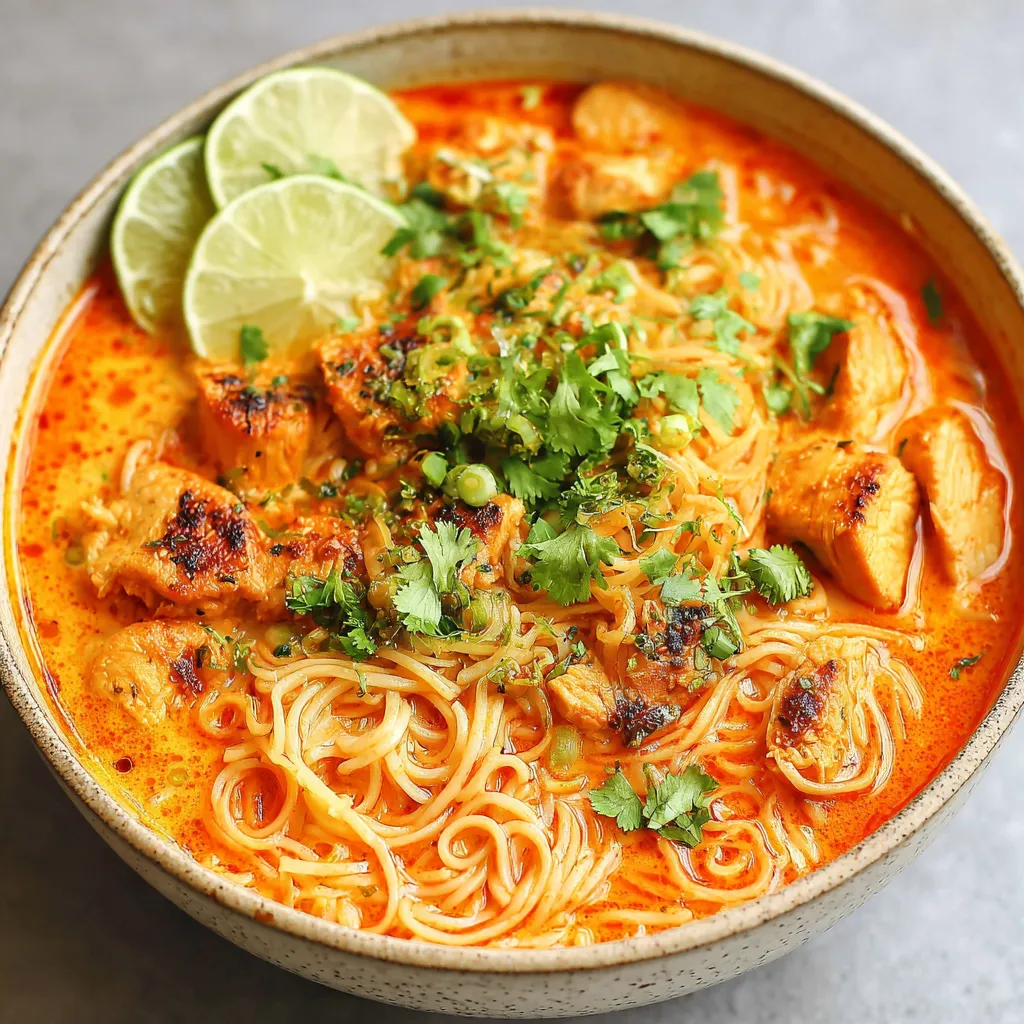
Best Thai Red Curry Noodle Soup
Ingredients
Equipment
Method
- Prepare the Curry Paste (if making from scratch): Combine all curry paste ingredients in a food processor or mortar and pestle. Process or pound until a smooth paste forms.
- Sauté the Curry Paste: Heat vegetable oil in a large pot or Dutch oven over medium heat. Add the red curry paste and cook, stirring constantly, for 2-3 minutes, or until fragrant. Be careful not to burn the paste.
- Add Coconut Milk: Pour in the coconut milk and stir well to combine with the curry paste. Bring to a simmer.
- Add Broth and Seasonings: Pour in the chicken broth (or vegetable broth). Add fish sauce (or soy sauce) and palm sugar (or brown sugar). Stir to dissolve the sugar.
- Simmer the Soup: Bring the soup to a gentle simmer and cook for 10-15 minutes, allowing the flavors to meld together.
- Add Protein and Vegetables: Add the sliced chicken (or tofu, or shrimp) and mixed vegetables to the soup. Cook until the protein is cooked through and the vegetables are tender-crisp, about 5-7 minutes.
- Adjust Seasoning: Taste the soup and adjust seasoning as needed. Add more fish sauce (or soy sauce) for saltiness, palm sugar (or brown sugar) for sweetness, or lime juice for acidity.
- Assemble the Noodle Soup: Divide the cooked rice noodles among bowls. Ladle the red curry soup over the noodles.
- Garnish and Serve: Garnish with fresh cilantro, basil, lime wedges, bean sprouts, and chili oil, if desired. Serve immediately.