
Unlocking the Secrets: The Science Behind Black Pepper Chicken
The magic of Black Pepper Chicken lies in a beautiful interplay of chemical reactions. First, let’s talk about the Maillard reaction. This is what gives the chicken its beautiful brown crust and deep, savory flavor. The Maillard reaction occurs when amino acids (from the protein in the chicken) and reducing sugars (like those found in honey or sugar) are heated together. The hotter the temperature, the faster and more intense the reaction. Next, consider the role of black pepper. Black pepper gets its pungent flavor from a compound called piperine. Heat enhances the flavor of piperine, which is why freshly cracked black pepper is so crucial in this dish. Pre-ground pepper loses its potency quickly as the piperine degrades. Furthermore, fat-soluble flavor compounds in the pepper are released more readily in oil, contributing to the dish’s overall aroma and taste. Finally, the sauce’s viscosity and cling are essential. Cornstarch acts as a thickening agent. When heated in liquid, cornstarch granules absorb water, swell, and create a viscous solution. The balance of cornstarch to liquid is key to achieving that perfect, glossy coating without a gluey texture. Soy sauce, rich in glutamates, provides umami, enhancing the savory notes and contributing to the overall depth of flavor. The small amount of sugar balances the saltiness of the soy sauce and the heat from the pepper, creating a harmonious and craveable dish.The Irresistible Black Pepper Chicken Recipe
This recipe has been honed through many trials, and I am sure you will love it.Ingredients:
- For the Chicken:
- 1.5 lbs boneless, skinless chicken thighs, cut into 1-inch pieces
- 1 tablespoon soy sauce
- 1 tablespoon rice wine (or dry sherry)
- 1 teaspoon cornstarch
- 1/2 teaspoon ground ginger
- 1/4 teaspoon garlic powder
- 1/4 teaspoon salt
- For the Sauce:
- 2 tablespoons vegetable oil
- 2 cloves garlic, minced
- 1 tablespoon ginger, minced
- 1/4 cup soy sauce
- 2 tablespoons oyster sauce
- 2 tablespoons brown sugar
- 1 tablespoon rice wine vinegar
- 1 tablespoon freshly cracked black pepper, plus more to taste
- 1 teaspoon sesame oil
- 1 tablespoon cornstarch
- 1/4 cup chicken broth (or water)
- Optional: 1/4 teaspoon red pepper flakes for extra heat
- For Serving:
- Cooked rice
- Chopped green onions (optional)
- Sesame seeds (optional)
Instructions:
- Marinate the Chicken: In a medium bowl, combine the chicken pieces with soy sauce, rice wine, cornstarch, ginger, garlic powder, and salt. Mix well and let marinate for at least 20 minutes, or up to 2 hours in the refrigerator.
- Prepare the Sauce: In a small bowl, whisk together soy sauce, oyster sauce, brown sugar, rice wine vinegar, black pepper, sesame oil, cornstarch, and chicken broth. Set aside.
- Cook the Chicken: Heat 1 tablespoon of vegetable oil in a large skillet or wok over medium-high heat. Add the marinated chicken and cook, stirring occasionally, until browned and cooked through (about 5-7 minutes). Remove the chicken from the skillet and set aside.
- Sauté Aromatics: Add the remaining 1 tablespoon of vegetable oil to the skillet. Add the minced garlic and ginger and cook for about 30 seconds, or until fragrant, being careful not to burn them.
- Add the Sauce: Pour the prepared sauce into the skillet and bring to a simmer, stirring constantly. Cook for 1-2 minutes, or until the sauce has thickened. If you want a spicier kick, you might even consider trying it in the Spicy Garlic Butter Chicken Tortellini or the Hot Honey Chicken Bowl for an extra flavor.
- Combine and Serve: Return the cooked chicken to the skillet and toss to coat it evenly with the sauce. Cook for another minute, allowing the flavors to meld together.
- Serve: Serve the Black Pepper Chicken over cooked rice. Garnish with chopped green onions and sesame seeds, if desired.
My Black Pepper Chicken Investigation: A Culinary Journey
My journey to perfecting Black Pepper Chicken was far from a straight line. Like many of you, I initially thought it was just a matter of throwing some ingredients together in a pan. My first few attempts were a disaster – either the chicken was dry, the sauce was bland, or the texture was completely off. But I wasn’t ready to give up. I was determined to understand the science behind this dish and unlock its secrets.The Great Chicken Debacle: Dryness and Toughness
My initial problem was consistently dry and tough chicken. I tried using chicken breasts, thinking they were a healthier option, but they always ended up overcooked and rubbery. Then, I had an “Aha!” moment when I realized that chicken thighs, with their higher fat content, were the key. Not only are they more forgiving to cook, but they also stay much juicier and more flavorful. I also learned the importance of marinating the chicken. The marinade not only tenderizes the meat but also infuses it with flavor, preventing it from drying out during cooking.The Bland Sauce Blues: Flavor Infusion
Another major hurdle was achieving that complex, layered flavor that I loved in restaurant versions. My early sauces were always one-dimensional and lacked depth. I experimented with different ratios of soy sauce, sugar, and vinegar, but nothing seemed to work. Then, I discovered the power of oyster sauce. A small amount of oyster sauce added a significant boost of umami and richness to the sauce. I also realized that freshly cracked black pepper was non-negotiable. The pre-ground pepper simply couldn’t compete with the vibrant aroma and intense flavor of freshly cracked peppercorns. This realization reminded me of my success when I made Honey Pepper Chicken Pasta.The Texture Tango: Tackling Thickness
Getting the right sauce texture was another challenge. Some batches were too thin and watery, while others were thick and gloppy. I learned that the key was to use the right amount of cornstarch and to whisk it thoroughly with the chicken broth before adding it to the pan. This prevented the cornstarch from clumping and ensured a smooth, glossy sauce. I also discovered that cooking the sauce over medium heat, rather than high heat, allowed it to thicken gradually without burning or sticking to the pan. I was tempted to add some garlic and parmesan, like in the Creamy Garlic Parmesan Crockpot Chicken, but decided against it.The Sweet Spot: Balancing the Flavors
Finally, finding the perfect balance of sweet, savory, and spicy was essential. The initial recipes I tried had a lot of sugar, which overwhelmed the other flavors. By carefully adjusting the amount of brown sugar and rice wine vinegar, I was able to create a sauce that was complex and balanced, with a hint of sweetness that complemented the savory and spicy notes. In short, you don’t want to end up with something overly sweet like Honey Garlic Chicken or Butter Chicken.The Foolproof Method: Black Pepper Chicken Mastery
After countless experiments and adjustments, I’ve distilled my findings into a simple, foolproof method for making restaurant-quality Black Pepper Chicken at home.- Choose the Right Chicken: Opt for boneless, skinless chicken thighs for their superior flavor and moisture.
- Marinate for Flavor and Tenderness: Marinate the chicken for at least 20 minutes to infuse it with flavor and tenderize the meat.
- Freshly Crack Your Pepper: Use freshly cracked black pepper for the most intense flavor and aroma.
- Build the Sauce with Umami: Don’t skip the oyster sauce! It adds a crucial layer of umami that elevates the sauce.
- Thicken Carefully: Whisk the cornstarch with chicken broth before adding it to the pan to prevent clumping.
- Cook Over Medium Heat: Cook the sauce over medium heat to allow it to thicken gradually without burning.
- Adjust to Your Taste: Taste the sauce and adjust the seasonings to your liking, adding more black pepper, soy sauce, or sugar as needed.
Why are chicken thighs recommended over chicken breasts in this Black Pepper Chicken recipe?
Chicken thighs, with their higher fat content, are more forgiving to cook and stay juicier and more flavorful than chicken breasts, which tend to become dry and rubbery.
Why is freshly cracked black pepper emphasized in the recipe?
Freshly cracked black pepper provides a more vibrant aroma and intense flavor due to the higher concentration of piperine, which degrades quickly in pre-ground pepper.
What role does oyster sauce play in the black pepper chicken sauce?
Oyster sauce adds a crucial layer of umami and richness to the sauce, enhancing its overall flavor profile.
How do you prevent the cornstarch from clumping when thickening the sauce?
Whisk the cornstarch thoroughly with the chicken broth before adding it to the pan. This ensures a smooth, glossy sauce without clumps.
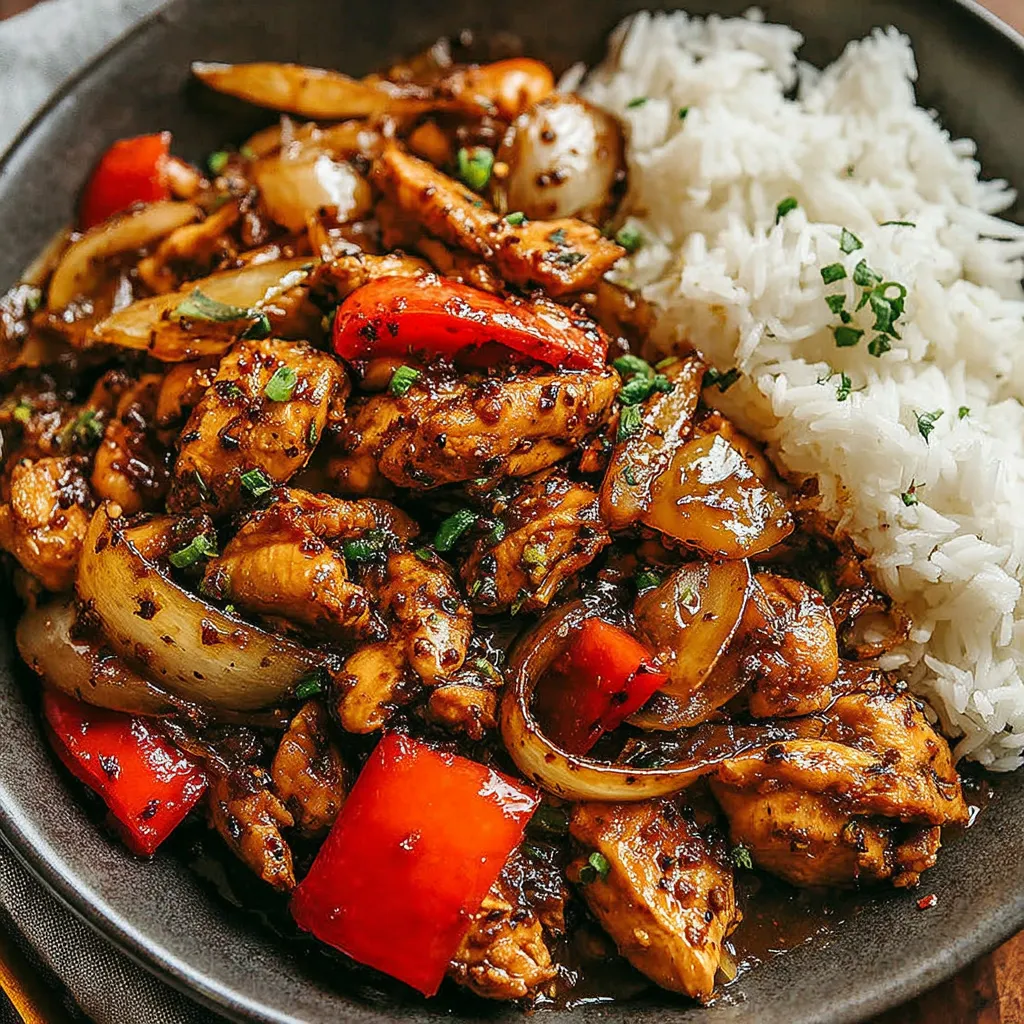
Black Pepper Chicken
This Black Pepper Chicken recipe delivers the perfect balance of savory, spicy, and slightly sweet flavors, replicating the restaurant experience at home. Tender chicken thighs are marinated, then coated in a rich, glossy black pepper sauce, creating a truly irresistible dish.
Ingredients
Equipment
Method
- Marinate the Chicken: In a medium bowl, combine the chicken pieces with soy sauce, rice wine, cornstarch, ginger, garlic powder, and salt. Mix well and let marinate for at least 20 minutes, or up to 2 hours in the refrigerator.
- Prepare the Sauce: In a small bowl, whisk together soy sauce, oyster sauce, brown sugar, rice wine vinegar, black pepper, sesame oil, cornstarch, and chicken broth. Set aside.
- Cook the Chicken: Heat 1 tablespoon of vegetable oil in a large skillet or wok over medium-high heat. Add the marinated chicken and cook, stirring occasionally, until browned and cooked through (about 5-7 minutes). Remove the chicken from the skillet and set aside.
- Sauté Aromatics: Add the remaining 1 tablespoon of vegetable oil to the skillet. Add the minced garlic and ginger and cook for about 30 seconds, or until fragrant, being careful not to burn them.
- Add the Sauce: Pour the prepared sauce into the skillet and bring to a simmer, stirring constantly. Cook for 1-2 minutes, or until the sauce has thickened.
- Combine and Serve: Return the cooked chicken to the skillet and toss to coat it evenly with the sauce. Cook for another minute, allowing the flavors to meld together.
- Serve: Serve the Black Pepper Chicken over cooked rice. Garnish with chopped green onions and sesame seeds, if desired.
Notes
For the best flavor, use freshly cracked black pepper. Marinating the chicken for longer than 20 minutes will result in more tender and flavorful chicken. Store leftovers in an airtight container in the refrigerator for up to 3 days. Reheat gently in a skillet or microwave.