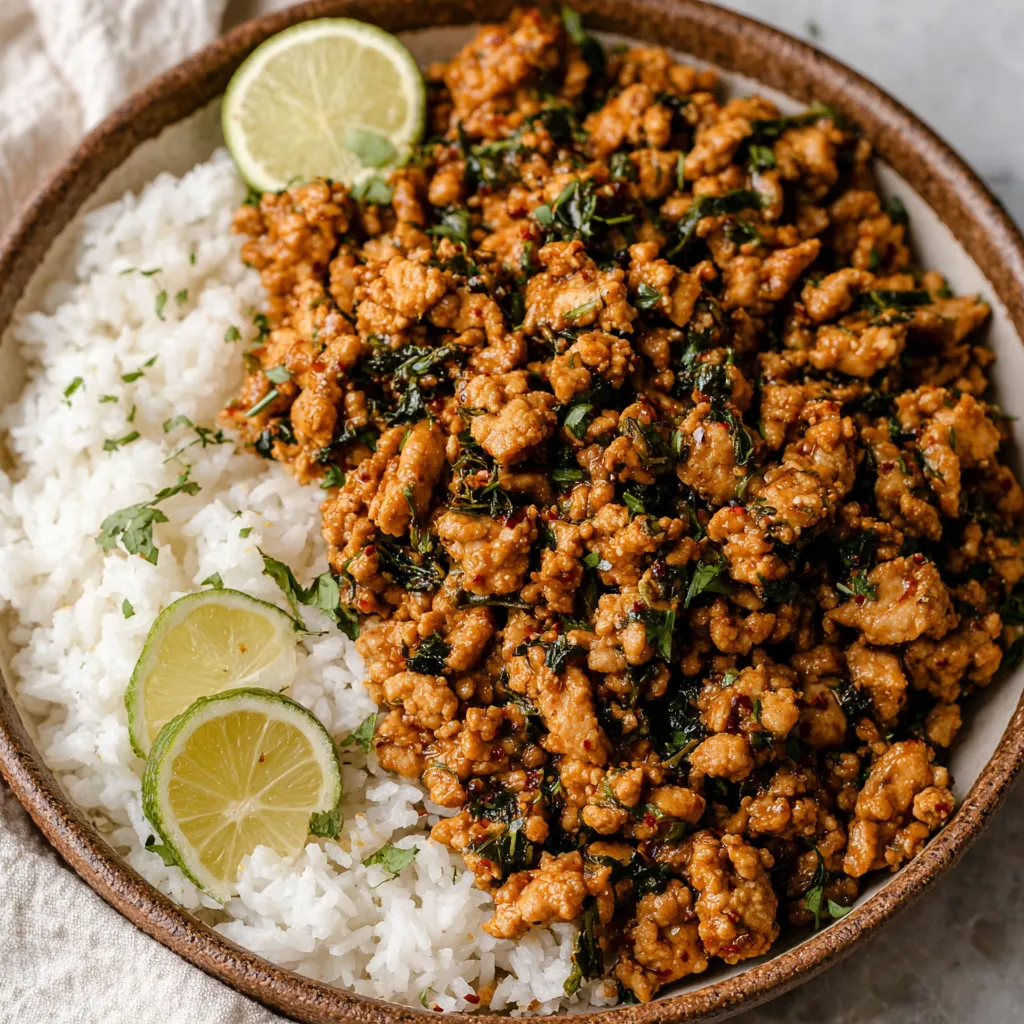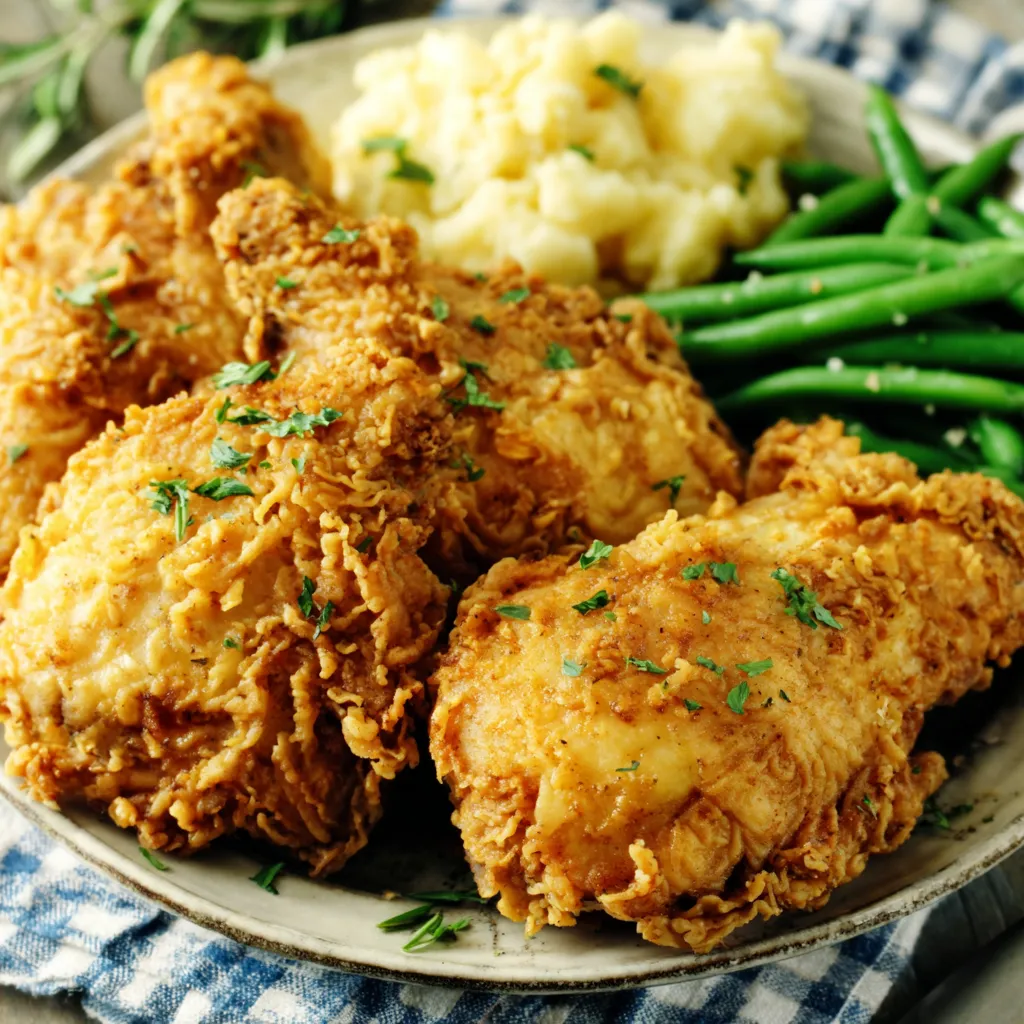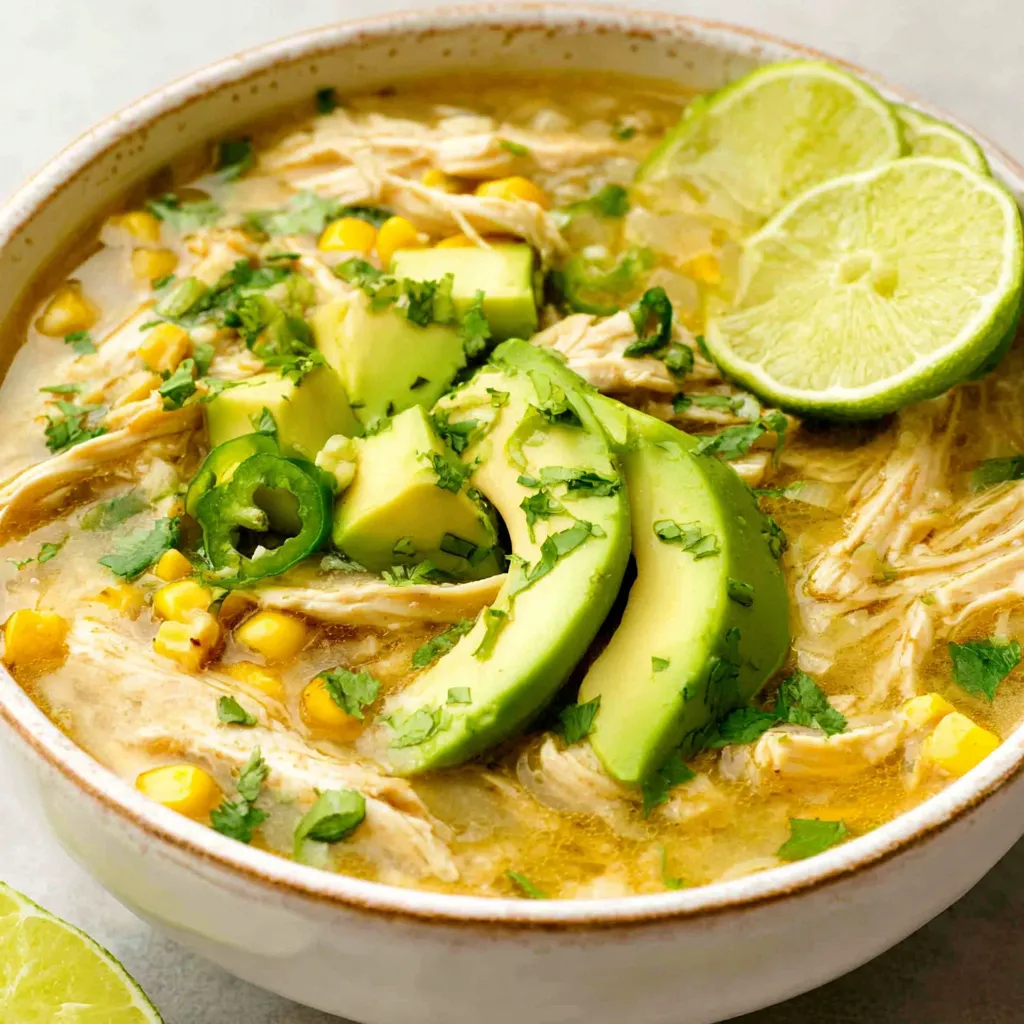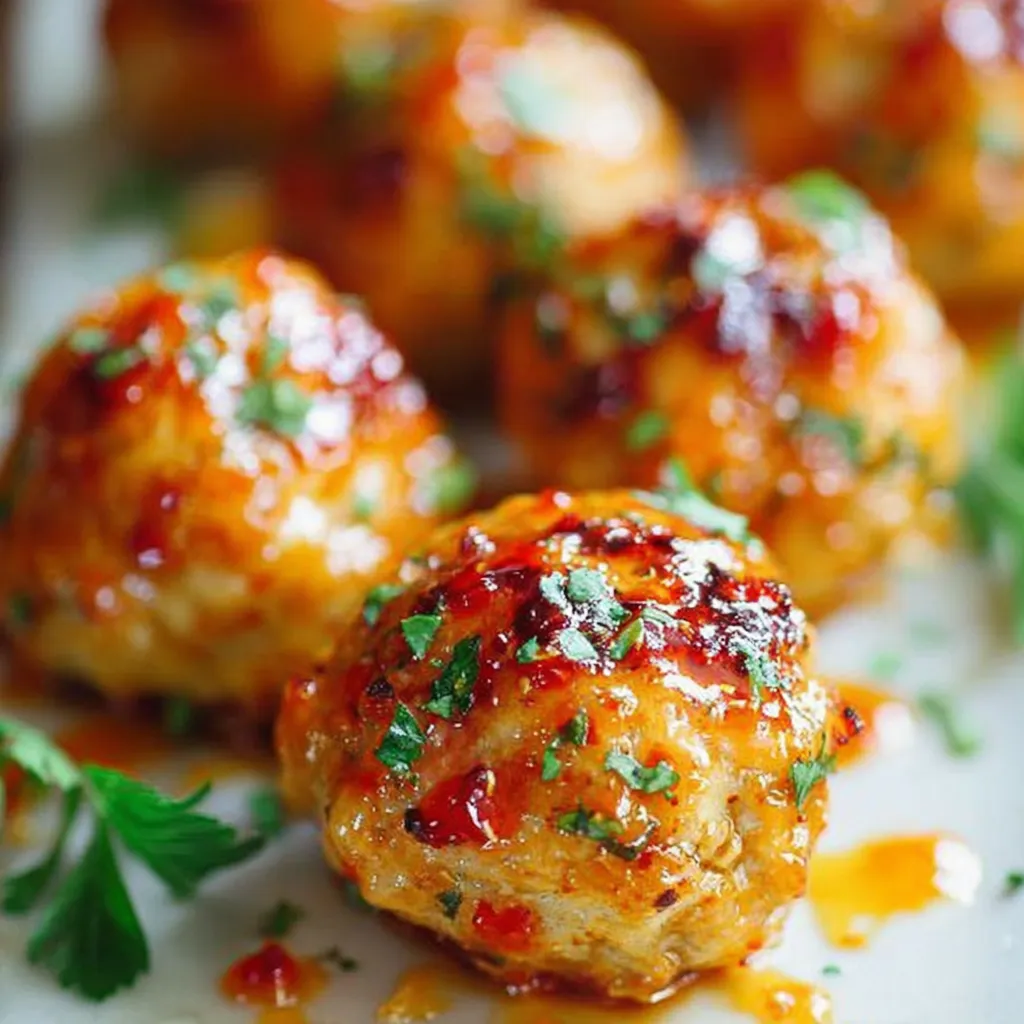

Decoding the Delight: The Science Behind the Flavor
The magic of coconut chicken and rice lies in a delicate interplay of fat, acid, salt, and umami. The coconut milk provides a rich, fatty base, carrying flavors and contributing to a creamy texture. Acid, often in the form of lime juice or vinegar, brightens the dish and prevents it from becoming cloying. Salt enhances the flavors and balances the sweetness of the coconut. And umami, that savory depth, can be introduced through ingredients like soy sauce, fish sauce, or even a touch of mushrooms. The Maillard reaction, that browning process responsible for so many delicious flavors, also plays a crucial role, especially when searing the chicken. Properly searing the chicken gives it a golden-brown crust and adds complexity that you would miss otherwise. Finally, rice, a complex carbohydrate, provides a gentle, satisfying base to bring all the flavors together into a complete dish.The Recipe: A Culinary Blueprint
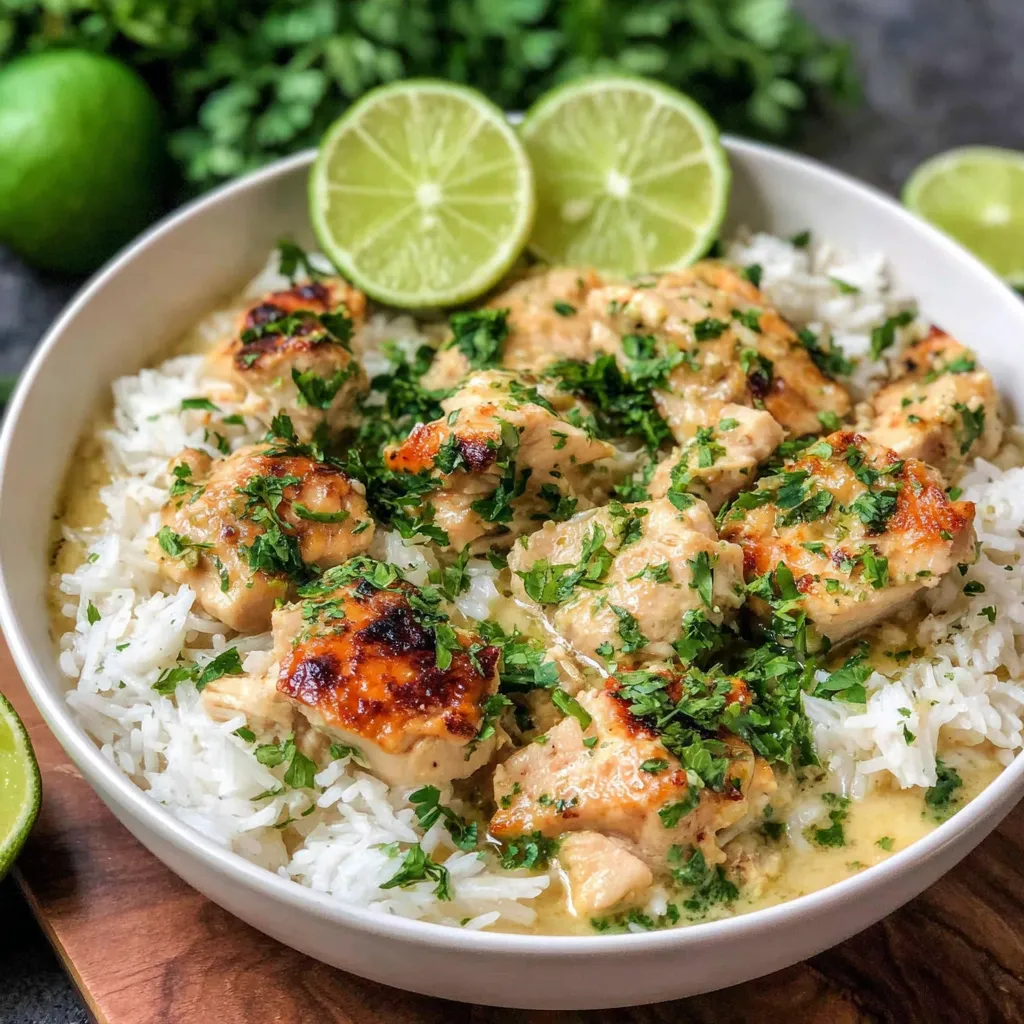 Here’s my go-to recipe for perfectly balanced and deeply flavorful coconut chicken and rice.
Ingredients:
- 1.5 lbs boneless, skinless chicken thighs, cut into 1-inch pieces
- 1 tbsp olive oil
- 1 onion, chopped
- 2 cloves garlic, minced
- 1 inch ginger, grated
- 1 red bell pepper, chopped
- 1 (13.5 oz) can full-fat coconut milk
- 1/2 cup chicken broth
- 2 tbsp soy sauce
- 1 tbsp lime juice
- 1 tsp brown sugar
- 1/2 tsp red pepper flakes (optional)
- Salt and pepper to taste
- 1 cup long-grain rice
- Fresh cilantro, chopped, for garnish
- Lime wedges, for serving
Instructions:
1. Sear the Chicken: Heat olive oil in a large skillet or Dutch oven over medium-high heat. Season chicken with salt and pepper. Sear chicken in batches until browned on all sides. Remove chicken from skillet and set aside. 2. Sauté Aromatics: Add onion to the skillet and cook until softened, about 5 minutes. Add garlic and ginger and cook for 1 minute more, until fragrant. Add bell pepper and cook for another 3 minutes. 3. Simmer the Sauce: Pour in coconut milk, chicken broth, soy sauce, lime juice, brown sugar, and red pepper flakes (if using). Bring to a simmer. 4. Cook the Rice: Stir in rice. Return chicken to the skillet. Bring to a simmer, then reduce heat to low, cover, and cook for 20-25 minutes, or until rice is cooked through and liquid is absorbed. 5. Rest and Serve: Let stand for 5 minutes before fluffing with a fork. Garnish with fresh cilantro and serve with lime wedges.My Coconut Chicken Quest: A Culinary Investigation
My journey to perfecting coconut chicken and rice was far from smooth. My first few attempts were a disaster; the rice was either mushy or undercooked, the chicken was bland, and the sauce was either too watery or overwhelmingly sweet. Then, I had an “Aha!” moment – the key was understanding the delicate balance of flavors and textures.The Soggy Rice Saga
Like many of you, I initially thought I could just throw everything into a pot and let it simmer. Big mistake! The rice absorbed too much liquid, resulting in a gluey mess. I learned that the ratio of liquid to rice is crucial, and that using full-fat coconut milk significantly impacts the final consistency. I tried parboiling the rice separately, inspired by similar techniques I’ve used when making Mexican Chicken Cheese Rice Casserole, but that didn’t quite achieve the right texture.The Chicken Conundrum
Initially, I didn’t bother searing the chicken, figuring the coconut milk would infuse it with enough flavor. But the chicken ended up pale and unappetizing. Searing the chicken before adding it to the sauce made a world of difference. I also experimented with different cuts of chicken. Chicken breast was too dry, so I settled on chicken thighs which remained wonderfully tender and juicy. The same issue applied to my Creamy Garlic Parmesan Crockpot Chicken and I learned the same thing, chicken thighs are the way to go!The Flavor Fiasco
My initial attempts at the sauce were either bland or overly sweet. I realized that I needed to layer the flavors, starting with aromatics like garlic and ginger, and then balancing the sweetness of the coconut milk with savory elements like soy sauce and a touch of lime juice. The lime juice was essential for cutting through the richness and preventing the dish from becoming cloying. I also learned that a pinch of red pepper flakes adds a subtle kick that elevates the entire dish. It’s the same with my Butter Chicken – adding some spice kicks it up a notch!The Quest for Creaminess
Achieving the right level of creaminess was another challenge. Using low-fat coconut milk resulted in a watery sauce, while using too much coconut milk made the dish overly rich. The solution was to combine full-fat coconut milk with chicken broth, which created a perfectly balanced sauce that coated the chicken and rice beautifully. Finding the right balance of the sauce helped me perfect my Creamy Garlic Chicken Gnocchi recipe as well.The Foolproof Formula: Cracking the Code
After countless experiments, I’ve distilled the process into a simple, foolproof method. Follow these steps, and you’ll be enjoying perfectly cooked coconut chicken and rice every time.- Sear the Chicken: Don’t skip this step! Searing the chicken adds depth of flavor and prevents it from becoming pale and bland.
- Layer the Aromatics: Sauté onion, garlic, and ginger to build a flavorful base for the sauce.
- Balance the Flavors: Use a combination of coconut milk, chicken broth, soy sauce, and lime juice to create a well-rounded sauce.
- Cook the Rice Properly: Use the correct ratio of liquid to rice, and simmer on low heat until the rice is cooked through and the liquid is absorbed.
- Rest Before Serving: Let the dish stand for 5 minutes before fluffing with a fork to allow the flavors to meld and the rice to finish cooking.
Why is searing the chicken so important in this coconut chicken and rice recipe?
Searing the chicken adds depth of flavor and prevents it from becoming pale and bland. It creates a golden-brown crust that enhances the overall taste.
What’s the key to preventing the rice from becoming mushy when cooking coconut chicken and rice?
The key is to use the correct ratio of liquid to rice and to simmer the dish on low heat until the rice is cooked through and the liquid is absorbed. Full-fat coconut milk impacts the final consistency, so adjusting the broth amount is crucial.
What ingredients are essential for balancing the flavors in the coconut chicken and rice sauce?
A combination of coconut milk, chicken broth, soy sauce, and lime juice is essential for a well-rounded sauce. The lime juice is particularly important for cutting through the richness of the coconut milk.
Why let the coconut chicken and rice rest before serving?
Letting the dish stand for 5 minutes before fluffing with a fork allows the flavors to meld and the rice to finish cooking, resulting in a better final product.
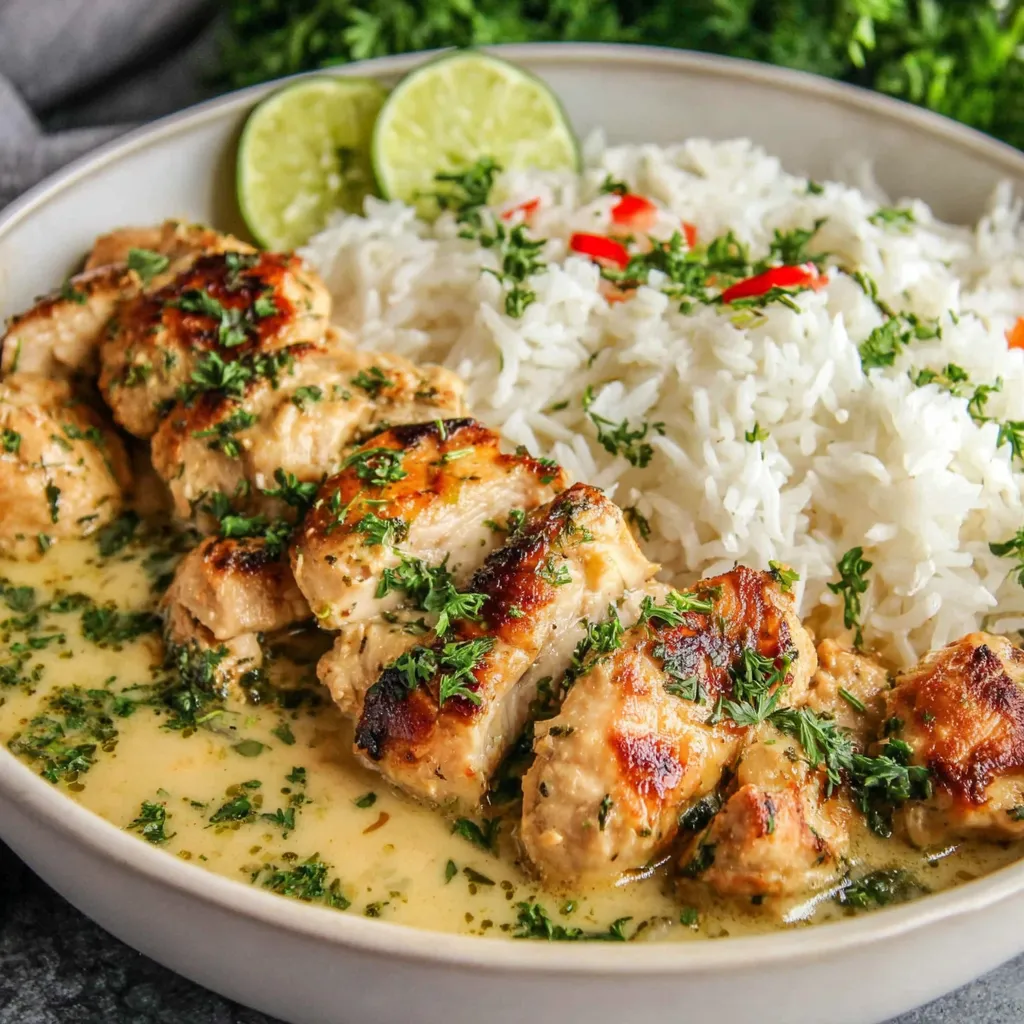
Coconut Chicken and Rice
Ingredients
Equipment
Method
- Heat olive oil in a large skillet or Dutch oven over medium-high heat.
- Season chicken with salt and pepper.
- Sear chicken in batches until browned on all sides. Remove chicken from skillet and set aside.
- Add onion to the skillet and cook until softened, about 5 minutes.
- Add garlic and ginger and cook for 1 minute more, until fragrant.
- Add bell pepper and cook for another 3 minutes.
- Pour in coconut milk, chicken broth, soy sauce, lime juice, brown sugar, and red pepper flakes (if using). Bring to a simmer.
- Stir in rice. Return chicken to the skillet.
- Bring to a simmer, then reduce heat to low, cover, and cook for 20-25 minutes, or until rice is cooked through and liquid is absorbed.
- Let stand for 5 minutes before fluffing with a fork.
- Garnish with fresh cilantro and serve with lime wedges.