
The Alchemist’s Secrets: Unlocking the Science of Slow Cooker Success
The secret to excellent crockpot chicken and rice isn’t just about tossing ingredients into a pot and hoping for the best; it’s about understanding the chemical reactions and physical changes that occur during slow cooking. Firstly, the starch in the rice is the key culprit behind the mushiness many experience. When rice cooks, it absorbs liquid and the starch granules swell. Overcooking leads to excessive swelling and bursting, resulting in a sticky, unpleasant texture. Secondly, protein denaturation is at play with the chicken. Low and slow cooking breaks down tough connective tissues, making the chicken tender. However, overcooking dries it out because all the moisture is squeezed out. The final element is flavor infusion. Slow cooking allows flavors to meld and deepen, but this also means that ingredients should be added at the right time for optimal impact. Too early, and delicate herbs might lose their potency. Too late, and they won’t have a chance to fully integrate.The Culinary Blueprint: My Foolproof Crockpot Chicken and Rice Recipe
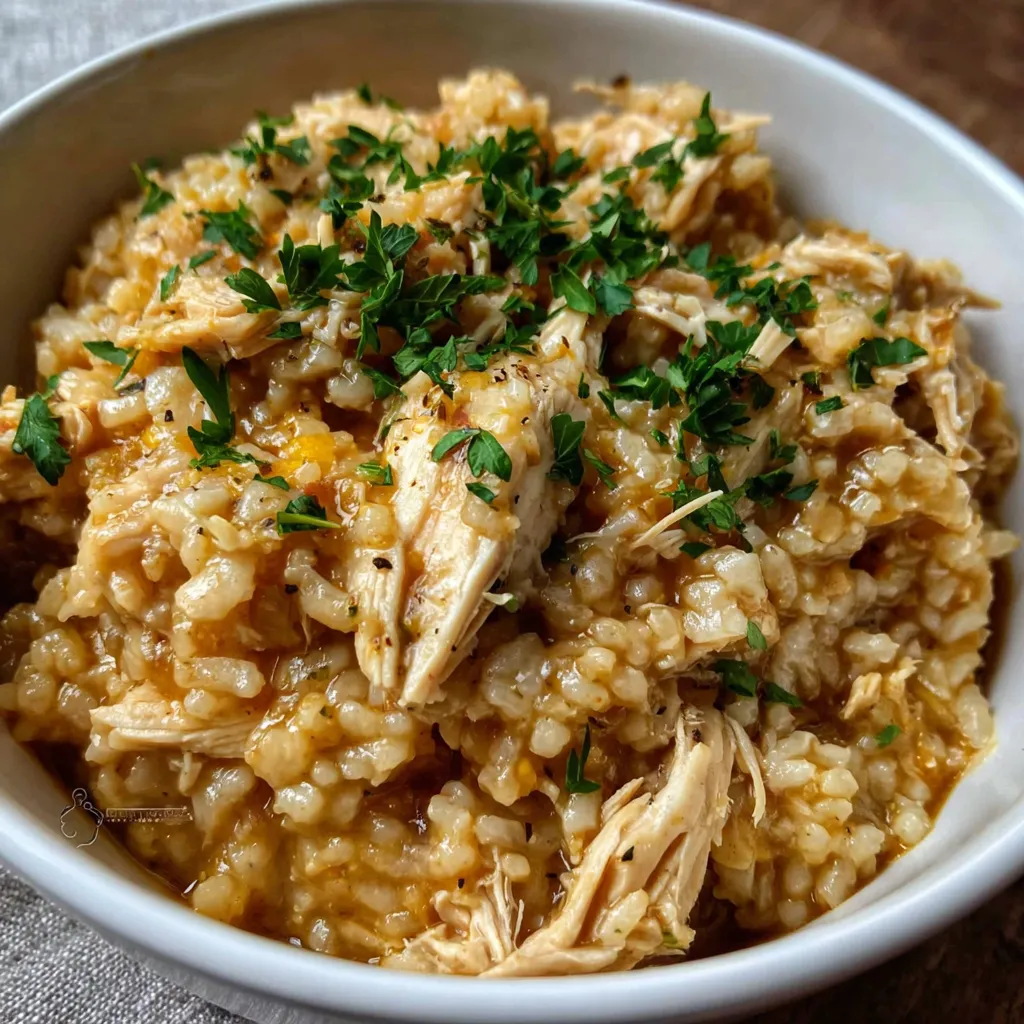 Here’s my tried-and-true recipe, perfected after many experiments, designed to deliver consistently delicious results.
Ingredients:
- 1.5 lbs boneless, skinless chicken thighs (or breasts, see notes)
- 1 tbsp olive oil
- 1 medium onion, chopped
- 2 cloves garlic, minced
- 1 cup long-grain rice, uncooked (basmati or jasmine preferred)
- 2 cups chicken broth, low sodium
- 1 cup milk or cream (for richness, optional)
- 1 tsp dried thyme
- 1/2 tsp dried rosemary
- 1/4 tsp black pepper
- 1/2 tsp salt (or to taste)
- 1 cup frozen peas (or mixed vegetables), added during the last 30 minutes
- Optional: 1/4 cup shredded Parmesan cheese, for garnish
Instructions:
- Heat olive oil in a skillet over medium heat. Brown chicken thighs on both sides (about 3-4 minutes per side). This step is crucial for flavor and texture.
- Transfer browned chicken to the slow cooker.
- In the same skillet, sauté onion until softened, about 5 minutes. Add garlic and cook for another minute until fragrant.
- Pour the onion and garlic mixture over the chicken in the slow cooker.
- Add uncooked rice, chicken broth, milk (if using), thyme, rosemary, salt, and pepper to the slow cooker.
- Stir gently to combine.
- Cover and cook on low for 2.5-3 hours, or until the rice is cooked and the chicken is tender. Cooking time may vary depending on your slow cooker. CHECK AFTER 2.5 HOURS.
- During the last 30 minutes of cooking, stir in frozen peas (or mixed vegetables).
- Once done, shred the chicken with two forks.
- Let stand for 5-10 minutes before serving.
- Garnish with shredded Parmesan cheese (optional) and serve hot.
Recipe Notes:
- Chicken Choice: While I prefer chicken thighs for their tenderness and flavor, chicken breasts can be used. If using chicken breasts, monitor closely to prevent them from drying out. You might need to reduce the cooking time.
- Rice Variety: Long-grain rice (basmati or jasmine) works best. Avoid short-grain rice, which is more prone to becoming mushy.
- Liquid Ratio: The 2:1 ratio of liquid to rice is essential. Too much liquid will result in mushy rice; too little, and the rice will be undercooked.
- Customization: Feel free to add other vegetables, such as diced carrots, celery, or mushrooms. Adjust the herbs and spices to your liking.
My Crockpot Chronicles: A Journey to Chicken and Rice Nirvana
Like many of you, I initially thought crockpot chicken and rice was a no-brainer. Throw everything in, set it, and forget it, right? My first few attempts were a disaster. The rice was either a gummy mess or disappointingly crunchy, and the chicken, depending on the day, was either dry as the Sahara or suspiciously rubbery. I knew there had to be a better way. So, I embarked on a culinary investigation, determined to crack the code to perfect slow cooker chicken and rice.The Great Rice Debate: Finding the Right Grain
My initial failures all pointed to the rice. I started by experimenting with different types of rice. Short-grain rice was a complete no-go. It turned into a sticky, porridge-like substance that was far from appealing. Then, I tried long-grain rice, specifically basmati and jasmine. These varieties held their shape better and had a more pleasant texture. The key, I realized, was not just the type of rice, but also the amount of liquid and the cooking time. I also discovered that rinsing the rice beforehand helps remove excess starch, further preventing stickiness.The Chicken Conundrum: Moist vs. Dry
Next, I tackled the chicken issue. Chicken breasts, while convenient, tended to dry out during the long cooking process. I switched to chicken thighs, which are more forgiving and retain moisture better. Browning the chicken before adding it to the slow cooker also made a huge difference. It created a delicious crust and added depth of flavor. I remembered a recipe I made last week – Creamy Garlic Parmesan Crockpot Chicken – and how the sear on the chicken contributed to overall flavor.The Flavor Factor: Building Layers of Deliciousness
Simply throwing everything into the slow cooker didn’t produce the vibrant, flavorful dish I was aiming for. I experimented with different herbs, spices, and aromatics. Sautéing the onion and garlic before adding them to the slow cooker unlocked their flavors and created a richer base. Thyme and rosemary proved to be a winning combination, adding a subtle earthiness and warmth. A touch of milk or cream, added towards the end, elevated the dish to a new level of creamy indulgence. It reminded me of the comfort I get from a Chicken Parmesan Casserole, but without all the work!The Timing Triumph: The Aha! Moment
The biggest breakthrough came when I realized that the cooking time was the most critical factor. I had been overcooking the rice, leading to its mushy demise. I started checking the rice after 2.5 hours and adjusting the cooking time accordingly. Adding the frozen peas (or mixed vegetables) during the last 30 minutes prevented them from becoming overcooked and mushy. This was like adding the spinach to the Chicken Spinach Mushroom Bake only at the very end to keep it from wilting too much. Finally, letting the dish stand for 5-10 minutes after cooking allowed the flavors to meld and the rice to absorb any remaining liquid.The Ultimate Technique: A Foolproof Guide to Crockpot Chicken and Rice Perfection
Based on my extensive experiments, here’s the definitive technique for consistently delicious crockpot chicken and rice:- Brown the Chicken: Sear the chicken thighs (or breasts) in a skillet before adding them to the slow cooker. This step adds depth of flavor and improves texture.
- Sauté the Aromatics: Sauté onion and garlic in the same skillet to unlock their flavors before adding them to the slow cooker.
- Use Long-Grain Rice: Opt for long-grain rice (basmati or jasmine) for the best texture. Rinse it beforehand to remove excess starch.
- Maintain the Liquid Ratio: Use a 2:1 ratio of liquid (chicken broth) to rice. Too much liquid will result in mushy rice; too little, and the rice will be undercooked. You can also substitute some of the broth with milk or cream for a richer flavor.
- Control the Cooking Time: Cook on low for 2.5-3 hours, or until the rice is cooked and the chicken is tender. Start checking after 2.5 hours and adjust the cooking time accordingly. It’s better to err on the side of slightly undercooked rice than overcooked, mushy rice.
- Add Vegetables Last: Stir in frozen peas (or mixed vegetables) during the last 30 minutes of cooking to prevent them from becoming overcooked. This is similar to how I add the mushrooms to my Rotisserie Chicken Mushroom Soup so they aren’t too soft.
- Let it Rest: Let the dish stand for 5-10 minutes after cooking to allow the flavors to meld and the rice to absorb any remaining liquid.
- Season to Perfection: Taste and adjust seasonings as needed. A pinch of salt, pepper, or a squeeze of lemon juice can make a big difference. If you want to spice things up, consider a pinch of cayenne pepper, similar to what you might find in a Mexican Chicken Cheese Rice Casserole. Or, for a brighter, fresher taste, try adding lemon slices like in the Slow Cooker Lemon Chicken.
Why is it important to brown the chicken before putting it in the slow cooker?
Browning the chicken in a skillet before slow cooking adds depth of flavor and improves the texture of the chicken. It creates a delicious crust that enhances the overall taste of the dish.
What type of rice is best for crockpot chicken and rice, and why?
Long-grain rice, such as basmati or jasmine, is best for crockpot chicken and rice. Short-grain rice tends to become mushy. Long-grain varieties hold their shape better and have a more pleasant texture.
How can I prevent the rice from becoming mushy in the slow cooker?
To prevent mushy rice, use long-grain rice, maintain a 2:1 ratio of liquid to rice, and avoid overcooking. Check the rice after 2.5 hours and adjust the cooking time accordingly. Rinsing the rice beforehand also helps remove excess starch.
When should I add the frozen vegetables to the crockpot chicken and rice?
Add frozen peas or mixed vegetables during the last 30 minutes of cooking to prevent them from becoming overcooked and mushy.
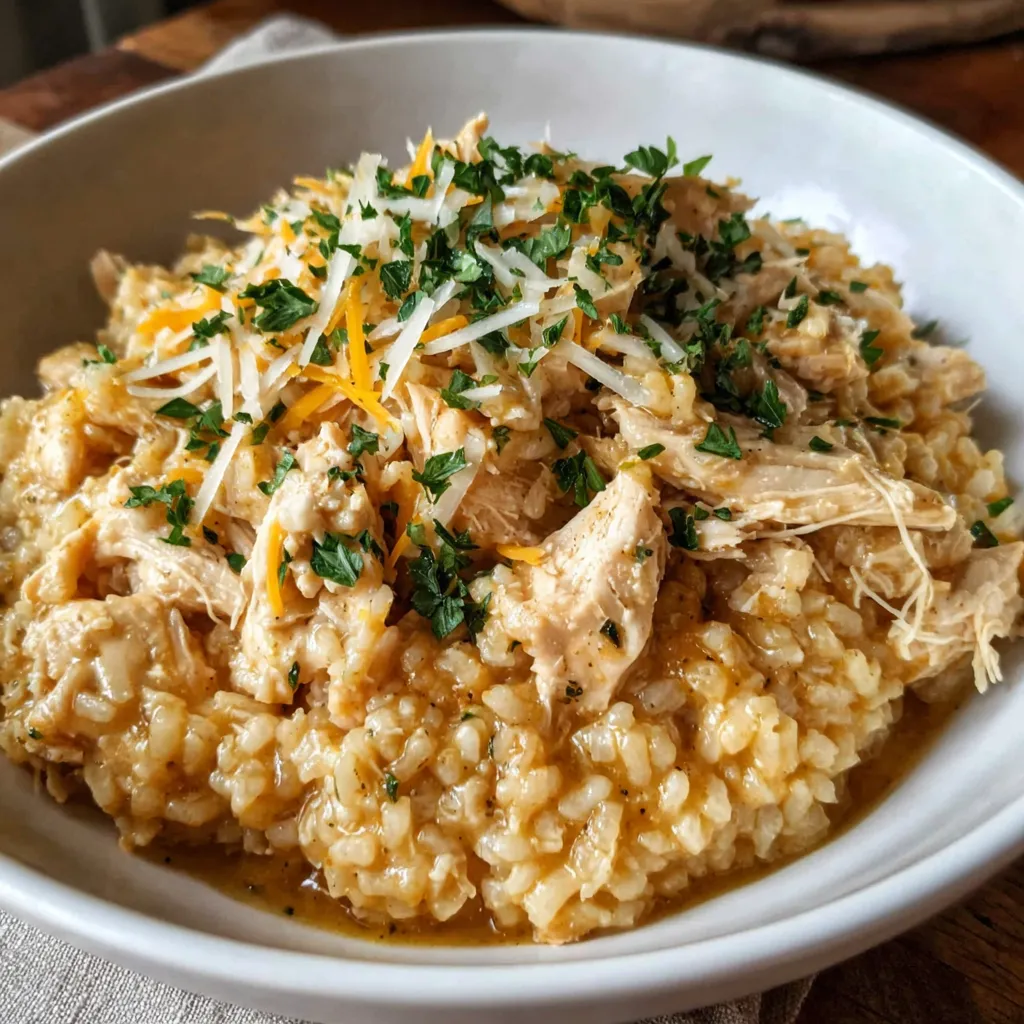
Crockpot Chicken and Rice
Ingredients
Equipment
Method
- Heat olive oil in a skillet over medium heat.
- Brown chicken thighs on both sides for about 3-4 minutes per side.
- Transfer browned chicken to the slow cooker.
- In the same skillet, sauté onion until softened, about 5 minutes.
- Add garlic and cook for another minute until fragrant.
- Pour the onion and garlic mixture over the chicken in the slow cooker.
- Add uncooked rice, chicken broth, milk (if using), thyme, rosemary, salt, and pepper to the slow cooker.
- Stir gently to combine.
- Cover and cook on low for 2.5-3 hours, or until the rice is cooked and the chicken is tender. Check after 2.5 hours.
- During the last 30 minutes of cooking, stir in frozen peas or mixed vegetables.
- Once done, shred the chicken with two forks.
- Let stand for 5-10 minutes before serving.
- Garnish with shredded Parmesan cheese (optional) and serve hot.