
Unlocking the Secrets: The Science Behind the Sauce
The magic of Butter Chicken lies in a delicate dance of flavors and textures. It’s not *just* about throwing ingredients together; it’s about understanding how they interact. The key principles at play are:- Maillard Reaction & Caramelization: These are your flavor builders. Searing the chicken and caramelizing the onions & garlic creates hundreds of flavor compounds that form the base of your dish. Don’t skip this step!
- Acidity and Sweetness Balance: Tomatoes provide acidity, while sugar (or honey, depending on your preference) balances it. This is crucial for preventing the sauce from tasting one-dimensional.
- Fat as a Flavor Carrier: The butter (obviously!) and cream are not just about richness; they carry the aromatic compounds from the spices and other ingredients, ensuring every bite is bursting with flavor. Think of it like the delivery system for all the deliciousness.
- Emulsification: This is how you get that smooth, velvety sauce. Properly combining the butter, tomato paste, and cream prevents them from separating and creating an oily or grainy texture.
- Spice Blooming: Heating the spices in oil releases their essential oils, maximizing their flavor and aroma. This is why toasting whole spices or blooming ground spices in ghee is such a fundamental technique in Indian cooking.
The Ultimate Butter Chicken Recipe: A Road Map to Flavor
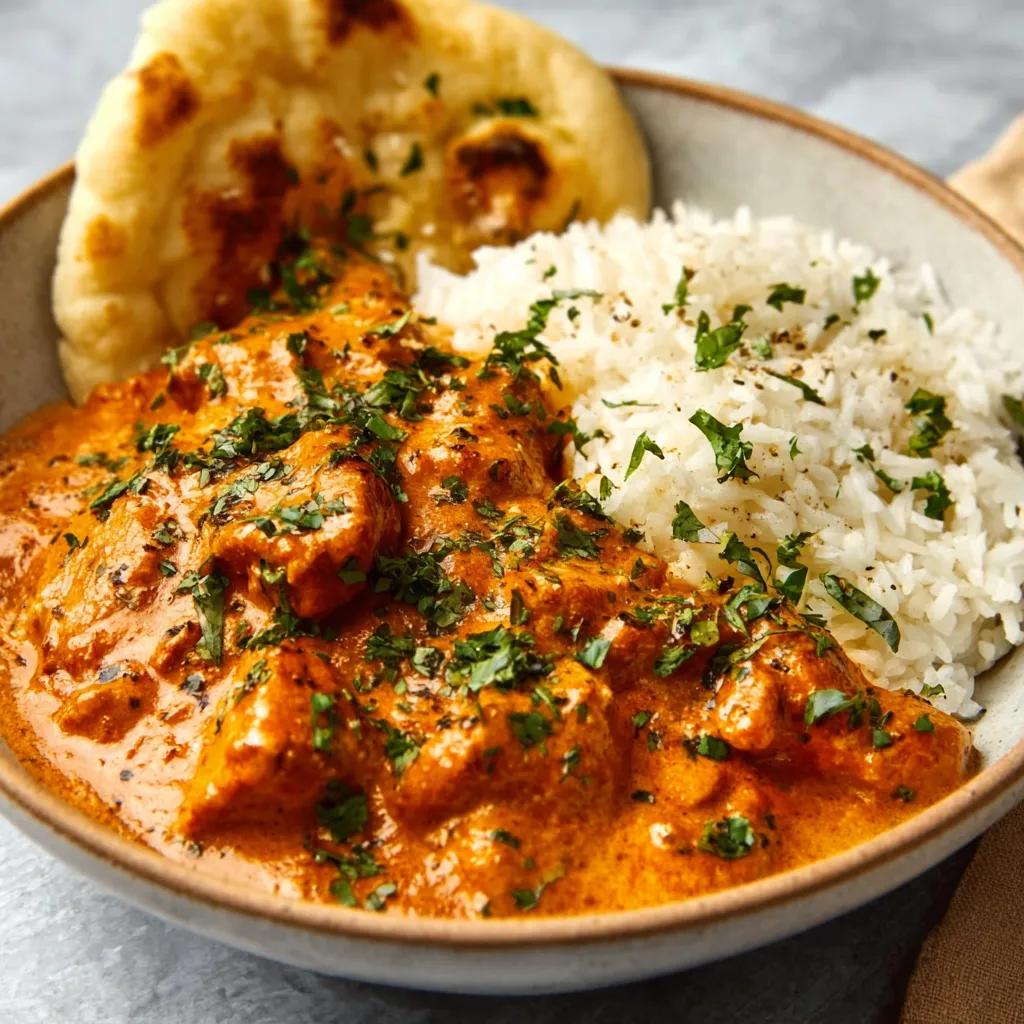 This recipe is designed to be relatively Butter Chicken, manageable even on a busy weeknight, offering wonderful Dinner Ideas Recipes.
Yields
Serves 4-6Prep Time
20 minutesCook Time
45 minutesIngredients
- For the Chicken Marinade:
- 1.5 lbs boneless, skinless chicken thighs, cut into 1-inch pieces
- 1 cup plain yogurt
- 1 tablespoon ginger-garlic paste
- 1 teaspoon garam masala
- 1 teaspoon turmeric powder
- 1 teaspoon chili powder (adjust to taste)
- 1/2 teaspoon salt
- For the Sauce:
- 2 tablespoons butter
- 1 large onion, finely chopped
- 2 cloves garlic, minced
- 1 tablespoon ginger-garlic paste
- 1 (14.5 oz) can crushed tomatoes
- 1/2 cup tomato paste
- 1 teaspoon garam masala
- 1/2 teaspoon turmeric powder
- 1/2 teaspoon chili powder (adjust to taste)
- 1/4 teaspoon cayenne pepper (optional, for extra heat)
- 1 teaspoon sugar (or honey)
- 1/2 cup heavy cream
- 1/4 cup chopped cilantro, for garnish
- Salt to taste
Instructions
- Marinate the Chicken: In a bowl, combine all the marinade ingredients. Mix well and ensure the chicken is evenly coated. Cover and refrigerate for at least 30 minutes, or up to overnight.
- Cook the Chicken: Heat 1 tablespoon of oil or ghee in a large skillet or pot over medium-high heat. Add the marinated chicken in a single layer (you may need to do this in batches) and sear until browned on all sides, but not fully cooked through. Set aside.
- Prepare the Sauce: In the same skillet, melt the butter over medium heat. Add the chopped onion and cook until softened and lightly golden, about 5-7 minutes. Add the minced garlic and ginger-garlic paste and cook for another minute until fragrant.
- Build the Flavor: Stir in the crushed tomatoes, tomato paste, garam masala, turmeric powder, chili powder, and cayenne pepper (if using). Bring to a simmer and cook for 10-15 minutes, stirring occasionally, allowing the flavors to meld.
- Blend the Sauce (Optional): For an extra smooth sauce, use an immersion blender to blend the sauce until smooth. Alternatively, you can carefully transfer the sauce to a regular blender, blend, and then return it to the skillet.
- Combine Chicken and Sauce: Add the seared chicken to the sauce. Stir in the sugar (or honey) and season with salt to taste. Simmer for another 10-15 minutes, or until the chicken is cooked through and the sauce has thickened.
- Finish with Cream: Stir in the heavy cream and cook for another 2-3 minutes, until heated through. Be careful not to boil the cream.
- Garnish and Serve: Garnish with chopped cilantro and serve hot with basmati rice or naan bread.
My Butter Chicken Odyssey: A Culinary Investigation
My journey to mastering Butter Chicken was far from a straight line. It was a winding path of burnt spices, watery sauces, and flavorless chicken – a true culinary adventure. I was determined to create an Easy Butter Chicken Dish.The Marinade Mishap
My first few attempts were a disaster. I thought the marinade was just a formality, so I’d slap it on for 15 minutes and toss the chicken in the pan. The result? Dry, flavorless chicken that swam in a bland sauce. Then, I had an “Aha!” moment when I realized the marinade wasn’t just about flavor; it was about tenderizing the chicken and allowing the spices to penetrate deep into the meat. I started marinating overnight, and the difference was night and day. Now, sometimes I use a similar overnight marinade when making Honey Garlic Chicken.The Great Spice Blunder
Like many of you, I initially thought that more spices equaled more flavor. I went overboard, throwing in every spice I could find, hoping for a flavor explosion. Instead, I ended up with a muddy, bitter mess. It wasn’t until I learned about “spice blooming” – heating the spices in oil to release their essential oils – that I started to understand the importance of balance and technique. Now I toast spices even when I am making something simple like Spicy Garlic Butter Chicken Tortellini.The Case of the Watery Sauce
Ah, the watery sauce – the bane of every home cook’s Butter Chicken dreams. I tried everything: adding more tomato paste, thickening with cornstarch, reducing for hours. Nothing seemed to work. Then, I discovered the secret: proper emulsification. By ensuring the butter, tomato paste, and cream were properly combined, I was able to create a sauce that was rich, creamy, and perfectly balanced.The Final Revelation
The biggest turning point came when I started treating Butter Chicken as a layered process, rather than a one-pot wonder. Searing the chicken separately, building the sauce from scratch, and then combining the two allowed me to control each element and create a truly exceptional dish.The Foolproof Method: Your Path to Butter Chicken Bliss
Here’s the distilled wisdom, the essence of my Butter Chicken journey – a step-by-step guide to achieving Butter Chicken perfection:- Marinate Generously: Don’t skimp on the marinade, and give it time to work its magic (at least 30 minutes, ideally overnight). This step is crucial for tender, flavorful chicken.
- Sear for Success: Sear the chicken in batches to avoid overcrowding the pan and steaming the meat. A good sear creates a beautiful crust and adds depth of flavor.
- Bloom Your Spices: Heat the spices in oil or butter before adding the other ingredients. This releases their essential oils and maximizes their flavor.
- Emulsify with Care: Ensure the butter, tomato paste, and cream are properly combined to create a smooth, velvety sauce.
- Simmer, Don’t Boil: Simmer the sauce gently to allow the flavors to meld and the sauce to thicken without burning.
- Taste and Adjust: Taste the sauce throughout the cooking process and adjust the seasoning as needed. Don’t be afraid to add a little extra salt, sugar, or chili powder to balance the flavors.
- Finish with Freshness: A sprinkle of fresh cilantro adds a burst of freshness and brightens the entire dish.
Why is marinating the chicken for a longer time important in this Butter Chicken recipe?
Marinating the chicken for at least 30 minutes, ideally overnight, tenderizes the chicken and allows the spices to penetrate deeply into the meat, resulting in more flavorful chicken.
What is “spice blooming” and why is it a crucial step in making Butter Chicken?
“Spice blooming” refers to heating the spices in oil or butter before adding other ingredients. This process releases the essential oils in the spices, maximizing their flavor and aroma, which is essential for a flavorful Butter Chicken.
How do you achieve a smooth, velvety sauce and avoid a watery or grainy texture in Butter Chicken?
A smooth, velvety sauce is achieved through proper emulsification. Make sure the butter, tomato paste, and cream are properly combined. Simmering gently, rather than boiling, also helps prevent separation and ensures a rich, creamy texture.
Can I use chicken breast instead of chicken thighs for this recipe?
The recipe calls for chicken thighs because they are more flavorful and stay moist during cooking. While you can use chicken breast, be mindful not to overcook it, as it can become dry. Adjust cooking time accordingly.
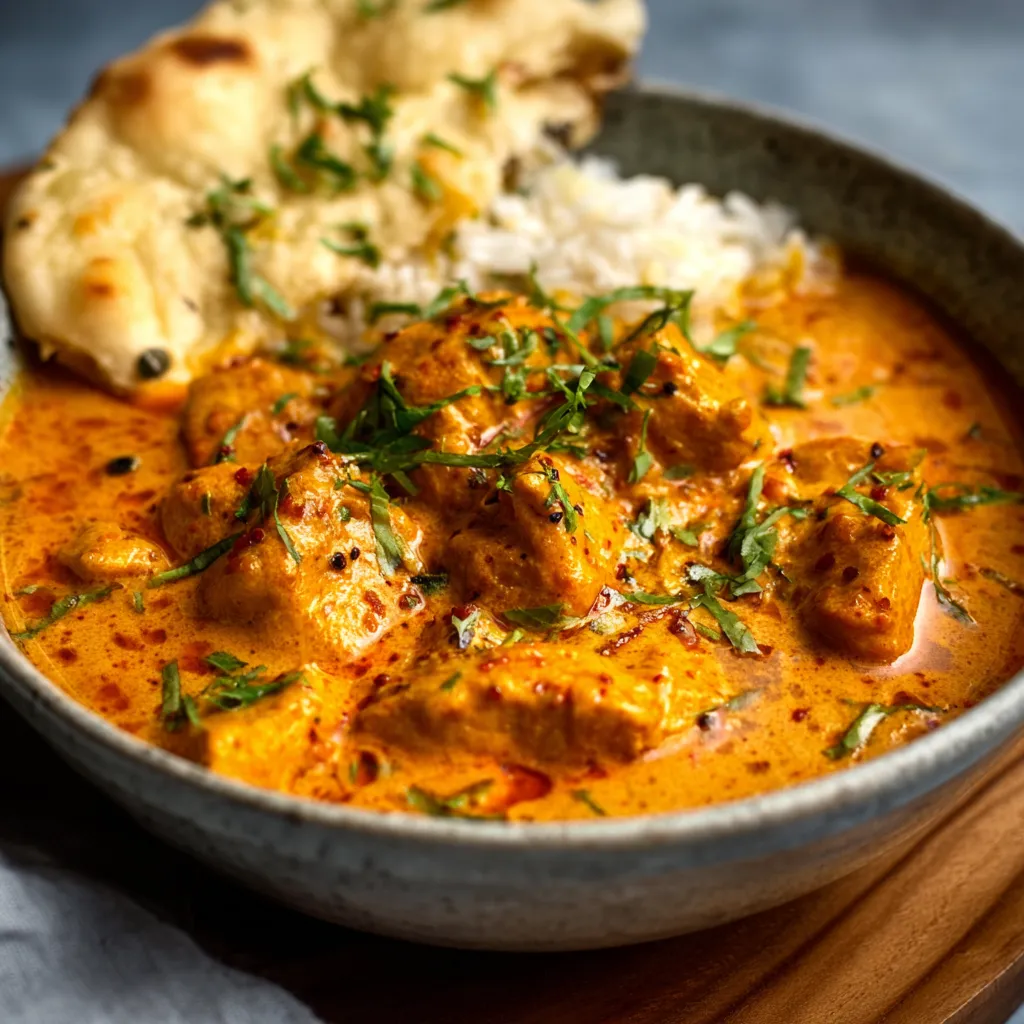
Easy Butter Chicken
Ingredients
Equipment
Method
- Marinate the Chicken: In a bowl, combine all the marinade ingredients. Mix well and ensure the chicken is evenly coated. Cover and refrigerate for at least 30 minutes, or up to overnight.
- Cook the Chicken: Heat 1 tablespoon of oil or ghee in a large skillet or pot over medium-high heat. Add the marinated chicken in a single layer (you may need to do this in batches) and sear until browned on all sides, but not fully cooked through. Set aside.
- Prepare the Sauce: In the same skillet, melt the butter over medium heat. Add the chopped onion and cook until softened and lightly golden, about 5-7 minutes. Add the minced garlic and ginger-garlic paste and cook for another minute until fragrant.
- Build the Flavor: Stir in the crushed tomatoes, tomato paste, garam masala, turmeric powder, chili powder, and cayenne pepper (if using). Bring to a simmer and cook for 10-15 minutes, stirring occasionally, allowing the flavors to meld.
- Blend the Sauce (Optional): For an extra smooth sauce, use an immersion blender to blend the sauce until smooth. Alternatively, you can carefully transfer the sauce to a regular blender, blend, and then return it to the skillet.
- Combine Chicken and Sauce: Add the seared chicken to the sauce. Stir in the sugar (or honey) and season with salt to taste. Simmer for another 10-15 minutes, or until the chicken is cooked through and the sauce has thickened.
- Finish with Cream: Stir in the heavy cream and cook for another 2-3 minutes, until heated through. Be careful not to boil the cream.
- Garnish and Serve: Garnish with chopped cilantro and serve hot with basmati rice or naan bread.