
The Alchemist’s Guide: Understanding the Chicken Pasta Equation
The secret to outstanding chicken pasta lies in understanding the interplay of several key factors. First, there’s the protein. We need tender, flavorful chicken that complements, not overpowers, the other ingredients. Secondly, the pasta itself: the shape matters, as does the cooking method. Overcooked pasta is a culinary crime, while undercooked pasta is simply unpleasant. Finally, and perhaps most crucially, the sauce. It’s the glue that binds everything together, and achieving the perfect balance of creaminess, flavor, and consistency is the ultimate challenge. The Maillard reaction, the browning of the chicken, is critical for developing rich, savory notes. Consider the type of fat used—olive oil provides a fruity undertone, while butter contributes richness. And don’t underestimate the power of acidity to balance the richness of the cream. A squeeze of lemon juice or a splash of white wine vinegar can elevate the dish from good to extraordinary. Furthermore, the starch released from the pasta during cooking acts as a natural thickener for the sauce, so save that pasta water!The Grand Formula: A Recipe for Chicken Pasta Perfection
This recipe builds upon the principles outlined above to deliver consistently delicious results.Ingredients:
- 1 pound boneless, skinless chicken breasts, cut into bite-sized pieces
- 1 pound pasta (penne, farfalle, or rotini work well)
- 2 tablespoons olive oil
- 1 small onion, chopped
- 2 cloves garlic, minced
- 1/2 cup dry white wine (optional)
- 1 cup chicken broth
- 1 cup heavy cream
- 1/2 cup grated Parmesan cheese, plus more for serving
- 1/4 cup chopped fresh parsley
- 1 tablespoon lemon juice
- Salt and black pepper to taste
- Red pepper flakes (optional)
Instructions:
- Cook the pasta: Bring a large pot of salted water to a boil. Add the pasta and cook according to package directions until al dente. Reserve about 1 cup of pasta water before draining.
- Sear the chicken: While the pasta is cooking, heat the olive oil in a large skillet over medium-high heat. Season the chicken with salt and pepper. Add the chicken to the skillet and cook until browned and cooked through, about 5-7 minutes. Remove the chicken from the skillet and set aside.
- Sauté aromatics: Add the chopped onion to the skillet and cook until softened, about 3-5 minutes. Add the minced garlic and cook for another minute until fragrant.
- Deglaze and simmer: If using, pour in the white wine and scrape up any browned bits from the bottom of the skillet. Let the wine reduce slightly, about 2 minutes. Add the chicken broth and bring to a simmer.
- Create the sauce: Stir in the heavy cream and Parmesan cheese. Reduce the heat to low and simmer for 5-7 minutes, or until the sauce has thickened slightly.
- Combine and finish: Add the cooked pasta and chicken back to the skillet. Toss to coat everything in the sauce. If the sauce is too thick, add a little of the reserved pasta water until it reaches your desired consistency.
- Brighten and serve: Stir in the chopped parsley and lemon juice. Season with salt, pepper, and red pepper flakes (if using) to taste. Serve immediately, garnished with extra Parmesan cheese.
Adventures in the Kitchen: My Chicken Pasta Odyssey
My first few attempts were a disaster, I’ll admit it. Like many of you, I initially thought that chicken pasta was simply a matter of throwing everything into a pot and hoping for the best. The results were often bland, with the chicken either dry or rubbery, and the sauce either too watery or too thick and gluey. I needed to understand the underlying principles to truly master this dish.The Chicken Conundrum: Tenderizing Techniques
The first major hurdle was the chicken. I tried various methods: poaching, baking, even slow-cooking. Poaching yielded flavorless chicken, baking resulted in dryness, and slow-cooking turned the chicken into a shredded mess. Then, I had an “Aha!” moment: searing the chicken first, then removing it from the pan to finish cooking in the sauce, was the key. This approach allowed the Maillard reaction to work its magic, creating a beautiful crust and adding depth of flavor, while the gentle simmering in the sauce ensured that the chicken remained tender and juicy. I also discovered that cutting the chicken into uniform bite-sized pieces was crucial for even cooking.Pasta Predicaments: Achieving Al Dente Nirvana
Next came the pasta. Overcooked pasta is the enemy of a good dish. I experimented with different pasta shapes, finally settling on penne and farfalle because their ridges and shapes held the sauce beautifully. I also learned the importance of salting the pasta water generously. This simple step seasons the pasta from the inside out and makes a huge difference in the overall flavor of the dish. And, crucially, reserving that pasta water is non-negotiable – it’s liquid gold!Sauce Sensations: The Quest for Creamy Perfection
The sauce was the biggest challenge of all. My early attempts were often too thin or too thick, lacking in flavor and depth. I experimented with different ratios of cream, broth, and cheese. I tried adding flour as a thickener, but the results were often gloopy. The turning point came when I realized the power of reducing the sauce to concentrate its flavors and using the reserved pasta water to adjust the consistency. The starch in the pasta water acts as a natural emulsifier, creating a smooth and creamy sauce without the need for flour or other thickening agents. Also, the addition of white wine, while optional, elevated the sauce significantly, adding a layer of complexity and acidity that balanced the richness of the cream. Consider this similar to the Creamy Garlic Parmesan Crockpot Chicken which also uses parmesan for a creamy texture.The Ultimate Cheat Sheet: The Foolproof Chicken Pasta Method
After countless iterations, I’ve distilled the process into a simple, foolproof method. Follow these steps, and you’ll be on your way to chicken pasta perfection:- Sear the Chicken Right: Cut the chicken into even bite-sized pieces, season well, and sear in a hot pan to develop a golden-brown crust. Don’t overcrowd the pan!
- Pasta Power: Cook your pasta al dente in generously salted water. Reserve at least one cup of pasta water before draining.
- Aromatic Awakening: Sauté your aromatics (onion, garlic) until softened and fragrant. This is the foundation of your flavor.
- Deglaze Like a Pro: Don’t skip the deglazing step! Use white wine (or chicken broth) to scrape up those flavorful browned bits from the bottom of the pan.
- Creamy Creations: Simmer the sauce until it thickens slightly. Then, stir in the Parmesan cheese until melted and smooth.
- The Perfect Marriage: Add the cooked pasta and chicken to the sauce. Toss to coat everything evenly.
- Liquid Gold: Use the reserved pasta water to adjust the sauce’s consistency. Add a little at a time until it reaches your desired thickness.
- Brighten and Balance: Finish with fresh parsley, lemon juice, and a generous sprinkle of Parmesan cheese. Taste and adjust seasoning as needed.
Why is reserving pasta water important for this chicken pasta recipe?
The starch in the pasta water acts as a natural emulsifier, which helps to create a smooth and creamy sauce without needing flour or other thickening agents. It also helps adjust the consistency of the sauce.
What is the key to making the chicken tender and flavorful in this recipe?
Searing the chicken first in a hot pan to develop a golden-brown crust (Maillard reaction) and then removing it to finish cooking in the sauce ensures it remains tender and juicy while adding depth of flavor.
What pasta shapes are recommended for this chicken pasta recipe?
Penne, farfalle, or rotini are recommended because their ridges and shapes hold the sauce beautifully.
What can I add to the recipe to experiment with flavors?
Consider adding sun-dried tomatoes, spinach, or roasted red peppers for extra flavor and nutrients. For a spicier kick, draw inspiration from honey pepper chicken pasta.
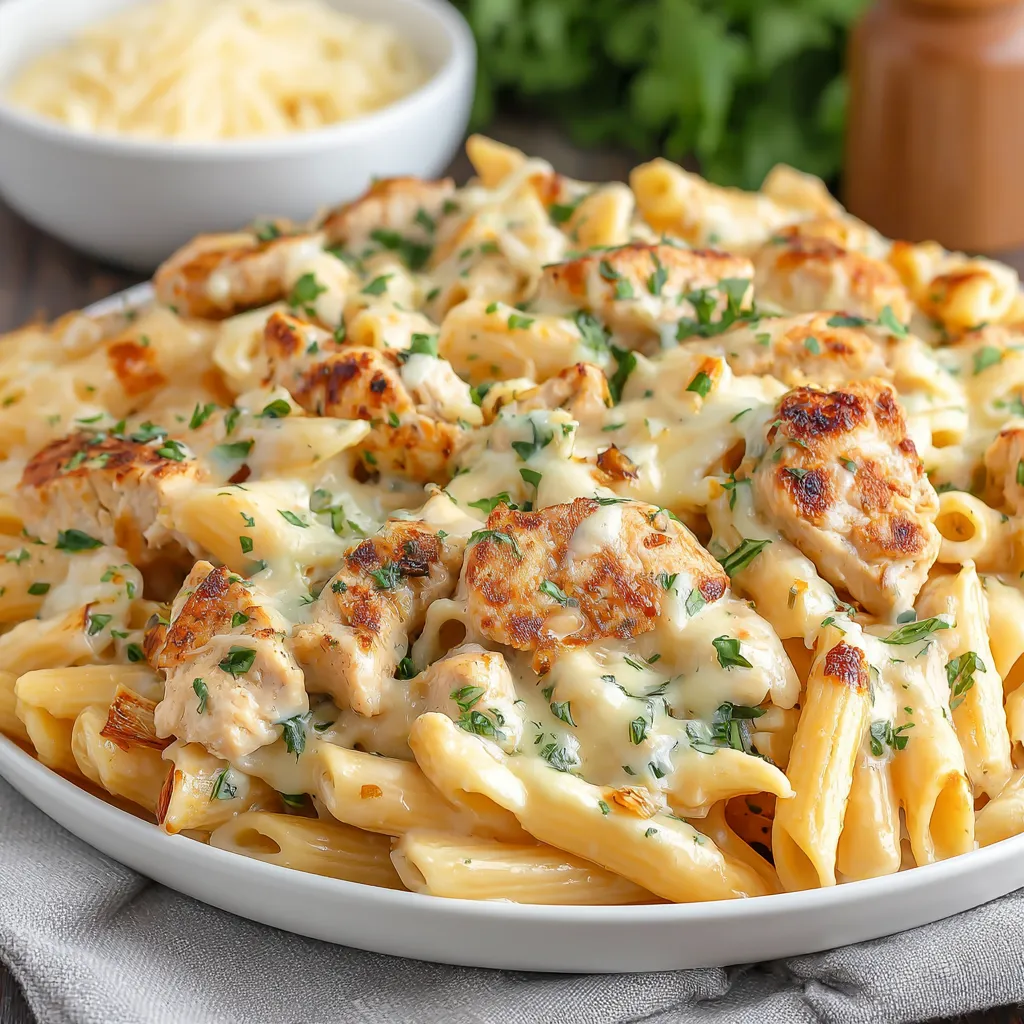
Easy Creamy Chicken Pasta
This easy chicken pasta recipe delivers a consistently delicious and creamy dish. Featuring tender chicken, perfectly cooked pasta, and a rich Parmesan sauce, this recipe is a weeknight staple that can be customized to your liking.
Ingredients
Equipment
Method
- Cook the pasta: Bring a large pot of salted water to a boil. Add the pasta and cook according to package directions until al dente. Reserve about 1 cup of pasta water before draining.
- Sear the chicken: While the pasta is cooking, heat the olive oil in a large skillet over medium-high heat. Season the chicken with salt and pepper. Add the chicken to the skillet and cook until browned and cooked through, about 5-7 minutes. Remove the chicken from the skillet and set aside.
- Sauté aromatics: Add the chopped onion to the skillet and cook until softened, about 3-5 minutes. Add the minced garlic and cook for another minute until fragrant.
- Deglaze and simmer: If using, pour in the white wine and scrape up any browned bits from the bottom of the skillet. Let the wine reduce slightly, about 2 minutes. Add the chicken broth and bring to a simmer.
- Create the sauce: Stir in the heavy cream and Parmesan cheese. Reduce the heat to low and simmer for 5-7 minutes, or until the sauce has thickened slightly.
- Combine and finish: Add the cooked pasta and chicken back to the skillet. Toss to coat everything in the sauce. If the sauce is too thick, add a little of the reserved pasta water until it reaches your desired consistency.
- Brighten and serve: Stir in the chopped parsley and lemon juice. Season with salt, pepper, and red pepper flakes (if using) to taste. Serve immediately, garnished with extra Parmesan cheese.
Notes
For a richer flavor, use butter instead of olive oil. Add sun-dried tomatoes, spinach, or roasted red peppers for extra flavor and nutrients. Store leftovers in an airtight container in the refrigerator for up to 3 days. Reheat gently on the stovetop or in the microwave. You can also add a pinch of nutmeg to the sauce for added warmth.