
The Alchemist’s Corner: Soup Science 101
The secret to a truly exceptional creamy soup lies in understanding the interplay of fat, starch, and acid. Fat, rendered from the Italian sausage, carries flavor compounds that coat the palate. Starch, released from the ditalini pasta, thickens the broth, providing body. Acid, usually from tomatoes or wine (though less prevalent in *this* creamy version), brightens the flavors and prevents the richness from becoming overwhelming. Cream, the star ingredient, adds luxuriousness, but its high-fat content can cause curdling if mishandled. The key is to gently incorporate it at the end of the cooking process, never allowing it to boil. Emulsification is key. Think of hollandaise sauce – a stable emulsion of fat and water achieved through gradual addition and constant motion. We want a similar stability in our soup, preventing separation and ensuring a velvety texture.The Recipe: Creamy Parmesan Italian Sausage Ditalini Soup
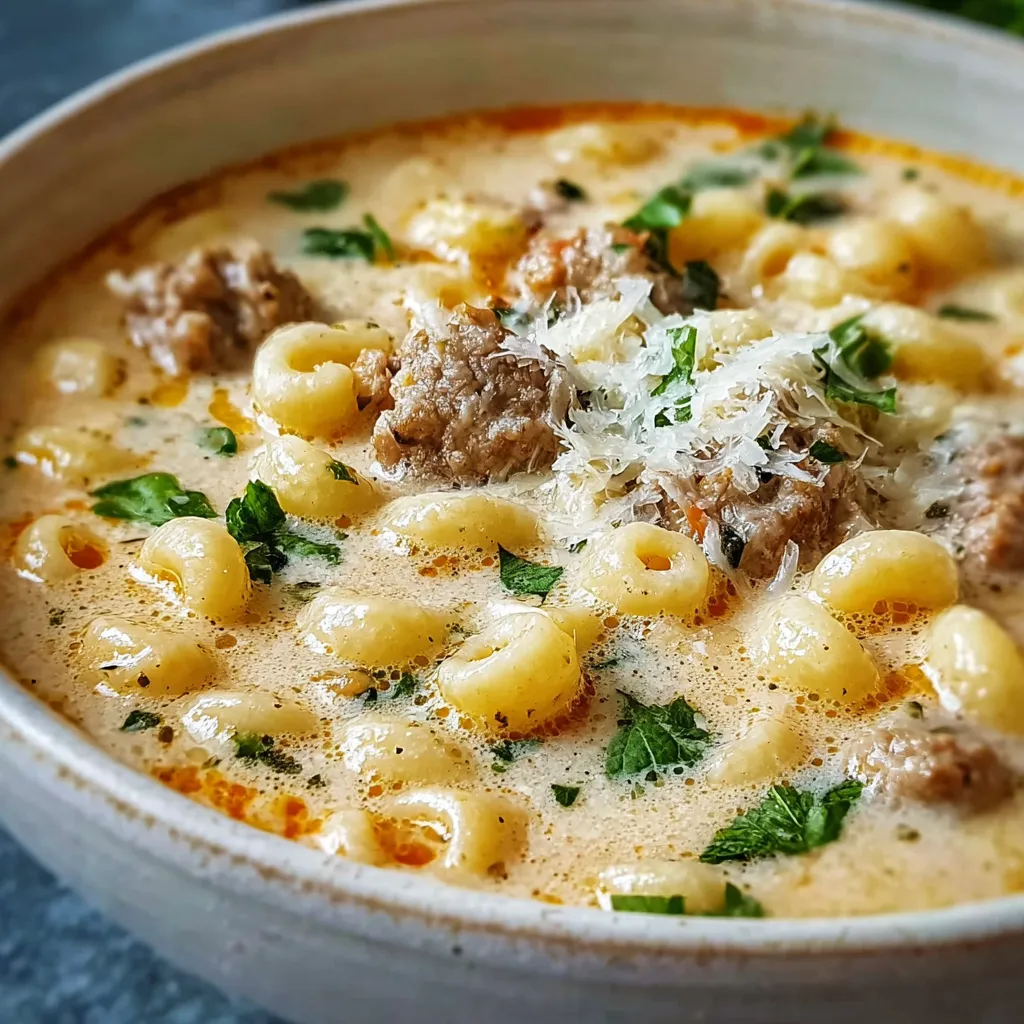 Here’s the recipe that emerged after countless trials, errors, and triumphs.
Ingredients
- 1 pound Italian sausage (sweet or hot, casings removed)
- 1 medium yellow onion, diced
- 2 cloves garlic, minced
- 1 teaspoon dried Italian seasoning
- 1/2 teaspoon red pepper flakes (optional)
- 4 cups chicken broth
- 1 (14.5 ounce) can diced tomatoes, undrained
- 1 cup ditalini pasta
- 1/2 cup heavy cream
- 1/2 cup grated Parmesan cheese, plus more for serving
- 2 tablespoons chopped fresh parsley, for garnish
- Salt and pepper to taste
- 2 tablespoons olive oil
Instructions
- Brown the Sausage: In a large pot or Dutch oven, heat olive oil over medium-high heat. Add the Italian sausage and cook, breaking it apart with a spoon, until browned and cooked through. Remove the sausage from the pot and set aside. Leave the rendered fat in the pot – that’s liquid gold!
- Sauté Aromatics: Add the diced onion to the pot and cook until softened, about 5 minutes. Add the minced garlic, Italian seasoning, and red pepper flakes (if using) and cook for another minute until fragrant.
- Build the Broth: Pour in the chicken broth and diced tomatoes (undrained). Bring to a simmer, scraping up any browned bits from the bottom of the pot.
- Cook the Pasta: Add the ditalini pasta and cook according to package directions, usually about 8-10 minutes, or until al dente.
- Combine and Finish: Return the cooked sausage to the pot. Stir in the heavy cream and Parmesan cheese. Heat gently until the cheese is melted and the soup is heated through. Do not boil!
- Season and Serve: Season with salt and pepper to taste. Garnish with fresh parsley and extra Parmesan cheese. Serve immediately.
My Culinary Confessions: The Investigation
My journey to perfecting this soup wasn’t exactly smooth sailing. My first few attempts were a disaster, resulting in either a watery, flavorless broth or a thick, gluey mess. But like any determined food scientist, I dove deep into the variables, meticulously tweaking each element until I achieved soup nirvana.The Soggy Pasta Saga
Initially, I was adding the pasta too early, resulting in overcooked, mushy noodles that absorbed all the broth. The soup became less of a soup and more of a pasta casserole. Then, I had an “Aha!” moment: adding the pasta later and cooking it *in* the broth allowed it to release its starch and thicken the soup naturally, without turning into a starchy blob.The Case of the Curdled Cream
Like many of you, I initially thought that just dumping the cream into a boiling pot of soup was the way to go. Wrong! The high heat caused the cream to curdle, resulting in an unappetizing, grainy texture. The solution? Tempering the cream. By slowly whisking a small amount of the hot broth into the cold cream before adding it to the pot, I gradually raised its temperature, preventing it from shocking and curdling.The Parmesan Predicament
The parmesan cheese, while adding a wonderful salty, nutty flavor, also presented a challenge. Adding it too early resulted in a clumpy, stringy mess. The secret? Stirring it in *after* the cream, once the soup had cooled slightly. This allowed the cheese to melt smoothly and evenly, creating a silky, cheesy texture. This reminds me of when I learned how to make Cajun Steak Tips In Creamy Rigatoni Parmesan Bake, a baked pasta dish which also requires careful addition of cream and cheese for optimal texture.The Sausage Selection Struggle
I experimented with different types of Italian sausage, from mild to hot, and even tried using pre-cooked sausage. While pre-cooked sausage saved time, it lacked the depth of flavor that comes from browning the sausage from scratch. Ultimately, I found that using a combination of sweet and hot Italian sausage provided the perfect balance of flavor and heat. This soup is infinitely adaptable, much like Italian Penicillin Soup, which can be customized based on your preferred ingredients.The Foolproof Formula: A Creamy Soup Symphony
Here’s the definitive, step-by-step method for achieving creamy soup perfection:- Brown the Sausage Beautifully: Render the fat, build the flavor base.
- Sauté Aromatics Skillfully: Onions, garlic, and spices create the foundation of flavor.
- Build the Broth Bravely: Use a quality broth and deglaze the pot.
- Cook the Pasta Perfectly: Add the pasta later, cook al dente.
- Temper the Cream Tactfully: Prevent curdling, ensure smoothness.
- Melt the Parmesan Masterfully: Add after the cream, achieve silky perfection.
- Season Sensibly: Salt and pepper to taste, adjust as needed.
How do you prevent the cream from curdling when making this soup?
To prevent the cream from curdling, temper it by slowly whisking a small amount of the hot broth into the cold cream before adding it to the pot. This gradually raises the cream’s temperature, preventing it from shocking and curdling.
What is the best way to incorporate the Parmesan cheese into the soup to avoid it clumping?
Stir the Parmesan cheese into the soup *after* the cream, once the soup has cooled slightly. This allows the cheese to melt smoothly and evenly, creating a silky, cheesy texture.
Why is it important to add the ditalini pasta later in the cooking process?
Adding the pasta later and cooking it *in* the broth allows it to release its starch and thicken the soup naturally, without turning into a starchy blob or becoming overcooked and mushy.
What kind of Italian sausage is recommended for this soup?
The article suggests using a combination of sweet and hot Italian sausage for the perfect balance of flavor and heat. While pre-cooked sausage can save time, browning the sausage from scratch provides a deeper flavor.
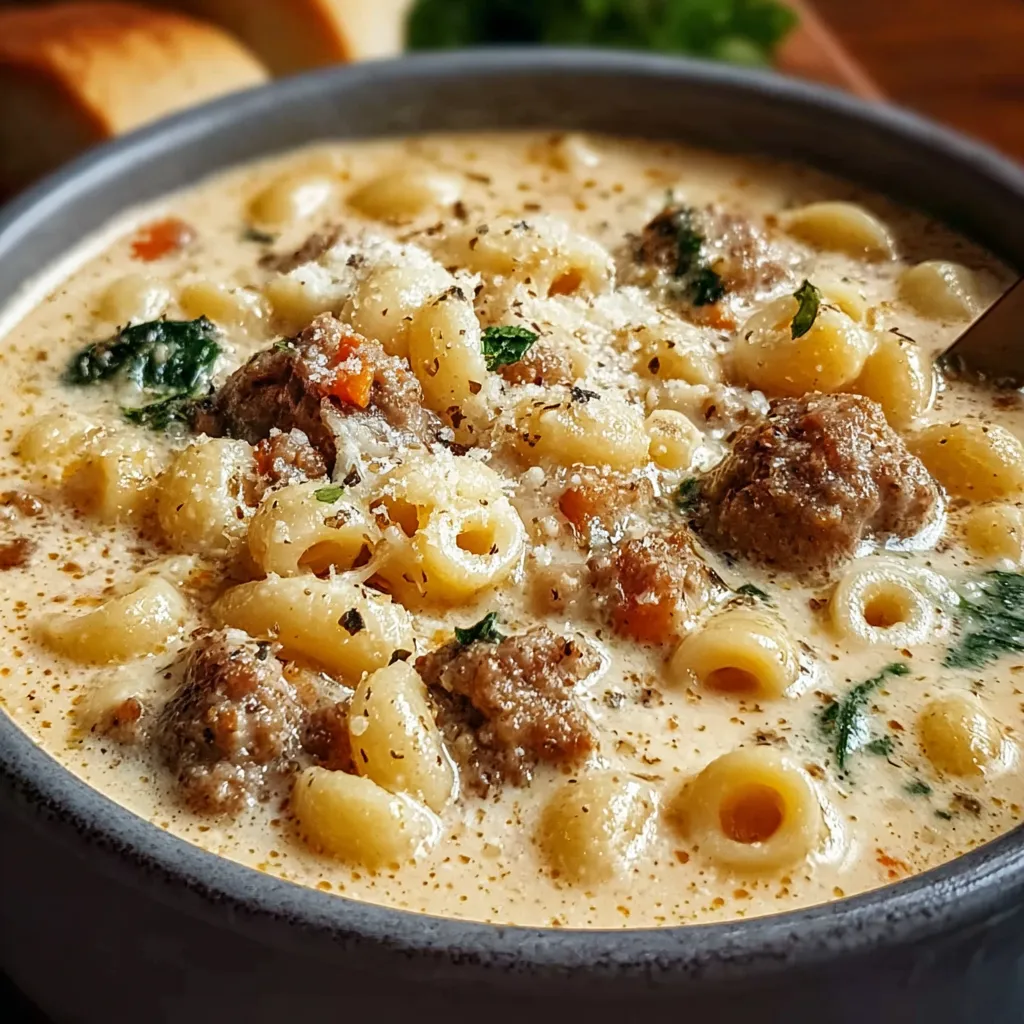
Easy Creamy Parmesan Italian Sausage Ditalini Soup
Ingredients
Equipment
Method
- In a large pot or Dutch oven, heat olive oil over medium-high heat.
- Add the Italian sausage and cook, breaking it apart with a spoon, until browned and cooked through. Remove the sausage from the pot and set aside.
- Leave the rendered fat in the pot.
- Add the diced onion to the pot and cook until softened, about 5 minutes.
- Add the minced garlic, Italian seasoning, and red pepper flakes (if using) and cook for another minute until fragrant.
- Pour in the chicken broth and diced tomatoes (undrained). Bring to a simmer, scraping up any browned bits from the bottom of the pot.
- Add the ditalini pasta and cook according to package directions, usually about 8-10 minutes, or until al dente.
- Return the cooked sausage to the pot.
- Stir in the heavy cream and Parmesan cheese. Heat gently until the cheese is melted and the soup is heated through. Do not boil!
- Season with salt and pepper to taste.
- Garnish with fresh parsley and extra Parmesan cheese.
- Serve immediately.