
Unlocking the One-Pot Wonder: The Science Behind Lasagna Soup
The magic of transforming a layered lasagna into a harmonious soup rests on understanding a few key principles of food science. First, we need to address the pasta: overcooking is the enemy. Unlike a baked lasagna where pasta layers are protected within the sauce, soup pasta is fully submerged. Therefore, selecting a pasta shape that can withstand simmering without turning to mush is crucial. Short, sturdy shapes like rotini or penne work best. Secondly, building flavor quickly is paramount. Browning the meat and vegetables initially creates Maillard reaction products, those savory compounds that add depth. Thirdly, acid is key. A touch of balsamic vinegar or even a squeeze of lemon juice at the end brightens the overall flavor profile and balances the richness. Finally, and perhaps most importantly, the proper ratio of liquid to solids is essential to achieve the desired soup consistency. We want a hearty soup, not a watery broth with bits of lasagna ingredients floating around. This delicate balance requires careful measurement and potentially some adjustment as the soup simmers. The best Lasagna Soup Recipe must consider each one of these elements.The Grand Recipe: One Pot Lasagna Soup
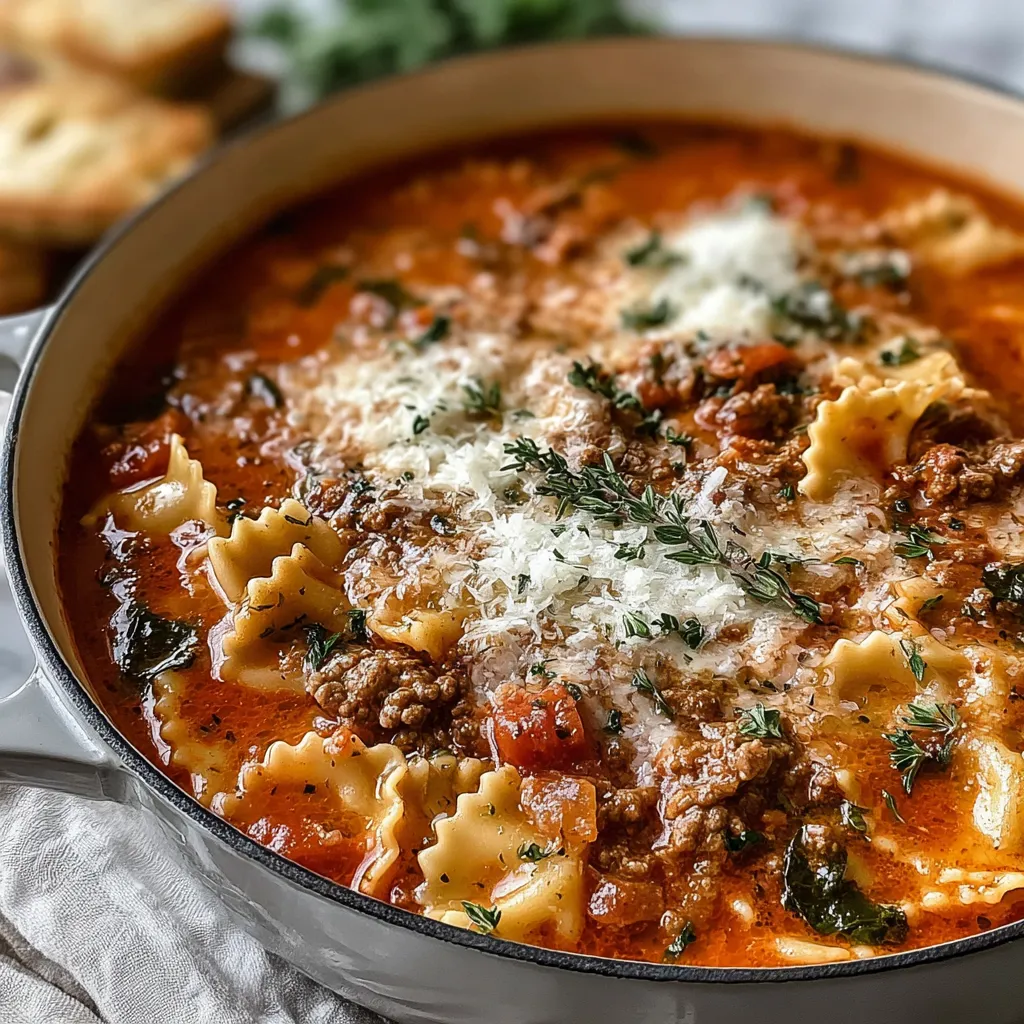 This recipe is designed to be approachable, flavorful, and, most importantly, achievable in a single pot.
Ingredients
- 1 pound Italian sausage (sweet or hot, or a combination), removed from casings
- 1 large onion, chopped
- 2 cloves garlic, minced
- 1 red bell pepper, chopped
- 1 (28 ounce) can crushed tomatoes
- 1 (15 ounce) can tomato sauce
- 4 cups chicken broth (low sodium)
- 1 cup water
- 1 teaspoon dried oregano
- 1/2 teaspoon dried basil
- 1/4 teaspoon red pepper flakes (optional)
- Salt and pepper to taste
- 8 ounces lasagna noodles, broken into small pieces
- 1 (15 ounce) container ricotta cheese
- 1/4 cup chopped fresh parsley
- Grated Parmesan cheese, for serving
Instructions
- In a large pot or Dutch oven, brown the Italian sausage over medium-high heat, breaking it up with a spoon. Drain off any excess grease.
- Add the onion, garlic, and bell pepper to the pot and cook until softened, about 5-7 minutes.
- Stir in the crushed tomatoes, tomato sauce, chicken broth, water, oregano, basil, red pepper flakes (if using), salt, and pepper. Bring to a boil.
- Add the broken lasagna noodles. Reduce heat to low, cover, and simmer for 15-20 minutes, or until the noodles are tender. Stir occasionally to prevent sticking.
- While the soup simmers, prepare the ricotta cheese mixture. In a small bowl, combine the ricotta cheese and parsley. Season with salt and pepper to taste.
- To serve, ladle the soup into bowls. Top each serving with a dollop of the ricotta cheese mixture and a sprinkle of grated Parmesan cheese.
Tips and Variations
- For a richer flavor, use beef broth instead of chicken broth.
- Add other vegetables, such as zucchini, carrots, or mushrooms.
- If you don’t have lasagna noodles, use another short pasta shape, such as rotini or penne.
- Make it a Lasagna Soup Freezer Meal: Prepare the soup up to the point of adding the pasta. Let it cool completely, then transfer to a freezer-safe container. When ready to serve, thaw overnight in the refrigerator, then bring to a simmer and add the pasta.
- Spice it up by adding a pinch of cayenne pepper or a dash of hot sauce.
Confessions of a Culinary Investigator: My One-Pot Lasagna Soup Journey
My first few attempts were a disaster. Like many of you, I initially thought, “It’s just soup! How hard can it be?” Turns out, pretty hard.The Pasta Predicament
My initial instinct was to use regular lasagna noodles, broken into large pieces. Epic fail. They turned into a gummy, starchy mess, clinging together and creating a cement-like texture. The texture was reminiscent of Cream Cheese Spaghetti Casserole gone wrong. Then, I had an “Aha!” moment: smaller pasta is the key! Breaking the noodles into much smaller pieces—about one-inch squares—solved the clumping issue. I also experimented with pre-cooking the pasta separately, but that defeated the purpose of a one-pot meal.The Flavor Fiasco
My early batches tasted…flat. They lacked the depth and complexity of a true lasagna. I realized I was skimping on the browning. Taking the time to really brown the sausage and sauté the vegetables until they were nicely caramelized made a HUGE difference. This, in turn, made me think of how important the browning process is when I make Pot Roast With Mashed Potatoes. Adding a pinch of red pepper flakes also gave the soup a subtle kick that I found particularly appealing.The Liquid Ledger
Getting the right liquid-to-solids ratio was a constant challenge. Too much broth, and the soup was thin and watery. Too little, and the pasta absorbed all the liquid, resulting in a thick, gloppy mess. The solution? Starting with a conservative amount of broth and adding more as needed. I also discovered that using a combination of chicken broth and water yielded a more balanced flavor than using straight chicken broth. The Rotisserie Chicken Mushroom Soup uses a similar liquid blend to achieve its excellent texture.Ricotta Revelation
Initially, I mixed the ricotta directly into the soup. While it tasted good, the texture was somewhat grainy. The solution? Dolloping the ricotta on top of each serving! This not only created a more visually appealing presentation but also allowed the creamy ricotta to melt slowly into the hot soup, creating pockets of deliciousness. It reminded me of the way I top my Chicken Parmesan Casserole with mozzarella, creating those perfect, cheesy bites.The Foolproof Formula: Mastering One Pot Lasagna Soup
After countless iterations and a mountain of dirty dishes, I’ve distilled the process down to a foolproof method. This is the golden ticket to Stock Pot Soup Recipes success!- Brown Like a Boss: Don’t rush the browning process. Take the time to really develop the flavor of the sausage and vegetables.
- Small Pasta, Big Difference: Break the lasagna noodles into small, manageable pieces (about one-inch squares).
- Liquid Control: Start with a conservative amount of broth and add more as needed to achieve your desired consistency.
- Ricotta Ritual: Dollop the ricotta on top of each serving for optimal texture and flavor.
- Season with Soul: Don’t be afraid to experiment with different seasonings to create a soup that suits your taste. A little red pepper flakes, a squeeze of lemon juice, or a dash of balsamic vinegar can make all the difference. You can find a similar technique in the Creamy Garlic Parmesan Crockpot Chicken recipe.
Why is it important to break the lasagna noodles into small pieces for this soup?
Breaking the lasagna noodles into small pieces (about one-inch squares) prevents them from clumping together and becoming a gummy, starchy mess during cooking.
What kind of pasta works best in lasagna soup?
Short, sturdy pasta shapes like rotini or penne work best because they can withstand simmering in the soup without becoming mushy. If using lasagna noodles, break them into small pieces.
How can I add more depth of flavor to my lasagna soup?
Browning the sausage and vegetables thoroughly before adding the other ingredients is crucial for developing a richer flavor. You can also add a pinch of red pepper flakes or a squeeze of lemon juice at the end to brighten the flavor.
Can I freeze lasagna soup?
Yes, you can freeze the soup. Prepare the soup up to the point of adding the pasta. Let it cool completely, then transfer to a freezer-safe container. When ready to serve, thaw overnight in the refrigerator, then bring to a simmer and add the pasta.

Easy One Pot Lasagna Soup
Ingredients
Equipment
Method
- In a large pot or Dutch oven, brown the Italian sausage over medium-high heat, breaking it up with a spoon. Drain off any excess grease.
- Add the onion, garlic, and bell pepper to the pot and cook until softened, about 5-7 minutes.
- Stir in the crushed tomatoes, tomato sauce, chicken broth, water, oregano, basil, red pepper flakes (if using), salt, and pepper. Bring to a boil.
- Add the broken lasagna noodles. Reduce heat to low, cover, and simmer for 15-20 minutes, or until the noodles are tender. Stir occasionally to prevent sticking.
- While the soup simmers, prepare the ricotta cheese mixture. In a small bowl, combine the ricotta cheese and parsley. Season with salt and pepper to taste.
- To serve, ladle the soup into bowls. Top each serving with a dollop of the ricotta cheese mixture and a sprinkle of grated Parmesan cheese.