
The Tangy Tango: Unlocking the Science of Cranberry Orange Chicken
The magic of Skillet Cranberry Orange Chicken lies in the interplay of several key scientific principles. First, consider the Maillard reaction. This is the browning process that occurs when amino acids and reducing sugars are heated, creating hundreds of flavor compounds. Achieving a good sear on the chicken is crucial, and it’s more than just aesthetics; it fundamentally changes the taste. High heat, a dry surface, and sufficient protein are key. Next, we have the role of acids in cooking. Both cranberries and oranges are rich in citric and other acids. These acids perform several important functions. They tenderize the chicken by partially denaturing proteins, preventing it from becoming dry and tough. They also contribute to the overall flavor profile, providing a delightful tanginess that balances the sweetness of the cranberries and any added sugar. The acidity also helps to prevent the sauce from becoming overly sweet and cloying. Finally, pectin, a soluble fiber found in cranberries and oranges, plays a role in thickening the sauce. As the sauce simmers, the pectin is released and, in the presence of sugar and acid, forms a gel-like structure, giving the sauce a desirable viscosity. Understanding this principle allows you to adjust the cooking time and sugar levels to achieve the perfect sauce consistency. Think of it like the science behind jam-making, but applied to a savory dish!The Recipe: Your Guide to Skillet Cranberry Orange Chicken Glory

Ingredients:
- 4 boneless, skinless chicken breasts (about 6 ounces each)
- 1 tablespoon olive oil
- Salt and freshly ground black pepper, to taste
- 1 small onion, chopped
- 2 cloves garlic, minced
- 1 cup fresh or frozen cranberries
- 1/2 cup orange juice
- 1/4 cup chicken broth
- 2 tablespoons orange zest
- 2 tablespoons brown sugar (adjust to taste)
- 1 tablespoon apple cider vinegar
- 1 teaspoon Dijon mustard
- 1/4 teaspoon ground ginger
- 1/4 teaspoon ground cinnamon
- Optional: Fresh parsley or orange slices for garnish
Instructions:
- Prepare the Chicken: Pat the chicken breasts dry with paper towels. Season generously with salt and pepper.
- Sear the Chicken: Heat the olive oil in a large skillet over medium-high heat. Once the oil is shimmering, add the chicken breasts and sear for 3-4 minutes per side, or until golden brown and cooked through. Remove the chicken from the skillet and set aside.
- Sauté Aromatics: Reduce the heat to medium. Add the chopped onion to the skillet and cook for 3-5 minutes, or until softened. Add the minced garlic and cook for another minute, until fragrant.
- Create the Sauce: Add the cranberries, orange juice, chicken broth, orange zest, brown sugar, apple cider vinegar, Dijon mustard, ginger, and cinnamon to the skillet. Stir to combine.
- Simmer the Sauce: Bring the sauce to a simmer and cook for 8-10 minutes, or until the cranberries have burst and the sauce has thickened slightly. Stir occasionally to prevent sticking.
- Combine and Finish: Return the chicken breasts to the skillet and nestle them into the sauce. Spoon the sauce over the chicken to coat. Continue to simmer for another 2-3 minutes, or until the chicken is heated through.
- Garnish and Serve: Garnish with fresh parsley or orange slices, if desired. Serve immediately over rice, quinoa, or your favorite side dish.
The Investigation: My Cranberry Orange Chicken Odyssey
The Soggy Start: My Initial Struggles
My first few attempts at making Skillet Cranberry Orange Chicken were a disaster. Like many of you, I initially thought it was just a matter of throwing everything into a pan and hoping for the best. My chicken ended up pale and bland, the sauce was either watery or a sticky, sugary mess, and the overall dish lacked that vibrant, tangy flavor I was aiming for. I even tried a similar recipe with a different protein, using ground turkey and a bit of maple syrup, but it was still missing something.The Browning Breakthrough: Unlocking the Maillard Magic
Then, I had an “Aha!” moment. I realized I was skipping a crucial step: properly searing the chicken. The Maillard reaction, as I later learned, is essential for developing deep, complex flavors. So, I started focusing on getting a good sear on the chicken before adding it to the sauce. This simple change made a world of difference. The chicken developed a beautiful golden-brown crust, and the flavor was significantly richer. This is also where proper seasoning became paramount. Salt and pepper are your friends!Acid Test: Taming the Sweetness
Another hurdle was balancing the sweetness of the cranberries and orange juice. The first few times, the sauce was overwhelmingly sweet, masking all the other flavors. The solution? Acidity. I experimented with adding a splash of apple cider vinegar, and it worked wonders. The vinegar cut through the sweetness, adding a welcome tanginess that brightened up the entire dish. I also discovered that using fresh orange zest, rather than relying solely on orange juice, intensified the citrus flavor without adding extra sugar. Thinking about this process made me think of other recipes with similar flavor profiles, like Pineapple Bbq Chicken, where the interplay of sweet and savory is key.The Thickening Conundrum: Pectin to the Rescue
Finally, I struggled with getting the sauce to the right consistency. Sometimes it was too thin, other times too thick and gloopy. The key, I discovered, was understanding the role of pectin in cranberries and oranges. By simmering the sauce for the right amount of time, I could allow the pectin to release and thicken the sauce naturally. Too much simmering, however, would result in a sticky, jam-like consistency. I also learned that adjusting the amount of sugar could affect the sauce’s thickness. Less sugar meant a less sticky sauce. It reminded me a bit of making Honey Garlic Chicken, where the final simmer reduces the sauce to the perfect glaze.The Perfect Pairing: From Side Dish Dilemma to Culinary Harmony
Choosing the right side dish was also part of the journey. Initially, I served it with mashed potatoes, which, while tasty, didn’t quite complement the bright flavors of the chicken. Then I tried quinoa. It was a game-changer. Its nutty flavor and slightly chewy texture provided the perfect counterpoint to the tangy, sweet sauce. Brown rice also works well. My friend even tried the sauce with a side of roasted vegetables and said it reminded her of Skillet Chicken With Veggies.The Technique: A Foolproof Method for Skillet Cranberry Orange Chicken
Here’s a step-by-step guide to guarantee success every time:- Dry and Season: Pat the chicken breasts completely dry with paper towels. This is crucial for achieving a good sear. Season generously with salt and pepper.
- High Heat Sear: Heat the oil in a skillet over medium-high heat. Don’t overcrowd the pan; sear the chicken in batches if necessary. A good sear takes 3-4 minutes per side and gives you that beautiful golden crust.
- Aromatic Foundation: Sauté the onion until softened, then add the garlic and cook until fragrant. Don’t burn the garlic!
- Acidic Harmony: Add the cranberries, orange juice, orange zest, brown sugar, apple cider vinegar, Dijon mustard, ginger, and cinnamon to the skillet. The vinegar is key to balancing the sweetness.
- Gentle Simmer: Simmer the sauce until the cranberries burst and the sauce thickens slightly. Stir occasionally to prevent sticking. This usually takes around 8-10 minutes.
- Final Embrace: Return the chicken to the skillet, nestle it into the sauce, and spoon the sauce over the chicken to coat. Simmer for another 2-3 minutes to heat the chicken through.
- Taste and Adjust: Before serving, taste the sauce and adjust the seasoning as needed. Add a pinch of salt or a splash of vinegar to balance the flavors. A little bit of Dijon mustard can also add a nice depth. Think about the steps in making Crockpot Bbq Chicken where the sauce is critical.
Why is searing the chicken so important in this recipe?
Searing the chicken is crucial because it triggers the Maillard reaction, which creates deep, complex flavors and a golden-brown crust. This step significantly enriches the overall taste of the dish.
How does the apple cider vinegar improve the Cranberry Orange Chicken?
The apple cider vinegar balances the sweetness of the cranberries and orange juice, adding a welcome tanginess that brightens up the entire dish and prevents the sauce from becoming overly sweet.
What role does pectin play in the cranberry orange sauce?
Pectin, found in cranberries and oranges, helps thicken the sauce. As the sauce simmers, pectin is released and forms a gel-like structure, giving the sauce a desirable viscosity. Adjusting cooking time and sugar levels affects the sauce’s thickness due to pectin.
What are some recommended side dishes to serve with Skillet Cranberry Orange Chicken?
Quinoa and brown rice are recommended side dishes. Quinoa’s nutty flavor and slightly chewy texture provide a good counterpoint to the tangy, sweet sauce. Roasted vegetables are another good option.
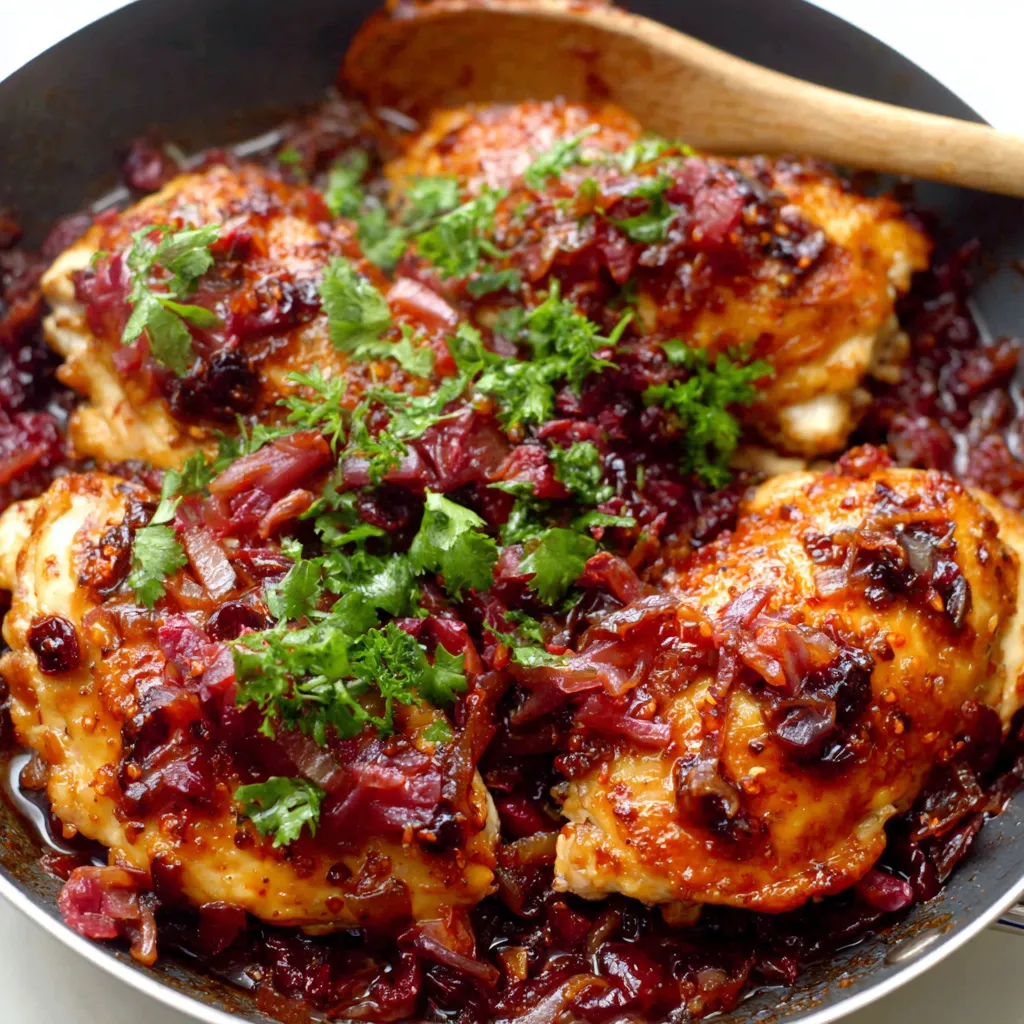
Easy Skillet Cranberry Orange Chicken
Ingredients
Equipment
Method
- Prepare the Chicken: Pat the chicken breasts dry with paper towels. Season generously with salt and pepper.
- Sear the Chicken: Heat the olive oil in a large skillet over medium-high heat. Once the oil is shimmering, add the chicken breasts and sear for 3-4 minutes per side, or until golden brown and cooked through. Remove the chicken from the skillet and set aside.
- Sauté Aromatics: Reduce the heat to medium. Add the chopped onion to the skillet and cook for 3-5 minutes, or until softened. Add the minced garlic and cook for another minute, until fragrant.
- Create the Sauce: Add the cranberries, orange juice, chicken broth, orange zest, brown sugar, apple cider vinegar, Dijon mustard, ginger, and cinnamon to the skillet. Stir to combine.
- Simmer the Sauce: Bring the sauce to a simmer and cook for 8-10 minutes, or until the cranberries have burst and the sauce has thickened slightly. Stir occasionally to prevent sticking.
- Combine and Finish: Return the chicken breasts to the skillet and nestle them into the sauce. Spoon the sauce over the chicken to coat. Continue to simmer for another 2-3 minutes, or until the chicken is heated through.
- Garnish and Serve: Garnish with fresh parsley or orange slices, if desired. Serve immediately over rice, quinoa, or your favorite side dish.