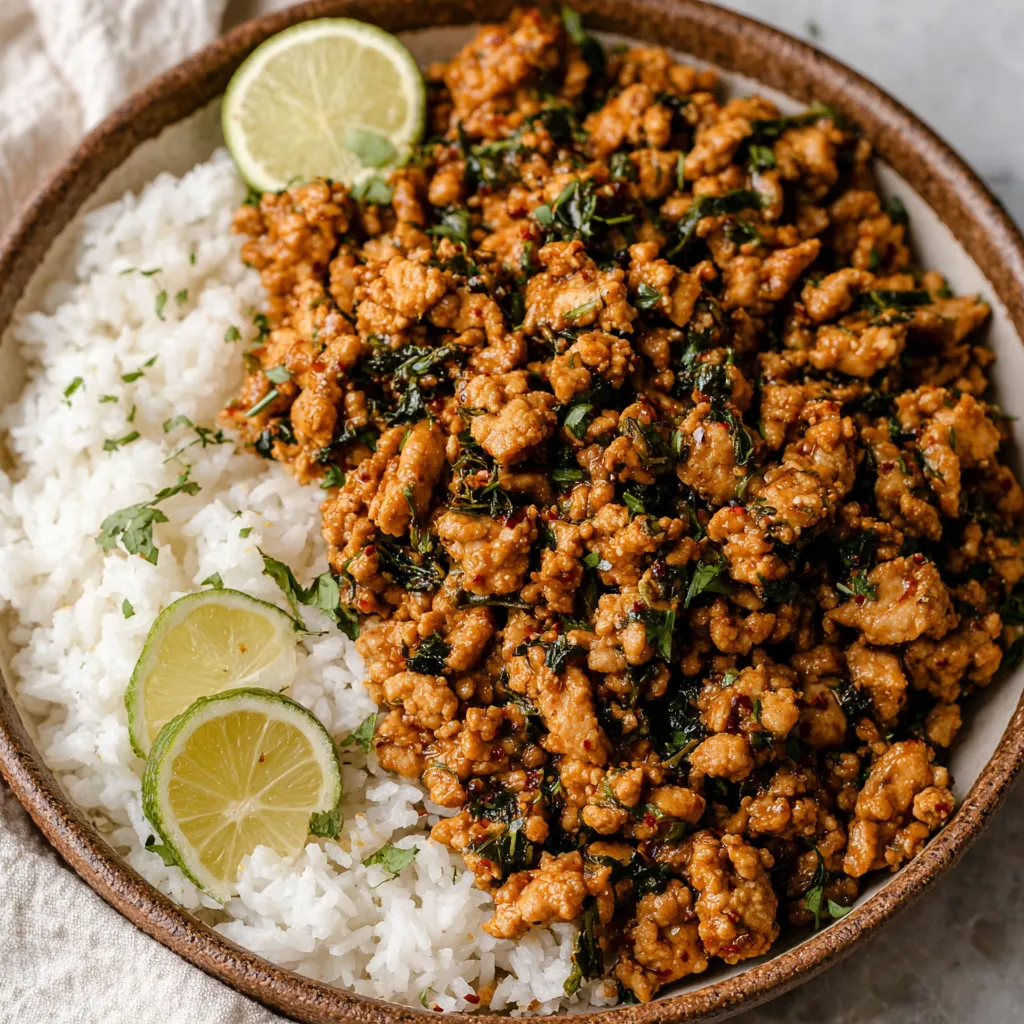

Unlocking the Secrets: The Science Behind the Flavor
The magic of Thai cuisine hinges on a careful interplay of key flavor components. It’s not just about throwing in some soy sauce and chili flakes. Let’s break down the science:- Umami Base: Soy sauce (or tamari for gluten-free options) provides the savory, umami foundation. It’s crucial to use a good quality soy sauce – the cheap stuff can taste harsh and metallic.
- Sweetness: Palm sugar is traditional, but brown sugar or even honey can be used. The sweetness balances the saltiness and acidity.
- Acidity: Lime juice is essential for that characteristic Thai tang. It brightens the dish and adds a refreshing zest. Avoid bottled lime juice – fresh is always best.
- Heat: Chili garlic sauce or sriracha brings the heat. Adjust the amount to your preference. If you’re using fresh chilies, remember that the seeds contain most of the capsaicin, so remove them for a milder flavor.
- Aromatics: Ginger and garlic are the aromatic powerhouses. Don’t skimp on these! They infuse the entire dish with their fragrant oils.
- Texture: Cabbage provides a satisfying crunch, but it’s crucial not to overcook it. It should still have some bite. The chicken needs to be cooked through but remain tender and juicy. This is where proper searing and temperature control come in.
The Ultimate Thai Chicken Cabbage Skillet Recipe
 Here’s my go-to recipe, perfected through numerous iterations.
Ingredients:
- 1.5 lbs boneless, skinless chicken thighs, cut into 1-inch pieces
- 1 tbsp olive oil
- 1 medium yellow onion, thinly sliced
- 2 cloves garlic, minced
- 1 inch ginger, grated
- 1 medium head of green cabbage, shredded
- 1/4 cup soy sauce (or tamari)
- 2 tbsp brown sugar
- 2 tbsp lime juice
- 1-2 tbsp chili garlic sauce (or sriracha, to taste)
- 1/4 cup chopped fresh cilantro
- 2 tbsp chopped peanuts (optional, for garnish)
Instructions:
- Heat olive oil in a large skillet or wok over medium-high heat.
- Add chicken and cook until browned on all sides and cooked through (about 6-8 minutes). Remove chicken from the skillet and set aside.
- Add onion to the skillet and cook until softened, about 3-4 minutes.
- Add garlic and ginger and cook for 1 minute more, until fragrant.
- Add shredded cabbage to the skillet and cook until slightly softened but still crunchy, about 5-7 minutes.
- In a small bowl, whisk together soy sauce, brown sugar, lime juice, and chili garlic sauce.
- Pour the sauce over the cabbage and stir to coat.
- Return the chicken to the skillet and stir to combine with the cabbage and sauce.
- Cook for another 2-3 minutes, until heated through.
- Garnish with fresh cilantro and peanuts (if using).
- Serve immediately.
My Culinary Investigation: A Journey to Thai Skillet Perfection
My path to the perfect Thai Chicken Cabbage Skillet wasn’t exactly smooth. It was more like a winding, bumpy road filled with culinary potholes and delicious detours.The Soggy Cabbage Catastrophe
My first few attempts were a disaster. Like many of you, I initially thought I could just throw everything into the skillet at once and hope for the best. The result? Soggy cabbage swimming in a watery sauce. The chicken was either overcooked or undercooked, and the flavors were muted and indistinct. It was a sad, gloppy mess.The “Aha!” Moment: Mastering the Technique
Then, I had an “Aha!” moment while experimenting with a similar recipe, Skillet Chicken With Veggies. I realized that the key was to cook each component separately and then combine them at the end. This allowed me to control the texture and prevent the cabbage from becoming waterlogged. Searing the chicken first also locked in the juices and added a beautiful caramelized flavor.The Sauce Struggle: Finding the Right Balance
The sauce was another challenge. My initial attempts were either too sweet, too salty, or too spicy. It took several iterations to find the perfect balance of soy sauce, brown sugar, lime juice, and chili garlic sauce. I also experimented with different types of sweeteners, eventually settling on brown sugar for its slightly molasses-like flavor. I even tried using a bit of honey, like in Honey Pepper Chicken, but it overpowered the other flavors.The Cilantro Conundrum: Fresh vs. Dried
Finally, there was the cilantro conundrum. I initially used dried cilantro, thinking it would be more convenient. Big mistake! Dried cilantro has very little flavor compared to fresh. Fresh cilantro adds a bright, herbaceous note that is essential to the dish. Now, I always use fresh cilantro and add it at the very end to preserve its flavor. I’ve also found that adding a touch of lime zest, like in the Tex Mex Chicken And Zucchini recipe, further enhances the brightness of the dish.Embracing the Heat: Chili Garlic Sauce vs. Sriracha
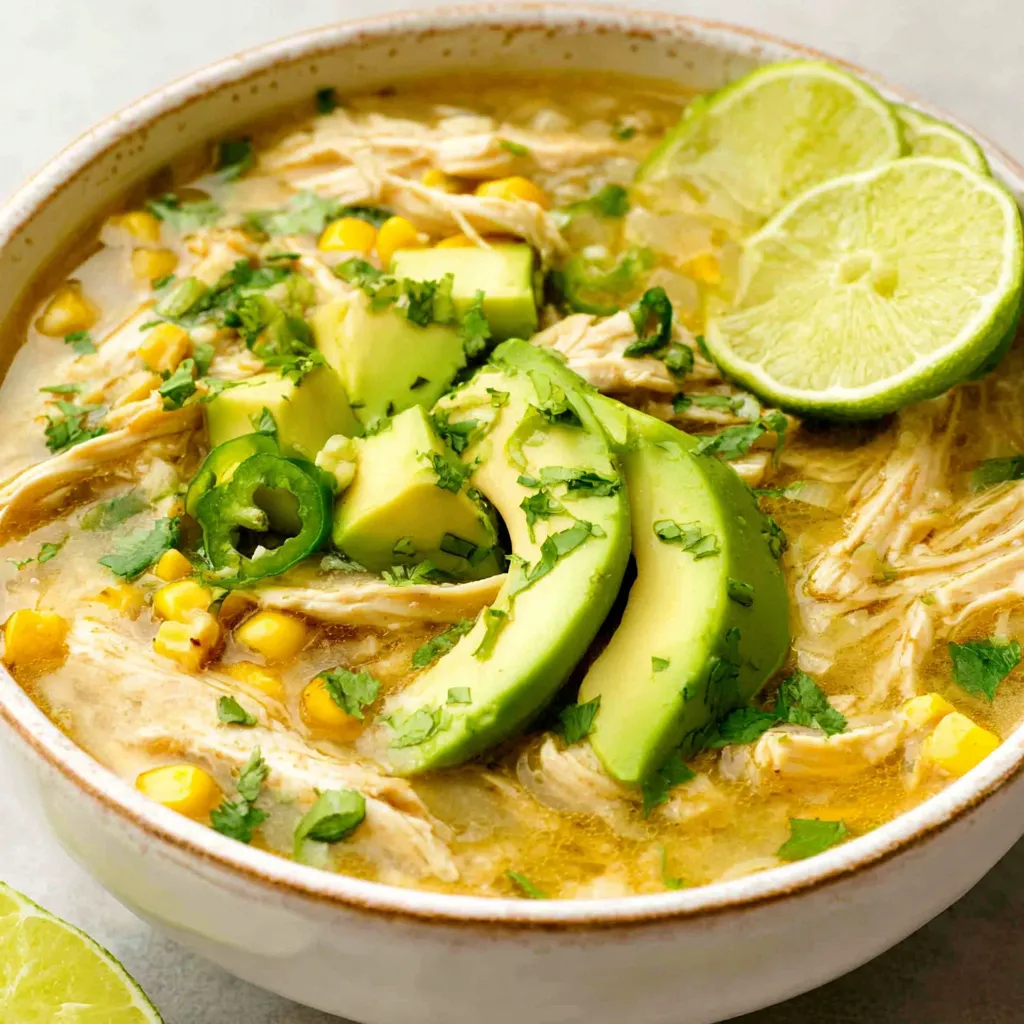
I also experimented with different heat sources. While sriracha is a common choice, I found that chili garlic sauce provides a more complex flavor with a pleasant garlicky kick. It’s crucial to add it gradually and taste as you go, especially if you’re sensitive to spice. The spice levels should complement, not overwhelm, the other flavors, much like in a good bowl of Thai Chicken Soup.The Foolproof Method: A Step-by-Step Guide
After countless experiments and delicious (and not-so-delicious) iterations, I’ve distilled the process down to a simple, foolproof method:- Sear the Chicken: Sear the chicken in a hot skillet to lock in the juices and add flavor. Remove it and set aside.
- Sauté the Aromatics: Sauté the onion, garlic, and ginger until fragrant. This creates a flavorful base for the dish.
- Cook the Cabbage: Add the cabbage and cook until slightly softened but still crunchy. Don’t overcook it!
- Whisk the Sauce: Whisk together the soy sauce, brown sugar, lime juice, and chili garlic sauce.
- Combine and Simmer: Pour the sauce over the cabbage, return the chicken to the skillet, and simmer until heated through.
- Garnish and Serve: Garnish with fresh cilantro and peanuts (if using) and serve immediately.
What makes this Thai Chicken Cabbage Skillet recipe “authentic”?
The recipe achieves authentic Thai flavor through a careful balance of umami (soy sauce), sweetness (brown sugar), acidity (lime juice), heat (chili garlic sauce), and aromatics (ginger and garlic). Fresh ingredients and proper cooking techniques are also key.
How do I prevent the cabbage from becoming soggy in the skillet?
To prevent soggy cabbage, avoid overcrowding the skillet and cook the cabbage separately until slightly softened but still crunchy. Do not overcook it. Combining it with the sauce and chicken at the end ensures it retains its texture.
Can I use bottled lime juice instead of fresh lime juice?
The article strongly recommends using fresh lime juice for the best flavor. Bottled lime juice lacks the bright, refreshing zest that fresh lime juice provides.
What can I substitute for chili garlic sauce if I don’t have it?
You can substitute sriracha for chili garlic sauce. Adjust the amount to your preference, as spice levels can vary. Add gradually and taste as you go.
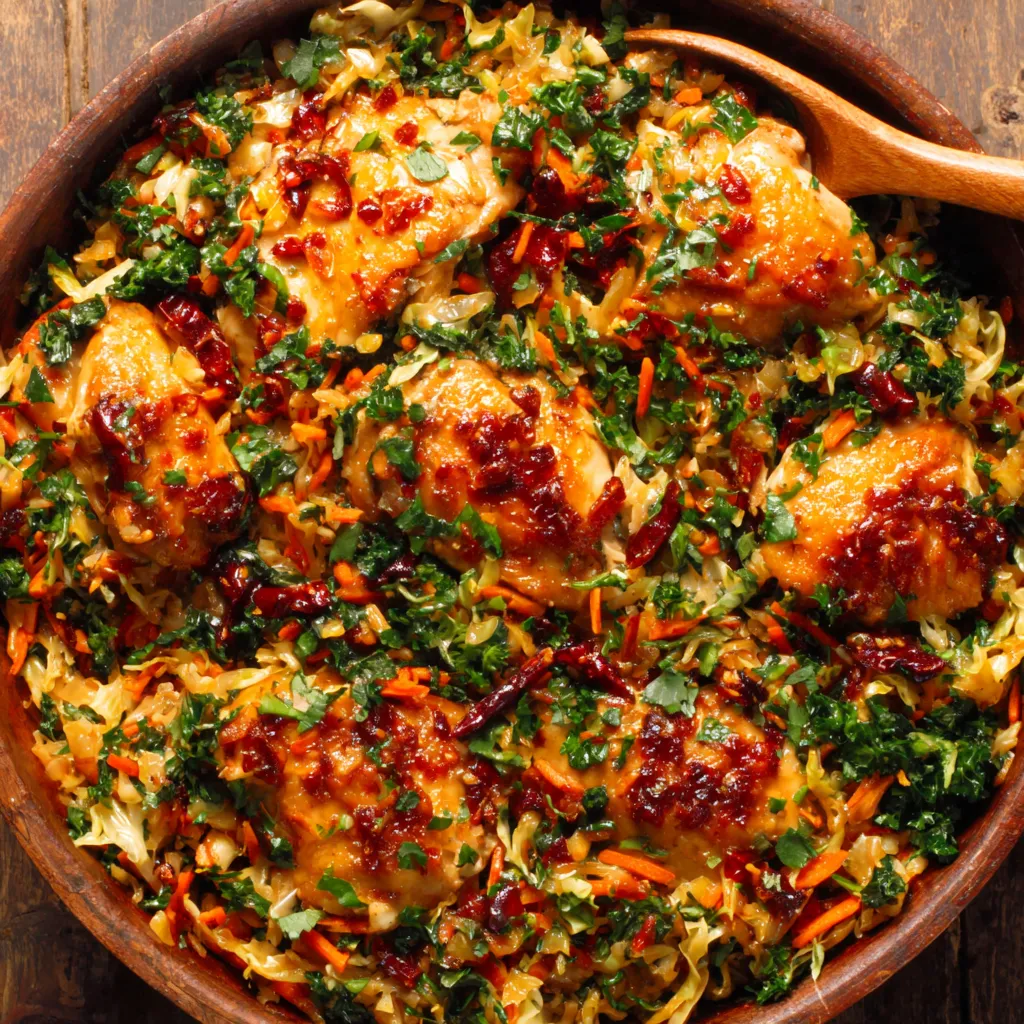
Easy Thai Chicken Cabbage Skillet
Ingredients
Equipment
Method
- Heat olive oil in a large skillet or wok over medium-high heat.
- Add chicken and cook until browned on all sides and cooked through (about 6-8 minutes). Remove chicken from the skillet and set aside.
- Add onion to the skillet and cook until softened, about 3-4 minutes.
- Add garlic and ginger and cook for 1 minute more, until fragrant.
- Add shredded cabbage to the skillet and cook until slightly softened but still crunchy, about 5-7 minutes.
- In a small bowl, whisk together soy sauce, brown sugar, lime juice, and chili garlic sauce.
- Pour the sauce over the cabbage and stir to coat.
- Return the chicken to the skillet and stir to combine with the cabbage and sauce.
- Cook for another 2-3 minutes, until heated through.
- Garnish with fresh cilantro and peanuts (if using).
- Serve immediately.