
Unlocking the Secrets: The Science Behind the Sauce
The magic of Tuscan Chicken Pasta lies in its creamy, sun-dried tomato-infused sauce. The key to achieving that perfect balance of flavors and textures hinges on understanding a few core scientific principles. First, emulsification. We’re essentially creating a stable mixture of water-based ingredients (chicken broth, cream) and oil-based components (olive oil from the sun-dried tomatoes). Too much oil, and the sauce will separate. Too little, and it will lack richness. Secondly, acid balance. The sun-dried tomatoes provide a concentrated burst of acidity. Counteracting this with cream and Parmesan cheese is crucial to prevent the dish from being overly tart. Thirdly, Maillard reaction. Searing the chicken promotes the Maillard reaction, creating hundreds of flavor compounds that contribute to the overall depth of the dish. Don’t skip this step, thinking you can just boil the chicken! Finally, starch gelatinization. The pasta releases starch into the cooking water, which thickens the sauce. Properly salted pasta water is essential, not just for flavor, but to help create a silky smooth sauce.The Ultimate Tuscan Chicken Pasta Recipe
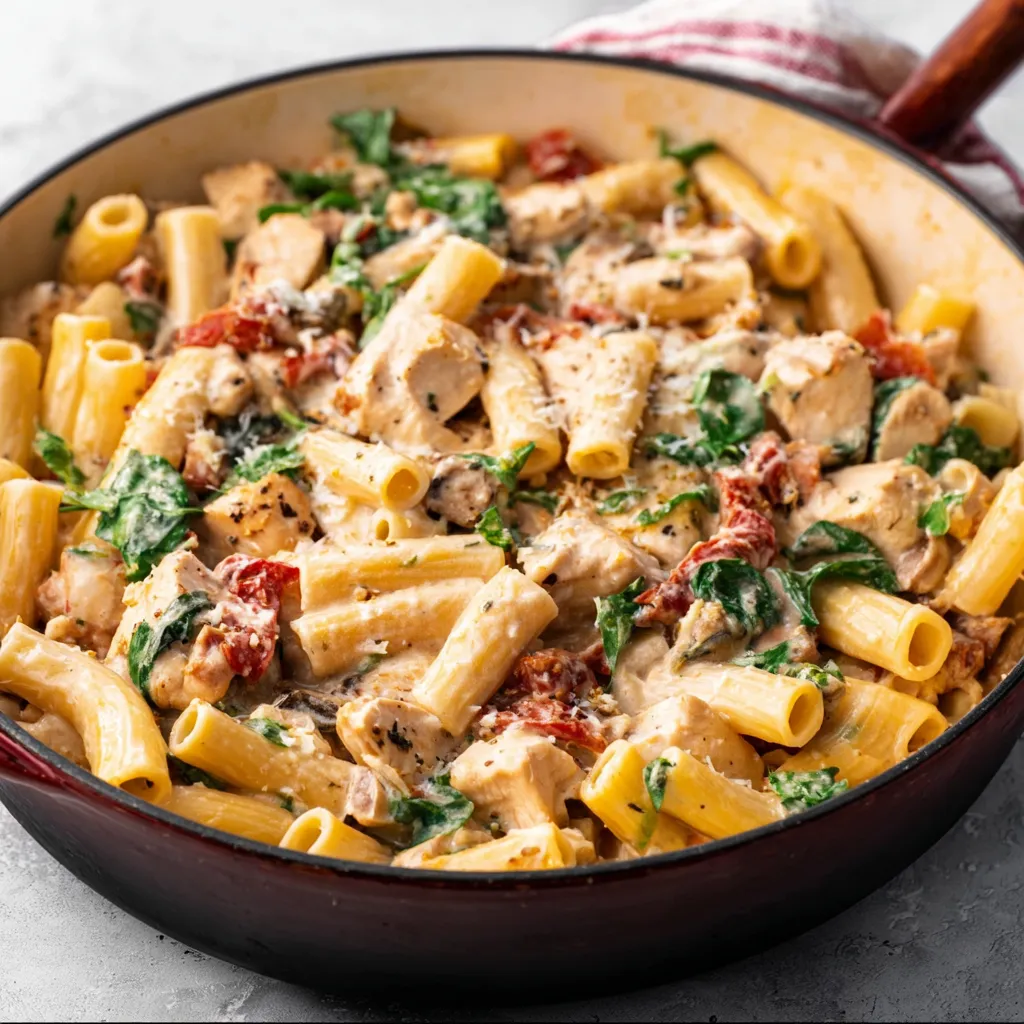 This recipe is the result of countless trials and errors. It’s designed to be foolproof, even for beginner cooks.
Ingredients:
- 1.5 lbs boneless, skinless chicken breasts, cut into bite-sized pieces
- 1 lb pasta (penne, farfalle, or rotini work well)
- 2 tbsp olive oil
- 1/2 cup sun-dried tomatoes, oil-packed, drained and chopped
- 2 cloves garlic, minced
- 1/2 cup chopped onion
- 1/2 cup chicken broth
- 1 cup heavy cream
- 1/2 cup grated Parmesan cheese
- 1/4 cup chopped fresh spinach
- 1/4 cup chopped fresh basil
- 1 tsp Italian seasoning
- Salt and pepper to taste
- Optional: Red pepper flakes for a touch of heat
Instructions:
- Cook the Pasta: Bring a large pot of salted water to a boil. Add the pasta and cook according to package directions until al dente. Reserve about 1 cup of pasta water before draining.
- Sear the Chicken: While the pasta is cooking, heat the olive oil in a large skillet over medium-high heat. Season the chicken with salt, pepper, and Italian seasoning. Add the chicken to the skillet and cook until browned and cooked through, about 5-7 minutes. Remove the chicken from the skillet and set aside.
- Sauté Aromatics: Add the onion and garlic to the skillet and cook until softened and fragrant, about 3-5 minutes.
- Build the Sauce: Add the sun-dried tomatoes and chicken broth to the skillet. Bring to a simmer and cook for 2-3 minutes, scraping up any browned bits from the bottom of the pan.
- Create the Creamy Base: Stir in the heavy cream and Parmesan cheese. Reduce the heat to low and simmer for 5-7 minutes, or until the sauce has thickened slightly. If the sauce becomes too thick, add a splash of the reserved pasta water to thin it out.
- Combine and Serve: Add the cooked chicken and pasta to the skillet with the sauce. Toss to coat. Stir in the spinach and basil. Season with salt and pepper to taste. If desired, add a pinch of red pepper flakes for heat.
- Serve immediately and enjoy this delicious Tuscan Chicken Pasta!
My Culinary Odyssey: The Tuscan Chicken Pasta Investigation
My journey to perfecting Tuscan Chicken Pasta was anything but straightforward. Like many of you, I initially thought it was just a matter of throwing ingredients into a pan and hoping for the best. My first few attempts were a disaster – either the sauce was too thin, too oily, or just plain bland. It wasn’t until I started applying a more scientific approach that I truly began to understand the nuances of this dish.The Great Cream Caper: Finding the Right Consistency
Initially, I used milk instead of heavy cream, thinking I could save on calories. Big mistake! The sauce was watery and lacked the luxurious richness that defines Tuscan Chicken Pasta. Then, I tried using half-and-half. It was better, but still not quite right. The “Aha!” moment came when I finally embraced the heavy cream. It created a velvety smooth sauce that clung beautifully to the pasta. It also helped balance the acidity of the sun-dried tomatoes.The Sun-Dried Tomato Saga: Oil-Packed vs. Dry-Packed
Another challenge was figuring out the optimal type of sun-dried tomatoes to use. I initially opted for dry-packed sun-dried tomatoes, thinking they would be healthier. However, they were tough and lacked the intense flavor of the oil-packed variety. Rehydrating them was a hassle, and the results were never quite as good. Switching to oil-packed sun-dried tomatoes (drained, of course) made a world of difference. The oil itself adds a layer of flavor to the sauce, and the tomatoes are much softer and easier to work with. Plus, you can use that flavorful oil from the jar to sauté the chicken.The Chicken Conundrum: Searing vs. Boiling
Like many home cooks, I sometimes take shortcuts. One time, I tried poaching the chicken instead of searing it, figuring it would be healthier. While the chicken was tender, it lacked the depth of flavor that comes from the Maillard reaction. The browned bits on the bottom of the pan, created during searing, contribute significantly to the richness of the sauce. From then on, searing the chicken became a non-negotiable step. I also experimented with different types of pasta. While spaghetti works, I found that penne, farfalle, or rotini are better at capturing the sauce. For a richer flavor profile, I would sometime prepare Boursin Chicken Pasta instead. Sometimes I would want a quick dinner, in which case Chicken Garlic Parmesan Pasta would be my go-to meal. And when it got cold, nothing was better than a hearty Creamy Chicken Pasta Soup.The Foolproof Method: Mastering Tuscan Chicken Pasta
After numerous experiments and taste tests, I’ve distilled the process down to a simple, foolproof method:- Salt the Pasta Water Generously: This is crucial for flavor and helps to create a silky sauce.
- Sear the Chicken for Flavor: Don’t skip this step! It adds depth and complexity to the dish.
- Use Oil-Packed Sun-Dried Tomatoes (Drained): They offer superior flavor and texture.
- Embrace the Heavy Cream: It’s essential for achieving that luxurious, creamy sauce.
- Reserve Pasta Water: Use it to thin the sauce if it becomes too thick.
- Add Fresh Herbs at the End: Spinach and basil add a burst of freshness and color.
- Taste and Adjust Seasoning: Don’t be afraid to add more salt, pepper, or red pepper flakes to suit your taste.
Why is it important to sear the chicken instead of boiling or poaching it?
Searing the chicken promotes the Maillard reaction, which creates hundreds of flavor compounds that contribute to the overall depth and richness of the dish. This step is crucial for achieving the best flavor.
What’s the difference between using oil-packed and dry-packed sun-dried tomatoes in this recipe, and which is recommended?
Oil-packed sun-dried tomatoes are recommended because they have a more intense flavor and softer texture compared to dry-packed. The oil also adds flavor to the sauce, and the tomatoes are easier to work with. Dry-packed tomatoes can be tough and require rehydration.
Why is heavy cream better than milk or half-and-half for the sauce?
Heavy cream creates a velvety smooth and rich sauce that clings to the pasta, which is essential for authentic Tuscan Chicken Pasta. Milk results in a watery sauce, while half-and-half is better but still doesn’t provide the same luxurious texture and flavor.
Why is reserving some of the pasta water important?
The pasta water contains starch, which helps to thicken the sauce and create a silky smooth texture. If the sauce becomes too thick, you can add a splash of the reserved pasta water to thin it out to the desired consistency.
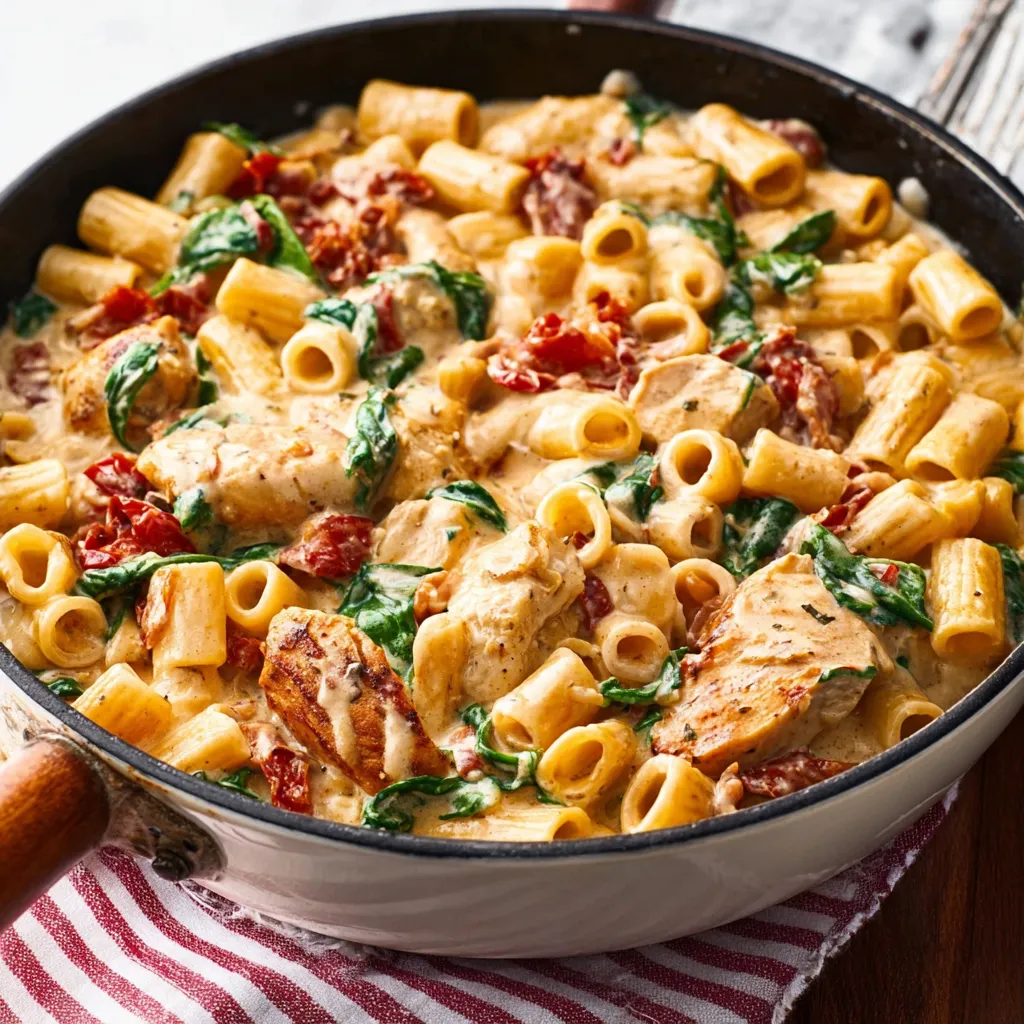
Easy Tuscan Chicken Pasta
Ingredients
Equipment
Method
- Cook the Pasta: Bring a large pot of salted water to a boil. Add the pasta and cook according to package directions until al dente. Reserve about 1 cup of pasta water before draining.
- Sear the Chicken: While the pasta is cooking, heat the olive oil in a large skillet over medium-high heat. Season the chicken with salt, pepper, and Italian seasoning. Add the chicken to the skillet and cook until browned and cooked through, about 5-7 minutes. Remove the chicken from the skillet and set aside.
- Sauté Aromatics: Add the onion and garlic to the skillet and cook until softened and fragrant, about 3-5 minutes.
- Build the Sauce: Add the sun-dried tomatoes and chicken broth to the skillet. Bring to a simmer and cook for 2-3 minutes, scraping up any browned bits from the bottom of the pan.
- Create the Creamy Base: Stir in the heavy cream and Parmesan cheese. Reduce the heat to low and simmer for 5-7 minutes, or until the sauce has thickened slightly. If the sauce becomes too thick, add a splash of the reserved pasta water to thin it out.
- Combine and Serve: Add the cooked chicken and pasta to the skillet with the sauce. Toss to coat. Stir in the spinach and basil. Season with salt and pepper to taste. If desired, add a pinch of red pepper flakes for heat.
- Serve immediately and enjoy this delicious Tuscan Chicken Pasta!