
Unlocking the Secrets: The Science Behind the Stick
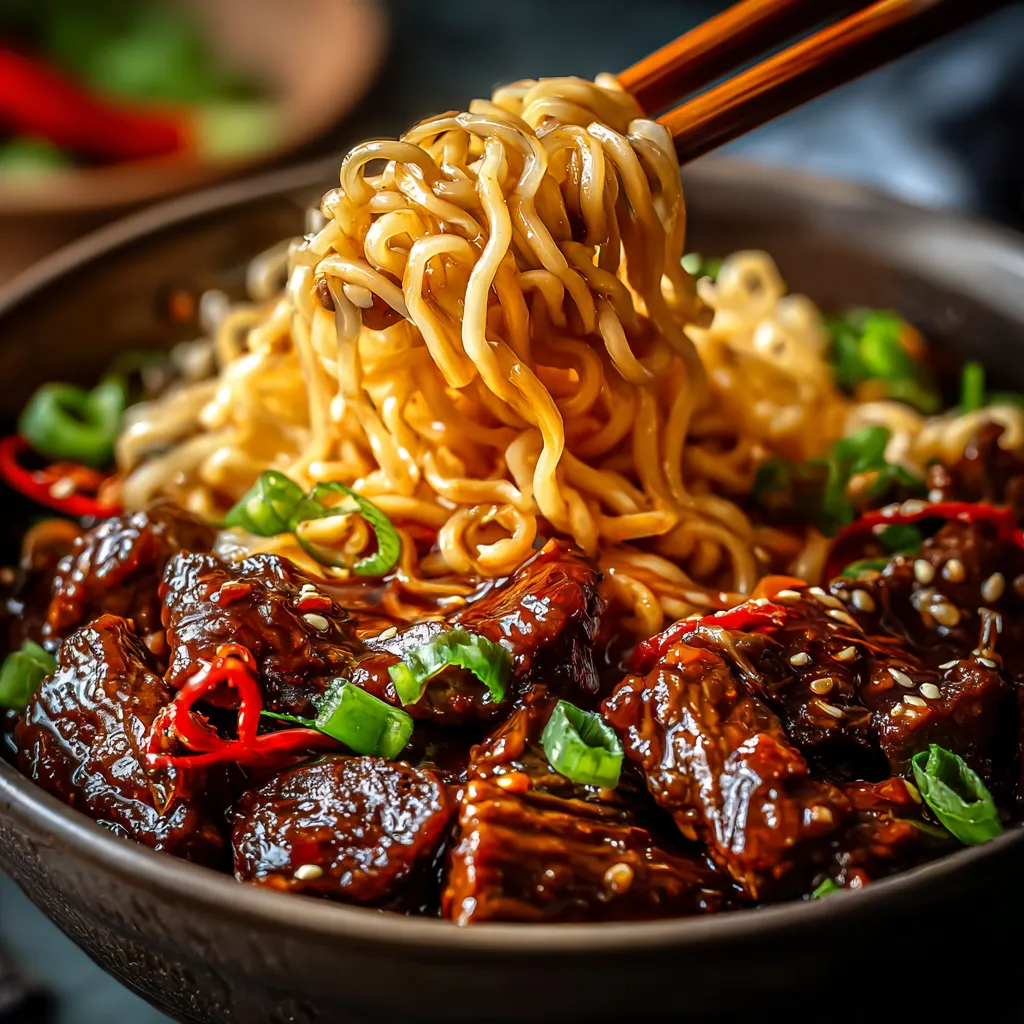 The magic of truly great sticky beef noodles, a beloved staple in many Asian Dinners, lies in understanding a few key scientific principles. First, we need to talk about the Maillard reaction. This is the chemical reaction between amino acids and reducing sugars that gives browned food its distinctive flavor. In our case, it’s crucial for developing that deep, rich flavor in the beef. High heat and a relatively dry surface are your best friends here.
Next, there’s the importance of starch. Cornstarch, in particular, plays a vital role in thickening the sauce and creating that signature stickiness. The starch granules absorb liquid and swell, creating a viscous and glossy coating. Proper hydration of the cornstarch is key to preventing lumps and ensuring a smooth sauce. Finally, balance is everything. The sweetness of the sugar, the saltiness of the soy sauce, the acidity of the vinegar, and the umami of the beef broth all need to work in harmony to create a truly unforgettable dish. Mastering these principles is key to elevating your Homemade Chinese Food game.
The magic of truly great sticky beef noodles, a beloved staple in many Asian Dinners, lies in understanding a few key scientific principles. First, we need to talk about the Maillard reaction. This is the chemical reaction between amino acids and reducing sugars that gives browned food its distinctive flavor. In our case, it’s crucial for developing that deep, rich flavor in the beef. High heat and a relatively dry surface are your best friends here.
Next, there’s the importance of starch. Cornstarch, in particular, plays a vital role in thickening the sauce and creating that signature stickiness. The starch granules absorb liquid and swell, creating a viscous and glossy coating. Proper hydration of the cornstarch is key to preventing lumps and ensuring a smooth sauce. Finally, balance is everything. The sweetness of the sugar, the saltiness of the soy sauce, the acidity of the vinegar, and the umami of the beef broth all need to work in harmony to create a truly unforgettable dish. Mastering these principles is key to elevating your Homemade Chinese Food game.
The Irresistible Recipe: Sticky Beef Noodle Perfection
Here’s the recipe I’ve painstakingly developed and refined over countless iterations, drawing inspiration from various Asian Noodle Recipes and my own experiments with Chinese Cooking Recipes:Ingredients:
- For the Beef:
- 1 lb flank steak, thinly sliced against the grain
- 1 tbsp soy sauce
- 1 tbsp cornstarch
- 1 tbsp Shaoxing wine (or dry sherry)
- 1 tsp sesame oil
- 1/2 tsp white pepper
- For the Noodles:
- 1 lb fresh or dried egg noodles
- For the Sauce:
- 1/4 cup soy sauce
- 2 tbsp hoisin sauce
- 2 tbsp brown sugar
- 1 tbsp rice vinegar
- 1 cup beef broth
- 2 tbsp cornstarch
- 1 tbsp sesame oil
- For the Aromatics:
- 2 tbsp vegetable oil
- 4 cloves garlic, minced
- 1 inch ginger, minced
- 2 green onions, thinly sliced, white and green parts separated
- 1 red chili, thinly sliced (optional)
- Garnish:
- Sesame seeds
- Chopped green onions
Instructions:
- Prepare the Beef: In a bowl, combine the sliced flank steak with soy sauce, cornstarch, Shaoxing wine, sesame oil, and white pepper. Mix well and let it marinate for at least 20 minutes, or up to an hour in the refrigerator.
- Cook the Noodles: Cook the egg noodles according to package directions until al dente. Drain well and set aside. If using fresh noodles, be careful not to overcook them.
- Prepare the Sauce: In a small bowl, whisk together soy sauce, hoisin sauce, brown sugar, rice vinegar, beef broth, cornstarch, and sesame oil until well combined. Make sure the cornstarch is fully dissolved to avoid lumps.
- Sauté the Aromatics: Heat vegetable oil in a large wok or skillet over high heat. Add minced garlic, ginger, and the white parts of the green onions. Sauté for about 30 seconds until fragrant, being careful not to burn the garlic.
- Cook the Beef: Add the marinated beef to the wok and stir-fry until browned and cooked through, about 3-5 minutes. Remove the beef from the wok and set aside.
- Combine and Simmer: Pour the sauce into the wok and bring it to a simmer over medium heat. Cook, stirring constantly, until the sauce thickens and becomes glossy, about 2-3 minutes.
- Add Noodles and Beef: Add the cooked noodles and beef back into the wok with the sauce. Toss everything together to coat the noodles and beef evenly with the sticky sauce.
- Serve: Serve immediately, garnished with sesame seeds and chopped green onions. Add sliced red chili for a spicy kick, if desired.
My Sticky Situation: The Culinary Investigation
The Soggy Start
My first few attempts at sticky beef noodles were a disaster. The noodles were always soggy, the beef was tough, and the sauce was either too watery or cloyingly sweet. Like many of you, I initially thought that simply throwing everything into a pan and hoping for the best would somehow magically result in restaurant-quality Chinese Cooking Recipes. I was wrong. Terribly wrong. I even considered giving up and just ordering takeout, but the determined food scientist in me refused to surrender.The Beef Brouhaha
One of my biggest challenges was getting the beef right. It was either overcooked and dry, or undercooked and chewy. Then, I had an “Aha!” moment when I realized the importance of slicing the beef thinly against the grain and marinating it properly. The marinade not only tenderized the beef but also helped it to brown beautifully in the wok. I realized that neglecting this step was detrimental to my desired outcome when trying Asian Dinners.The Saucy Revelation
The sauce was another hurdle. Getting the right balance of sweet, savory, and tangy took a lot of trial and error. Too much sugar made it taste like candy, while too much soy sauce made it overwhelmingly salty. The breakthrough came when I started experimenting with different ratios of soy sauce, hoisin sauce, brown sugar, and rice vinegar. Adding a touch of beef broth for umami depth also made a huge difference. The consistency was often off until I realized the importance of properly blooming my cornstarch.Noodle Nightmare No More
Finally, the noodles. Soggy noodles are the bane of any noodle dish. I tried everything from parboiling them to rinsing them in cold water after cooking. The key, I discovered, was to cook them al dente and toss them with a little bit of oil to prevent them from sticking together. This ensures that they remain firm and chewy even after being coated in the sticky sauce. This insight came just in time to save my reputation amongst my family, who were beginning to think I’d lost my touch, when trying to perfect Asian Noodle Recipes. I also experimented with different types of noodles, including udon, ramen, and even Steak Tortellini (not traditional, I know!), but ultimately, I found that fresh egg noodles worked best for absorbing the sauce and providing that satisfying chew. Although I do love a good Beef Stir Fry or even a Mushroom Pasta, noodles were the perfect accompaniment for this dish.The Foolproof Formula: Mastering the Technique
Here’s a step-by-step guide to achieving sticky beef noodle perfection, based on my extensive culinary investigation. It’s much simpler than making Honey Pepper Chicken Pasta, trust me.- Slice the Beef Thinly: Use a sharp knife to slice the flank steak against the grain into thin strips. This will ensure that the beef is tender and easy to chew.
- Marinate the Beef: Marinating the beef for at least 20 minutes will tenderize it and infuse it with flavor. Don’t skip this step!
- Cook the Noodles Al Dente: Overcooked noodles are the enemy. Cook them until they’re just tender, then drain them well and toss them with a little bit of oil.
- Prepare the Sauce in Advance: Whisk together all the sauce ingredients in a bowl and set aside. This will ensure that the sauce thickens evenly and doesn’t have any lumps.
- Sauté the Aromatics: Sautéing the garlic, ginger, and green onions in hot oil will release their fragrant oils and add depth of flavor to the dish. Be careful not to burn the garlic!
- Cook the Beef Quickly: Cook the beef over high heat until it’s browned and cooked through. Don’t overcrowd the wok, or the beef will steam instead of sear.
- Simmer the Sauce Until Thick: Simmer the sauce over medium heat until it thickens and becomes glossy. Stir constantly to prevent it from sticking to the bottom of the wok.
- Combine and Toss: Add the cooked noodles and beef to the wok with the sauce. Toss everything together to coat the noodles and beef evenly with the sticky sauce.
- Serve Immediately: Sticky beef noodles are best served hot and fresh. Garnish with sesame seeds and chopped green onions for extra flavor and visual appeal.
What is the key to achieving the ‘sticky’ texture in sticky beef noodles?
The stickiness comes from using cornstarch to thicken the sauce. Proper hydration of the cornstarch is essential to prevent lumps and ensure a smooth, viscous, and glossy coating.
Why is it important to slice the flank steak against the grain?
Slicing the flank steak thinly against the grain ensures that the beef is tender and easy to chew.
What is the purpose of marinating the beef before cooking?
Marinating the beef tenderizes it and infuses it with flavor, and helps it to brown beautifully in the wok.
What type of noodles are recommended for sticky beef noodles?
Fresh egg noodles are recommended as they absorb the sauce well and provide a satisfying chew.
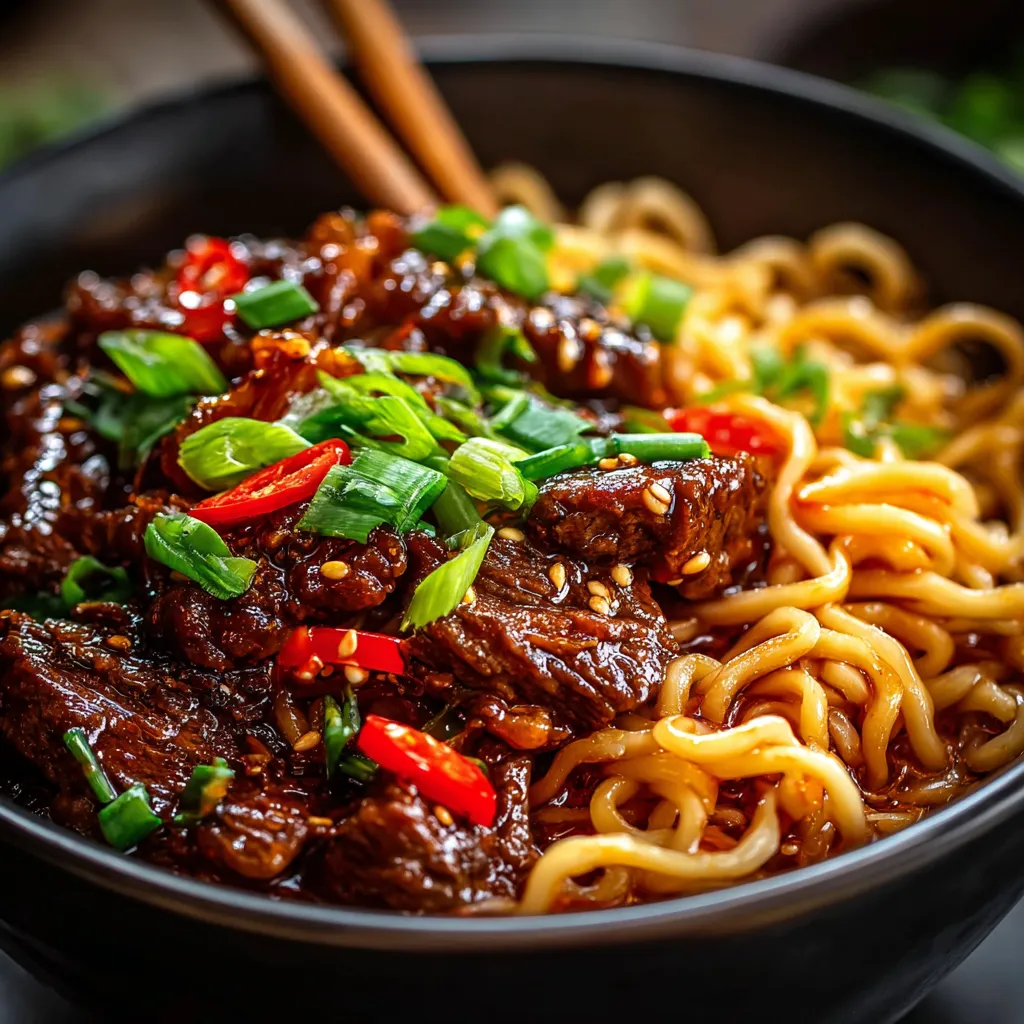
Irresistible Sticky Beef Noodles
These sticky beef noodles offer a delightful balance of sweet, savory, and umami flavors, reminiscent of your favorite takeout. Tender flank steak and perfectly cooked egg noodles are coated in a luscious, glossy sauce, creating a truly satisfying and irresistible dish.
Ingredients
Equipment
Method
- Prepare the Beef: In a bowl, combine the sliced flank steak with 1 tbsp soy sauce, 1 tbsp cornstarch, Shaoxing wine, sesame oil, and white pepper. Mix well and let it marinate for at least 20 minutes, or up to an hour in the refrigerator.
- Cook the Noodles: Cook the egg noodles according to package directions until al dente. Drain well and set aside. If using fresh noodles, be careful not to overcook them.
- Prepare the Sauce: In a small bowl, whisk together 1/4 cup soy sauce, hoisin sauce, brown sugar, rice vinegar, beef broth, 2 tbsp cornstarch, and sesame oil until well combined. Make sure the cornstarch is fully dissolved to avoid lumps.
- Sauté the Aromatics: Heat vegetable oil in a large wok or skillet over high heat. Add minced garlic, ginger, and the white parts of the green onions. Sauté for about 30 seconds until fragrant, being careful not to burn the garlic.
- Cook the Beef: Add the marinated beef to the wok and stir-fry until browned and cooked through, about 3-5 minutes. Remove the beef from the wok and set aside.
- Combine and Simmer: Pour the sauce into the wok and bring it to a simmer over medium heat. Cook, stirring constantly, until the sauce thickens and becomes glossy, about 2-3 minutes.
- Add Noodles and Beef: Add the cooked noodles and beef back into the wok with the sauce. Toss everything together to coat the noodles and beef evenly with the sticky sauce.
- Serve: Serve immediately, garnished with sesame seeds and chopped green onions. Add sliced red chili for a spicy kick, if desired.
Notes
For best results, slice the beef as thinly as possible against the grain. If you don’t have Shaoxing wine, dry sherry makes a good substitute. Store leftovers in an airtight container in the refrigerator for up to 3 days. Reheat gently in a wok or skillet, adding a splash of water or broth if needed. For a spicier dish, add more red chili or a pinch of red pepper flakes.