
The Secrets Behind Sizzling Success: Unveiling the Science
The key to a perfectly juicy steak lies in understanding the science of muscle fibers and heat. Meat is primarily composed of protein, water, and fat. When heat is applied, the proteins denature and contract, squeezing out moisture. The higher the temperature, and the longer the exposure, the more moisture is lost, resulting in a dry, tough steak. The “Maillard reaction,” that beautiful browning process that gives steak its characteristic flavor, occurs at temperatures above 285°F (140°C). We need to reach this temperature to develop flavor, but we also need to avoid overcooking the inside. The creamy garlic sauce, on the other hand, is all about emulsification – the process of suspending fat molecules (from cream and butter) in water-based liquids (like wine or broth). Garlic’s pungent compounds also contribute significantly to the sauce’s overall character. Balancing the richness of the cream with acidity (from wine or lemon juice) is critical to prevent it from being overwhelmingly heavy.The Recipe: Your Culinary Blueprint
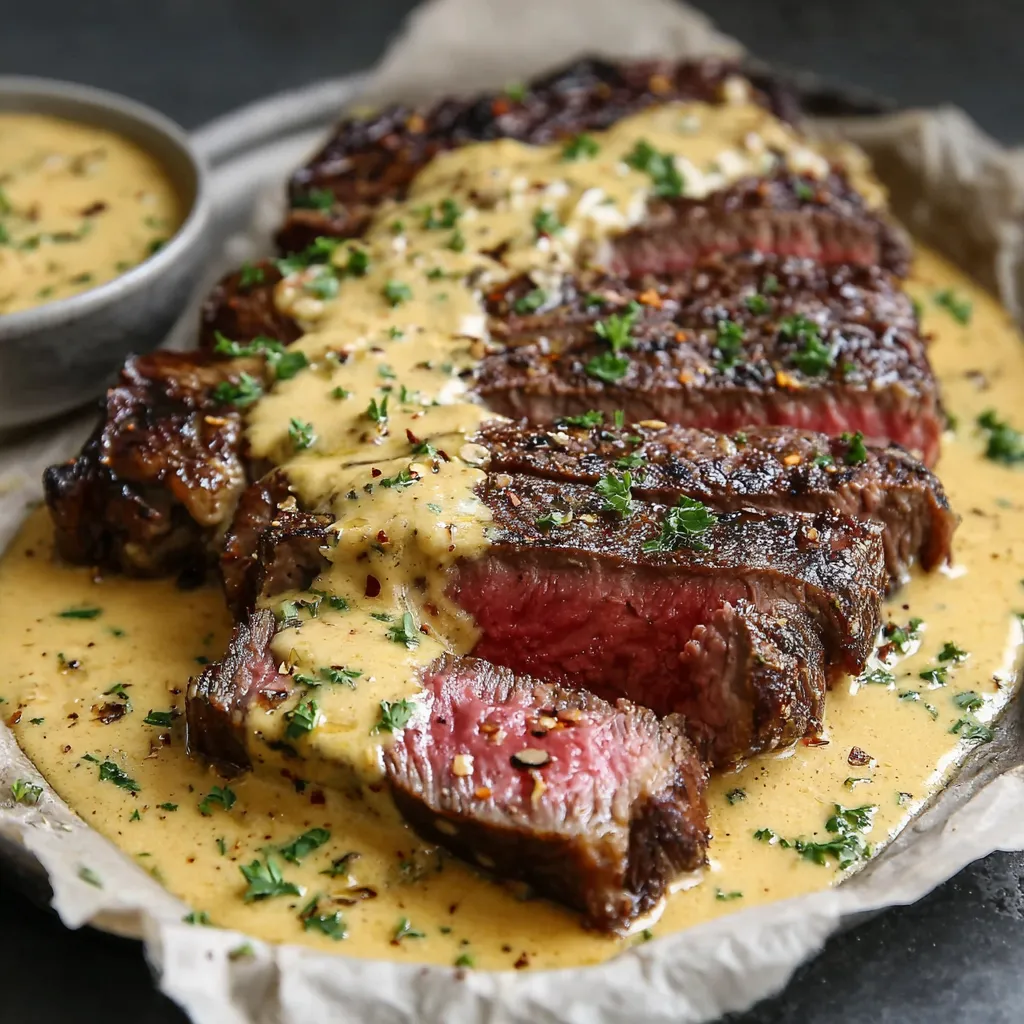 Here’s a detailed recipe that incorporates these scientific principles to create a truly exceptional steak with creamy garlic sauce:
Ingredients:
- For the Steaks:
- 2 (8-10 oz) steaks (Ribeye, New York Strip, or Filet Mignon), about 1-inch thick
- 1 tablespoon olive oil
- 1 tablespoon butter
- Salt and freshly ground black pepper, to taste
- Optional: Fresh thyme or rosemary sprigs
- For the Creamy Garlic Sauce:
- 2 tablespoons butter
- 4 cloves garlic, minced
- 1/4 cup dry white wine (such as Sauvignon Blanc or Pinot Grigio)
- 1 cup heavy cream
- 1/4 cup grated Parmesan cheese
- 1 tablespoon chopped fresh parsley
- Salt and freshly ground black pepper, to taste
- Optional: 1 teaspoon lemon juice, for brightness
Instructions:
- Prepare the Steaks: Pat the steaks dry with paper towels. This is crucial for achieving a good sear. Season generously with salt and pepper on both sides. Allow the steaks to sit at room temperature for at least 30 minutes (up to an hour). This helps them cook more evenly.
- Sear the Steaks: Heat olive oil and butter in a heavy-bottomed skillet (cast iron is ideal) over medium-high heat until the butter is melted and the pan is shimmering. Carefully place the steaks in the hot pan, being careful not to overcrowd it. Sear for 3-4 minutes per side for medium-rare, adjusting cooking time based on your desired doneness and the thickness of the steaks. If using herbs, add them to the pan during the last minute of cooking.
- Check the Temperature: Use a meat thermometer to check the internal temperature. For medium-rare, aim for 130-135°F (54-57°C); for medium, 135-145°F (57-63°C); for medium-well, 145-155°F (63-68°C); and for well-done, 155°F (68°C) and above.
- Rest the Steaks: Remove the steaks from the pan and place them on a cutting board. Tent loosely with foil and let them rest for at least 10 minutes. This allows the juices to redistribute throughout the meat, resulting in a more tender and juicy steak.
- Make the Creamy Garlic Sauce: While the steaks are resting, melt the butter in the same skillet over medium heat. Add the minced garlic and sauté for about 1 minute, until fragrant but not browned.
- Deglaze the Pan: Pour in the white wine and deglaze the pan, scraping up any browned bits from the bottom. Let the wine reduce by half, about 2-3 minutes.
- Add Cream and Parmesan: Stir in the heavy cream and Parmesan cheese. Bring to a simmer and cook for 3-5 minutes, or until the sauce has thickened slightly.
- Finish the Sauce: Stir in the chopped parsley and lemon juice (if using). Season with salt and pepper to taste.
- Serve: Slice the steaks against the grain and serve immediately, spooning the creamy garlic sauce over the top.
The Investigation: My Quest for the Perfect Steak
My journey to mastering the art of steak with creamy garlic sauce wasn’t always smooth sailing. Like many of you, I initially thought that simply throwing a steak on a hot pan would suffice. My first few attempts were a disaster – tough, dry, and utterly disappointing.The Initial Fails: A Tale of Overcooked Disappointment
I started by blasting the steak with high heat from the get-go. The result? A charred exterior and an interior resembling shoe leather. I then tried lower heat, thinking I could gently coax the steak to perfection. This resulted in a grayish, under-seared mess. I needed to find a better way.The Revelation of Resting: A Game Changer
Then, I had an “Aha!” moment after reading about the importance of resting the meat. I was so eager to devour my creation that I skipped this crucial step. I realized that cutting into a hot steak releases all those precious juices. By allowing the steak to rest, these juices redistribute, resulting in a far more tender and flavorful experience. This simple change made a world of difference.The Quest for the Creamy Dream: Sauce Troubles
The sauce presented its own set of challenges. My first few attempts were either too thin and watery or so thick they resembled glue. I initially feared acid, thinking it would curdle the cream. I was wrong. I discovered that a touch of acidity, like lemon juice or white wine, actually helps balance the richness and prevents the sauce from being cloying. It was a revelation. Trying to make Creamy Steak Pasta before perfecting the sauce was a mistake.The Perfect Sear: Embracing High Heat
I learned that achieving a beautiful sear requires high heat and a dry surface. Patting the steak dry with paper towels before seasoning is a simple but effective trick. I also experimented with different fats, eventually settling on a combination of olive oil (for a higher smoke point) and butter (for flavor). I also realized the importance of using a good quality steak. A well-marbled ribeye, for example, will always yield a more flavorful and tender result than a leaner cut. I sometimes enjoy a Spicy Garlic Butter Steak With Cheddar Cream Rotini, but that’s a different preparation.The Final Breakthrough: Temperature is King
Ultimately, the key to consistently juicy steak is understanding and controlling the internal temperature. A meat thermometer is your best friend here. It takes the guesswork out of the equation and ensures that your steak is cooked to your desired level of doneness every time. No more guessing!The Technique: A Foolproof Method, Summarized
Here’s the definitive technique for achieving juicy steak with creamy garlic sauce, distilled from my trials and tribulations:- Choose the Right Cut: Opt for well-marbled steaks like Ribeye, New York Strip, or Filet Mignon.
- Prepare the Steak: Pat dry, season generously with salt and pepper, and let rest at room temperature for 30-60 minutes.
- Sear it Hot: Heat a heavy-bottomed skillet with olive oil and butter over medium-high heat. Sear for 3-4 minutes per side.
- Monitor the Temperature: Use a meat thermometer to ensure the steak reaches your desired doneness.
- Rest, Rest, Rest: Tent the steak with foil and let it rest for at least 10 minutes.
- Craft the Sauce: Sauté minced garlic in butter, deglaze with white wine, then add heavy cream and Parmesan cheese. Simmer until thickened.
- Balance the Flavors: Finish the sauce with fresh parsley, lemon juice (optional), and season to taste.
- Serve Immediately: Slice the steak against the grain and spoon the creamy garlic sauce over the top.
Why is it important to let the steak rest after cooking?
Resting the steak for at least 10 minutes allows the juices to redistribute throughout the meat, resulting in a more tender and juicy steak. Cutting into a hot steak releases those precious juices.
What is the Maillard reaction, and why is it important for cooking steak?
The Maillard reaction is the browning process that gives steak its characteristic flavor. It occurs at temperatures above 285°F (140°C). Reaching this temperature is necessary to develop flavor, but it’s also important to avoid overcooking the inside of the steak.
What’s the key to preventing the creamy garlic sauce from being too heavy or cloying?
Balancing the richness of the cream with acidity, such as from white wine or lemon juice, is crucial to prevent the sauce from being overwhelmingly heavy.
Why is it important to pat the steak dry before searing?
Patting the steak dry with paper towels before seasoning is crucial for achieving a good sear. A dry surface helps the steak brown properly in the hot pan.
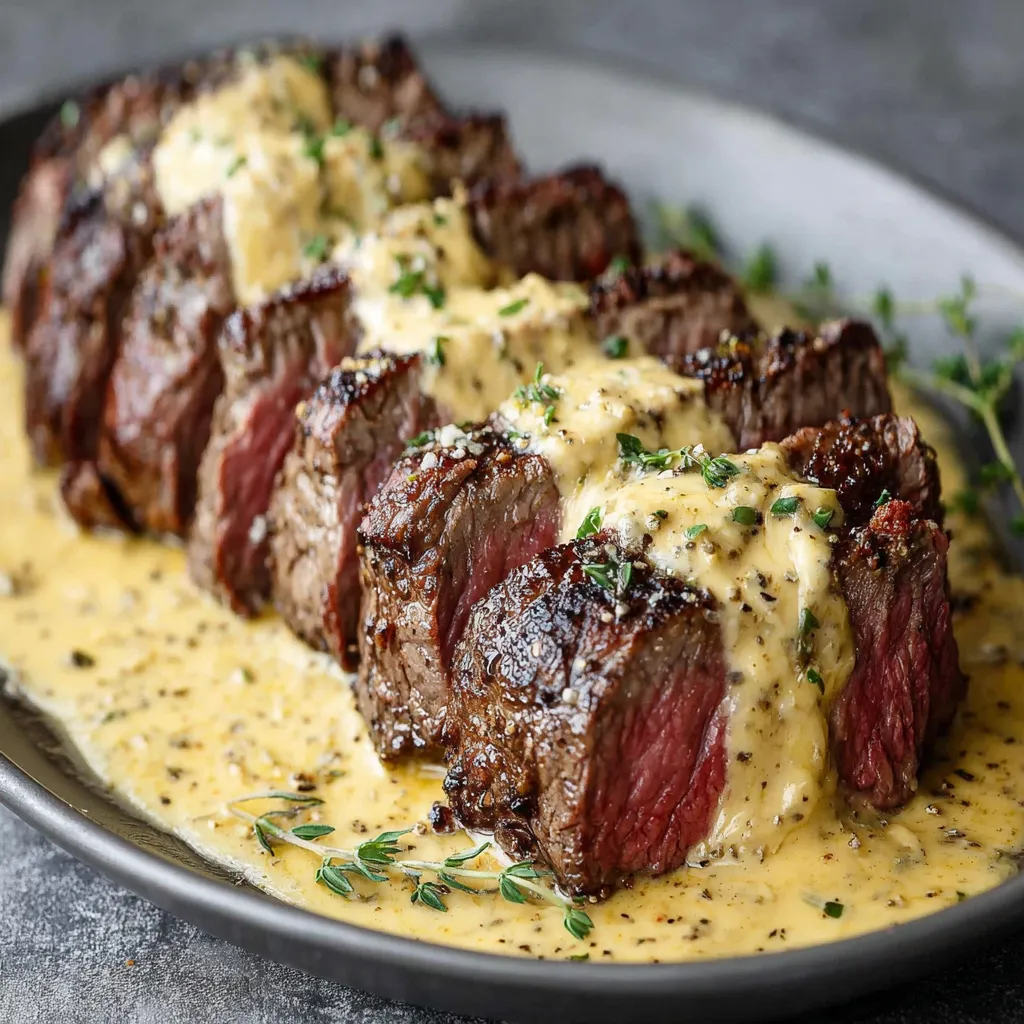
Juicy Steak with Creamy Garlic Sauce Ultimate
Ingredients
Equipment
Method
- Pat the steaks dry with paper towels and season generously with salt and pepper on both sides. Allow the steaks to sit at room temperature for at least 30 minutes.
- Heat olive oil and butter in a heavy-bottomed skillet over medium-high heat until the butter is melted and the pan is shimmering. Carefully place the steaks in the hot pan, being careful not to overcrowd it. Sear for 3-4 minutes per side for medium-rare, adjusting cooking time based on your desired doneness and the thickness of the steaks. If using herbs, add them to the pan during the last minute of cooking.
- Use a meat thermometer to check the internal temperature. For medium-rare, aim for 130-135°F (54-57°C); for medium, 135-145°F (57-63°C); for medium-well, 145-155°F (63-68°C); and for well-done, 155°F (68°C) and above.
- Remove the steaks from the pan and place them on a cutting board. Tent loosely with foil and let them rest for at least 10 minutes.
- While the steaks are resting, melt the butter in the same skillet over medium heat. Add the minced garlic and sauté for about 1 minute, until fragrant but not browned.
- Pour in the white wine and deglaze the pan, scraping up any browned bits from the bottom. Let the wine reduce by half, about 2-3 minutes.
- Stir in the heavy cream and Parmesan cheese. Bring to a simmer and cook for 3-5 minutes, or until the sauce has thickened slightly.
- Stir in the chopped parsley and lemon juice (if using). Season with salt and pepper to taste.
- Slice the steaks against the grain and serve immediately, spooning the creamy garlic sauce over the top.