
The Alchemy of Flavor: Unveiling the Secrets
The key to a truly outstanding spinach mushroom pasta lies in understanding the science behind flavor development. It’s not just about throwing ingredients together; it’s about coaxing the best out of each component and building a symphony of tastes and textures. Several factors play crucial roles. Firstly, the Maillard reaction, that magical browning process that occurs when amino acids and reducing sugars are heated, is essential for deepening the savory notes of both mushrooms and garlic. Secondly, proper seasoning is critical. Salt not only enhances the inherent flavors but also draws moisture out of the mushrooms, allowing them to brown more effectively. Thirdly, the acid component, often provided by a squeeze of lemon juice or a splash of white wine, brightens the dish and balances the richness of the cream and Parmesan cheese. Finally, the quality of the ingredients matters immensely. Fresh spinach, flavorful mushrooms (I prefer a mix), and high-quality Parmesan will elevate the dish far beyond what dried spinach and pre-shredded cheese can achieve. Understanding these principles transforms cooking from a chore into an art.Spinach Mushroom Pasta: The Ultimate Recipe
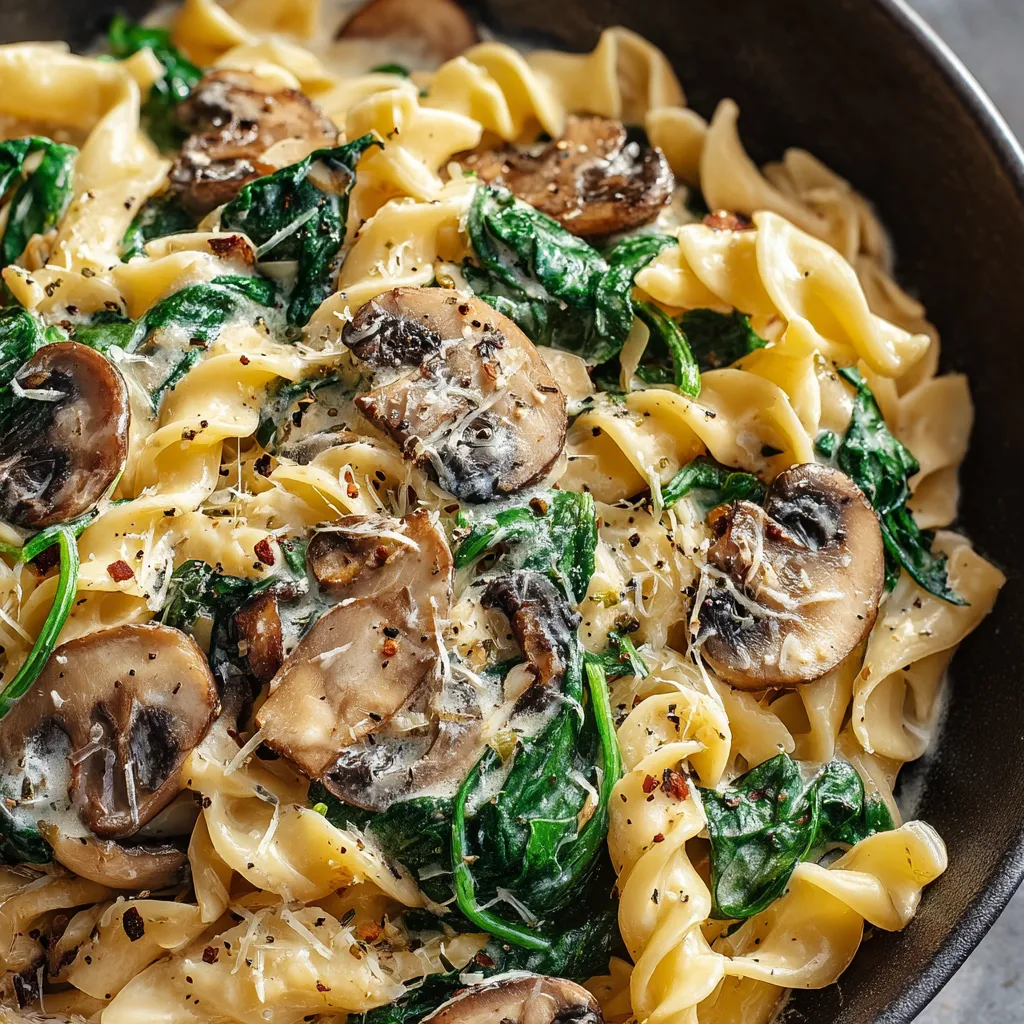 This recipe has been meticulously crafted and refined to ensure consistently delicious results. It’s designed to be both approachable for beginner cooks and satisfying for experienced chefs.
Ingredients:
- 1 pound pasta (penne, fettuccine, or your favorite shape)
- 1 tablespoon olive oil
- 1 pound mushrooms, sliced (cremini, shiitake, or a mix)
- 4 cloves garlic, minced
- 5 ounces baby spinach, washed and dried
- 1/2 cup heavy cream
- 1/2 cup grated Parmesan cheese, plus more for serving
- 1/4 cup dry white wine (optional, but recommended)
- 2 tablespoons butter
- 1/4 cup reserved pasta water
- Salt and black pepper to taste
- Pinch of red pepper flakes (optional)
- Fresh parsley, chopped (for garnish)
Instructions:
- Cook the pasta according to package directions in heavily salted boiling water. Reserve about 1/4 cup of the pasta water before draining.
- While the pasta is cooking, heat the olive oil in a large skillet or Dutch oven over medium-high heat. Add the sliced mushrooms and cook, stirring occasionally, until browned and softened, about 8-10 minutes. Don’t overcrowd the pan; cook in batches if necessary to achieve proper browning.
- Add the minced garlic to the skillet and cook for about 30 seconds, until fragrant. Be careful not to burn the garlic.
- If using white wine, pour it into the skillet and scrape up any browned bits from the bottom. Let the wine reduce slightly, about 1-2 minutes.
- Add the baby spinach to the skillet and cook until wilted, about 2-3 minutes.
- Stir in the heavy cream, Parmesan cheese, butter, salt, pepper, and red pepper flakes (if using). Bring to a simmer and cook for a minute or two, until the sauce has thickened slightly.
- Add the cooked pasta to the skillet and toss to coat. If the sauce is too thick, add a little of the reserved pasta water until it reaches your desired consistency.
- Serve immediately, garnished with fresh parsley and extra Parmesan cheese.
My Quest for the Perfect Pasta: A Culinary Investigation
The Initial Disasters: Blandness and Watery Spinach
My first few attempts at making spinach mushroom pasta were a disaster. Like many of you, I initially thought it was as simple as sautéing some mushrooms and spinach, tossing it with pasta, and adding some cream. The result? Bland, watery, and utterly uninspiring. The mushrooms were pale and rubbery, the spinach was a soggy mess, and the sauce lacked any depth of flavor. I was ready to give up on the dish entirely. I even considered just making Chicken Garlic Parmesan Pasta instead.The Mushroom Revelation: Browning is Key
Then, I had an “Aha!” moment. I realized that the key to unlocking the flavor of mushrooms is proper browning. I started experimenting with different techniques, ensuring the pan was hot enough and avoiding overcrowding. I also discovered the importance of salting the mushrooms early on to draw out their moisture, allowing them to brown more effectively. The difference was remarkable. The browned mushrooms added a depth of umami that was previously missing. I realized that this was a step in the right direction, and it reminded me of how much I enjoyed making Mushroom Pasta.Spinach Strategies: Avoiding the Soggy Mess
Next, I tackled the spinach problem. I realized that adding a mountain of raw spinach to the skillet at once resulted in a watery mess. The solution? Add the spinach in batches, allowing each batch to wilt before adding more. This prevents the spinach from releasing too much water and helps it retain its vibrant green color and slightly toothsome texture. Using baby spinach instead of regular spinach also made a huge difference.The Sauce Solution: Cream, Cheese, and Acid
Finally, I focused on the sauce. I experimented with different ratios of cream and Parmesan cheese, ultimately settling on a balance that provided richness without being overly heavy. The addition of a splash of dry white wine provided a crucial element of acidity, cutting through the richness of the cream and cheese and brightening the overall flavor. A squeeze of lemon juice at the end served a similar purpose. I also found that reserving some pasta water and adding it to the sauce helped to create a smoother, more emulsified sauce that clung to the pasta perfectly. It was a turning point. I was already dreaming of trying Chicken Spinach Penne next.The Foolproof Method: A Step-by-Step Guide
After countless experiments and refinements, I’ve distilled the process into a foolproof method that guarantees delicious spinach mushroom pasta every time.- Brown the Mushrooms Properly: Use a hot pan, avoid overcrowding, and salt the mushrooms early to draw out their moisture. Cook in batches if necessary.
- Sauté the Garlic Gently: Add the minced garlic after the mushrooms are browned and cook for only 30 seconds, until fragrant. Be careful not to burn it.
- Wilt the Spinach in Batches: Add the spinach in batches, allowing each batch to wilt before adding more. This prevents it from becoming soggy.
- Emulsify the Sauce: Reserve some pasta water and add it to the sauce to create a smoother, more emulsified sauce that clings to the pasta.
- Balance the Flavors: Use a combination of cream, Parmesan cheese, and a touch of acidity (white wine or lemon juice) to create a balanced and flavorful sauce.
What is the key to making delicious spinach mushroom pasta instead of a bland dish?
The key lies in understanding flavor development. This includes browning the mushrooms properly using the Maillard reaction, proper seasoning, adding an acid component like lemon juice or white wine, and using high-quality, fresh ingredients.
How do you prevent the spinach from becoming a soggy mess in spinach mushroom pasta?
Add the spinach to the skillet in batches, allowing each batch to wilt before adding more. Using baby spinach also helps.
Why is it important to reserve pasta water when making spinach mushroom pasta?
Reserving pasta water and adding it to the sauce helps to create a smoother, more emulsified sauce that clings to the pasta perfectly.
What are the key steps for achieving the best flavor in spinach mushroom pasta?
The key steps are: browning the mushrooms properly, sautéing the garlic gently, wilting the spinach in batches, emulsifying the sauce with pasta water, and balancing the flavors with cream, Parmesan cheese, and an acid component like white wine or lemon juice.
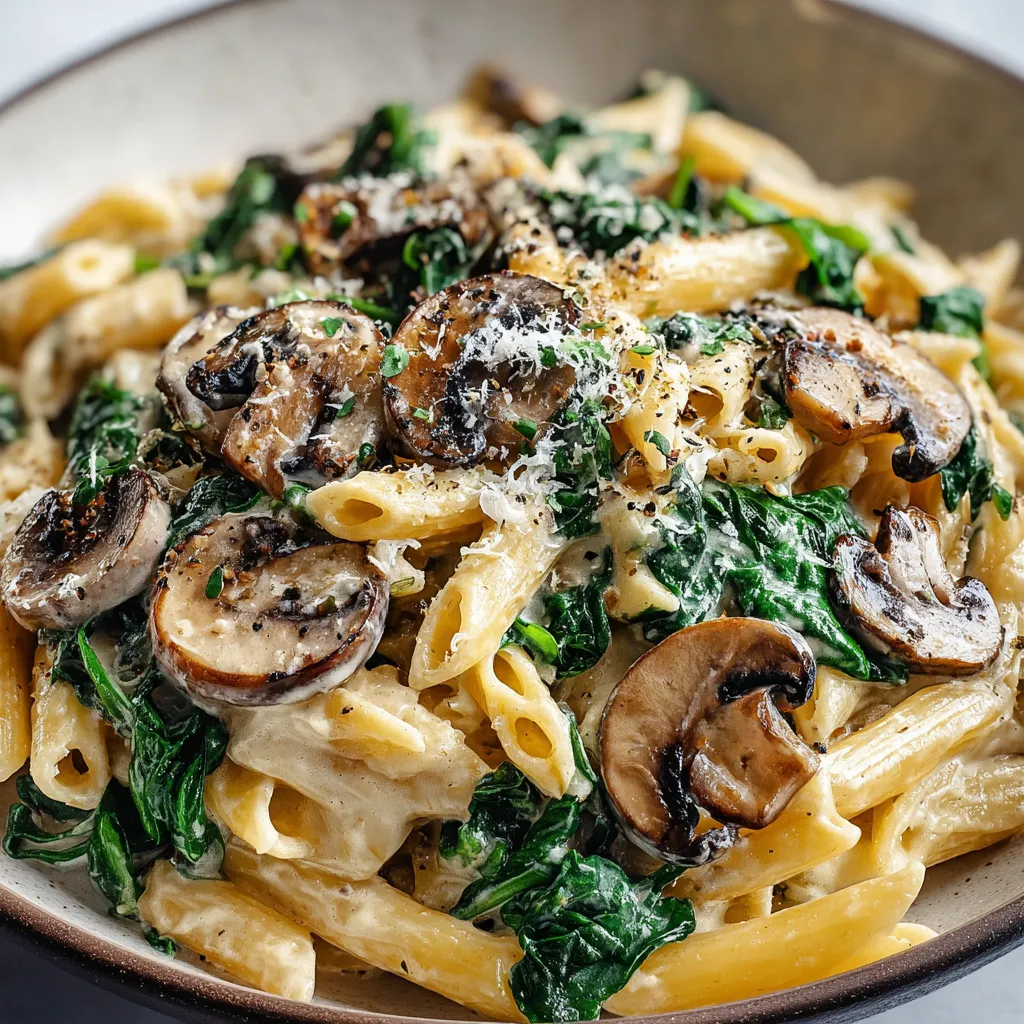
Spinach Mushroom Pasta Easy
Ingredients
Equipment
Method
- Cook the pasta according to package directions in heavily salted boiling water. Reserve about 1/4 cup of the pasta water before draining.
- While the pasta is cooking, heat the olive oil in a large skillet or Dutch oven over medium-high heat. Add the sliced mushrooms and cook, stirring occasionally, until browned and softened, about 8-10 minutes. Don’t overcrowd the pan; cook in batches if necessary to achieve proper browning.
- Add the minced garlic to the skillet and cook for about 30 seconds, until fragrant. Be careful not to burn the garlic.
- If using white wine, pour it into the skillet and scrape up any browned bits from the bottom. Let the wine reduce slightly, about 1-2 minutes.
- Add the baby spinach to the skillet and cook until wilted, about 2-3 minutes.
- Stir in the heavy cream, Parmesan cheese, butter, salt, pepper, and red pepper flakes (if using). Bring to a simmer and cook for a minute or two, until the sauce has thickened slightly.
- Add the cooked pasta to the skillet and toss to coat. If the sauce is too thick, add a little of the reserved pasta water until it reaches your desired consistency.
- Serve immediately, garnished with fresh parsley and extra Parmesan cheese.