
Unlocking the Secrets: The Science Behind the Shells
The magic of stuffed shells lies in the interplay of several key elements. First, there’s the pasta itself. Large pasta shells, scientifically known as *conchiglie*, need to be cooked *al dente* – firm to the bite. Overcooking results in mushy shells that fall apart during stuffing, a structural integrity nightmare! Second, the ricotta filling’s texture is critical. Ricotta, a fresh cheese made from whey, is naturally high in moisture. Too much moisture, and your filling will be runny, leading to a watery, unappetizing dish. Spinach, the verdant powerhouse of the filling, presents its own challenge. Its high water content necessitates thorough removal to prevent a soggy final product. Finally, the sauce acts as a crucial binder and flavor enhancer. A well-balanced tomato sauce, not too acidic and with a hint of sweetness, complements the richness of the ricotta and the earthiness of the spinach. The balance of these factors dictates the ultimate success of the stuffed shells.The Quintessential Spinach Ricotta Stuffed Shells Recipe
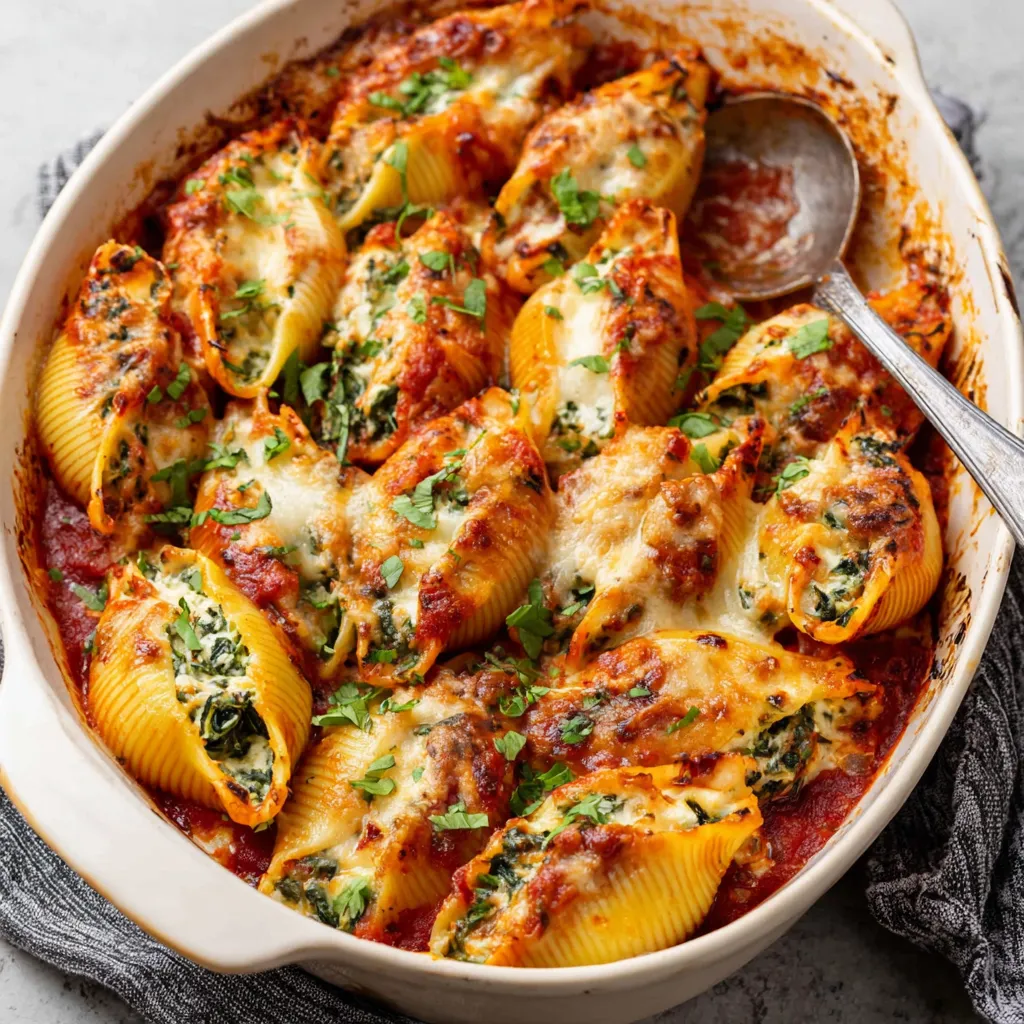 This recipe embodies the lessons learned through my culinary investigations, resulting in consistently delicious and structurally sound stuffed shells.
Ingredients:
- Jumbo Pasta Shells: 1 box (about 30 shells)
For the Filling:
- Ricotta Cheese: 30 ounces (full-fat, preferably whole milk)
- Frozen Spinach: 10 ounces, thawed and squeezed dry
- Egg: 1 large, lightly beaten
- Grated Parmesan Cheese: ½ cup
- Grated Pecorino Romano Cheese: ¼ cup
- Fresh Parsley: ¼ cup, chopped
- Garlic: 2 cloves, minced
- Salt: ½ teaspoon, or to taste
- Black Pepper: ¼ teaspoon, or to taste
- Pinch of Nutmeg: Optional
For the Sauce:
- Olive Oil: 2 tablespoons
- Onion: 1 medium, chopped
- Garlic: 2 cloves, minced
- Canned Crushed Tomatoes: 28 ounces
- Tomato Paste: 2 tablespoons
- Dried Oregano: 1 teaspoon
- Dried Basil: 1 teaspoon
- Sugar: 1 teaspoon (to balance acidity)
- Salt: To taste
- Black Pepper: To taste
- Fresh Basil Leaves: For garnish (optional)
Instructions:
- Prepare the Sauce: Heat olive oil in a large saucepan over medium heat. Add onion and cook until softened, about 5 minutes. Add garlic and cook for another minute until fragrant. Stir in crushed tomatoes, tomato paste, oregano, basil, sugar, salt, and pepper. Bring to a simmer, then reduce heat and simmer for at least 30 minutes, stirring occasionally. The longer it simmers, the better the flavor will develop.
- Cook the Shells: Cook pasta shells according to package directions, but reduce the cooking time by 2 minutes to achieve *al dente* texture. Drain well and rinse with cold water to stop the cooking process. Gently toss with a little olive oil to prevent sticking.
- Prepare the Filling: In a large bowl, combine ricotta cheese, squeezed-dry spinach, egg, Parmesan cheese, Pecorino Romano cheese, parsley, garlic, salt, pepper, and nutmeg (if using). Mix well until all ingredients are evenly distributed.
- Stuff the Shells: Preheat oven to 375°F (190°C). Spread a thin layer of tomato sauce in the bottom of a 9×13 inch baking dish. Using a spoon or piping bag, carefully fill each shell with the ricotta mixture. Arrange the stuffed shells in a single layer in the baking dish.
- Bake: Pour the remaining tomato sauce over the stuffed shells, ensuring they are well covered. Cover the baking dish with aluminum foil and bake for 20 minutes. Remove the foil and bake for another 10-15 minutes, or until the sauce is bubbly and the cheese is melted and lightly golden brown.
- Garnish and Serve: Let the stuffed shells cool slightly before serving. Garnish with fresh basil leaves, if desired.
The Investigation: My Stuffed Shell Saga
My journey to stuffed shell perfection wasn’t exactly a smooth ride. It was more like a rollercoaster of culinary triumphs and tragicomic failures.The Soggy Beginnings
My first few attempts were a disaster. Like many of you, I initially thought that frozen spinach, thawed, would be sufficient. The result? Watery shells swimming in a diluted sauce. The ricotta filling, while flavorful, was a structural mess. I was ready to throw in the towel and just make Chicken Parmesan Casserole instead.The Squeeze Heard ‘Round the Kitchen
Then, I had an “Aha!” moment. The spinach! It was the culprit. I realized that merely thawing wasn’t enough. It needed to be *aggressively* squeezed dry. I’m talking using-your-bare-hands-and-squeezing-until-your-wrists-ache dry. This made a huge difference. The filling became firmer, more cohesive, and less prone to weeping moisture during baking. It reminded me of the importance of moisture control when making Creamy Dreamy Mushroom Pasta; pasta dishes are all about balance.Al Dente or Bust!
Another pitfall I encountered was overcooked pasta. Mushy shells are simply unacceptable. The solution? Undercooking the pasta by a couple of minutes. They finish cooking in the oven, absorbing the sauce’s flavors without disintegrating. Getting the pasta right is just as important as the sauce, as it is in my Cream Cheese Spaghetti Casserole.The Flavor Boost: Cheese Combinations and Nutmeg’s Whisper
Finally, I experimented with the cheese combination. While Parmesan is a classic, adding Pecorino Romano brought a sharper, saltier dimension to the filling. And a pinch of nutmeg? It’s the secret weapon that elevates the entire dish, adding a subtle warmth that complements the spinach and ricotta beautifully. Using both Parmesan and another cheese is a great way to boost flavors, just like when I make my Chicken Spinach Mushroom Bake.The Technique: Mastering the Art of Stuffed Shells
After much experimentation and more than a few near-failures, I’ve distilled the process down to a foolproof method:- Squeeze the Spinach: Thaw frozen spinach completely and squeeze out as much water as humanly possible. Use your hands, a cheesecloth, or even a potato ricer. Seriously, get every last drop!
- Al Dente is Key: Cook the pasta shells *al dente*. Err on the side of undercooked rather than overcooked. They should be firm with a slight bite.
- Cheese Power: Use a combination of Parmesan and Pecorino Romano for a more complex and flavorful filling.
- Nutmeg Magic: Don’t underestimate the power of a pinch of nutmeg. It adds a subtle warmth and depth to the filling.
- Sauce Coverage: Ensure the stuffed shells are well-covered with sauce. This prevents them from drying out during baking and infuses them with flavor. It’s a critical step I also take when making my Chicken Broccoli Alfredo Bake.
- Bake Covered, Finish Uncovered: Baking the shells covered for the first part of the baking time keeps them moist. Removing the foil for the last 10-15 minutes allows the cheese to melt and brown.
Why is it important to squeeze the spinach dry when making spinach ricotta stuffed shells?
Squeezing the spinach dry is crucial because spinach has a high water content. If you don’t remove the excess water, the filling will be runny, and the final dish will be soggy and unappetizing.
What does it mean to cook the pasta shells ‘al dente,’ and why is it important for this recipe?
Cooking the pasta ‘al dente’ means cooking it until it is firm to the bite. It’s important for this recipe because overcooked pasta will become mushy and fall apart during stuffing, making the shells structurally unsound.
What is the purpose of adding sugar to the tomato sauce?
The sugar is added to the tomato sauce to balance the acidity of the tomatoes, creating a more well-rounded and flavorful sauce that complements the richness of the ricotta and the earthiness of the spinach.
Why bake the stuffed shells covered for the first 20 minutes and then uncovered for the last 10-15 minutes?
Baking the shells covered for the first part of the baking time keeps them moist. Removing the foil for the last 10-15 minutes allows the cheese to melt and brown, creating a desirable texture and appearance.

Spinach Ricotta Stuffed Shells Ultimate
Ingredients
Equipment
Method
- Prepare the Sauce: Heat olive oil in a large saucepan over medium heat. Add onion and cook until softened, about 5 minutes. Add garlic and cook for another minute until fragrant. Stir in crushed tomatoes, tomato paste, oregano, basil, sugar, salt, and pepper. Bring to a simmer, then reduce heat and simmer for at least 30 minutes, stirring occasionally.
- Cook the Shells: Cook pasta shells according to package directions, but reduce the cooking time by 2 minutes to achieve al dente texture. Drain well and rinse with cold water to stop the cooking process. Gently toss with a little olive oil to prevent sticking.
- Prepare the Filling: In a large bowl, combine ricotta cheese, squeezed-dry spinach, egg, Parmesan cheese, Pecorino Romano cheese, parsley, garlic, salt, pepper, and nutmeg (if using). Mix well until all ingredients are evenly distributed.
- Stuff the Shells: Preheat oven to 375°F (190°C). Spread a thin layer of tomato sauce in the bottom of a 9×13 inch baking dish. Using a spoon or piping bag, carefully fill each shell with the ricotta mixture. Arrange the stuffed shells in a single layer in the baking dish.
- Bake: Pour the remaining tomato sauce over the stuffed shells, ensuring they are well covered. Cover the baking dish with aluminum foil and bake for 20 minutes. Remove the foil and bake for another 10-15 minutes, or until the sauce is bubbly and the cheese is melted and lightly golden brown.
- Garnish and Serve: Let the stuffed shells cool slightly before serving. Garnish with fresh basil leaves, if desired.