
Deconstructing Deliciousness: The Science Behind Thai Peanut Noodles
The magic of Thai Chicken Peanut Noodles lies not just in the ingredients, but in how they interact on a molecular level. Let’s break down the key players:- The Noodles: Noodle selection significantly impacts the final texture and flavor absorption. Rice noodles, wheat noodles, and even egg noodles can be used, each offering a different chew and ability to soak up the sauce. Thicker noodles often stand up better to the rich sauce.
- The Peanut Sauce: This is where the magic happens. Peanut butter (or ground peanuts) provides the nutty base. Soy sauce adds umami and saltiness. Honey or brown sugar brings sweetness. Lime juice offers acidity and brightness. Chili garlic sauce (or sriracha) provides the heat. The key is to balance these flavors for a harmonious blend. The emulsification of the sauce is also critical; proper whisking or blending ensures a smooth, creamy consistency.
- The Protein (Chicken): Chicken, being relatively neutral in flavor, acts as a vehicle for the sauce. The best approach is to either marinate the chicken beforehand or cook it in a way that allows it to absorb the sauce during the cooking process. Searing or stir-frying are great options.
- The Vegetables: Vegetables add texture, freshness, and nutritional value. Common choices include bell peppers, carrots, green onions, and bean sprouts. The goal is to cook them until they are tender-crisp, retaining their crunch and vibrancy.
- The Aromatics: Garlic and ginger are crucial for building a flavorful foundation. Sautéing them in oil before adding the other ingredients releases their aromatic compounds, infusing the entire dish with depth and complexity.
The Ultimate Thai Chicken Peanut Noodles Recipe
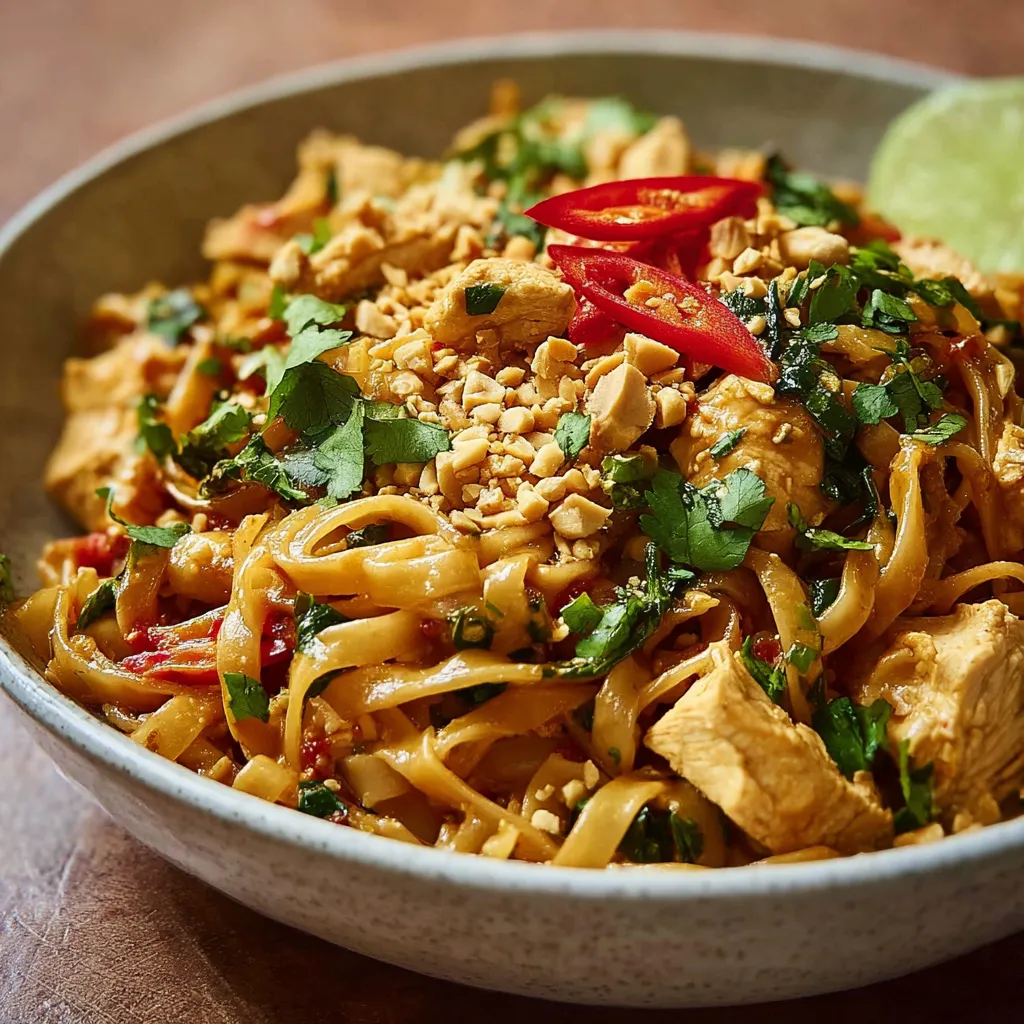 This recipe incorporates everything I’ve learned to create a consistently delicious and satisfying Thai Chicken Peanut Noodles dish.
Ingredients:
- For the Noodles:
- 8 oz wide rice noodles (or your favorite noodle)
- For the Chicken:
- 1 lb boneless, skinless chicken breasts, cut into bite-sized pieces
- 1 tbsp soy sauce
- 1 tbsp cornstarch
- 1 tsp sesame oil
- For the Peanut Sauce:
- 1/2 cup creamy peanut butter
- 1/4 cup soy sauce
- 2 tbsp honey (or brown sugar)
- 2 tbsp lime juice
- 1-2 tbsp chili garlic sauce (or sriracha), to taste
- 2 tbsp sesame oil
- 2 tbsp rice vinegar
- 1/4 cup warm water, or more to thin
- 1 clove garlic, minced
- 1 inch ginger, grated
- For the Vegetables:
- 1 red bell pepper, thinly sliced
- 1 carrot, julienned
- 1/2 cup green onions, chopped
- 1/2 cup bean sprouts
- Optional: Chopped peanuts, cilantro, lime wedges for garnish
Instructions:
- Prepare the Noodles: Cook the noodles according to package directions. Drain and rinse with cold water to prevent sticking. Set aside.
- Marinate the Chicken: In a bowl, combine the chicken with soy sauce, cornstarch, and sesame oil. Marinate for at least 15 minutes (or up to 30 minutes in the refrigerator).
- Make the Peanut Sauce: In a medium bowl, whisk together peanut butter, soy sauce, honey, lime juice, chili garlic sauce, sesame oil, rice vinegar, warm water, garlic, and ginger until smooth. Add more water if needed to reach desired consistency. Taste and adjust seasonings as needed.
- Cook the Chicken: Heat a large skillet or wok over medium-high heat. Add the marinated chicken and cook until browned and cooked through, about 5-7 minutes. Remove from the skillet and set aside.
- Sauté the Vegetables: Add the bell pepper and carrot to the skillet and cook until tender-crisp, about 3-5 minutes.
- Combine Everything: Add the cooked noodles and chicken back to the skillet with the vegetables. Pour the peanut sauce over the mixture and toss to coat evenly.
- Serve: Garnish with green onions, chopped peanuts, cilantro, and lime wedges. Serve immediately.
The Investigation: My Thai Peanut Noodle Odyssey
My first few attempts were a disaster. The sauce was either too thick, too salty, or just plain bland. The noodles were either mushy or stuck together in a giant clump. I knew I needed a more systematic approach.The Great Noodle Experiment
Like many of you, I initially thought that any noodle would do. I was wrong. My first mistake was using thin rice noodles, which became overly soft and lost their texture when coated in the sauce. Then, I tried egg noodles, which were better, but still not quite right. The ‘Aha!’ moment came when I switched to wide rice noodles. Their wider surface area and firmer texture held up beautifully to the sauce, providing the perfect chew. I also learned the importance of rinsing the noodles in cold water after cooking to prevent them from sticking together. You could apply the same lessons learned here to Thai Red Curry Noodle Soup, where noodle integrity is paramount.The Sauce Struggle: Achieving Flavor Harmony
The peanut sauce was my biggest challenge. I started with a basic recipe, but the flavors were always off balance. Sometimes it was too peanutty, other times too sweet, and occasionally, overwhelmingly salty. I realized that the key was to adjust the ratios of each ingredient to suit my taste. Through trial and error, I discovered that a combination of peanut butter, soy sauce, honey, lime juice, chili garlic sauce, sesame oil, and rice vinegar created the perfect balance of savory, sweet, spicy, and acidic notes. The addition of rice vinegar was a game-changer, adding a subtle tang that brightened up the entire sauce. And don’t be afraid of using water to thin the sauce! A thick, gloppy sauce is not what you want.Chicken Chronicles: Marinating Matters
Initially, I just tossed the chicken into the skillet and cooked it. It was fine, but nothing special. Then, I started experimenting with marinades. A simple marinade of soy sauce, cornstarch, and sesame oil made a world of difference. The soy sauce added umami, the cornstarch helped to tenderize the chicken, and the sesame oil added a nutty aroma. Marinating the chicken for at least 15 minutes allowed it to absorb the flavors and stay moist during cooking. This technique is equally effective in recipes like Thai Chicken Cabbage Skillet.Veggie Victory: Tender-Crisp Perfection
Overcooked vegetables are a textural nightmare. I learned to add the vegetables to the skillet after the chicken was cooked and to sauté them until they were just tender-crisp. This preserved their crunch and vibrancy, adding a welcome contrast to the soft noodles and rich sauce. I experimented with different vegetables, but bell peppers, carrots, green onions, and bean sprouts proved to be the perfect combination.Spice is Nice (But Be Careful!)
The chili garlic sauce (or sriracha) is a crucial component of the peanut sauce, but it’s important to use it judiciously. Start with a small amount and add more to taste, as the heat can quickly overwhelm the other flavors. I prefer chili garlic sauce for its added garlic flavor, but sriracha works just as well. If you’re sensitive to spice, you can also use a pinch of red pepper flakes instead. Thinking about the spice level is also really important for Thai Chicken Soup.The Foolproof Formula: Mastering Thai Chicken Peanut Noodles
After countless experiments and taste tests, I’ve distilled the process into a simple, foolproof method:- Noodle Nirvana: Use wide rice noodles and rinse them in cold water after cooking.
- Sauce Symphony: Balance the flavors of peanut butter, soy sauce, honey, lime juice, chili garlic sauce, sesame oil, and rice vinegar. Don’t be afraid to adjust the ratios to suit your taste.
- Chicken Charm: Marinate the chicken in soy sauce, cornstarch, and sesame oil for at least 15 minutes.
- Veggie Virtuosity: Sauté the vegetables until tender-crisp.
- Spice Sensibility: Add chili garlic sauce (or sriracha) to taste, starting with a small amount and adding more as needed.
- The Grand Finale: Combine everything in a skillet, toss to coat evenly, and serve immediately. Garnish with green onions, chopped peanuts, cilantro, and lime wedges.
What type of noodles are recommended for Thai Chicken Peanut Noodles, and why?
Wide rice noodles are recommended. Their wider surface area and firmer texture hold up beautifully to the sauce, providing the perfect chew.
What is the key to achieving a balanced flavor in the peanut sauce?
The key is to adjust the ratios of peanut butter, soy sauce, honey, lime juice, chili garlic sauce, sesame oil, and rice vinegar to suit your taste, creating a harmonious blend of savory, sweet, spicy, and acidic notes.
How should the chicken be prepared for optimal flavor absorption?
Marinate the chicken in a mixture of soy sauce, cornstarch, and sesame oil for at least 15 minutes before cooking. This allows the chicken to absorb the flavors and stay moist.
How should the vegetables be cooked to maintain the best texture?
Sauté the vegetables until they are tender-crisp. This preserves their crunch and vibrancy, adding a welcome contrast to the soft noodles and rich sauce.
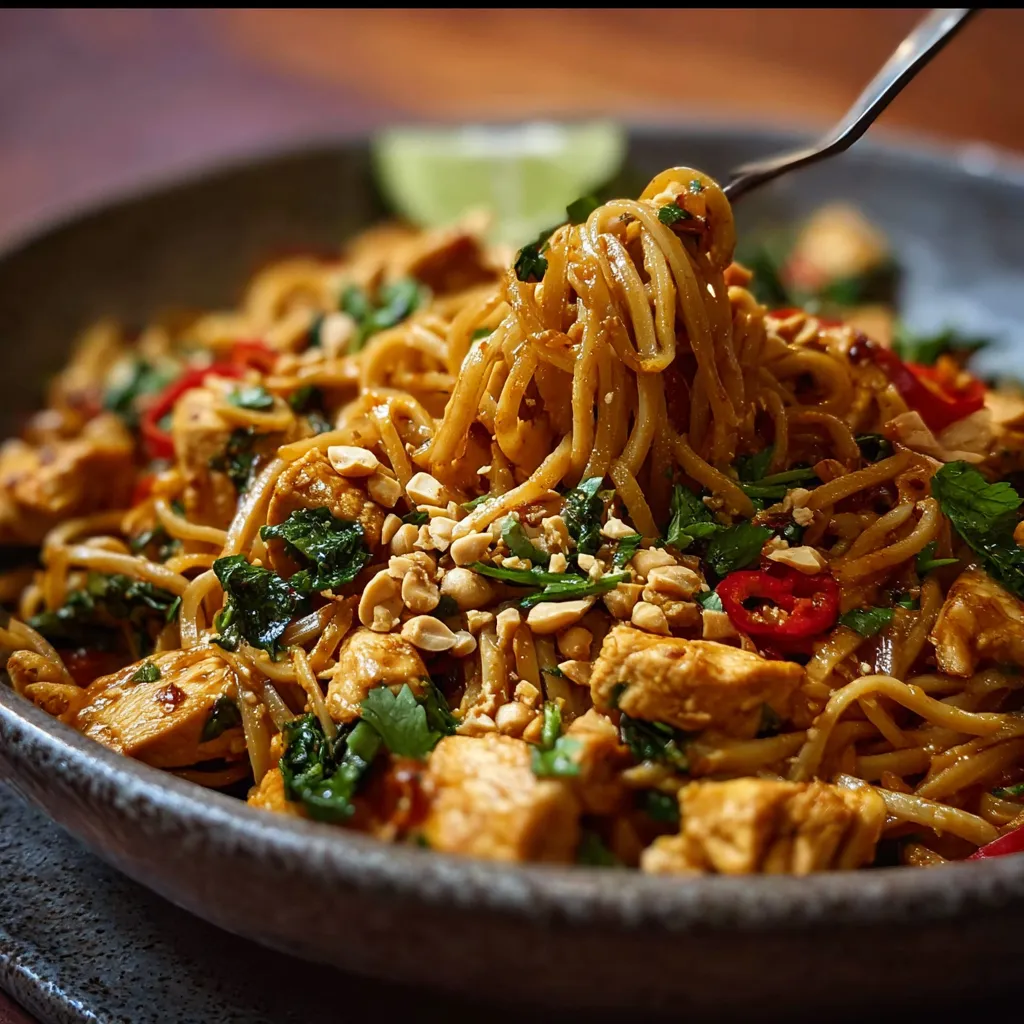
Thai Chicken Peanut Noodles
This Thai Chicken Peanut Noodles recipe delivers a perfect balance of savory, sweet, spicy, and nutty flavors. Marinated chicken, tender-crisp vegetables, and wide rice noodles are tossed in a creamy peanut sauce, creating a satisfying and addictive dish.
Ingredients
Equipment
Method
- Cook the noodles according to package directions. Drain and rinse with cold water to prevent sticking. Set aside.
- In a bowl, combine the chicken with soy sauce, cornstarch, and sesame oil. Marinate for at least 15 minutes.
- In a medium bowl, whisk together peanut butter, soy sauce, honey, lime juice, chili garlic sauce, sesame oil, rice vinegar, warm water, garlic, and ginger until smooth. Add more water if needed to reach desired consistency. Taste and adjust seasonings as needed.
- Heat a large skillet or wok over medium-high heat. Add the marinated chicken and cook until browned and cooked through, about 5-7 minutes. Remove from the skillet and set aside.
- Add the bell pepper and carrot to the skillet and cook until tender-crisp, about 3-5 minutes.
- Add the cooked noodles and chicken back to the skillet with the vegetables. Pour the peanut sauce over the mixture and toss to coat evenly.
- Garnish with green onions, chopped peanuts, cilantro, and lime wedges. Serve immediately.
Notes
For a spicier dish, add more chili garlic sauce or a pinch of red pepper flakes. Store leftovers in an airtight container in the refrigerator for up to 3 days. Wide rice noodles work best, but you can substitute with your favorite type of noodle. Adjust the amount of honey and lime juice to suit your taste preferences.