
Unlocking the Carbonara Code: The Science of Sauce
The magic of carbonara isn’t just in its simplicity, but in the delicate emulsion that forms its signature sauce. This emulsion relies on a few key principles. First, the heat must be carefully controlled. The goal is to gently cook the egg yolks just enough to thicken them, but not so much that they curdle. This is where the hot pasta water comes into play. The starch in the pasta water acts as an emulsifier, helping to bind the fats (from the guanciale or pancetta and cheese) and liquids (from the egg yolks and pasta water) together. The cheese, typically Pecorino Romano and/or Parmesan, also plays a critical role. Its protein structure contributes to the sauce’s viscosity and stability. If the temperature gets too high, the egg proteins denature, leading to curdling and a broken sauce. Conversely, if the temperature is too low, the sauce will remain thin and watery. Achieving that perfect balance is the key to carbonara success.The Ultimate Tortellini Carbonara Recipe
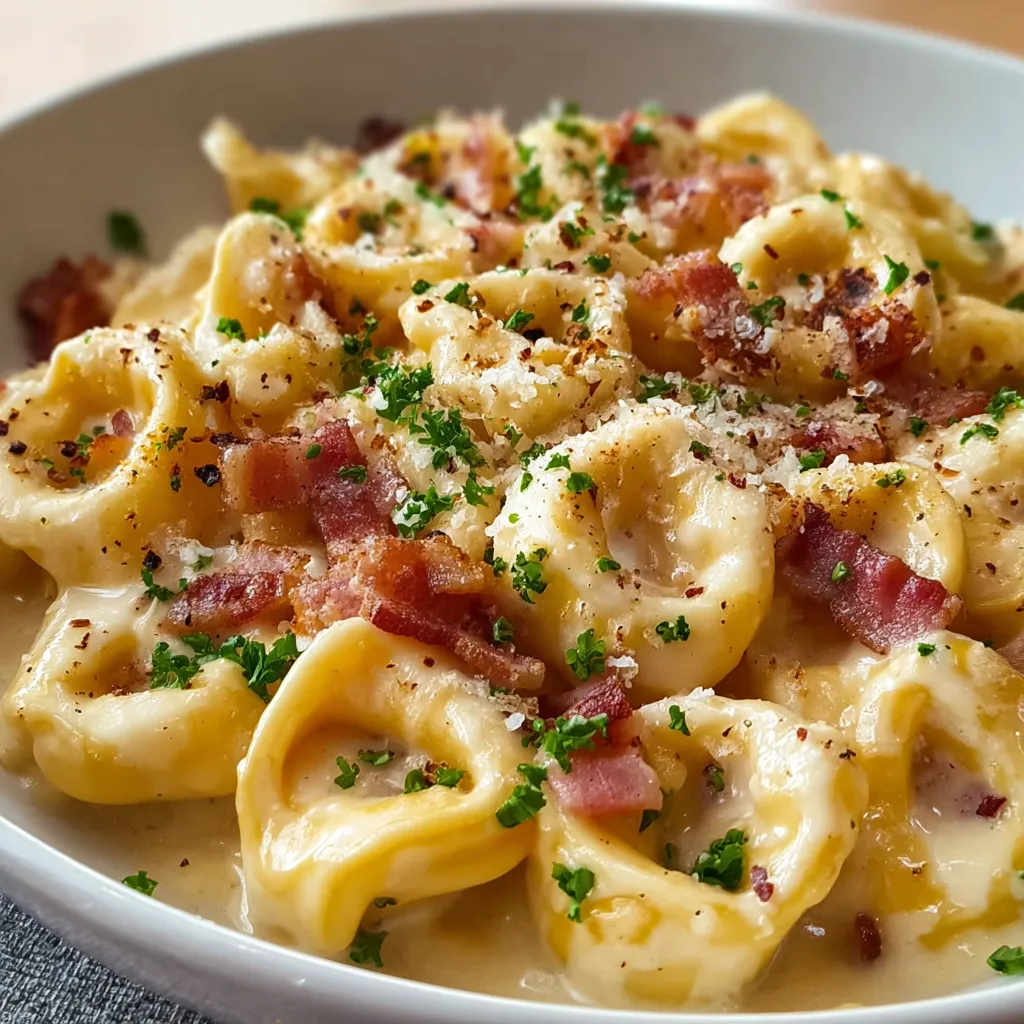 Here’s a recipe that incorporates all the science we discussed, designed for consistent, delicious results:
Ingredients
- 1 pound cheese tortellini (fresh or frozen)
- 4 ounces guanciale or pancetta, diced
- 3 large egg yolks
- 1 whole egg
- 1 cup grated Pecorino Romano cheese, plus more for serving
- 1/2 cup grated Parmesan cheese, plus more for serving
- 1/2 teaspoon black pepper, freshly ground
- 1/4 cup reserved pasta water, plus more as needed
- Salt to taste (be careful, the guanciale and cheese are salty)
Instructions
- Cook the Tortellini: Bring a large pot of salted water to a boil. Add the tortellini and cook according to package directions until al dente. Reserve about 1 cup of the pasta water before draining.
- Render the Guanciale/Pancetta: While the tortellini is cooking, in a large skillet over medium heat, cook the guanciale or pancetta until crispy and the fat has rendered. Remove the guanciale/pancetta from the skillet and set aside, leaving the rendered fat in the pan.
- Prepare the Egg Mixture: In a medium bowl, whisk together the egg yolks, whole egg, Pecorino Romano cheese, Parmesan cheese, and black pepper until well combined.
- Combine and Emulsify: Turn off the heat under the skillet. Immediately add the drained tortellini to the skillet with the rendered fat. Pour the egg mixture over the hot tortellini. Quickly toss the tortellini to coat it evenly with the egg mixture. Add 1/4 cup of the reserved pasta water and continue to toss vigorously. The heat from the tortellini and the pasta water will gently cook the egg yolks and create a creamy sauce. If the sauce is too thick, add more pasta water, a tablespoon at a time, until it reaches your desired consistency.
- Serve: Divide the tortellini carbonara among bowls. Top with the crispy guanciale/pancetta and additional grated Pecorino Romano and Parmesan cheese. Serve immediately.
My Carbonara Journey: From Disaster to Deliciousness
My first few attempts were a disaster. I thought carbonara was just throwing some ingredients together, but the results were consistently disappointing. Sometimes, I ended up with scrambled eggs clinging to the pasta; other times, the sauce was thin and greasy. I even considered giving up, thinking I just wasn’t cut out for it. Then, I had an “Aha!” moment after reading a food science article on emulsions. I realized the importance of temperature control and the role of pasta water.The Scrambled Egg Saga
Initially, I was using too much heat. I was so focused on cooking the eggs that I wasn’t paying attention to the temperature of the pan. The residual heat from the hot pan combined with the freshly cooked pasta was way too much, and the eggs curdled instantly. It was a sad, grainy mess. I realized I needed to turn off the heat completely before adding the egg mixture. This small change made a huge difference.The Pasta Water Revelation
Like many of you, I initially thought pasta water was just…water. But after some research, I discovered its magical properties. The starch in the pasta water acts as a natural emulsifier, helping to bind the fats and liquids together. This was the key to achieving that creamy, luscious sauce I was craving. I started reserving pasta water religiously, and the results were transformative. It’s also a crucial ingredient in achieving the perfect consistency when making Creamy Sausage Rigatoni.Cheese Choices and Proportions
I experimented with different cheeses and ratios. At first, I only used Parmesan. While it tasted good, it lacked the distinct sharpness and richness that I was looking for. Switching to a blend of Pecorino Romano and Parmesan, with Pecorino as the dominant cheese, elevated the flavor profile significantly. Now, I’m sure to have the right balance so it doesn’t end up tasting like my attempt at Garlic Parmesan Tortellini With Sausage And Broccoli.The Guanciale vs. Pancetta Debate
While authentic carbonara traditionally uses guanciale (cured pork cheek), it can be difficult to find. Pancetta is a perfectly acceptable substitute. The key is to render the fat properly. Crispy guanciale or pancetta adds a delightful texture and salty, savory flavor to the dish. The rendered fat is equally important, as it forms the base of the sauce and coats the tortellini beautifully, much like in a Creamy Cheesy Beef Enchilada Tortellini.The Foolproof Tortellini Carbonara Technique: A Step-by-Step Guide
Here’s a breakdown of the technique that will guarantee carbonara success every time:- Cook the Tortellini Al Dente: Don’t overcook the pasta! Al dente pasta will hold its shape better and absorb the sauce more effectively. Reserve at least 1 cup of pasta water.
- Render the Fat Slowly: Cook the guanciale or pancetta over medium heat until crispy. This will allow the fat to render properly and infuse the dish with flavor.
- Turn Off the Heat: This is crucial! Remove the skillet from the heat or turn it off completely before adding the egg mixture. The residual heat is all you need to cook the eggs gently.
- Whisk Vigorously: Toss the tortellini and egg mixture quickly and vigorously to create a smooth, emulsified sauce.
- Add Pasta Water Gradually: If the sauce is too thick, add pasta water, a tablespoon at a time, until it reaches your desired consistency. This prevents a dry or sticky sauce.
- Serve Immediately: Carbonara is best served immediately. The sauce will continue to thicken as it cools.
What is the key to preventing scrambled eggs when making Tortellini Carbonara?
The key to preventing scrambled eggs is to control the heat. Turn off the heat under the skillet completely before adding the egg mixture, allowing the residual heat from the tortellini and pasta water to gently cook the eggs.
Why is pasta water important in Tortellini Carbonara?
Pasta water contains starch, which acts as a natural emulsifier, helping to bind the fats (from the guanciale/pancetta and cheese) and liquids (from the egg yolks and pasta water) together, creating a creamy sauce.
Can I substitute pancetta for guanciale in the Tortellini Carbonara recipe?
Yes, pancetta is a perfectly acceptable substitute for guanciale. The key is to render the fat properly to infuse the dish with flavor.
What is the best way to ensure the sauce has the right consistency?
Add the reserved pasta water gradually, a tablespoon at a time, until the sauce reaches your desired consistency. This prevents the sauce from becoming too thick or dry.
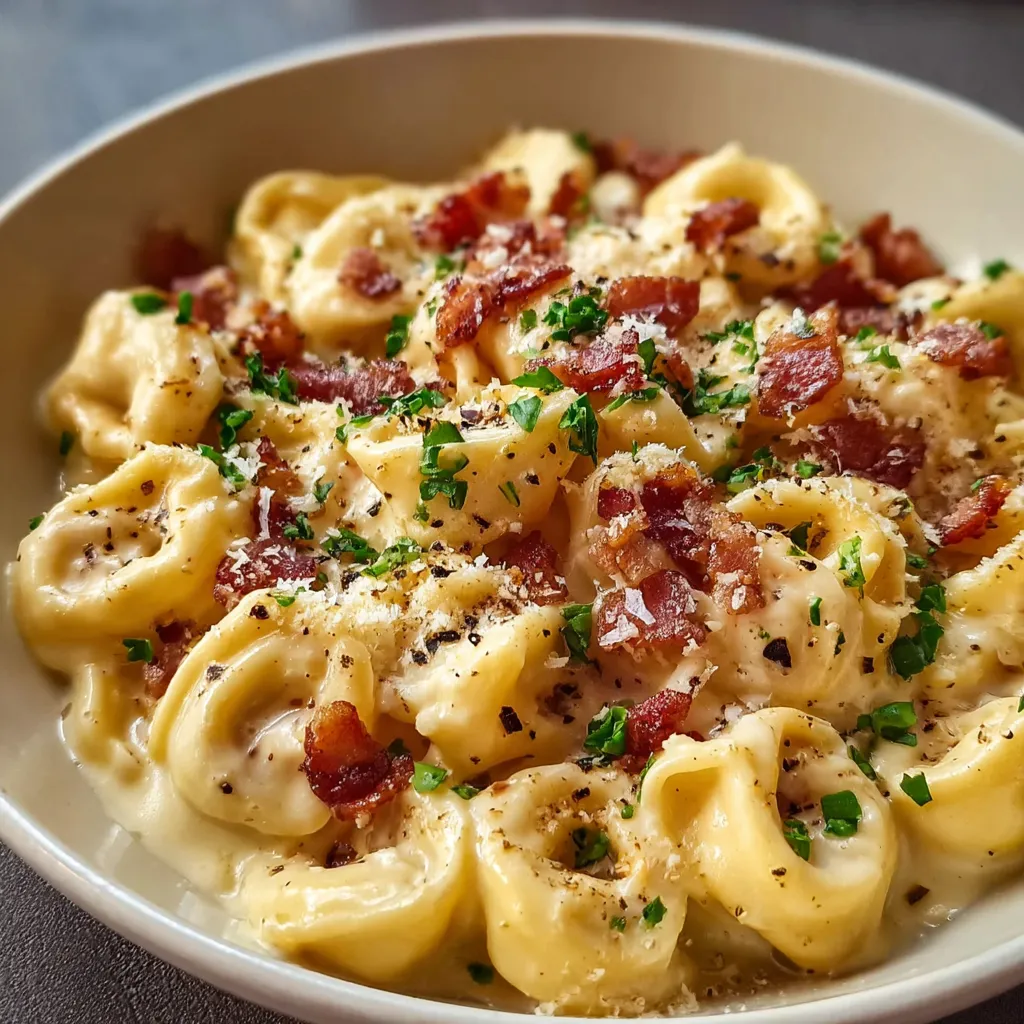
Tortellini Carbonara Ultimate Easy
This Tortellini Carbonara recipe simplifies the classic dish, focusing on a creamy, emulsified sauce achieved through careful temperature control and the use of pasta water. It’s a quick and easy way to enjoy the rich flavors of carbonara with the convenience of tortellini.
Ingredients
Equipment
Method
- Bring a large pot of salted water to a boil.
- Add the tortellini and cook according to package directions until al dente. Reserve about 1 cup of the pasta water before draining.
- While the tortellini is cooking, in a large skillet over medium heat, cook the guanciale or pancetta until crispy and the fat has rendered.
- Remove the guanciale/pancetta from the skillet and set aside, leaving the rendered fat in the pan.
- In a medium bowl, whisk together the egg yolks, whole egg, Pecorino Romano cheese, Parmesan cheese, and black pepper until well combined.
- Turn off the heat under the skillet.
- Immediately add the drained tortellini to the skillet with the rendered fat.
- Pour the egg mixture over the hot tortellini.
- Quickly toss the tortellini to coat it evenly with the egg mixture.
- Add 1/4 cup of the reserved pasta water and continue to toss vigorously.
- If the sauce is too thick, add more pasta water, a tablespoon at a time, until it reaches your desired consistency.
- Divide the tortellini carbonara among bowls.
- Top with the crispy guanciale/pancetta and additional grated Pecorino Romano and Parmesan cheese.
- Serve immediately.
Notes
For best results, use high-quality cheese and guanciale or pancetta. Be careful not to overcook the eggs, as they will curdle. Serve immediately, as the sauce will continue to thicken as it cools. If guanciale is unavailable, pancetta is an acceptable substitute. Salt carefully as the guanciale and cheese are already salty.