
Decoding the Creamy Dream: The Science Behind Tuscan Chicken Pasta
The magic of Tuscan Chicken Pasta lies in the emulsion. An emulsion, in culinary terms, is the stable combination of two liquids that don’t naturally mix, like oil and water. In this dish, the chicken stock, heavy cream, and rendered fat from the chicken combine to create a luscious sauce. Sun-dried tomatoes, packed in oil, contribute both flavor and emulsifying oils. The starch released from the pasta as it cooks further stabilizes the sauce, preventing it from separating and ensuring that every strand is coated in creamy goodness. The careful balance of acidity (from the tomatoes and potentially a touch of lemon juice) and richness (from the cream and Parmesan cheese) is also critical. Too much acid, and the cream can curdle; too little, and the dish becomes overwhelmingly heavy. Browning the chicken properly (the Maillard reaction) is also key, adding depth and complexity to the overall flavor profile. Finally, incorporating fresh basil at the end provides a bright, aromatic counterpoint to the richness of the sauce.Crafting Perfection: The Tuscan Chicken Pasta Recipe
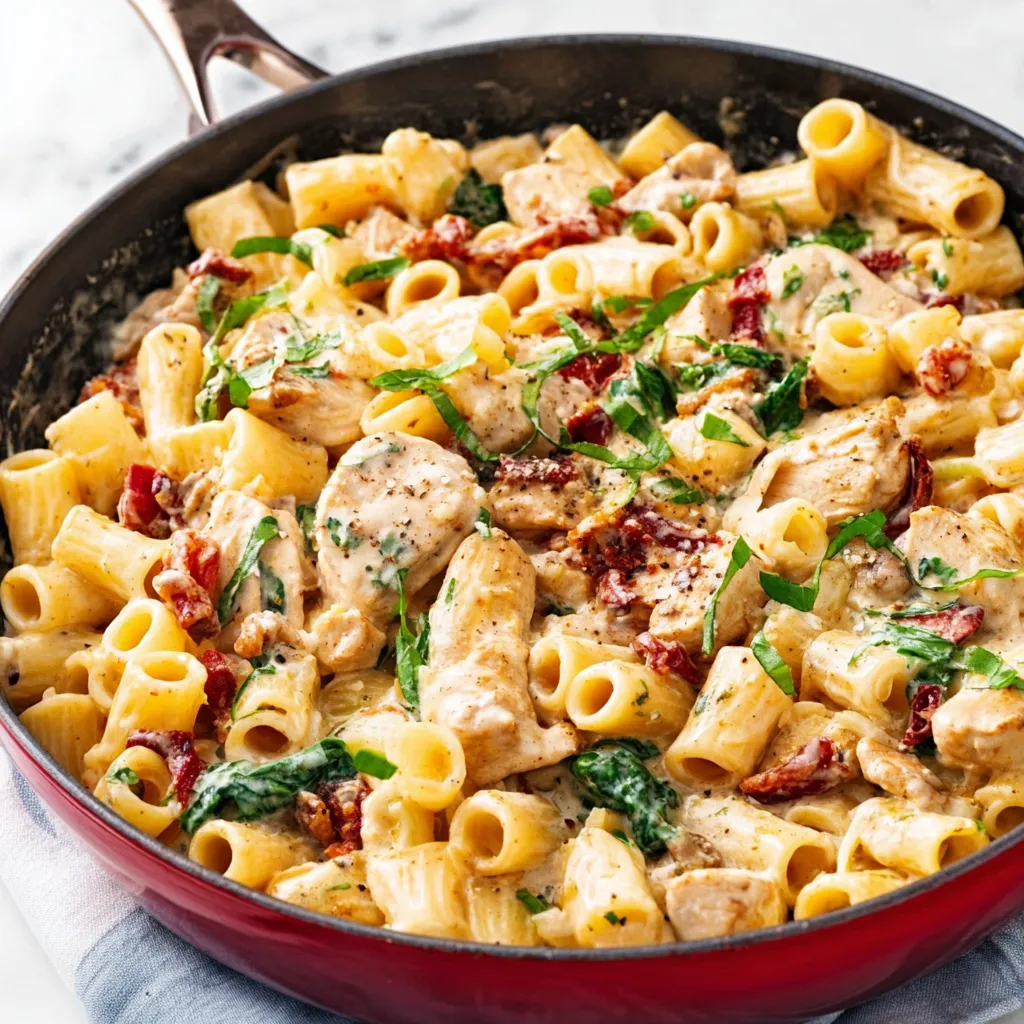 This recipe focuses on building layers of flavor and achieving that perfectly creamy texture.
Ingredients:
- 1.5 lbs boneless, skinless chicken breasts, cut into 1-inch pieces
- 1 tbsp olive oil
- 1 tbsp butter
- 1 tsp Italian seasoning
- 1/2 tsp garlic powder
- Salt and pepper to taste
- 8 oz pasta (penne, farfalle, or fettuccine recommended)
- 1/2 cup sun-dried tomatoes, oil-packed, drained and chopped
- 2 cloves garlic, minced
- 1 cup chicken broth
- 1 cup heavy cream
- 1/2 cup grated Parmesan cheese
- 1/4 cup chopped fresh basil
- Optional: red pepper flakes for a touch of heat
Instructions:
- Cook the pasta according to package directions. Reserve about 1 cup of pasta water before draining.
- Season the chicken with Italian seasoning, garlic powder, salt, and pepper.
- Heat the olive oil and butter in a large skillet over medium-high heat.
- Add the chicken to the skillet and cook until browned and cooked through, about 5-7 minutes. Remove the chicken from the skillet and set aside.
- Add the sun-dried tomatoes and garlic to the skillet and cook for 1 minute, until fragrant.
- Pour in the chicken broth and scrape up any browned bits from the bottom of the skillet.
- Bring to a simmer and cook for 2-3 minutes, until slightly reduced.
- Stir in the heavy cream and Parmesan cheese. Bring to a gentle simmer and cook for 3-5 minutes, until the sauce has thickened slightly.
- If the sauce is too thick, add a little of the reserved pasta water until it reaches your desired consistency.
- Return the chicken to the skillet and stir to combine.
- Add the cooked pasta to the skillet and toss to coat.
- Stir in the fresh basil and red pepper flakes (if using).
- Serve immediately and garnish with extra Parmesan cheese and fresh basil.
Confessions of a Culinary Investigator: My Tuscan Chicken Pasta Journey
My first few attempts were a disaster. I’m not exaggerating. Like many of you, I initially thought Tuscan Chicken Pasta was all about throwing ingredients into a pan and hoping for the best. My first attempt resulted in a watery, flavorless mess. The chicken was rubbery, the sauce was thin, and the sun-dried tomatoes tasted like…well, nothing.The Great Chicken Calamity
The chicken was my first major hurdle. I was overcrowding the pan, which meant the chicken was steaming instead of browning. That’s a cardinal sin in any good chicken dish, especially one that relies on that deep, savory flavor from proper searing. I also wasn’t seasoning the chicken assertively enough. It needed more than just a sprinkle of salt and pepper to stand up to the richness of the sauce. I needed to get some inspiration from other chicken recipes like Chicken Garlic Parmesan Pasta and ensure I am getting the chicken flavor right.The Sauce Struggle is Real
Then, I had an “Aha!” moment regarding the sauce. My initial thought was that more cream equals better. Wrong! The sauce was too heavy, lacking balance. I realized the importance of deglazing the pan with chicken broth and letting it reduce slightly before adding the cream. This concentrated the flavors and provided a better base for the creamy component. The sun-dried tomatoes also needed to be bloomed in the oil before adding any liquid. I realized that I needed to extract the maximum flavor by cooking them in the pan with garlic. It reminded me of Chicken Scampi. The garlic is critical to the whole dish.Parmesan Perfection
The final piece of the puzzle was the Parmesan cheese. I was initially using the pre-grated stuff from the store, which, while convenient, lacked the sharpness and depth of freshly grated Parmesan. Switching to freshly grated Parmesan made a world of difference, adding a salty, nutty complexity that elevated the entire dish.The Basil Revelation
Don’t underestimate the power of fresh basil. I was tossing it in while the sauce was simmering, which resulted in a muted, almost cooked flavor. Adding it right at the end, just before serving, preserved its bright, peppery aroma and provided a much-needed contrast to the richness of the sauce. It felt like a lightbulb going on over my head. This final step is extremely important just like in Marry Me Chicken Pasta.Cracking the Code: The Foolproof Tuscan Chicken Pasta Method
After countless iterations and several near-disasters, I’ve distilled the process down to a foolproof method:- Sear the Chicken Like a Pro: Don’t overcrowd the pan. Work in batches if necessary. Season generously with Italian seasoning, garlic powder, salt, and pepper. Get a good sear on both sides for maximum flavor.
- Bloom the Aromatics: Sauté the sun-dried tomatoes and garlic in the pan after the chicken is removed. This releases their essential oils and infuses the sauce with flavor.
- Deglaze and Reduce: Deglaze the pan with chicken broth and scrape up those delicious browned bits. Let it reduce slightly to concentrate the flavors.
- Creamy is Key: Use heavy cream for the richest texture. Add freshly grated Parmesan cheese for a salty, nutty bite.
- Pasta Perfection: Reserve pasta water! It’s your secret weapon for achieving the perfect sauce consistency.
- Basil at the End: Stir in fresh basil right before serving to preserve its bright aroma and flavor.
What makes Tuscan Chicken Pasta creamy and prevents the sauce from separating?
The creaminess comes from the emulsion of chicken stock, heavy cream, and rendered chicken fat. Sun-dried tomatoes contribute emulsifying oils, and the pasta starch stabilizes the sauce, preventing separation.
Why is it important to sear the chicken properly when making Tuscan Chicken Pasta?
Searing the chicken properly, achieving the Maillard reaction, adds depth and complexity to the overall flavor profile of the dish.
What is the key to getting the most flavor out of the sun-dried tomatoes?
Sautéing the sun-dried tomatoes and garlic in the pan after removing the chicken releases their essential oils, infusing the sauce with flavor.
Why is it important to add the fresh basil at the end of the cooking process?
Adding fresh basil right before serving preserves its bright, peppery aroma and provides a much-needed contrast to the richness of the sauce.
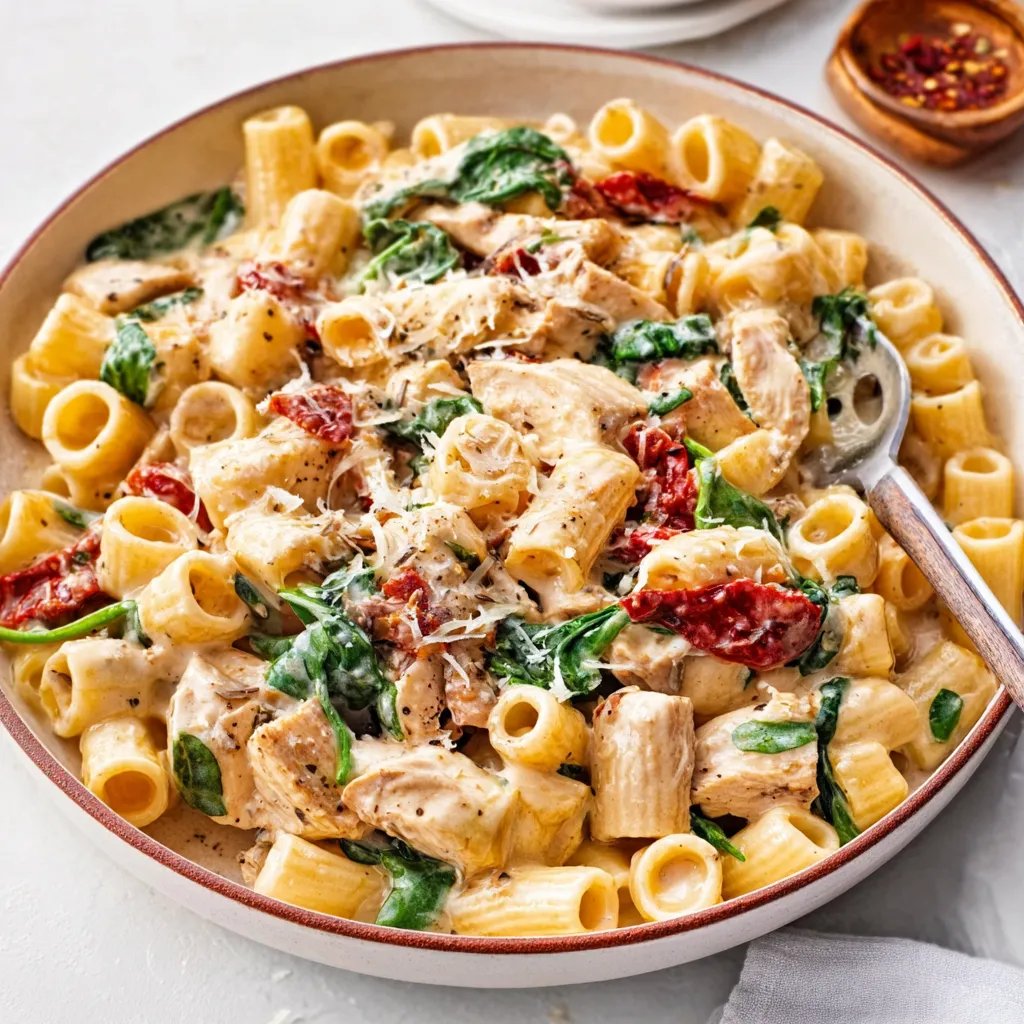
Tuscan Chicken Pasta
This Tuscan Chicken Pasta recipe is an easy and delicious way to enjoy a creamy, sun-dried tomato-infused pasta dish. With simple ingredients and clear instructions, you can create a restaurant-quality meal in the comfort of your own home.
Ingredients
Equipment
Method
- Cook the pasta according to package directions. Reserve about 1 cup of pasta water before draining.
- Season the chicken with Italian seasoning, garlic powder, salt, and pepper.
- Heat the olive oil and butter in a large skillet over medium-high heat.
- Add the chicken to the skillet and cook until browned and cooked through, about 5-7 minutes. Remove the chicken from the skillet and set aside.
- Add the sun-dried tomatoes and garlic to the skillet and cook for 1 minute, until fragrant.
- Pour in the chicken broth and scrape up any browned bits from the bottom of the skillet.
- Bring to a simmer and cook for 2-3 minutes, until slightly reduced.
- Stir in the heavy cream and Parmesan cheese. Bring to a gentle simmer and cook for 3-5 minutes, until the sauce has thickened slightly.
- If the sauce is too thick, add a little of the reserved pasta water until it reaches your desired consistency.
- Return the chicken to the skillet and stir to combine.
- Add the cooked pasta to the skillet and toss to coat.
- Stir in the fresh basil and red pepper flakes (if using).
- Serve immediately and garnish with extra Parmesan cheese and fresh basil.
Notes
For best results, use freshly grated Parmesan cheese and fresh basil. Don’t overcrowd the pan when searing the chicken to ensure proper browning. If the sauce becomes too thick, add reserved pasta water gradually until desired consistency is reached. Store leftovers in an airtight container in the refrigerator for up to 3 days.