
Decoding the Broth: The Science Behind the Soup
At its heart, Chicken Noodle Soup is all about the broth. It’s not just water flavored with chicken; it’s a complex emulsion of flavors, proteins, and fats, carefully balanced to create a comforting and nourishing experience. The secret lies in understanding the Maillard reaction and the extraction of collagen. The Maillard reaction, that browning magic that happens when proteins and sugars are heated, is key to developing depth of flavor. Similarly, simmering chicken bones releases collagen, which breaks down into gelatin, giving the broth that coveted rich, silky texture. Many underestimate the importance of quality broth when they search for Chicken Noodle Soup Recipe Homemade. Furthermore, the choice of vegetables significantly impacts the broth. Aromatics like onions, carrots, and celery (mirepoix) provide a foundational sweetness and earthiness, while herbs like thyme and bay leaf add subtle complexity. The fat content is also crucial; too little and the soup tastes thin, too much and it feels greasy. Achieving the right balance is an art and a science.The Ultimate Chicken Noodle Soup Recipe: A Blueprint for Comfort
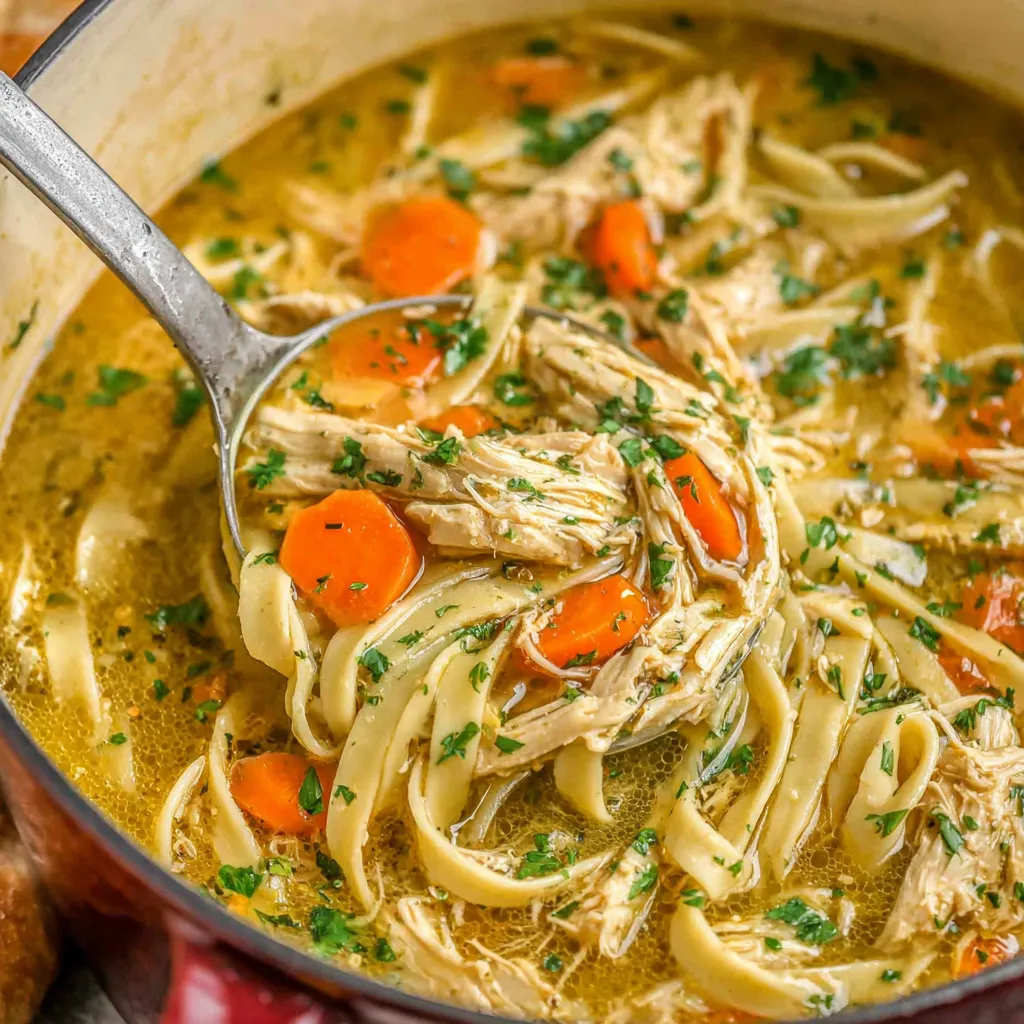 Here’s my go-to recipe for the ultimate Chicken Noodle Soup, a process refined through countless experiments and taste tests. This Chicken Soup Recipes Homemade delivers every time.
Ingredients:
- For the Broth:
- 1 whole chicken (about 3-4 pounds)
- 12 cups water
- 1 large onion, roughly chopped
- 2 carrots, roughly chopped
- 2 celery stalks, roughly chopped
- 2 bay leaves
- 1 teaspoon black peppercorns
- 1 teaspoon salt (plus more to taste)
- For the Soup:
- 2 tablespoons olive oil
- 1 onion, diced
- 2 carrots, diced
- 2 celery stalks, diced
- 2 cloves garlic, minced
- 8 ounces egg noodles
- 2 cups shredded cooked chicken (from the broth chicken)
- 1/4 cup chopped fresh parsley
- Salt and pepper to taste
Instructions:
- Make the Broth: Place the whole chicken, water, onion, carrots, celery, bay leaves, peppercorns, and salt in a large pot or Dutch oven. Bring to a boil, then reduce heat and simmer for 1.5-2 hours, or until the chicken is cooked through.
- Remove the Chicken: Carefully remove the chicken from the pot and set aside to cool slightly.
- Strain the Broth: Strain the broth through a fine-mesh sieve into a clean bowl or pot. Discard the solids.
- Prepare the Chicken: Once the chicken is cool enough to handle, remove the skin and bones. Shred the chicken meat and set aside 2 cups for the soup. Reserve the remaining chicken for another use (sandwiches, salads, etc.).
- Sauté the Vegetables: In the same pot (now cleaned), heat the olive oil over medium heat. Add the diced onion, carrots, and celery and cook until softened, about 5-7 minutes. Add the minced garlic and cook for another minute until fragrant.
- Add the Broth: Pour the strained broth into the pot with the vegetables. Bring to a boil, then add the egg noodles. Cook according to package directions, usually about 8-10 minutes.
- Add the Chicken: Stir in the shredded cooked chicken and parsley. Season with salt and pepper to taste.
- Serve: Ladle the soup into bowls and serve hot.
My Chicken Noodle Soup Odyssey: From Bland to Brilliant
My journey to creating the perfect Chicken Noodle Soup Recipe Homemade was far from straightforward. Like many of you, I initially thought it was simply a matter of throwing some ingredients together. My first few attempts were a disaster: bland, watery broths, mushy noodles, and flavorless chicken. It was discouraging, to say the least. Then, I had an “Aha!” moment: I realized I was treating it like a quick meal instead of a culinary project worthy of careful attention.The Broth Blunder
Initially, I used pre-made chicken broth. While convenient, it lacked depth and complexity. The flavor was one-dimensional, and the soup tasted…flat. I needed to build my own broth from scratch. This realization led me to experiment with different chicken parts. I tried using only chicken breasts, but the broth lacked richness. Then I tried only bones, which made it taste metallic. I found that using a whole chicken was the sweet spot, providing both flavorful meat and collagen-rich bones for a balanced broth.The Vegetable Vortex
Another problem was the vegetables. I used to just toss them in, chopped haphazardly, at the same time as the chicken. This resulted in overcooked, mushy vegetables and a broth that tasted muddy. I learned that sautéing the vegetables in olive oil before adding the broth not only softened them but also brought out their natural sweetness, adding another layer of flavor to the soup. The garlic, added towards the end of the sauté, bloomed with aroma.Noodle Nightmare
The noodles were consistently a problem. They were either undercooked and hard or overcooked and gummy. I tried different types of noodles: thin spaghetti, elbow macaroni, even orzo. Nothing seemed to work consistently. Then I discovered egg noodles. Their texture held up beautifully in the broth, and they added a slight richness that complemented the other flavors. The key, I learned, was to add them at the very end and cook them just until tender.The Chicken Conundrum
Finally, the chicken itself. Initially, I just boiled the chicken in the broth and called it a day. But the chicken ended up being dry and flavorless. I discovered that poaching the chicken gently in the broth, then shredding it and adding it back in at the end, resulted in moist, tender chicken that had absorbed the flavors of the broth. The journey taught me the importance of patience, experimentation, and attention to detail. It also showed me that even the simplest dishes can be elevated to something truly special with a little bit of effort and understanding. It’s not unlike perfecting a Pot Roast With Mashed Potatoes – it takes time and care to get it just right. Or even the surprisingly nuanced Butter Chicken. I can even see some of the lessons I learned applying to other dishes. For instance, the principle of building flavor through slow cooking and careful seasoning is crucial in dishes like Slow Cooker Lemon Chicken and Creamy Garlic Parmesan Crockpot Chicken. Paying attention to the texture and balance of ingredients also reminds me of making a good Creamy Garlic Chicken Gnocchi or the technique involved with perfecting Rotisserie Chicken Mushroom Soup.The Foolproof Chicken Noodle Soup Method: A Step-by-Step Guide to Success
After all my trials and tribulations, I’ve distilled the process into a simple, foolproof method:- Start with a whole chicken for the richest, most flavorful broth. Don’t skimp on the quality of the chicken!
- Sauté the vegetables (onion, carrots, celery, garlic) in olive oil before adding the broth. This brings out their sweetness and adds another layer of flavor.
- Simmer the broth low and slow for at least 1.5-2 hours. The longer it simmers, the richer and more flavorful it will become.
- Strain the broth thoroughly to remove any solids. This will result in a clear, clean-tasting soup.
- Add the egg noodles at the very end and cook until just tender. Overcooked noodles are the enemy!
- Shred the cooked chicken and add it back to the soup. This ensures that the chicken is moist and flavorful.
- Season to taste with salt, pepper, and fresh parsley. Don’t be afraid to experiment with other herbs and spices.
Why is using a whole chicken recommended for the broth instead of just chicken breasts or bones?
Using a whole chicken provides both flavorful meat and collagen-rich bones, resulting in a balanced and richer broth. Chicken breasts alone lack richness, while bones alone can make the broth taste metallic.
Why does the recipe instruct to sauté the vegetables before adding them to the broth?
Sautéing the vegetables in olive oil before adding the broth softens them, brings out their natural sweetness, and adds another layer of flavor to the soup. It also helps to prevent the vegetables from becoming mushy.
What is the key to preventing mushy or gummy noodles in chicken noodle soup?
The key is to add the egg noodles at the very end of the cooking process and cook them just until tender. Overcooking the noodles will result in a mushy or gummy texture.
Why is it important to strain the broth after simmering the chicken and vegetables?
Straining the broth thoroughly removes any solids, resulting in a clear and clean-tasting soup. This ensures a smoother and more enjoyable texture.
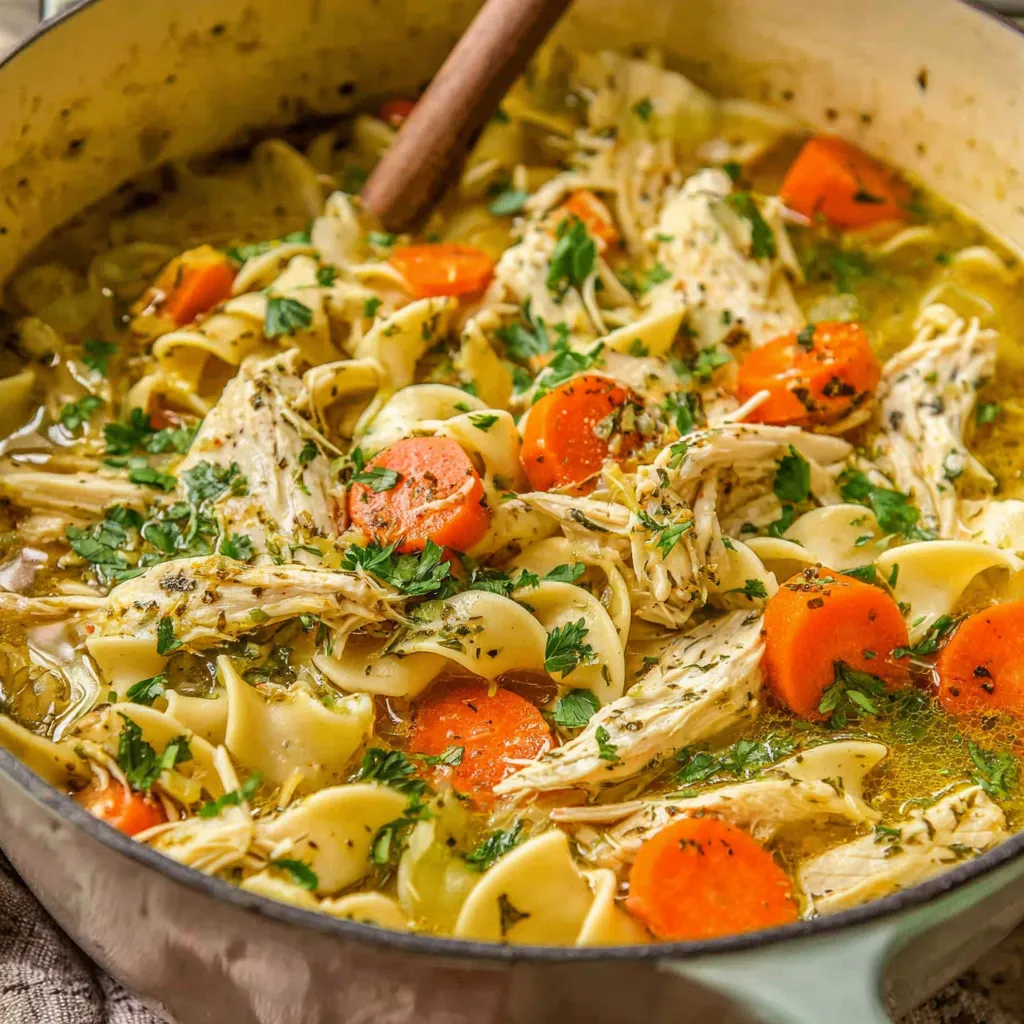
Ultimate Chicken Noodle Soup
This Ultimate Chicken Noodle Soup recipe delivers a comforting and nourishing experience. The secret lies in building a rich, flavorful broth and perfectly cooking the noodles and chicken for a truly satisfying bowl of soup.
Ingredients
Equipment
Method
- Make the Broth: Place the whole chicken, water, roughly chopped onion, roughly chopped carrots, roughly chopped celery, bay leaves, peppercorns, and salt in a large pot or Dutch oven. Bring to a boil, then reduce heat and simmer for 1.5-2 hours, or until the chicken is cooked through.
- Remove the Chicken: Carefully remove the chicken from the pot and set aside to cool slightly.
- Strain the Broth: Strain the broth through a fine-mesh sieve into a clean bowl or pot. Discard the solids.
- Prepare the Chicken: Once the chicken is cool enough to handle, remove the skin and bones. Shred the chicken meat and set aside 2 cups for the soup. Reserve the remaining chicken for another use.
- Sauté the Vegetables: In the same pot (now cleaned), heat the olive oil over medium heat. Add the diced onion, diced carrots, and diced celery and cook until softened, about 5-7 minutes. Add the minced garlic and cook for another minute until fragrant.
- Add the Broth: Pour the strained broth into the pot with the vegetables. Bring to a boil, then add the egg noodles. Cook according to package directions, usually about 8-10 minutes.
- Add the Chicken: Stir in the shredded cooked chicken and parsley. Season with salt and pepper to taste.
- Serve: Ladle the soup into bowls and serve hot.
Notes
For a richer broth, use chicken bones in addition to the whole chicken. Store leftover soup in an airtight container in the refrigerator for up to 3 days. For a spicier soup, add a pinch of red pepper flakes. You can substitute other types of noodles for the egg noodles, such as rotini or ditalini.