
The Alchemic Dance: Broth, Dumplings, and Harmony
The secret to exceptional gyoza soup isn’t just about slapping some dumplings into broth. It’s about understanding the interplay between the key elements: the broth’s umami, the dumpling’s filling, and the textures that create a symphony in your mouth. The broth acts as a canvas, highlighting the flavors within the gyoza. A bland broth will let the dumplings down, while an overly strong broth will overwhelm them. The dumpling filling needs to be flavorful enough to stand out, yet balanced enough not to clash with the broth. And finally, texture matters. Perfectly cooked gyoza should have a slightly chewy wrapper and a juicy filling. This creates a delightful contrast against the smooth broth and any added vegetables. Thinking of it another way, consider how a Chicken Soup Recipe relies on similar principles for its soothing and comforting effect.The Ultimate Gyoza Soup Recipe: A Labor of Love (That’s Worth It)
 Here’s my foolproof gyoza soup recipe, born from countless experiments and taste tests.
Ingredients:
- For the Broth:
- 6 cups chicken broth (low sodium preferred)
- 2 cups water
- 4 dried shiitake mushrooms, rehydrated (reserve soaking liquid)
- 2 inch piece of ginger, peeled and sliced
- 3 cloves garlic, smashed
- 2 green onions, white parts only, sliced
- 2 tbsp soy sauce
- 1 tbsp mirin
- 1 tsp sesame oil
- Pinch of white pepper
- For the Gyoza:
- 1 lb ground pork
- 1 cup finely chopped napa cabbage, squeezed dry
- 1/2 cup finely chopped green onions
- 2 tbsp soy sauce
- 1 tbsp rice vinegar
- 1 tbsp sesame oil
- 1 tsp grated ginger
- 1 clove garlic, minced
- 1/4 tsp white pepper
- 1 package (about 40-50) gyoza wrappers
- Small bowl of water
- For the Garnish:
- 2 green onions, thinly sliced (green parts only)
- Toasted sesame seeds
- Chili oil (optional)
- Fresh cilantro, chopped (optional)
Instructions:
- Prepare the Broth: In a large pot, combine chicken broth, water, rehydrated shiitake mushrooms (sliced), reserved mushroom soaking liquid (strain it first!), ginger, garlic, and white parts of green onions. Bring to a boil, then reduce heat and simmer for at least 30 minutes, or up to an hour, to allow the flavors to meld.
- Prepare the Gyoza Filling: In a large bowl, combine ground pork, napa cabbage, green onions, soy sauce, rice vinegar, sesame oil, ginger, garlic, and white pepper. Mix thoroughly until well combined.
- Assemble the Gyoza: Place a gyoza wrapper in the palm of your hand. Add about 1 teaspoon of filling to the center of the wrapper. Dip your finger into the bowl of water and moisten the edges of the wrapper. Fold the wrapper in half to form a half-moon shape. Pleat one side of the wrapper, pressing firmly to seal. Repeat until all the filling is used. Consider the ease of making Chicken Tortellini Soup if you don’t want to make your own gyoza.
- Cook the Gyoza: You have two options:
- Option 1 (Pan-Fried and Steamed): Heat 1 tablespoon of oil in a large non-stick skillet over medium heat. Arrange the gyoza in the skillet, flat side down, without overcrowding. Cook for 2-3 minutes, or until the bottoms are golden brown. Add 1/2 cup of water to the skillet, cover, and steam for 5-7 minutes, or until the water has evaporated and the gyoza are cooked through.
- Option 2 (Boiled): Bring a large pot of water to a boil. Gently drop the gyoza into the boiling water. Cook for 3-4 minutes, or until they float to the surface and are cooked through.
- Strain the Broth: Strain the broth through a fine-mesh sieve to remove the solids. Discard the solids.
- Finish the Soup: Return the strained broth to the pot. Add soy sauce, mirin, and sesame oil. Bring to a simmer.
- Serve: Divide the cooked gyoza among bowls. Ladle the hot broth over the gyoza. Garnish with green onions, toasted sesame seeds, chili oil (if using), and fresh cilantro (if using).
My Gyoza Soup Odyssey: From Disaster to Delicious
My journey to gyoza soup perfection was far from straightforward. It was a winding road filled with soggy dumplings, bland broths, and moments of sheer frustration. But through it all, I learned valuable lessons about the art of flavor layering and the importance of technique.The Soggy Saga: My First Forays
My first few attempts were a disaster. I naively assumed I could just throw some frozen gyoza into chicken broth and call it a day. The result was a watery, flavorless mess with dumplings that had the consistency of wallpaper paste. I realized I needed to start from scratch and understand the fundamentals. This was definitely not as easy as throwing together Chicken Noodle Soup.The Umami Awakening: Embracing the Fifth Taste
The breakthrough came when I started experimenting with umami-rich ingredients. I learned that a good broth needs more than just chicken stock. Dried shiitake mushrooms, ginger, and garlic became my go-to flavor boosters. Rehydrating the mushrooms and using the soaking liquid was a game-changer, adding a depth of flavor I hadn’t achieved before. I also discovered the power of a little soy sauce and mirin to add sweetness and complexity.The Dumpling Dilemma: Mastering the Filling
Next, I tackled the dumplings themselves. I realized that the filling needed to be well-seasoned and balanced. My initial attempts were too bland, so I started adding more ginger, garlic, and sesame oil. I also learned the importance of squeezing the excess moisture out of the napa cabbage to prevent the filling from becoming soggy. Using high-quality ground pork also made a noticeable difference. The result was a gyoza filling that was bursting with flavor.The Texture Tango: Finding the Perfect Bite
Finally, I experimented with different cooking methods to achieve the perfect dumpling texture. Boiling the gyoza resulted in a soft, slightly slippery texture, while pan-frying and steaming created a crispy bottom and a tender top. I preferred the latter method, as it added a delightful textural contrast to the soup. But if I’m feeling lazy, I’ll take the shortcut of using frozen dumplings in a similar way to how Thai Chicken Soup uses pre-cooked ingredients.The Gyoza Soup Gospel: A Foolproof Method in Five Steps
After my culinary quest, I’ve distilled the process down to a simple, foolproof method. Follow these steps, and you’ll be enjoying restaurant-quality gyoza soup in no time.- Build a Flavorful Broth: Don’t skimp on the umami-rich ingredients. Use dried shiitake mushrooms, ginger, garlic, and soy sauce to create a broth that’s both complex and satisfying.
- Craft a Balanced Filling: Season your gyoza filling generously and squeeze out any excess moisture. Use high-quality ingredients for the best flavor.
- Master the Cooking Technique: Pan-frying and steaming is my preferred method for achieving the perfect dumpling texture, but boiling is a perfectly acceptable alternative.
- Strain for Clarity: Strain your broth before adding the cooked gyoza for a clean, elegant presentation.
- Garnish with Flair: Don’t underestimate the power of a good garnish. Green onions, toasted sesame seeds, and chili oil can elevate your gyoza soup to the next level.
What makes this gyoza soup recipe ‘ultimate’ compared to just putting dumplings in broth?
The ‘ultimate’ gyoza soup focuses on the interplay between the broth’s umami, the dumpling’s flavorful filling, and achieving desirable textures like a slightly chewy wrapper and juicy filling.
What are some key ingredients to enhance the broth’s umami flavor?
Key ingredients for enhancing the broth’s umami include dried shiitake mushrooms (and their soaking liquid), ginger, garlic, and soy sauce.
What are the two recommended methods for cooking the gyoza, and what texture does each provide?
The recipe suggests pan-frying and steaming (for a crispy bottom and tender top) or boiling (for a soft, slightly slippery texture).
What is the importance of straining the broth before serving?
Straining the broth removes the solids, resulting in a clean and elegant presentation.
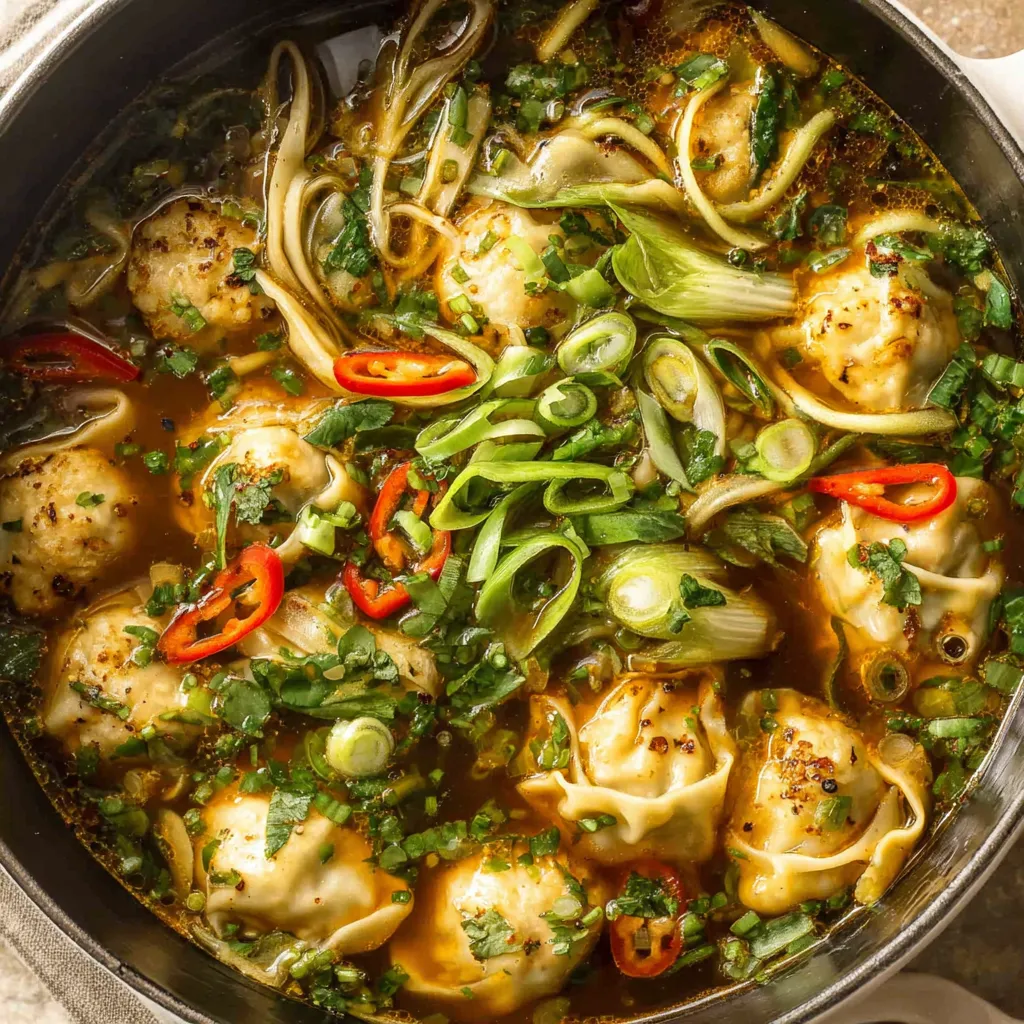
ULTIMATE GYOZA SOUP RECIPE
This recipe elevates gyoza soup to a culinary experience. It focuses on the harmonious interplay of a flavorful broth, well-seasoned gyoza filling, and delightful textures. The result is a comforting and satisfying soup perfect for any occasion.
Ingredients
Equipment
Method
- Prepare the Broth: In a large pot, combine chicken broth, water, rehydrated shiitake mushrooms (sliced), reserved mushroom soaking liquid (strain it first!), ginger, garlic, and white parts of green onions. Bring to a boil, then reduce heat and simmer for at least 30 minutes, or up to an hour, to allow the flavors to meld.
- Prepare the Gyoza Filling: In a large bowl, combine ground pork, napa cabbage, green onions, soy sauce, rice vinegar, sesame oil, ginger, garlic, and white pepper. Mix thoroughly until well combined.
- Assemble the Gyoza: Place a gyoza wrapper in the palm of your hand. Add about 1 teaspoon of filling to the center of the wrapper. Dip your finger into the bowl of water and moisten the edges of the wrapper. Fold the wrapper in half to form a half-moon shape. Pleat one side of the wrapper, pressing firmly to seal. Repeat until all the filling is used.
- Cook the Gyoza: You have two options:
- Option 1 (Pan-Fried and Steamed): Heat 1 tablespoon of oil in a large non-stick skillet over medium heat. Arrange the gyoza in the skillet, flat side down, without overcrowding. Cook for 2-3 minutes, or until the bottoms are golden brown. Add 1/2 cup of water to the skillet, cover, and steam for 5-7 minutes, or until the water has evaporated and the gyoza are cooked through.
- Option 2 (Boiled): Bring a large pot of water to a boil. Gently drop the gyoza into the boiling water. Cook for 3-4 minutes, or until they float to the surface and are cooked through.
- Strain the Broth: Strain the broth through a fine-mesh sieve to remove the solids. Discard the solids.
- Finish the Soup: Return the strained broth to the pot. Add soy sauce, mirin, and sesame oil. Bring to a simmer.
- Serve: Divide the cooked gyoza among bowls. Ladle the hot broth over the gyoza. Garnish with green onions, toasted sesame seeds, chili oil (if using), and fresh cilantro (if using).
Notes
For a richer broth, use homemade chicken stock. You can substitute ground chicken or turkey for ground pork in the gyoza filling. The gyoza soup can be stored in the refrigerator for up to 3 days. Reheat gently on the stovetop.