
The Deconstructed Loaf: Understanding the Principles
The science behind a good meatloaf boils down to a few key elements: binding, moisture retention, and flavor layering. Binding agents, like breadcrumbs and eggs, are crucial for holding the meatloaf together and preventing it from crumbling. Moisture retention is equally important, as a dry meatloaf is nobody’s friend. This is where ingredients like milk or broth come into play. Finally, flavor layering involves building a complex flavor profile through the strategic use of herbs, spices, and umami-rich ingredients. For a Parmesan Chicken Meatloaf, the challenge lies in adapting these principles to the unique characteristics of ground chicken. Ground chicken is leaner than ground beef, meaning it’s more prone to drying out. Parmesan cheese, while adding a delightful flavor, can also contribute to a drier texture if not properly balanced. Therefore, we need to focus on maximizing moisture retention and using the Parmesan strategically.The Ultimate Parmesan Chicken Meatloaf Recipe
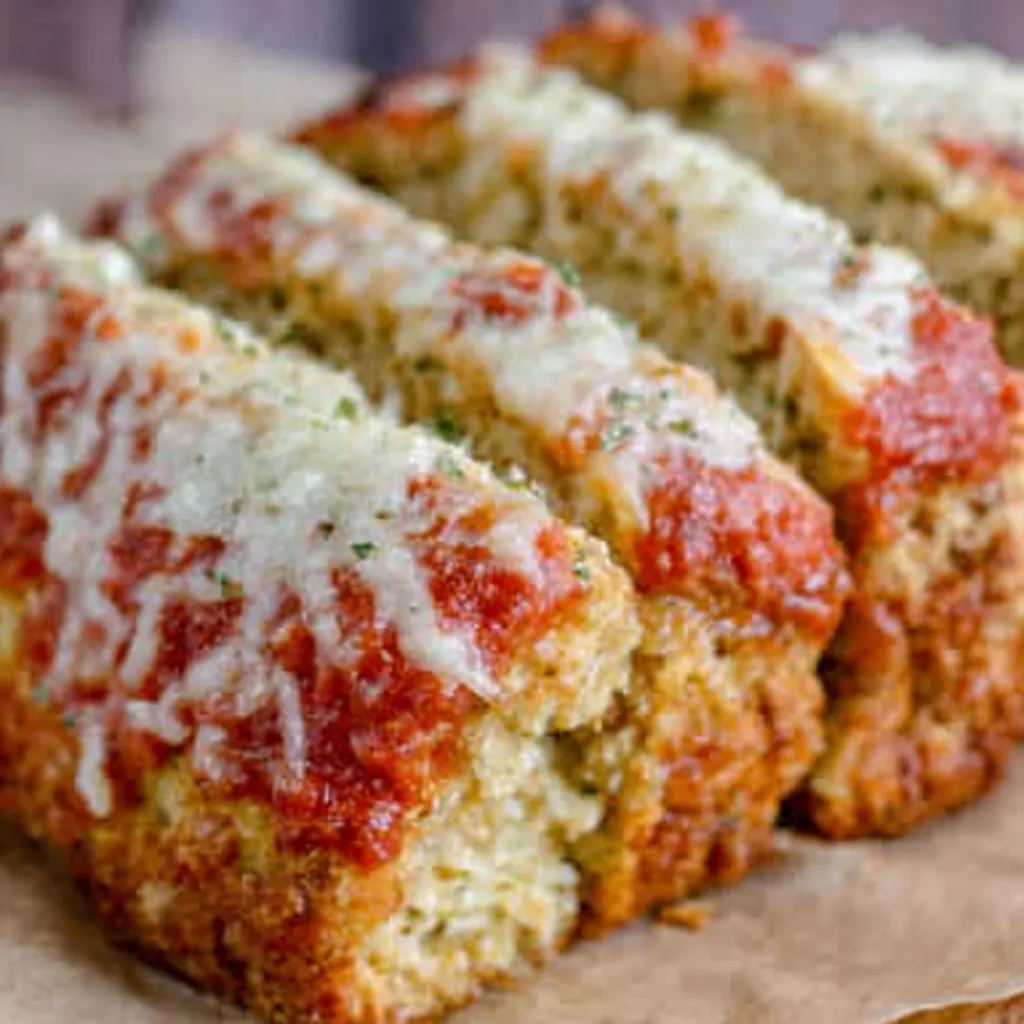 Here’s my perfected recipe, designed to deliver a moist, flavorful, and utterly satisfying Parmesan Chicken Meatloaf:
Ingredients
- For the Meatloaf:
- 2 lbs ground chicken
- 1 cup breadcrumbs (plain or Italian-seasoned)
- 1/2 cup grated Parmesan cheese, plus extra for topping
- 1/4 cup finely chopped onion
- 2 cloves garlic, minced
- 1 large egg, lightly beaten
- 1/4 cup milk (or chicken broth for added flavor)
- 2 tablespoons chopped fresh parsley
- 1 teaspoon dried oregano
- 1/2 teaspoon salt
- 1/4 teaspoon black pepper
- 1/4 teaspoon red pepper flakes (optional, for a little heat)
- For the Topping:
- 1/4 cup grated Parmesan cheese
- 1 tablespoon olive oil
Equipment
- 9×5 inch loaf pan
- Large mixing bowl
Instructions
1. Preheat and Prep: Preheat your oven to 375°F (190°C). Lightly grease a 9×5 inch loaf pan. 2. Combine Ingredients: In a large mixing bowl, combine all meatloaf ingredients (ground chicken, breadcrumbs, Parmesan cheese, onion, garlic, egg, milk, parsley, oregano, salt, pepper, and red pepper flakes, if using). 3. Mix Gently: Gently mix all ingredients together with your hands until just combined. Be careful not to overmix, as this can result in a tough meatloaf. 4. Shape and Transfer: Transfer the meatloaf mixture to the prepared loaf pan. Gently press it down to ensure it’s evenly distributed. 5. Prepare Topping: In a small bowl, combine the remaining Parmesan cheese and olive oil. Mix well to form a paste. 6. Spread Topping: Spread the Parmesan cheese mixture evenly over the top of the meatloaf. 7. Bake: Bake for 50-60 minutes, or until the internal temperature reaches 165°F (74°C). Use a meat thermometer to check for doneness. 8. Rest: Let the meatloaf rest for 10-15 minutes before slicing and serving. This allows the juices to redistribute, resulting in a more tender and flavorful meatloaf.Serving Suggestions
Serve your Parmesan Chicken Meatloaf with your favorite sides, such as mashed potatoes, roasted vegetables, or a simple salad. A side of marinara sauce or pesto is also a great addition. Consider serving it alongside a Cheesy Loaded Meatloaf Casserole Ultimate for a meatloaf extravaganza.The Culinary Case: My Quest for the Perfect Loaf
My first few attempts were a disaster, to put it mildly. The meatloaf was either dry and crumbly or dense and rubbery. I was determined to crack the code, though, so I approached the problem methodically, like any good food scientist would.The Dry Spell: Overcoming the Lean Protein Challenge
Like many of you, I initially thought that simply adding more liquid would solve the dryness issue. I tried increasing the amount of milk, but the meatloaf ended up being soggy and falling apart. Then, I had an “Aha!” moment when I realized that the problem wasn’t just a lack of moisture, but also a lack of fat. Ground chicken is significantly leaner than ground beef, so it needs extra help to stay moist. I experimented with adding different types of fat, like olive oil and even a small amount of grated butter. The butter worked best, adding richness and helping to keep the meatloaf moist without making it greasy. I considered using a creamy topping, like you would in a Creamy Meatloaf Recipe, but I didn’t want to mask the Parmesan flavor.The Parmesan Puzzle: Finding the Right Balance
The Parmesan cheese presented another challenge. While it added a wonderful flavor, too much of it made the meatloaf dry and gritty. I tried reducing the amount of Parmesan, but then the flavor was too subtle. The solution, I discovered, was to use a combination of grated Parmesan cheese in the meatloaf and a Parmesan-olive oil paste on top. This allowed me to maximize the Parmesan flavor without compromising the texture. I also experimented with different types of breadcrumbs. Plain breadcrumbs worked fine, but I found that Italian-seasoned breadcrumbs added an extra layer of flavor that complemented the Parmesan cheese nicely. Also, I found that using panko bread crumbs really helped in keeping the mixture together and avoiding it falling apart. For a similar idea, you can try out the Mini Meatloaf Recipe for additional ideas.The Final Verdict: A Flavorful Triumph
After numerous trials and errors, I finally achieved the perfect Parmesan Chicken Meatloaf. It was moist, tender, and bursting with savory Parmesan flavor. The Parmesan-olive oil topping created a beautiful golden crust that added a delightful crunch to each bite. It was a far cry from my initial failures, and a testament to the power of experimentation and persistence. I thought about adding garlic, like in a Garlic Parmesan Chicken Meatloaf, but decided against it since the garlic already gave a subtle hint of flavor. I think I may have found a challenger to the Meatloaf Perfect Recipe!The Foolproof Method: Mastering the Technique
Here’s a step-by-step summary of the technique for making the perfect Parmesan Chicken Meatloaf:- Don’t Overmix: Gently mix the ingredients until just combined to prevent a tough meatloaf.
- Add Fat: Incorporate a small amount of grated butter or olive oil to compensate for the leanness of ground chicken.
- Parmesan Power: Use a combination of grated Parmesan cheese in the meatloaf and a Parmesan-olive oil paste on top for maximum flavor and a crispy crust.
- Temperature is Key: Ensure the meatloaf reaches an internal temperature of 165°F (74°C) for food safety and optimal texture.
- Rest and Relax: Let the meatloaf rest for 10-15 minutes before slicing to allow the juices to redistribute and prevent it from drying out.
Why is it important not to overmix the ingredients when making this Parmesan Chicken Meatloaf?
Overmixing can result in a tough meatloaf. Gently mix the ingredients until just combined.
What’s the ideal internal temperature the meatloaf should reach when baking, and why is it important?
The meatloaf should reach an internal temperature of 165°F (74°C). This ensures it’s safe to eat and has the optimal texture.
Why is ground chicken more prone to drying out than ground beef in a meatloaf recipe?
Ground chicken is leaner than ground beef, meaning it has less fat and is more likely to dry out during cooking.
Why is it important to let the meatloaf rest after baking?
Resting the meatloaf for 10-15 minutes before slicing allows the juices to redistribute, resulting in a more tender and flavorful meatloaf.
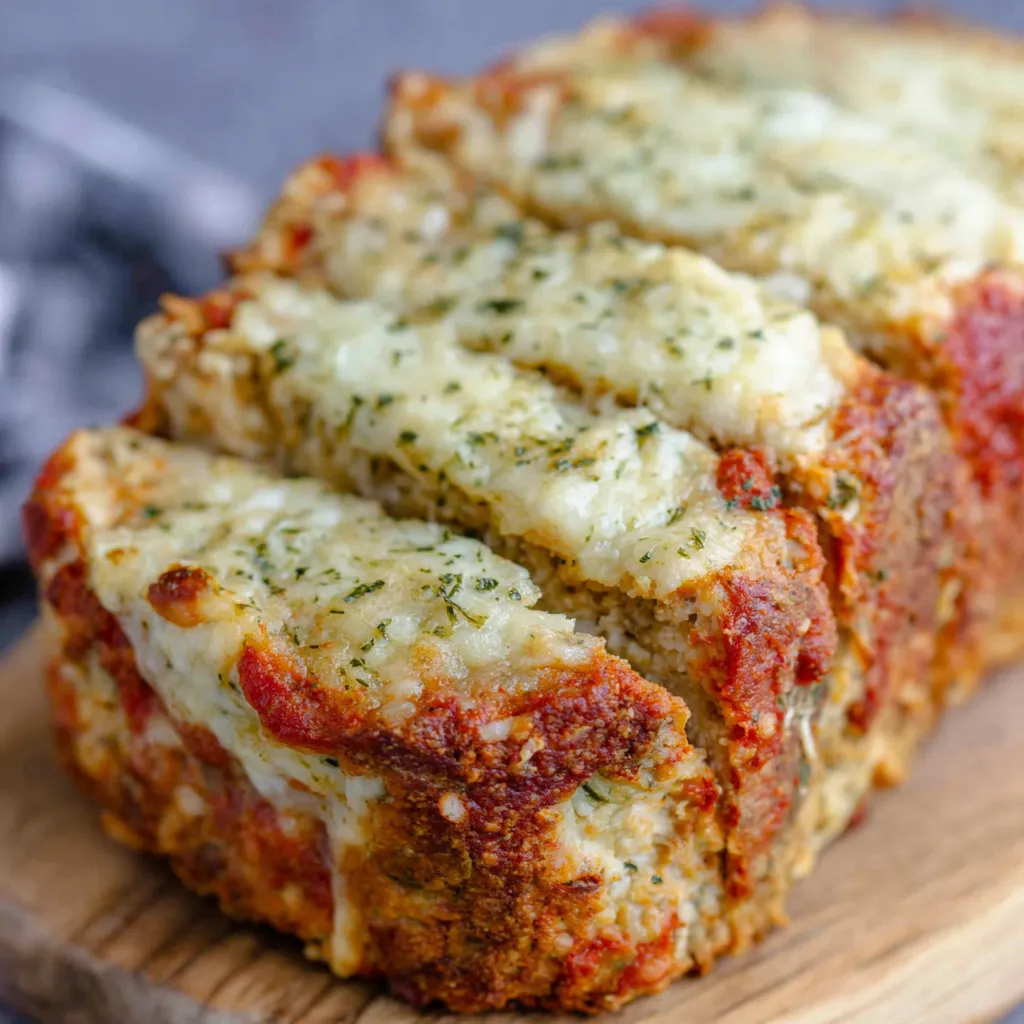
Parmesan Chicken Meatloaf
This Parmesan Chicken Meatloaf is a delicious and moist alternative to traditional beef meatloaf. The recipe features a savory Parmesan crust and a flavorful blend of herbs and spices, ensuring a satisfying and comforting meal that is easy to prepare and perfect for a weeknight dinner.
Ingredients
Equipment
Method
- Preheat your oven to 375°F (190°C). Lightly grease a 9×5 inch loaf pan.
- In a large mixing bowl, combine all meatloaf ingredients: ground chicken, breadcrumbs, Parmesan cheese, onion, garlic, egg, milk, parsley, oregano, salt, pepper, and red pepper flakes (if using).
- Gently mix all ingredients together with your hands until just combined. Be careful not to overmix.
- Transfer the meatloaf mixture to the prepared loaf pan. Gently press it down to ensure it’s evenly distributed.
- In a small bowl, combine the remaining Parmesan cheese and olive oil. Mix well to form a paste.
- Spread the Parmesan cheese mixture evenly over the top of the meatloaf.
- Bake for 50-60 minutes, or until the internal temperature reaches 165°F (74°C). Use a meat thermometer to check for doneness.
- Let the meatloaf rest for 10-15 minutes before slicing and serving. This allows the juices to redistribute.
Notes
For added flavor, use Italian-seasoned breadcrumbs. You can also add a small amount of grated butter to the meatloaf mixture to help keep it moist. Serve with your favorite sides, such as mashed potatoes, roasted vegetables, or a simple salad. Leftovers can be stored in the refrigerator for up to 3 days.