
Unlocking the Maillard Reaction: The Science Behind the Sizzle
Caramelization, the star of the show in our quest for perfectly caramelized BBQ chicken thighs, is often misunderstood. Many assume it’s solely about sugar. While sugar certainly plays a role (especially in BBQ sauce!), the real magic lies in the Maillard reaction. This complex chemical reaction occurs between amino acids (from the chicken protein) and reducing sugars (present in the chicken and enhanced by our BBQ sauce) at high temperatures. The Maillard reaction is what gives browned foods their distinctive flavor and appealing aroma. Think of the beautiful crust on a perfectly seared steak, or the golden-brown perfection of toasted bread – that’s the Maillard reaction in action. Several factors influence the Maillard reaction. Temperature is crucial; it needs to be hot enough (typically above 285°F/140°C) to initiate the reaction. However, too high a temperature can lead to burning before proper caramelization occurs. Moisture content also plays a role. Excess moisture steams the chicken, hindering the Maillard reaction. That’s why patting the chicken dry is essential. Finally, pH levels impact the reaction; slightly alkaline conditions generally promote browning. Marinating the chicken in a slightly acidic BBQ sauce, then glazing it with a sweeter sauce later in the cooking process provides a balanced approach.The Ultimate Caramelized BBQ Chicken Thighs Recipe
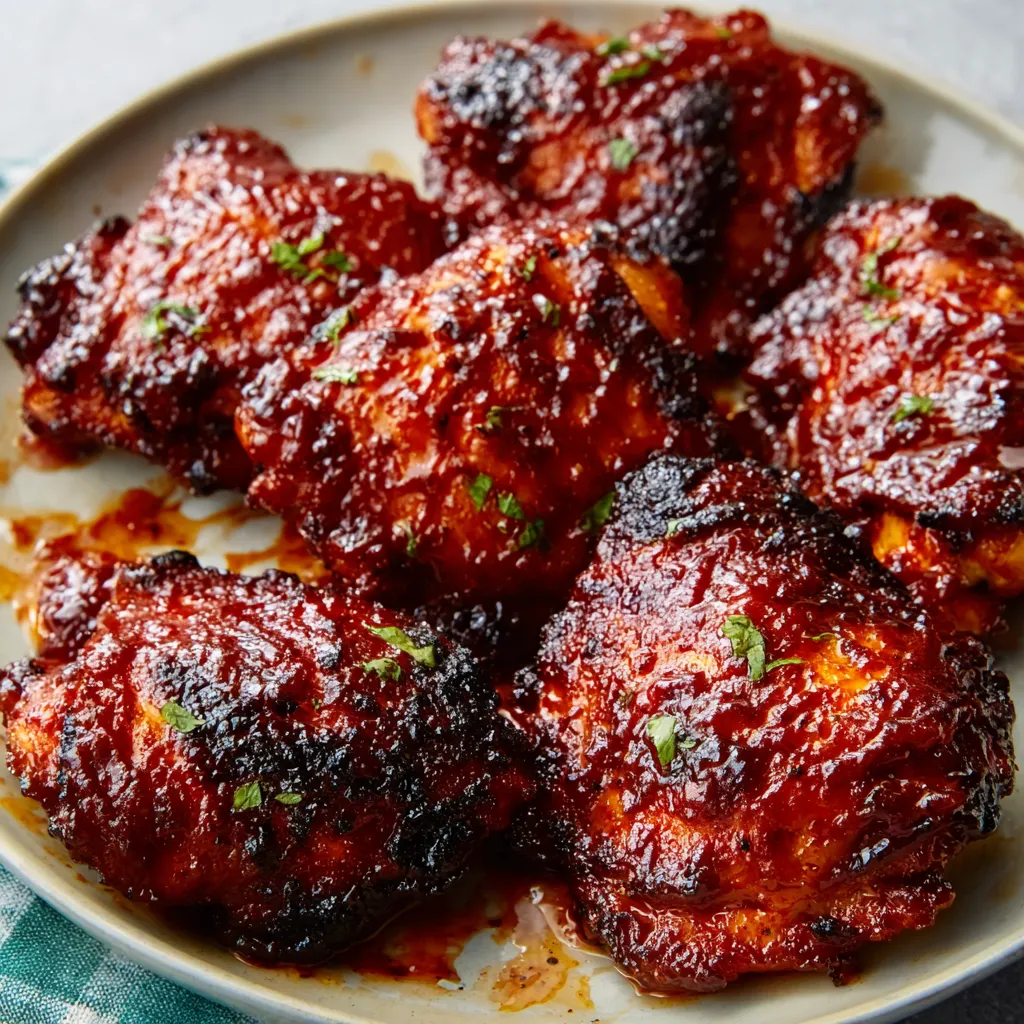 This recipe reflects everything I’ve learned through trial and error, aiming for maximum caramelization and flavor.
Ingredients:
- Chicken Thighs: 2 lbs boneless, skinless chicken thighs
- BBQ Sauce (Base): 1 cup, your favorite (I prefer a tangy, vinegar-based sauce)
- BBQ Sauce (Glaze): 1/2 cup, sweeter BBQ sauce (molasses or brown sugar-based)
- Olive Oil: 2 tablespoons
- Garlic: 2 cloves, minced
- Onion Powder: 1 teaspoon
- Smoked Paprika: 1 teaspoon
- Salt: 1 teaspoon
- Black Pepper: 1/2 teaspoon
- Optional: 1 tablespoon apple cider vinegar
Equipment:
- Large Bowl
- Cast Iron Skillet or Oven-Safe Pan
- Tongs
- Basting Brush
Instructions:
- Marinate the Chicken: In a large bowl, combine the chicken thighs, 1 cup of BBQ sauce (base), garlic, onion powder, smoked paprika, salt, pepper, and apple cider vinegar (if using). Mix well, ensuring all thighs are coated. Cover and refrigerate for at least 2 hours, or preferably overnight.
- Preheat Oven: Preheat your oven to 400°F (200°C).
- Sear the Chicken: Heat olive oil in a cast iron skillet (or oven-safe pan) over medium-high heat. Remove chicken thighs from the marinade, letting excess drip off. Sear the chicken thighs for 3-4 minutes per side, until browned. Don’t overcrowd the pan; work in batches if necessary.
- Bake: Transfer the skillet to the preheated oven and bake for 15-20 minutes, or until the chicken is cooked through (internal temperature reaches 165°F/74°C).
- Caramelize: Remove the skillet from the oven. Increase the oven temperature to broil. Brush the chicken thighs generously with the sweeter BBQ sauce (glaze). Place the skillet back under the broiler for 2-3 minutes, watching carefully to prevent burning. The sauce should bubble and caramelize.
- Rest: Remove the skillet from the oven and let the chicken rest for 5 minutes before serving. This allows the juices to redistribute, resulting in more tender and flavorful chicken.
- Serve: Serve immediately and enjoy! Consider pairing with classic sides like coleslaw, corn on the cob, or baked beans.
My Caramelization Chronicles: A Journey of Trial and Error
My first few attempts were a disaster. The chicken was either burnt on the outside and raw on the inside, or it was bland and lacking that beautiful caramelized crust. Like many of you, I initially thought it was just about slathering on BBQ sauce. Boy, was I wrong!The Soggy Sauce Struggle
Initially, I would coat the chicken thighs in a thick layer of BBQ sauce right from the start. The result? Steamed chicken swimming in a pool of sugary liquid. The sauce never had a chance to properly caramelize. It was just a sticky mess. I realized that moisture was the enemy.The Sear-ious Revelation
Then, I had an “Aha!” moment. I remembered the importance of searing meat. By searing the chicken thighs in a hot skillet before baking, I created a beautiful initial crust. This step not only added flavor but also helped to seal in the juices, preventing the chicken from drying out during baking.Sugar Rush and the Broiler Balancing Act
The next challenge was achieving that perfect caramelized glaze without burning the chicken. Using a sweeter BBQ sauce for the glaze was key. However, the high sugar content meant it could easily burn under the broiler. The solution? Carefully monitoring the chicken while it was under the broiler, and basting with the glaze only during the last few minutes of cooking. This allowed the sugars to caramelize without turning into a bitter, burnt mess.The Marinade Magic
Finally, I experimented with marinades. A simple marinade using a tangy, vinegar-based BBQ sauce, garlic, and spices not only tenderized the chicken but also added depth of flavor. The acidity in the vinegar helped to break down the proteins, resulting in more succulent chicken. Plus, marinating overnight allowed the flavors to penetrate deep into the meat. Now, I often enjoy this dish with some Honey Garlic Chicken. And sometimes with Brown Sugar Pineapple Chicken.The Foolproof Caramelization Technique: 5 Steps to Golden-Brown Glory
After countless attempts and more chicken thighs than I care to admit, I’ve distilled the process down to these five foolproof steps:- Dry and Sear: Pat the chicken thighs completely dry before searing them in a hot skillet. This promotes browning and prevents steaming.
- Strategic Saucing: Use a less sugary BBQ sauce for the initial marinade and baking, reserving the sweeter sauce for the final glaze.
- High-Heat Finish: Utilize the broiler for the last few minutes of cooking to achieve rapid caramelization.
- Constant Vigilance: Watch the chicken like a hawk while it’s under the broiler to prevent burning.
- Rest and Relax: Allow the chicken to rest for a few minutes before serving. This allows the juices to redistribute, resulting in more tender and flavorful chicken.
What is the Maillard reaction, and why is it important for caramelizing BBQ chicken thighs?
The Maillard reaction is a chemical reaction between amino acids and reducing sugars at high temperatures that gives browned foods their distinctive flavor and aroma. It’s crucial for caramelizing BBQ chicken thighs because it creates the flavorful, appealing crust.
Why does the recipe call for two different types of BBQ sauce (base and glaze)?
The recipe uses a less sugary BBQ sauce as a base for marinating and baking to prevent burning and steaming. A sweeter BBQ sauce is then used as a glaze towards the end, under the broiler, to achieve rapid caramelization without burning the chicken.
What are the key steps to avoid soggy or burnt chicken when trying to caramelize BBQ chicken thighs?
The key steps are to pat the chicken dry before searing, use a less sugary sauce for the initial marinade and baking, save the sweeter sauce for a final glaze under the broiler, constantly watch the chicken under the broiler to prevent burning, and let the chicken rest before serving.
Why is it important to sear the chicken thighs before baking?
Searing the chicken thighs in a hot skillet before baking creates an initial crust, adds flavor, and helps seal in the juices, preventing the chicken from drying out during baking.
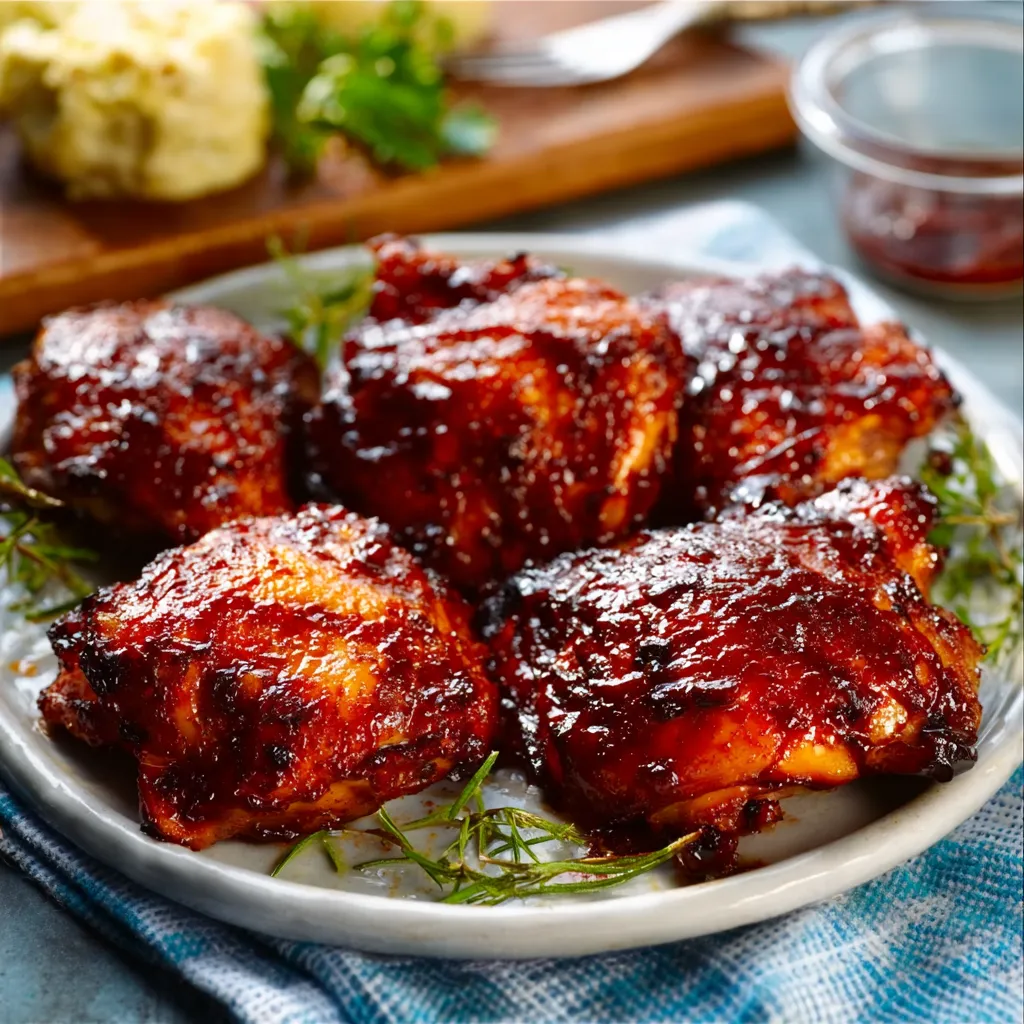
Ultimate Caramelized BBQ Chicken Thighs
Ingredients
Equipment
Method
- Marinate the Chicken: In a large bowl, combine the chicken thighs, 1 cup of BBQ sauce (base), garlic, onion powder, smoked paprika, salt, pepper, and apple cider vinegar (if using). Mix well, ensuring all thighs are coated. Cover and refrigerate for at least 2 hours, or preferably overnight.
- Preheat Oven: Preheat your oven to 400°F (200°C).
- Sear the Chicken: Heat olive oil in a cast iron skillet (or oven-safe pan) over medium-high heat. Remove chicken thighs from the marinade, letting excess drip off. Sear the chicken thighs for 3-4 minutes per side, until browned. Don’t overcrowd the pan; work in batches if necessary.
- Bake: Transfer the skillet to the preheated oven and bake for 15-20 minutes, or until the chicken is cooked through (internal temperature reaches 165°F/74°C).
- Caramelize: Remove the skillet from the oven. Increase the oven temperature to broil. Brush the chicken thighs generously with the sweeter BBQ sauce (glaze). Place the skillet back under the broiler for 2-3 minutes, watching carefully to prevent burning. The sauce should bubble and caramelize.
- Rest: Remove the skillet from the oven and let the chicken rest for 5 minutes before serving. This allows the juices to redistribute, resulting in more tender and flavorful chicken.
- Serve: Serve immediately and enjoy! Consider pairing with classic sides like coleslaw, corn on the cob, or baked beans.