
The Alchemist’s Cauldron: Understanding Soup Chemistry
The magic of any great soup, especially an Easy Comfort Soup like this one, lies in the interplay of its components. It’s not just about throwing ingredients into a pot; it’s about understanding how they interact to create a harmonious whole. The chicken provides the savory backbone, releasing collagen that enriches the broth and adds body. Vegetables contribute sweetness and depth of flavor, while herbs bring brightness and aromatics. And, of course, the gnocchi – those delightful little potato dumplings – lend a comforting chewiness that elevates the soup to a satisfying meal. One crucial element is understanding the Maillard reaction. Searing the vegetables (carrots, celery, onion) before adding the broth helps develop those complex, browned flavors that are so essential for a deeply flavorful soup. Skipping this step sacrifices a significant layer of taste. Furthermore, using a high-quality chicken broth (or even better, homemade!) makes a world of difference. Many store-bought broths are bland and thin, lacking the richness needed to support the other ingredients. A good broth should be flavorful enough to stand on its own. We’re aiming for a soup that embodies what Fall Easy Recipes Dinners are all about: cozy, flavorful, and satisfying. The principles are very similar to other comfort food recipes, like the Creamy Garlic Chicken Gnocchi, which relies on a rich, creamy sauce.Recipe: Rotisserie Chicken Gnocchi Soup – Elevated
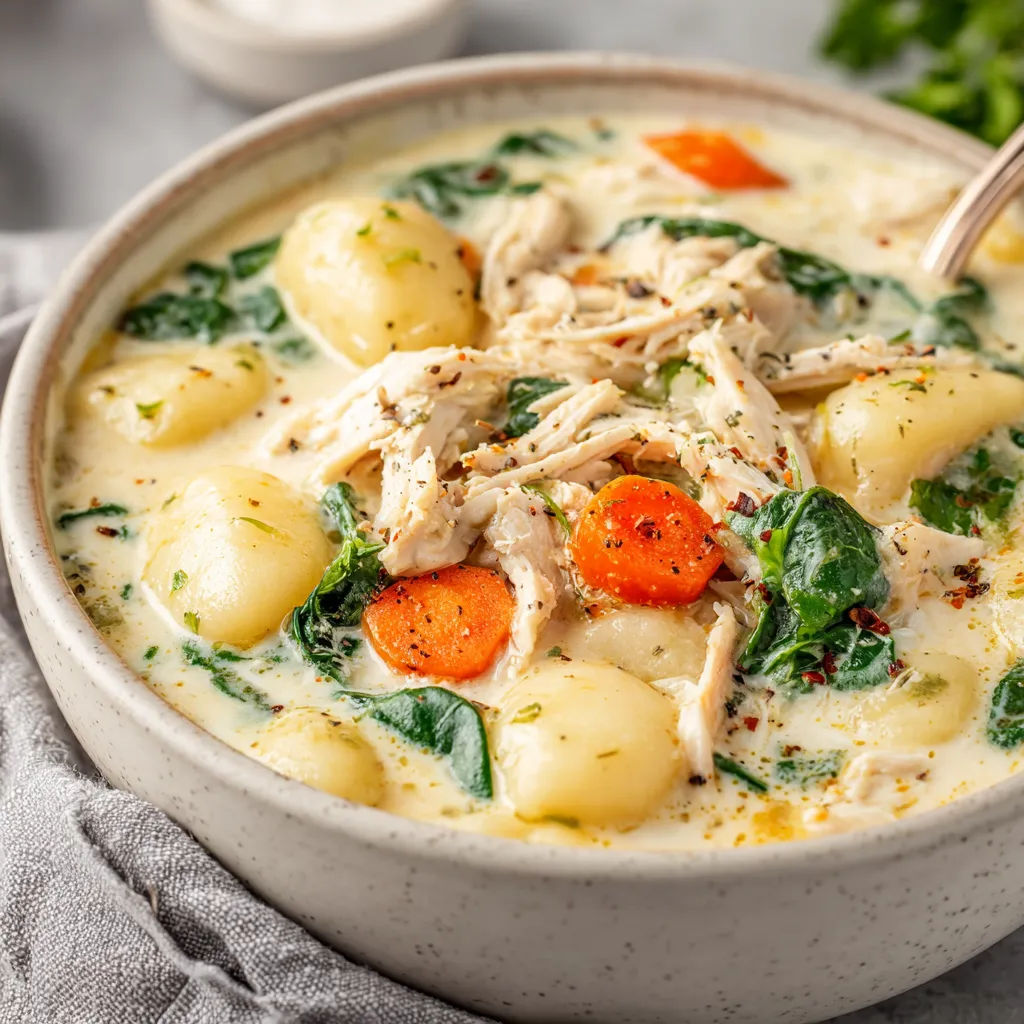
Ingredients:
- 1 tablespoon olive oil
- 1 medium yellow onion, chopped
- 2 carrots, peeled and chopped
- 2 celery stalks, chopped
- 2 cloves garlic, minced
- 8 cups chicken broth (low sodium preferred)
- 1 teaspoon dried Italian seasoning
- 1/2 teaspoon dried thyme
- 1/4 teaspoon red pepper flakes (optional)
- 1 pound shelf-stable gnocchi
- 3 cups shredded rotisserie chicken
- 1 cup chopped fresh spinach
- 1/4 cup heavy cream (optional, for extra richness)
- Salt and freshly ground black pepper to taste
- Fresh parsley, chopped (for garnish)
Instructions:
- Sauté the Vegetables: Heat the olive oil in a large pot or Dutch oven over medium heat. Add the onion, carrots, and celery and cook until softened, about 5-7 minutes. Add the minced garlic and cook for another minute until fragrant.
- Build the Flavor: Pour in the chicken broth, add the Italian seasoning, thyme, and red pepper flakes (if using). Bring to a simmer.
- Cook the Gnocchi: Gently stir in the gnocchi. Cook according to package directions, usually about 2-3 minutes, or until they float to the surface.
- Add the Chicken and Spinach: Stir in the shredded rotisserie chicken and chopped spinach. Cook until the spinach is wilted and the chicken is heated through, about 2-3 minutes.
- Finish and Serve: Stir in the heavy cream (if using) for extra richness. Season with salt and freshly ground black pepper to taste. Garnish with fresh parsley before serving.
My Soupy Saga: A Culinary Investigation
The Early Days: Bland Beginnings
My first few attempts at rotisserie chicken gnocchi soup were a disaster. I rushed the process, skipped browning the vegetables, and used a watery broth. The result was a bland, one-dimensional soup that tasted suspiciously like chicken-flavored water with gnocchi. I knew there had to be a better way. Like many of you, I initially thought it was a simple matter of throwing everything in a pot. I was so wrong!The Browning Revelation: An “Aha!” Moment
Then, I had an “Aha!” moment. I remembered the importance of the Maillard reaction – that magical browning process that unlocks so much flavor. I started by meticulously browning the vegetables in olive oil before adding the broth. The difference was astounding! The soup immediately developed a deeper, more complex flavor profile.Broth is Boss: The Quest for Liquid Gold
Next, I tackled the broth. I realized that the store-bought broth I was using was severely lacking. I experimented with different brands and even tried making my own. While homemade broth is undoubtedly the best, I found that using a high-quality, low-sodium store-bought broth significantly improved the soup’s overall flavor. This simple switch transformed it from a forgettable dish to a comforting bowl of goodness. It was the equivalent of what broth does for Rotisserie Chicken Mushroom Soup – the backbone of the dish.Gnocchi Gymnastics: Achieving Pillowy Perfection
Finally, I focused on the gnocchi. I experimented with different brands and cooking times. I found that shelf-stable gnocchi worked best, as they held their shape better than refrigerated gnocchi. Cooking them gently in the simmering broth, just until they floated to the surface, ensured that they remained pillowy and tender.The Finishing Touches: Herbs, Cream, and Gratitude
The addition of fresh spinach and a touch of heavy cream (optional, but highly recommended) added brightness and richness to the soup. A sprinkle of fresh parsley at the end provided a final burst of flavor and visual appeal. It turned out that transforming average ingredients was the secret to making the best Fall And Winter Dinner Recipes.The Art of Soupmaking: A Foolproof Method
Here’s the foolproof method I developed for making the ultimate rotisserie chicken gnocchi soup, a true Chicken And Gnocchi Soup Easy recipe:- Brown the Vegetables: Sauté the onion, carrots, and celery in olive oil until softened and lightly browned. This step is crucial for developing a deep, complex flavor.
- Use High-Quality Broth: Opt for a low-sodium, high-quality chicken broth (or homemade, if you’re feeling ambitious). The broth is the foundation of the soup, so don’t skimp on quality.
- Cook the Gnocchi Gently: Add the gnocchi to the simmering broth and cook just until they float to the surface. Overcooking will result in mushy gnocchi.
- Don’t Overcook the Chicken: Add the shredded rotisserie chicken towards the end of the cooking process to prevent it from drying out.
- Add Fresh Herbs: A sprinkle of fresh parsley or other herbs at the end adds brightness and flavor.
- Adjust Seasoning: Taste and adjust the seasoning with salt and pepper as needed. Remember, a little salt can go a long way in enhancing the flavors of the other ingredients.
- Creamy Finish (Optional): Stir in a touch of heavy cream or half-and-half at the end for extra richness and creaminess.
Why is it important to brown the vegetables before adding the broth to the soup?
Browning the vegetables, also known as the Maillard reaction, unlocks complex, browned flavors that significantly deepen the soup’s overall flavor profile. Skipping this step will result in a blander soup.
What kind of broth is recommended for the best flavor in this soup?
A high-quality, low-sodium store-bought chicken broth is recommended. Even better is using homemade broth for the richest flavor.
What type of gnocchi works best in this soup and how should they be cooked?
Shelf-stable gnocchi are recommended as they hold their shape better than refrigerated gnocchi. Cook them gently in the simmering broth just until they float to the surface to prevent them from becoming mushy.
When should I add the rotisserie chicken to the soup and why?
Add the shredded rotisserie chicken towards the end of the cooking process, about 2-3 minutes before serving. This prevents the chicken from drying out.
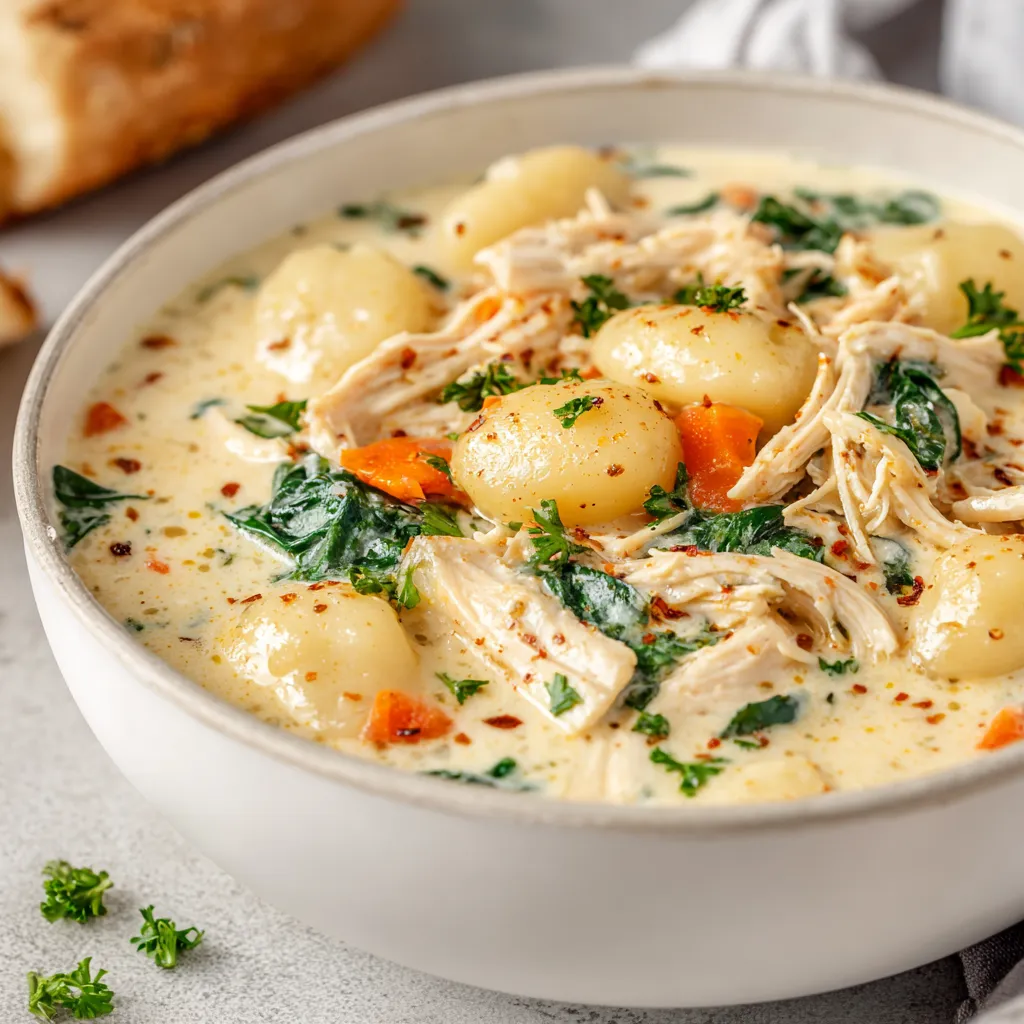
Easy Rotisserie Chicken Gnocchi Soup
This comforting and flavorful soup transforms simple ingredients into a satisfying meal. Featuring tender gnocchi, shredded rotisserie chicken, and fresh vegetables in a rich broth, this recipe is perfect for a quick and easy weeknight dinner. Elevate your soup game with browned vegetables and high-quality broth for a truly exceptional experience.
Ingredients
Equipment
Method
- Heat the olive oil in a large pot or Dutch oven over medium heat.
- Add the onion, carrots, and celery and cook until softened, about 5-7 minutes.
- Add the minced garlic and cook for another minute until fragrant.
- Pour in the chicken broth, add the Italian seasoning, thyme, and red pepper flakes (if using). Bring to a simmer.
- Gently stir in the gnocchi. Cook according to package directions, usually about 2-3 minutes, or until they float to the surface.
- Stir in the shredded rotisserie chicken and chopped spinach. Cook until the spinach is wilted and the chicken is heated through, about 2-3 minutes.
- Stir in the heavy cream (if using) for extra richness.
- Season with salt and freshly ground black pepper to taste.
- Garnish with fresh parsley before serving.
Notes
For a richer flavor, use homemade chicken broth. You can also add other vegetables like zucchini or mushrooms. Store leftovers in an airtight container in the refrigerator for up to 3 days. To prevent the gnocchi from becoming too soft, add them just before serving if reheating. For a vegetarian option, omit the chicken and use vegetable broth.