
Can the rich, savory flavors of perfectly seared steak and succulent shrimp truly harmonize in a vibrant, quick stir-fry, or is it merely a culinary chimera?
The Maillard Reaction: The Unsung Hero
The secret to a truly exceptional steak and shrimp stir-fry lies in understanding and harnessing the power of the Maillard reaction. This complex chemical process occurs between amino acids and reducing sugars, primarily when food is heated. It’s responsible for the browning, crust formation, and the deeply savory, almost nutty flavors that we associate with perfectly cooked steak and shrimp. Crucially, high heat is essential. If your pan isn’t hot enough, you’ll end up steaming the ingredients instead of searing them, resulting in a bland, lackluster dish. Another factor is moisture; too much and it will hinder proper browning. Finally, the quality of ingredients matters. Using high-quality cuts of steak and fresh shrimp will yield significantly better results. Think of it as building a flavor foundation; the better the foundation, the more delicious the stir-fry!
The Recipe: A Symphony of Flavors
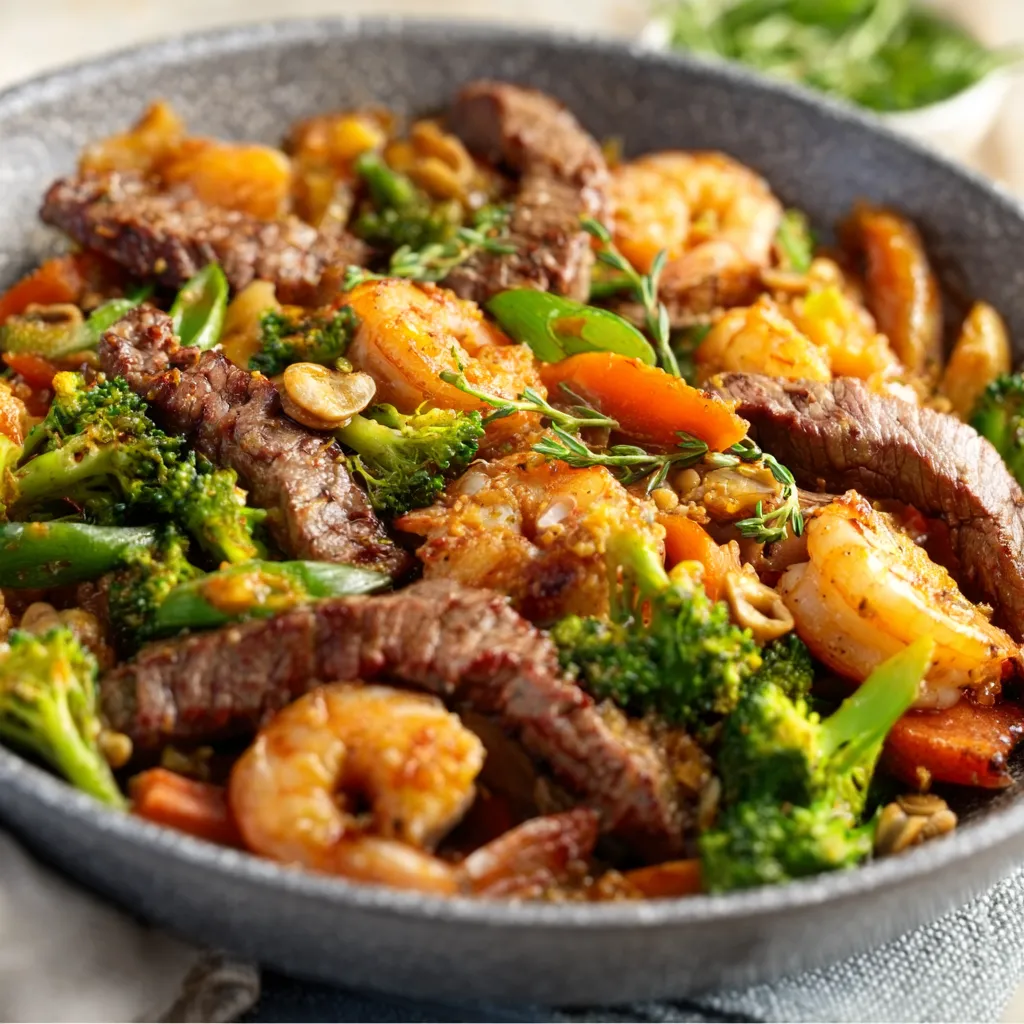
Ingredients:
- Steak: 1 pound sirloin or flank steak, thinly sliced against the grain
- Shrimp: 1 pound large shrimp, peeled and deveined
- Vegetables:
- 1 red bell pepper, sliced
- 1 green bell pepper, sliced
- 1 onion, sliced
- 2 cups broccoli florets
- 1 cup sliced mushrooms
- 2 cloves garlic, minced
- 1 inch ginger, minced
- Sauce:
- 1/4 cup soy sauce
- 2 tablespoons oyster sauce
- 1 tablespoon sesame oil
- 1 tablespoon cornstarch
- 1 tablespoon brown sugar
- 1/2 teaspoon red pepper flakes (optional)
- Oil: 2 tablespoons vegetable oil
- Garnish: Sesame seeds, chopped green onions
- Serving: Cooked rice or noodles
Instructions:
- Prepare the Steak and Shrimp: In separate bowls, marinate the steak with 1 tablespoon of soy sauce, 1 teaspoon of sesame oil, and 1 teaspoon of cornstarch. Marinate the shrimp with 1 tablespoon of soy sauce, 1 teaspoon of sesame oil, and 1/2 teaspoon of cornstarch.
- Prepare the Sauce: In a small bowl, whisk together the remaining soy sauce, oyster sauce, sesame oil, cornstarch, brown sugar, and red pepper flakes (if using).
- Cook the Steak: Heat 1 tablespoon of vegetable oil in a large wok or skillet over high heat. Add the steak and stir-fry for 2-3 minutes, or until browned. Remove from the pan and set aside.
- Cook the Shrimp: Add another tablespoon of vegetable oil to the wok. Add the shrimp and stir-fry for 2-3 minutes, or until pink and cooked through. Remove from the pan and set aside.
- Cook the Vegetables: Add the onion, bell peppers, broccoli, and mushrooms to the wok. Stir-fry for 3-5 minutes, or until the vegetables are tender-crisp. Add the garlic and ginger and stir-fry for another minute.
- Combine and Simmer: Return the steak and shrimp to the wok. Pour the sauce over the ingredients and stir-fry for 1-2 minutes, or until the sauce has thickened and everything is heated through.
- Serve: Serve immediately over cooked rice or noodles. Garnish with sesame seeds and chopped green onions.
From Fumble to Feast: My Stir-Fry Saga
The Soggy Struggle
My first few attempts were a disaster. Like many of you, I initially thought stir-fry was just about throwing everything into a pan and hoping for the best. The result? A soggy, flavorless mess. The steak was tough, the shrimp was rubbery, and the vegetables were either undercooked or mushy. I realized I needed to understand the science behind it.
The Browning Revelation
Then, I had an “Aha!” moment. I stumbled upon the Maillard reaction and its importance in achieving that beautiful sear and deep, savory flavor. I realized my pan wasn’t hot enough, and I was overcrowding it, which caused the ingredients to steam instead of brown. I also needed to marinate the steak and shrimp to help them stay tender and flavorful. This also taught me the importance of prepping everything beforehand, like when creating Beef Stir Fry.
Sauce Sensations
The sauce was another area that needed improvement. My initial attempts were too watery and lacked depth. Experimenting with different ratios of soy sauce, oyster sauce, sesame oil, and cornstarch was crucial. I found that a touch of brown sugar added a hint of sweetness that balanced the savory flavors perfectly. The sauce is just as important in Asian Beef Noodle Skillet, but contains different elements. I also played around with adding red pepper flakes for a little kick.
Ingredient Integrity
Finally, I learned the importance of using high-quality ingredients. Cheap cuts of steak will inevitably be tough, and old, frozen shrimp will lack flavor and texture. Investing in good quality sirloin or flank steak and fresh shrimp made a world of difference. As an added bonus, this also significantly shortened cook times, resulting in better quality. The same can be said for Chinese Pepper Steak, where the cut of meat and freshness of vegetables are key.
The Foolproof Formula: Stir-Fry Mastery
- High Heat is Key: Use a wok or large skillet and ensure it’s screaming hot before adding any ingredients.
- Don’t Overcrowd the Pan: Cook the steak and shrimp in batches to avoid steaming.
- Marinate for Flavor: Marinate the steak and shrimp to keep them tender and flavorful.
- Prep Everything in Advance: Chop all your vegetables and have your sauce ready to go before you start cooking.
- Use Quality Ingredients: Invest in good quality steak and fresh shrimp for the best results.
- Master the Sauce: Experiment with different ratios of ingredients to create a sauce that you love. Maybe even something similar to the sweet and savory sauce in Honey Garlic Shrimp.
- Quick and Constant Stirring: Keep the ingredients moving constantly to ensure even cooking.
What is the Maillard reaction and why is it important for this stir-fry?
The Maillard reaction is a chemical process between amino acids and reducing sugars that occurs when food is heated. It’s responsible for the browning, crust formation, and savory flavors in the steak and shrimp. High heat is essential for this reaction, otherwise, the ingredients will steam instead of sear, resulting in a bland dish.
Why is it important to marinate the steak and shrimp before stir-frying?
Marinating the steak and shrimp helps them stay tender and flavorful during the stir-frying process. The marinade adds moisture and flavor, preventing them from becoming dry and tough when cooked at high heat.
What are some tips for preventing a soggy stir-fry?
To avoid a soggy stir-fry, use high heat, don’t overcrowd the pan (cook in batches), prep all ingredients in advance, and use quality ingredients.
What kind of steak and shrimp is recommended for this recipe?
The recipe recommends using 1 pound of sirloin or flank steak, thinly sliced against the grain, and 1 pound of large shrimp, peeled and deveined. Using high-quality cuts of steak and fresh shrimp will yield significantly better results.
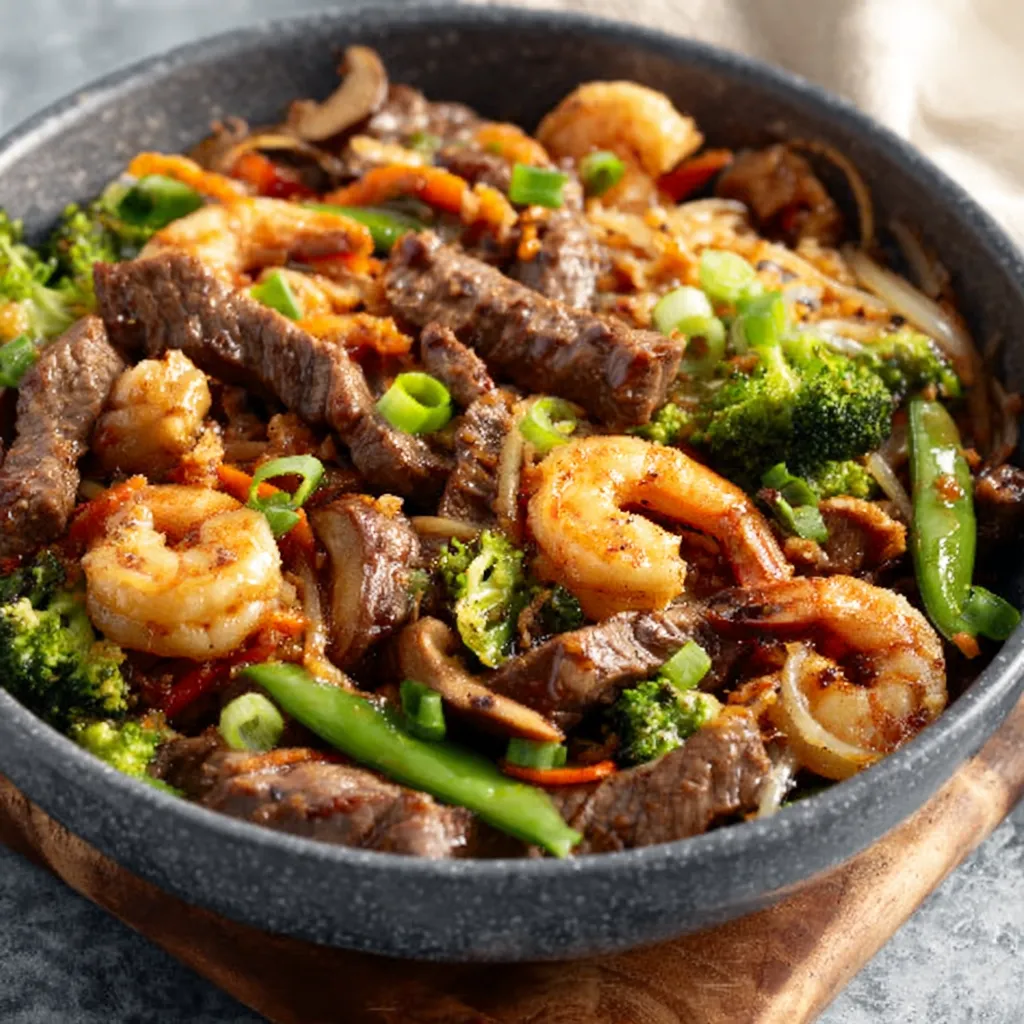
Steak and Shrimp Stir-Fry
Ingredients
Equipment
Method
- Prepare the Steak and Shrimp: In separate bowls, marinate the steak with 1 tablespoon of soy sauce, 1 teaspoon of sesame oil, and 1 teaspoon of cornstarch. Marinate the shrimp with 1 tablespoon of soy sauce, 1 teaspoon of sesame oil, and 1/2 teaspoon of cornstarch.
- Prepare the Sauce: In a small bowl, whisk together the remaining soy sauce, oyster sauce, sesame oil, cornstarch, brown sugar, and red pepper flakes (if using).
- Cook the Steak: Heat 1 tablespoon of vegetable oil in a large wok or skillet over high heat. Add the steak and stir-fry for 2-3 minutes, or until browned. Remove from the pan and set aside.
- Cook the Shrimp: Add another tablespoon of vegetable oil to the wok. Add the shrimp and stir-fry for 2-3 minutes, or until pink and cooked through. Remove from the pan and set aside.
- Cook the Vegetables: Add the onion, bell peppers, broccoli, and mushrooms to the wok. Stir-fry for 3-5 minutes, or until the vegetables are tender-crisp. Add the garlic and ginger and stir-fry for another minute.
- Combine and Simmer: Return the steak and shrimp to the wok. Pour the sauce over the ingredients and stir-fry for 1-2 minutes, or until the sauce has thickened and everything is heated through.
- Serve: Serve immediately over cooked rice or noodles. Garnish with sesame seeds and chopped green onions.