
The Alchemy of “Sticky”: A Deep Dive
The secret to sticky sauces isn’t just about adding sugar or honey; it’s about controlling the viscosity and preventing the sauce from separating. Viscosity, in simple terms, is the thickness of a liquid. In our Sticky Garlic Chicken Noodles, we’re aiming for a viscosity that coats the noodles and chicken without being overly thick or gummy. The key ingredients that contribute to stickiness are sugars (like honey or brown sugar), starches (like cornstarch), and fats (from the oil or chicken). When heated, sugars caramelize, adding depth of flavor and increasing viscosity. Starches, when combined with liquid and heat, gelatinize, creating a thickening effect. Fats help to emulsify the sauce, preventing it from separating and maintaining a smooth texture. However, there’s a fine line between a perfectly sticky sauce and a sticky disaster. Too much sugar can lead to a burnt flavor and an overly thick consistency. Too much starch can result in a gloppy texture. The right balance, achieved through careful measurement and precise cooking, is crucial. We also need to consider the Maillard reaction, that browning process that occurs when amino acids and reducing sugars are heated, contributing both color and complex flavors. Finally, remember that acidity, from ingredients like soy sauce or vinegar, balances the sweetness and prevents the sauce from becoming cloying.The Ultimate Sticky Garlic Chicken Noodle Recipe
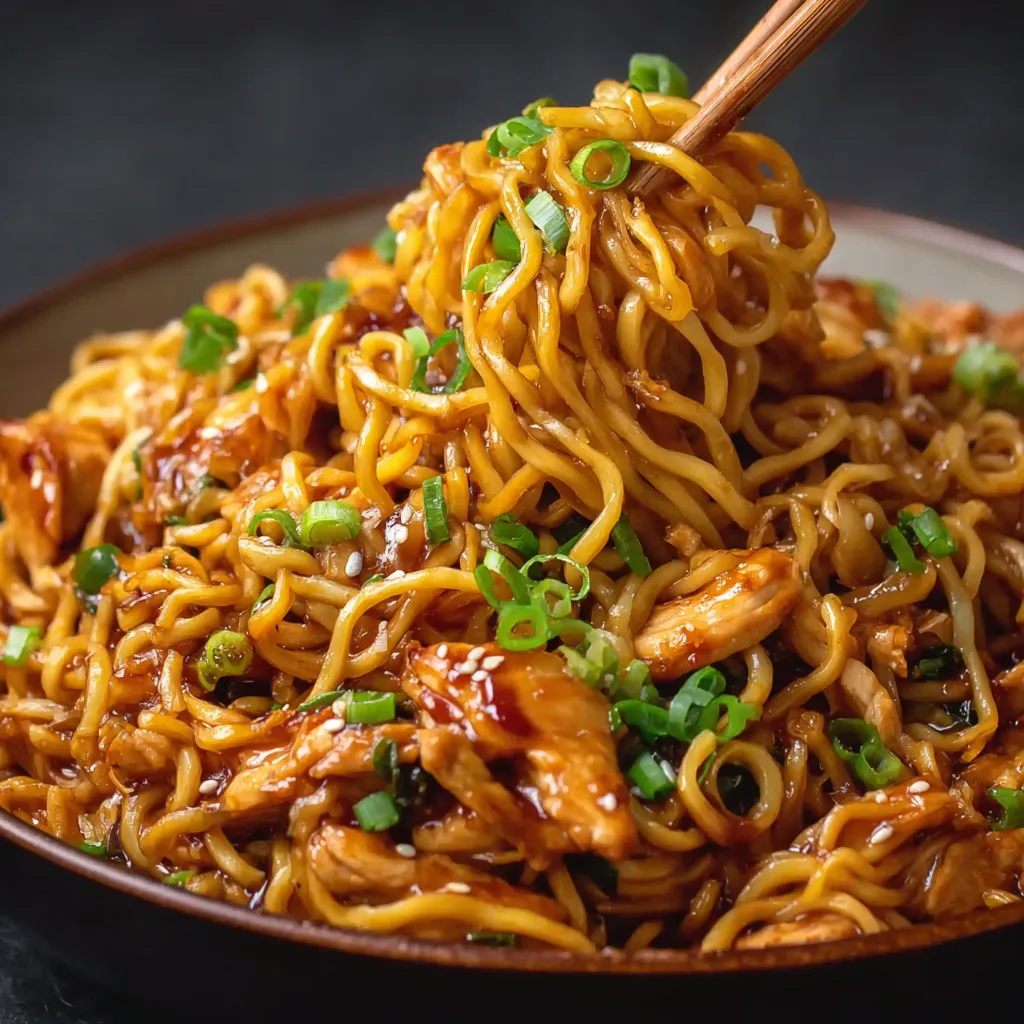 Here’s a recipe that incorporates all the scientific principles we’ve discussed to deliver consistently delicious Sticky Garlic Chicken Noodles:
Ingredients:
- For the Chicken:
- 1.5 lbs boneless, skinless chicken thighs, cut into bite-sized pieces
- 1 tbsp soy sauce
- 1 tbsp cornstarch
- 1 tsp sesame oil
- For the Noodles:
- 1 lb dried egg noodles (or your favorite type of noodle)
- For the Sauce:
- 4 tbsp soy sauce
- 2 tbsp honey
- 2 tbsp brown sugar
- 2 tbsp rice vinegar
- 2 tbsp cornstarch
- 1/4 cup chicken broth
- 6 cloves garlic, minced
- 1 inch ginger, minced
- 1/4 tsp red pepper flakes (optional)
- 2 tbsp vegetable oil
- Garnish:
- Sesame seeds
- Chopped green onions
Instructions:
- Marinate the Chicken: In a bowl, combine the chicken pieces with soy sauce, cornstarch, and sesame oil. Mix well and let marinate for at least 15 minutes (or up to 1 hour in the refrigerator).
- Cook the Noodles: Cook the noodles according to package directions. Drain and set aside. Toss with a little sesame oil to prevent sticking.
- Prepare the Sauce: In a small bowl, whisk together soy sauce, honey, brown sugar, rice vinegar, cornstarch, and chicken broth until smooth. Set aside.
- Cook the Chicken: Heat vegetable oil in a large skillet or wok over medium-high heat. Add the marinated chicken and cook until browned and cooked through, about 6-7 minutes. Remove the chicken from the skillet and set aside.
- Sauté Garlic and Ginger: Add the minced garlic and ginger to the skillet and sauté for about 30 seconds, until fragrant. Be careful not to burn the garlic.
- Add the Sauce: Pour the prepared sauce into the skillet and bring to a simmer, stirring constantly. Cook until the sauce thickens and becomes glossy, about 1-2 minutes.
- Combine and Serve: Add the cooked chicken and noodles to the skillet with the sauce. Toss everything together until the chicken and noodles are evenly coated in the sticky garlic sauce.
- Garnish: Garnish with sesame seeds and chopped green onions before serving.
My Quest for Sticky Noodle Perfection: A Culinary Detective Story
My first few attempts were a disaster. I envisioned perfectly coated noodles, glistening with a savory-sweet glaze, but what I got was either a watery mess or a cement-like clump. The flavor was there, but the texture was all wrong. I knew I had to dissect the problem and find a solution.The Soggy Saga: Experiment 1
Like many of you, I initially thought more soy sauce equaled more flavor. Wrong! My first batch was overwhelmingly salty and the sauce refused to thicken properly. The noodles swam in a thin, watery liquid. I learned that controlling the liquid-to-starch ratio is crucial. I also experimented with adding a Chicken Garlic Parmesan Pasta-like element, hoping the parmesan might lend some thickness, but it just made the sauce grainy.The Concrete Catastrophe: Experiment 2
Next, I went overboard with the cornstarch, thinking that was the key to stickiness. Big mistake. The sauce thickened almost instantly, turning into a gloppy, gelatinous mess. The noodles were coated in a thick, unappetizing paste. This was when I realized the importance of whisking the cornstarch with cold liquid *before* adding it to the hot pan to prevent clumping. It was like making gravy all over again! I even tried adding a touch of Honey Garlic Chicken inspiration, hoping the honey would balance the starch, but it was no use.The “Aha!” Moment: Experiment 3
Then, I had an “Aha!” moment. I realized the importance of balancing the sweet, savory, and acidic elements of the sauce. I reduced the soy sauce, increased the honey and rice vinegar, and carefully measured the cornstarch. I also discovered that sautéing the garlic and ginger *before* adding the sauce infused the dish with a deeper, more aromatic flavor. Finally, tossing the cooked noodles with a little sesame oil prevented them from sticking together and helped them absorb the sauce more evenly. I had finally unlocked the secret to sticky noodle success! Adding red pepper flakes also provided a great counterpoint to the sweet notes, similar to the way spice works in Honey Garlic Butter Chicken.Adding Protein Options: Experiment 4
In later experiments, I explored alternative proteins. Tofu worked well, especially when pressed to remove excess water and then pan-fried until crispy. Shrimp was another success, cooking quickly in the wok before adding the sauce. I even tried ground pork, which added a savory richness to the dish. However, I found that chicken thighs consistently delivered the best flavor and texture. Thinking about flavor combinations, I even tried a version that incorporated elements of Honey Garlic Chicken and Garlic Parmesan Chicken, but it ended up being too much and I reverted to the simplicity of the original.The Sticky Garlic Chicken Noodle Commandments: A Foolproof Method
Here’s a summary of the foolproof method, distilled from my culinary investigations:- Marinate the Chicken: Don’t skip the marinade! It tenderizes the chicken and adds flavor.
- Cook Noodles Perfectly: Overcooked noodles turn mushy, while undercooked noodles are tough. Follow package directions closely. Tossing with sesame oil prevents sticking.
- Whisk the Sauce: Whisk the sauce ingredients together *before* adding them to the pan to prevent cornstarch clumps.
- Sauté Aromatics: Sautéing the garlic and ginger in oil before adding the sauce releases their flavors and aromas. Don’t burn the garlic!
- Simmer and Stir: Simmer the sauce until it thickens and becomes glossy, stirring constantly to prevent sticking.
- Combine and Coat: Add the cooked chicken and noodles to the skillet and toss until everything is evenly coated in the sauce.
- Garnish Generously: Garnish with sesame seeds and chopped green onions for added flavor and visual appeal. You can even add a sprinkle of red pepper flakes for a touch of heat, similar to what you might find in Honey Garlic Chicken And Broccoli Stir-fry.
What is the key to achieving a perfectly sticky sauce for the noodles without it becoming a gloopy mess?
The key lies in controlling the viscosity of the sauce by balancing sugars, starches, and fats. Careful measurement, precise cooking, and balancing sweet, savory, and acidic elements are crucial.
Why is it important to whisk the sauce ingredients together before adding them to the pan?
Whisking the sauce ingredients, especially cornstarch, before adding them to the pan prevents the cornstarch from clumping and ensures a smooth, even sauce.
What role does sesame oil play in the noodle preparation?
Tossing the cooked noodles with a little sesame oil prevents them from sticking together and helps them absorb the sauce more evenly.
Can I use other proteins besides chicken thighs in this recipe?
Yes, tofu (pressed and pan-fried), shrimp, and ground pork are suggested as alternative protein options. However, the article suggests that chicken thighs consistently deliver the best flavor and texture.
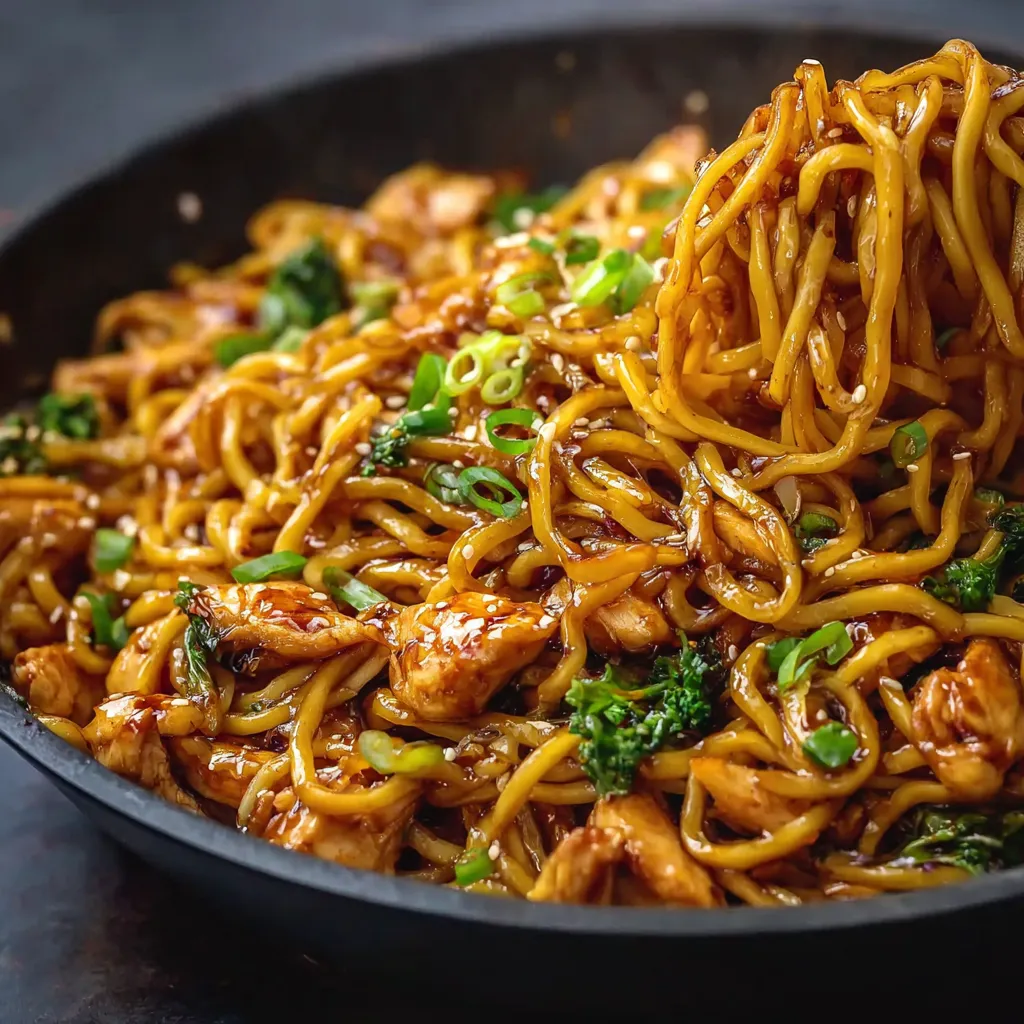
Sticky Garlic Chicken Noodles
These Sticky Garlic Chicken Noodles are a quick and easy meal, perfect for a weeknight dinner. The recipe features tender chicken and flavorful noodles coated in a sweet and savory sticky garlic sauce. Mastering the sauce’s viscosity is key to achieving that perfect balance.
Ingredients
Equipment
Method
- Marinate the Chicken: In a bowl, combine the chicken pieces with 1 tbsp soy sauce, 1 tbsp cornstarch, and 1 tsp sesame oil. Mix well and let marinate for at least 15 minutes (or up to 1 hour in the refrigerator).
- Cook the Noodles: Cook the noodles according to package directions. Drain and set aside. Toss with a little sesame oil to prevent sticking.
- Prepare the Sauce: In a small bowl, whisk together 4 tbsp soy sauce, honey, brown sugar, rice vinegar, cornstarch, and chicken broth until smooth. Set aside.
- Cook the Chicken: Heat vegetable oil in a large skillet or wok over medium-high heat. Add the marinated chicken and cook until browned and cooked through, about 6-7 minutes. Remove the chicken from the skillet and set aside.
- Sauté Garlic and Ginger: Add the minced garlic and ginger to the skillet and sauté for about 30 seconds, until fragrant. Be careful not to burn the garlic.
- Add the Sauce: Pour the prepared sauce into the skillet and bring to a simmer, stirring constantly. Cook until the sauce thickens and becomes glossy, about 1-2 minutes.
- Combine and Serve: Add the cooked chicken and noodles to the skillet with the sauce. Toss everything together until the chicken and noodles are evenly coated in the sticky garlic sauce.
- Garnish: Garnish with sesame seeds and chopped green onions before serving.
Notes
For a spicier dish, add more red pepper flakes. Tofu, shrimp, or ground pork can be used as alternative proteins. Store leftovers in an airtight container in the refrigerator for up to 3 days. To prevent the noodles from sticking together during storage, toss them with a little extra sesame oil before refrigerating. When reheating, add a splash of water or chicken broth to loosen the sauce.